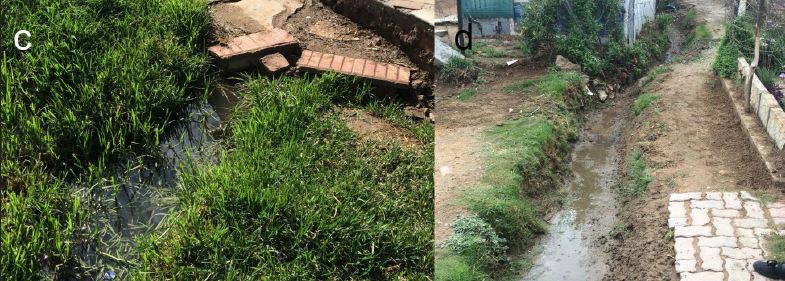
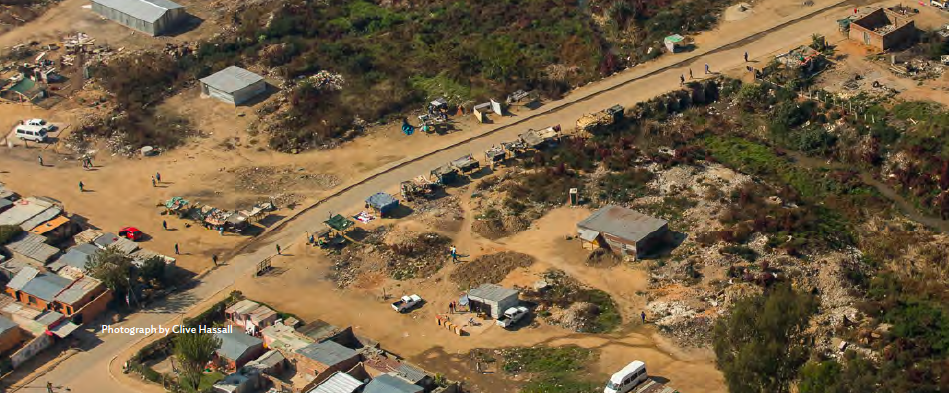
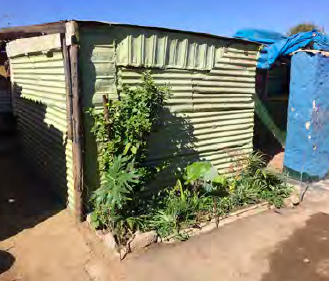
South Africa is struggling to provide services to the millions of poor people migrating to the major centres and living in informal settlements (shanty towns), built on land that was formerly used for agriculture or pasturage. Vegetation is sparse and the open spaces between the houses are generally of beaten earth. These areas face persistent challenges that undermine health and everyday well-being and increased disaster risk due to their poor design and lack of green infrastructure. Moreover, informal settlements are very vulnerable to flooding events, which affect the quality of life of the people living in them. Such a case is Diepsloot, a settlement in Johannesburg, where a team of researchers implemented a sustainable urban drainage system with the purpose of alleviating poor water infrastructure and addressing issues related to land erosion and environmental degradation. This research has been benefiting from the support of the local population through adaptive co-management and joint implementation of the intervention. (1,2)
Overview
Nature-based solution
- Green areas for water management
- Swales and filter strips
- Sustainable urban drainage systems
Key challenges
- Climate action for adaptation, resilience and mitigation (SDG 13)
- Climate change adaptation
- Environmental quality
- Waste management
- Green space, habitats and biodiversity (SDG 15)
- Habitat and biodiversity restoration
- Green space creation and/or management
- Water management (SDG 6)
- Flood protection
- Stormwater and rainfall management and storage
- Improvements to water quality
Focus
Project objectives
Implementation activities
Climate-focused activities
Climate change adaptation:
- Implement measures that prevent/manage desertification, soil erosion and landslides
- Implement sustainable urban drainage infrastructure (e.g. to make space for water)
Biodiversity conservation or restoration-focused activities
Biodiversity restoration:
- Rehabilitate and restore damaged or destroyed ecosystems
- Restore species (native, endangered, or unspecified)
- Public engagement
Main beneficiaries
- Non-government organisation/Civil Society
- Researchers/University
- Citizens or community groups
- Marginalized groups: Socio-economically disadvantaged populations (e.g. low-income households, unemployed)
Governance
Management set-up
- Led by non-government actors
Type of initiating organisation
- Non-government organisation/civil society
- Citizens or community group
- Researchers/university
Participatory approaches/ community involvement
- Dissemination of information and education
- Consultation (e.g. workshop, surveys, community meetings, town halls)
- Joint implementation (e.g. tree planting)
- Co-management/Joint management
Details on the roles of the organisations involved in the project
Project implemented in response to ...
Financing
Total cost
Source(s) of funding
- Research organisation / University
Type of funding
- Unknown
Non-financial contribution
- Provision of land
- Provision of labour
- Provision of expertise
- Public authorities (e.g. land, utility services)
- Citizens (e.g. volunteering)
Impacts and Monitoring
Environmental impacts
- Climate change
- Lowered local temperature
- Enhanced carbon sequestration
- Water management and blue areas
- Improved water quality
- Increased protection against flooding
- Improved stormwater management
- Green space and habitat
- Increased green space area
Economic impacts
- Unknown
Socio-cultural impacts
- Social justice and cohesion
- Improved liveability
- Increased involvement of locals in the management of green spaces
- Education
- Increased awareness of NBS and their benefits
Type of reported impacts
Presence of formal monitoring system
Presence of indicators used in reporting
Presence of monitoring/ evaluation reports
Availability of a web-based monitoring tool
References
2. GCRO (2019), TOWARDS APPLYING A GREEN INFRASTRUCTURE APPROACH IN THE GAUTENG CITY-REGION, available at Source link (accessed 25-04-2022)
3. City of Johannesburg (2021), Climate Action Plan, available at Source link (accessed 25-04-2022)
4. City of Johannesburg (2013), City of Johannesburg: 2013/16 Integrated Development Plan (IDP)
“Implementing the Joburg 2040 Strategy”, available at Source link (accessed 25-04-2022)