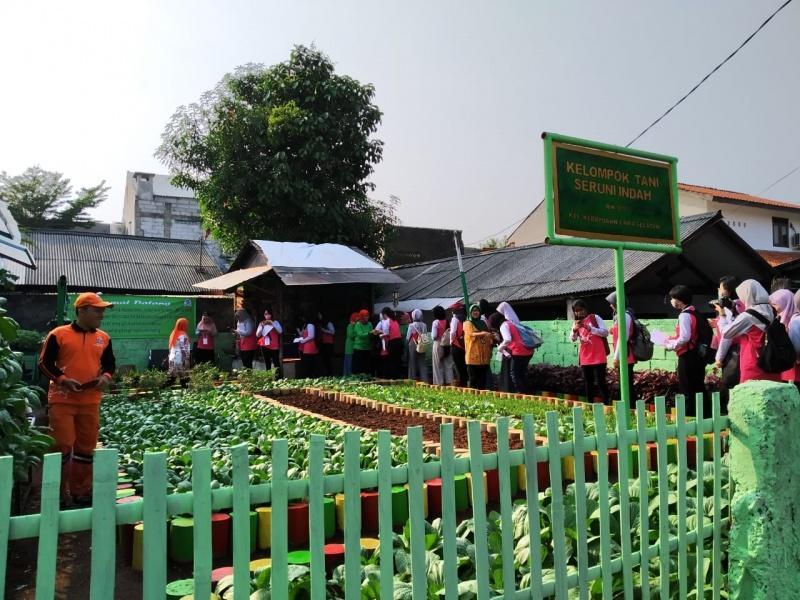
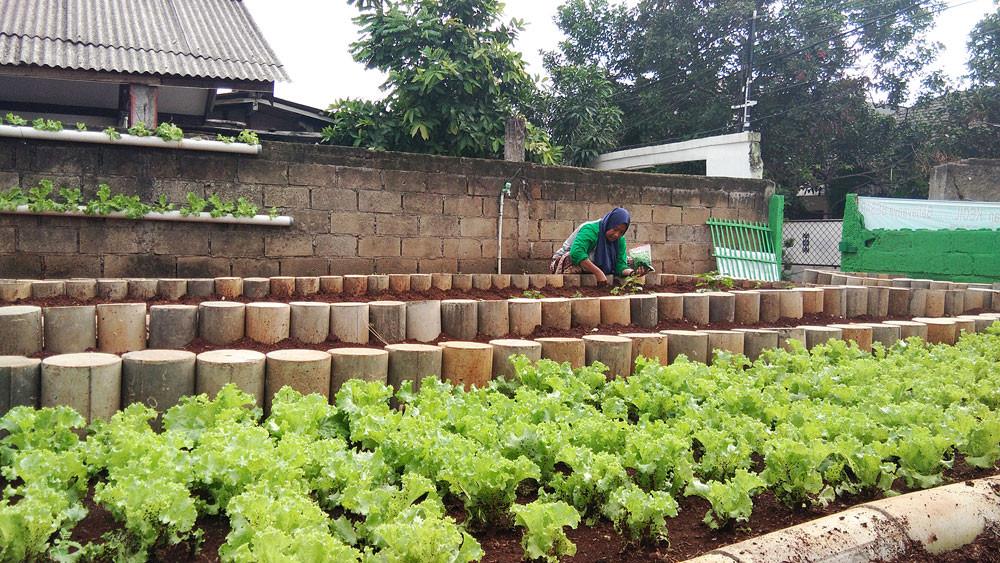
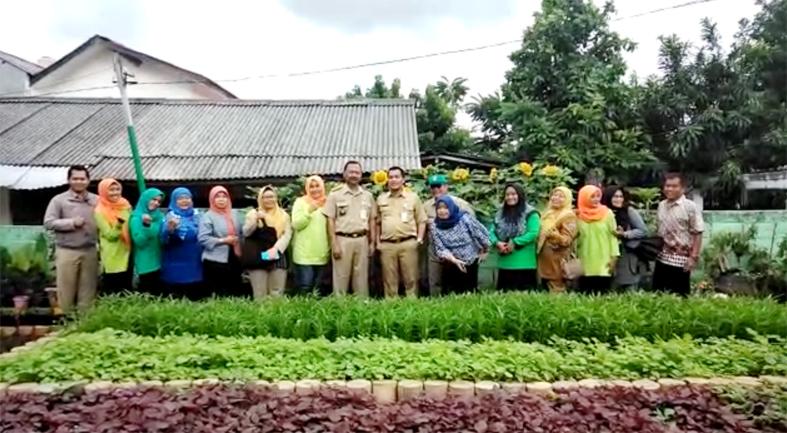
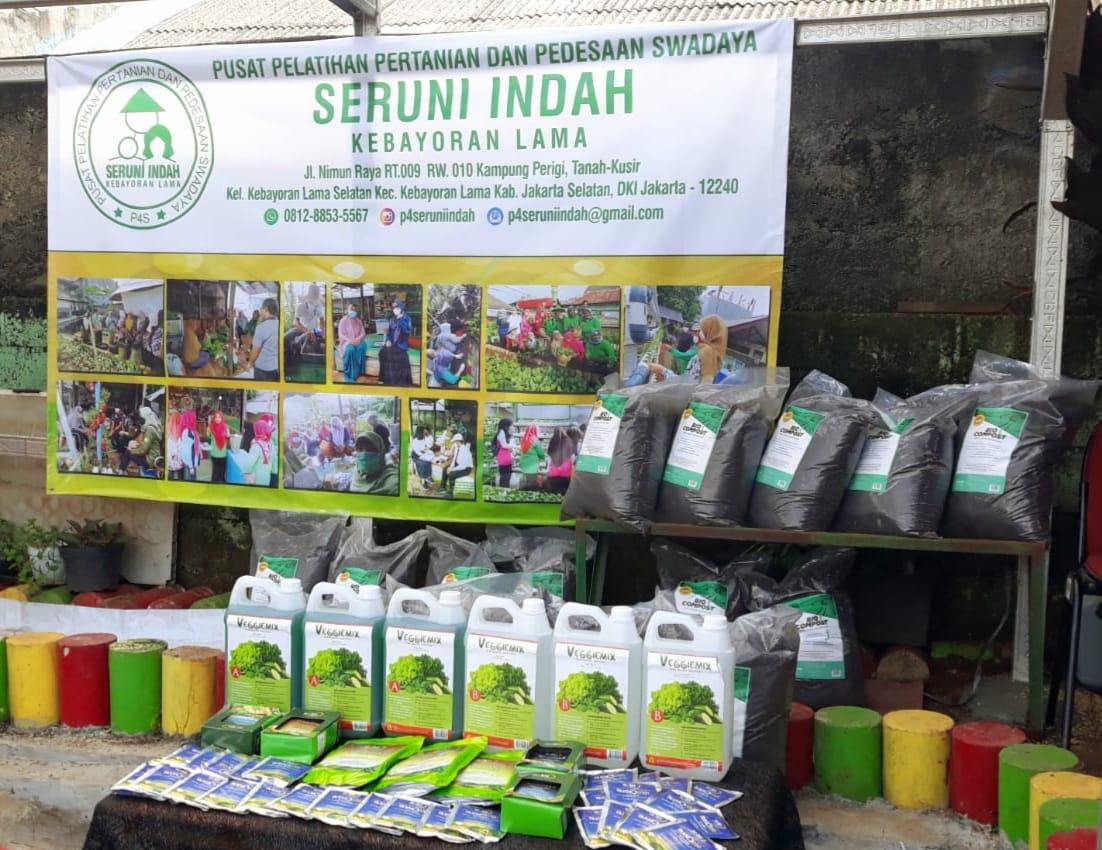
In 2017, the city of Jakarta initiated a peri-urban farming program under its Urban Agriculture Program that aimed to achieve sustainable agricultural production, rural economic sustainability and long-term environmental sustainability (1,4). South Jakarta is one of the five administrative units that form Jakarta is a prosperous city with more than 2.2 mils. inhabitants. Industrial production as well as urbanization developed quickly in the city, leading to a steep increase in population. Meanwhile, the city experiences a reduction in agricultural land converted into settlements and industrial land, as well as soil deterioration. The city needs agricultural land for production and to establish food security. Furthermore, it needs to improve air pollution as well as oxygen provisioning. As such a solution had to be found (1). To implement the program a total of 12 communities in the South Kebayoran Lama subdistrict of South Jakarta participated in implementing and operating urban farms. One of these communities has been the Kebayoran Lama Selatan Urban Village managed by Seruni Indah Farmers Group (Kelompok Tani Seruni Indah) which is a very successful example of sustainable organic urban farming supporting more than 3500 residents. The engagement consisted in using vacant and private yard land for horticultural crops (vegetables, fruits and ornamental plants), spices, medicines, herbs etc. through hydroponic and conventional practices that could benefit the community and the general public. 15 gardens have been implemented with funding provided by the Indonesian government (3, 7).

Overview
Nature-based solution
- Community gardens and allotments
- Horticulture
Key challenges
- Climate action for adaptation, resilience and mitigation (SDG 13)
- Climate change mitigation
- Environmental quality
- Soil quality improvement
- Air quality improvement
- Green space, habitats and biodiversity (SDG 15)
- Green space creation and/or management
- Sustainable consumption and production (SDG 12)
- Sustainable consumption
- Sustainable production
Focus
Project objectives
Implementation activities
Climate-focused activities
Climate change mitigation:
- Sustainable agriculture practices to reduce energy use or carbon emissions
- Raise public awareness of behaviours, lifestyle and cultural changes with mitigation potential
Main beneficiaries
- Local government/Municipality
- Citizens or community groups
- Food producers and cultivators (i.e. farmers, gardeners)
Governance
Management set-up
- Co-governance with government and non-government actors
Type of initiating organisation
- National government
- Citizens or community group
Participatory approaches/ community involvement
- Joint implementation (e.g. tree planting)
- Co-management/Joint management
Details on the roles of the organisations involved in the project
Project implemented in response to ...
Financing
Total cost
Source(s) of funding
- Public national budget
Type of funding
- Earmarked public budget
Non-financial contribution
- Provision of land
- Provision of labour
- Provision of expertise
- Provision of other services
- Public authorities (e.g. land, utility services)
- Citizens (e.g. volunteering)
Impacts and Monitoring
Environmental impacts
- Climate change
- Enhanced carbon sequestration
- Environmental quality
- Improved air quality
- Green space and habitat
- Increased green space area
- Increased number of species present
Economic impacts
- Increase in agricultural production (for profit or not)
- Generation of income from NBS
Socio-cultural impacts
- Social justice and cohesion
- Increased access to healthy/affordable food
- Education
- Increased knowledge of locals about local nature
Type of reported impacts
Presence of formal monitoring system
Presence of indicators used in reporting
Presence of monitoring/ evaluation reports
Availability of a web-based monitoring tool
References
2. The Jakarta Post (2020), Urban Farming a Solution to Food Security Issues during Pandemic, available at Source link (accessed 20-2-2023)
3. Berita Jakarta (2019), Tens Kilograms of Vegetables Harvested in Kebayoran Lama Selatan, available at Source link (accessed 20-2-2023)
4. Tabloid Sinartani (2020), Urban Farming Sukses, Hasil Panen Diminati Warga, available at Source link (accessed 20-2-2023)
5. SiPetaniDKI (2019), KWT Seruni Indah, available at Source link (accessed 20-2-2023)
6. Berita Jakarta (2020), Yogyakarta DPRD Praises Urban Farming in Jakarta, available at Source link (accessed 20-2-2023)
7. Jagad Tani (2029), Mengubah Tempat Sampah jadi Kebun, available at Source link (accessed 20-2-2023)
8. HumanitarianOpen Street Team, SiPetaniDKI: Urban Farming as a solution for climate change adaptation in Jakarta, available at Source link (accessed 22-03-2023)