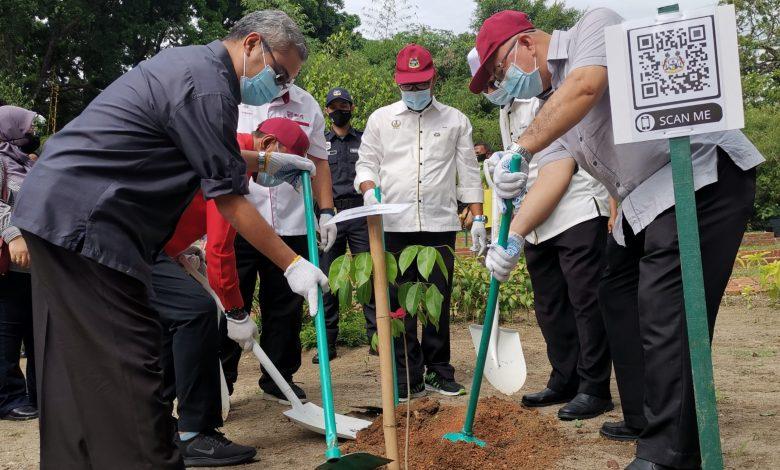
Since 2012, the Municipality of Ipoh continued the revitalization and rehabilitation of the D.R. Seenivasagam Recreational Park (TDRS) under the Malaysian National Urbanisation Policy, which suggests that for every 1,000 inhabitants, there should be public green open spaces of 2 ha. Through this intervention, the Ipoh municipality tried to address several sustainability challenges, which are usually a result of the lack of green open spaces. Some of the challenges addressed were the urban heat island effect, soil erosion resulting from improper drainage, and noise pollution. Ultimately, the municipality aimed to provide a convenient setting for a variety of leisure and recreational activities in addition to enhancing the civic values of the community. The intervention consisted of several tree-planting actions organized by the Ipoh Council in collaboration with the Perak Government (a Malaysian state that has its capital in Ipoh). D.R. Seenivasagam Recreational Park was built in the 1950s and is one of the largest urban parks in Ipoh. It has become a favourite among locals as well as an example of good practice for integrating green open spaces in addressing sustainability challenges over the years. Located in the vicinity of the Kinta River, during the early days of its opening, it was a mini botanical garden which eventually transitioned to a full-scale park, one of not too many in Ipoh. The park also includes a lake with wooden bridges that contributes to the diversity and habitat of the place. The DR Park, as it is known to the locals, has entertained many families for more than 25 years, starting as a mini-theme park during its formative years, much to the delight of many children. To date, the park has remained a popular spot with abundant greenery and attractions, an oasis within Ipoh’s city life. (1,2,3,4)

Overview
Nature-based solution
- Blue infrastructure
- Rivers/streams/canals/estuaries
- Parks and urban forests
- Large urban parks or forests
Key challenges
- Climate action for adaptation, resilience and mitigation (SDG 13)
- Climate change adaptation
- Climate change mitigation
- Environmental quality
- Noise reduction
- Green space, habitats and biodiversity (SDG 15)
- Habitat and biodiversity conservation
- Water management (SDG 6)
- Stormwater and rainfall management and storage
- Health and well-being (SDG 3)
- Creation of opportunities for recreation
Focus
Project objectives
Implementation activities
Climate-focused activities
Climate change adaptation:
- Implement measures that prevent/manage desertification, soil erosion and landslides
- Increase or improve urban vegetation cover to help reduce outdoor temperature
Biodiversity conservation or restoration-focused activities
Biodiversity conservation:
- Protect and enhance urban habitats
- Preserve and strengthen existing habitats and ecosystems
- Protect species
- Undertake specific measures to protect species
- Means for conservation governance
- Protect and apply traditional knowledge and conservation practices
Main beneficiaries
- Local government/Municipality
- Citizens or community groups
- Young people and children
Governance
Management set-up
- Government-led
Type of initiating organisation
- Regional government
- Local government/municipality
Participatory approaches/ community involvement
- Unknown
Details on the roles of the organisations involved in the project
Project implemented in response to ...
Financing
Total cost
Source(s) of funding
- Public regional budget
Type of funding
- Direct funding (grants, subsidies, or self-financed projects by private entities)
Non-financial contribution
Impacts and Monitoring
Environmental impacts
- Climate change
- Lowered local temperature
- Enhanced carbon sequestration
- Environmental quality
- Reduced noise exposure
- Green space and habitat
- Increased green space area
- Increased number of species present
Economic impacts
- Increased property prices
- Attraction of business and investment
Socio-cultural impacts
- Social justice and cohesion
- Increased opportunities for social interaction
- Health and wellbeing
- Improved physical health
- Improved mental health
- Gain in activities for recreation and exercise
Type of reported impacts
Presence of formal monitoring system
Presence of indicators used in reporting
Presence of monitoring/ evaluation reports
Availability of a web-based monitoring tool
References
2. Ipoh Echo (2021), D.R. Seenivasagam Recreational Park – A Major Attraction of Ipoh, available at Source link (accessed 13-2-2023)
3. The Star (2021), Perak moves to reduce urban heat, available at Source link (accessed 31-03-2023)
4. Edge Prop (2019), Perak govt to plant 2,590 trees to reduce urban heat, available at Source link (accessed 31-03-2023)
5. Federal Department of Town and Country Planning (no date), Open Spaces in Urban Malaysia, available at Source link (accessed 31-03-2023)
6. Rabiah Hj. Ahmad (2012), Urban Green Space Feature Assessment in Ipoh City Using GIS Technique, available at Source link (accessed 31-03-2023)
7. IpohEcho (2021), Reduce Urban Heat via Tree-Planting and Energy Efficiency, available at Source link (accessed 31-03-2023)