

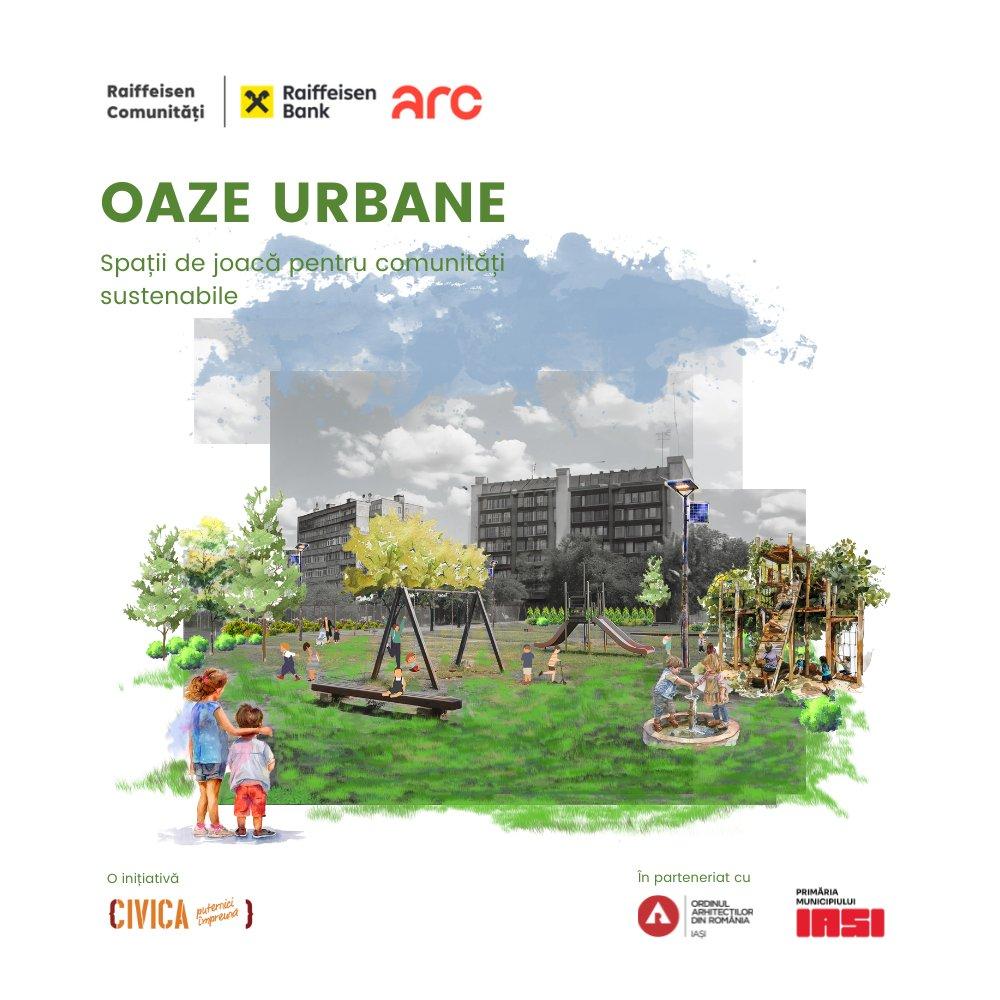
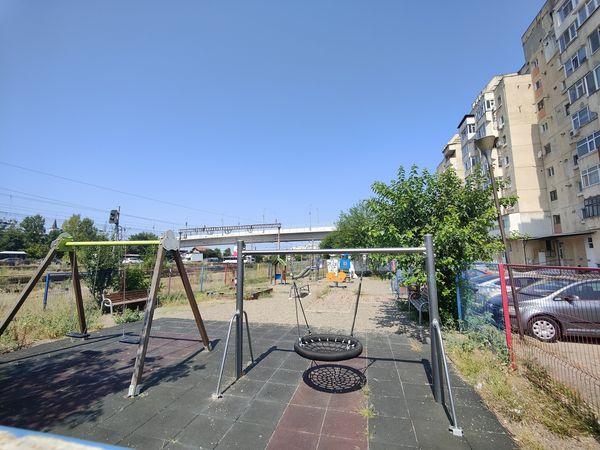
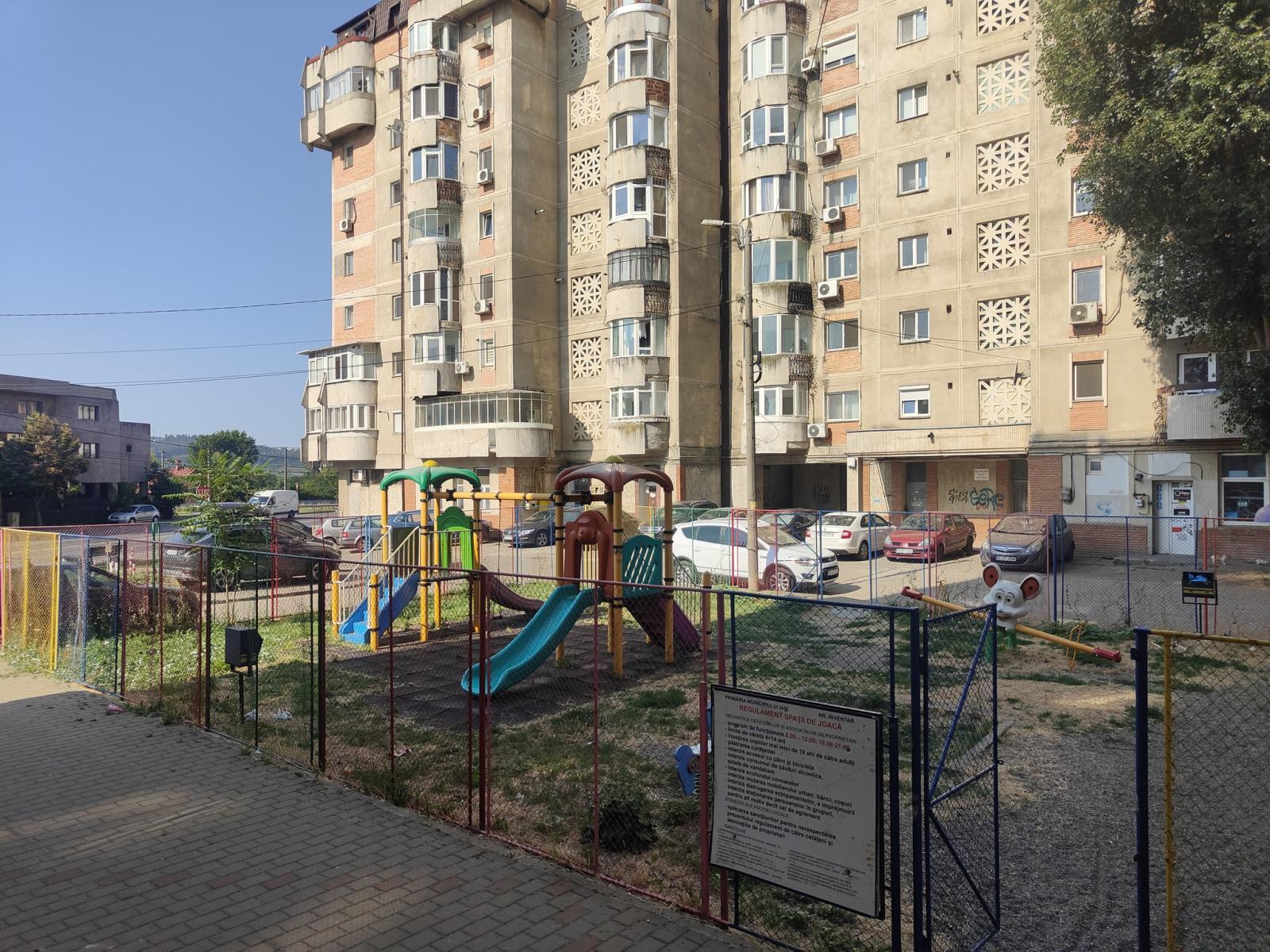
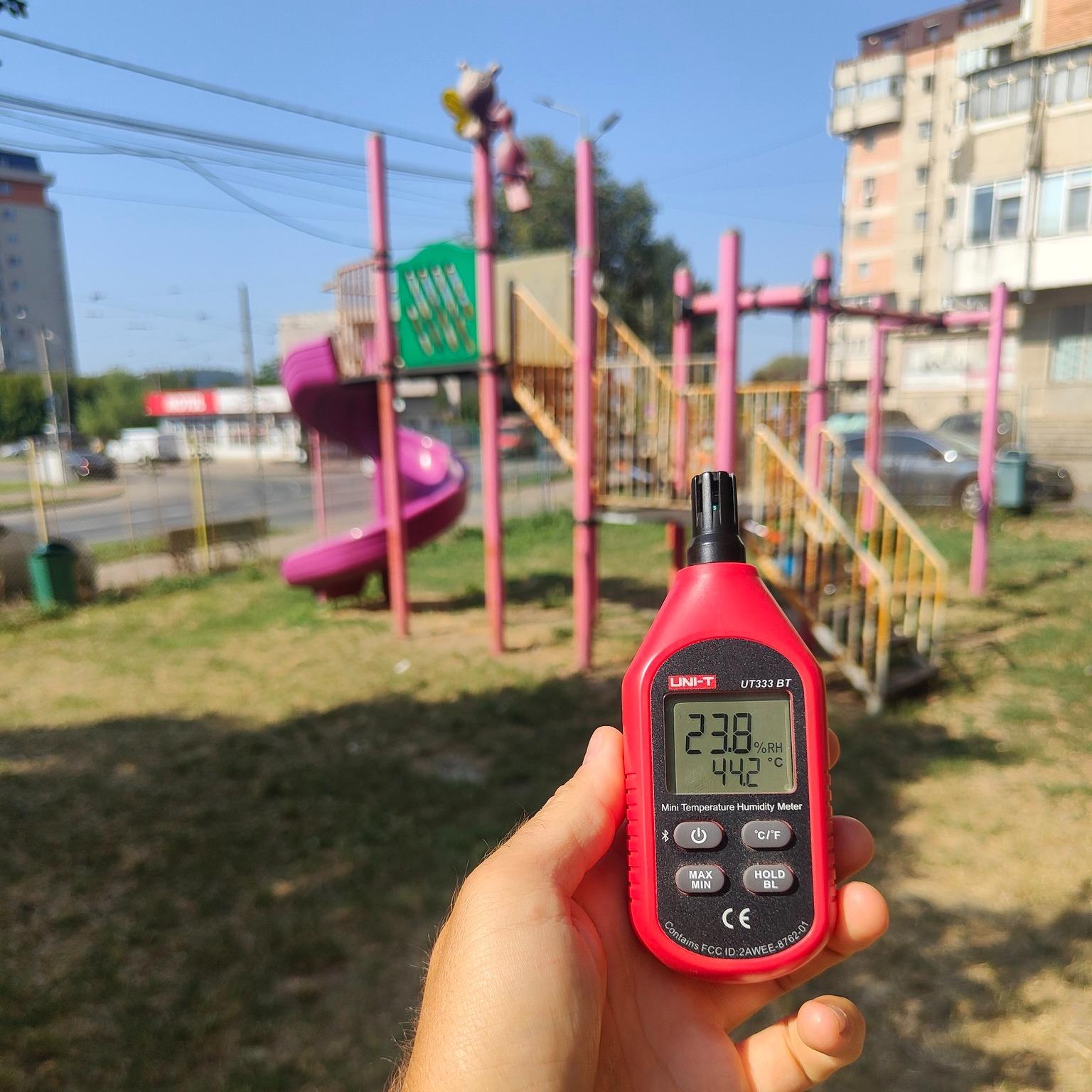
The Urban Oasis Playgrounds project focuses on creating a guide for green regeneration of playgrounds located all over Iasi by using natural climate solutions, with the potential for wider application beyond the city(1 to 6). The project's primary goal is to tackle pollution in playgrounds and address the overall lack of green spaces for children (1). This initiative is led by the NGO Civica in collaboration with the Municipality of Iași and the Architects Association in Iași (OAR) (1). The project secured €50,000 in funding after winning a competition organized by Raiffeisen Comunități, with support from the NGO "Asociația pentru Relații Comunitare" (2 & 3). In addition to pollution, the project seeks to address other critical issues, such as the heat island effect and the proximity of playgrounds to risk-prone areas (1). The guide will be developed based on public consultations with Iași residents and a comprehensive study to tackle these concerns (1 to 7). Currently, the first phase of the project is underway, involving assessments of various factors in playgrounds, including existing vegetation, shading, surface quality, infrastructure conditions, and pollution risks (4). These aspects are also reflected in a questionnaire distributed to the public, which gathers opinions on factors like cleanliness, noise exposure, thermal comfort, safety, and preferred natural green solutions (6). The initiative aims to raise awareness about climate change, actively engaging the community in the process (4). Once completed, the guide will be presented to the municipality with the goal of being adopted as a standard for future playground developments (1, 3, 4, 6). The first phase of the project will regenerate a playground by planting trees and native vegetation (3).
Overview
Nature-based solution
- Grey infrastructure featuring greens
- Green playgrounds and school grounds
Key challenges
- Climate action for adaptation, resilience and mitigation (SDG 13)
- Climate change adaptation
- Environmental quality
- Air quality improvement
- Noise reduction
- Green space, habitats and biodiversity (SDG 15)
- Green space creation and/or management
- Regeneration, land-use and urban development
- Promote natural styles of landscape design for urban development
- Health and well-being (SDG 3)
- Creation of opportunities for recreation
- Enabling opportunities for physical activity
- Improving physical health
- Inclusive and effective governance (SDG 16)
- Inclusive governance
- Social justice, cohesion and equity (SDG 10)
- Social justice and equity
- Environmental education
- Sense of community and community engagement
Principal problems in Functional Urban Area (FUA)
- Climate-Related Hazards
- Heat stress & Extreme temperatures
- Environmental Degradation
- Air pollution
- Land use and Socio-economic change
- Unequal availability and access to public green spaces
- Health, Well-being and Social cohesion
- Physical health harm (from pollution, wildfire, extreme temperature)
- Inadequate access to recreational opportunities
- Poor community engagement
- Insecurity in public spaces
Key priorities
Focus
Project objectives
Implementation activities
Climate-focused activities
Climate change adaptation:
- Increase urban vegetation cover to reduce urban heat island effect
- Reducing socio-economic vulnerability to climate impacts (e.g. awareness raising)
Specification of climate or environmentally vulnerable communities
Main beneficiaries
- Local government/Municipality
- Citizens or community groups
- Young people and children
Governance
Management set-up
- Led by non-government actors
Type of initiating organisation
- Non-government organisation/civil society
Participatory approaches/ community involvement
- Co-planning (e.g. stakeholder workshops, focus groups, participatory mapping)
- Deliberative decision-making processes (e.g., consensus building, deliberative polling)
- Taskforce groups
- Dissemination of information and education
- Consultation (e.g. workshop, surveys, community meetings, town halls)
- Citizen science
Details on the roles of the organisations involved in the project
Project implemented in response to ...
Type of enablers
Financing
Total cost
Source(s) of funding
- Private Foundation/Trust
Type of funding
- Direct funding (grants, subsidies, or self-financed projects by private entities)
Non-financial contribution
- Provision of land
- Provision of expertise
- Public authorities (e.g. land, utility services)
- Citizens (e.g. volunteering)
Impacts and Monitoring
Environmental impacts
- Climate change
- Lowered local temperature
- Expected lowered local temperature
- Environmental quality
- Improved air quality
- Expected improved air quality
- Reduced noise exposure
- Expected reduced noise exposure
- Green space and habitat
- Increased green space area
- Expected increased green space area
Economic impacts
- Unknown
Socio-cultural impacts
- Social justice and cohesion
- Improved social cohesion
- Expected improved social cohesion
- Improved liveability
- Expected improved liveability
- Improved access to urban green space
- Expected improved access to urban green space
- Increased visibility and opportunity for marginalised groups or indigenous peoples
- Expected increased visibility and opportunity for marginalised groups or indigenous peoples
- Increased opportunities for social interaction
- Expected increased opportunities for social interaction
- Increased involvement of locals in the management of green spaces
- Achieved increased involvement of locals in the management of green spaces
- Health and wellbeing
- Improved physical health
- Expected improved physical health
- Education
- Increased awareness of NBS and their benefits
- Achieved increased awareness of NBS and their benefits
Type of reported impacts
Presence of formal monitoring system
Presence of indicators used in reporting
Presence of monitoring/ evaluation reports
Availability of a web-based monitoring tool
Potential risks of implementation and trade-offs
References
 Information about this nature-based solution was collected as part of the Naturescapes project funded by the European Union under Grant Agreement No 101084341.