Last updated: October 2024
The Horpaz-Ezareni Park is an initiative driven by civil society, requesting the municipality of Miroslava to construct a natural park adjacent to Lake Ezareni. The aim is to protect its green spaces and aquatic bird species while addressing waste management in the area. The petition also called for more green spaces in line with European standards and sought to tackle the challenges of rapid urbanization in peri-urban areas. It collected hundreds of signatures and targeted an area of 20 hectares.
In response, the municipality agreed to the petition and initially proposed creating a park covering 4 hectares in 2022. This first plan was released to the public for consultation. However, the project has since evolved to encompass the original 20 hectares, plus an additional 2 hectares, with an estimated project cost of 11,000,000 euros and a timeline of 3 years for implementation.
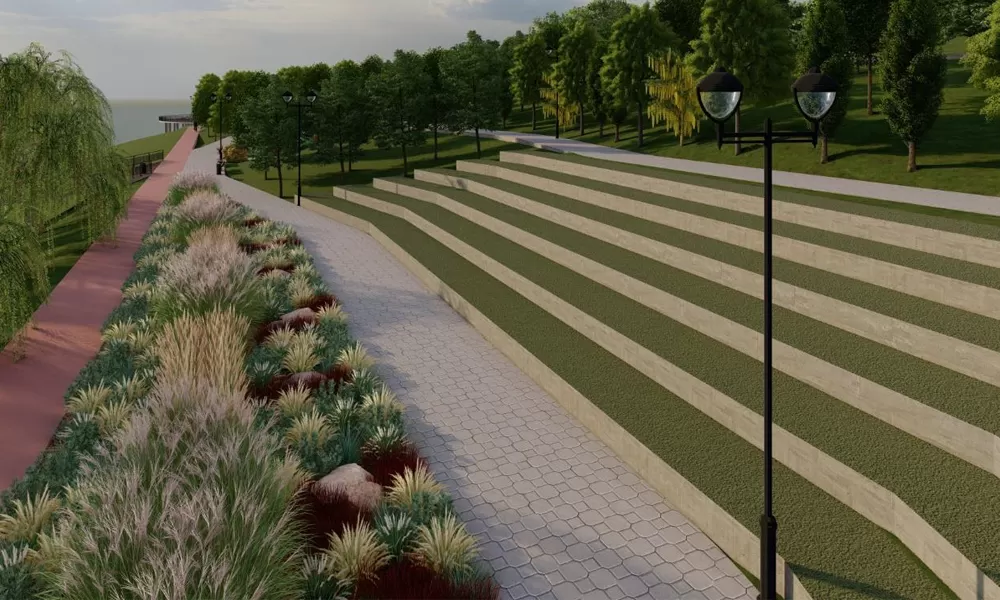
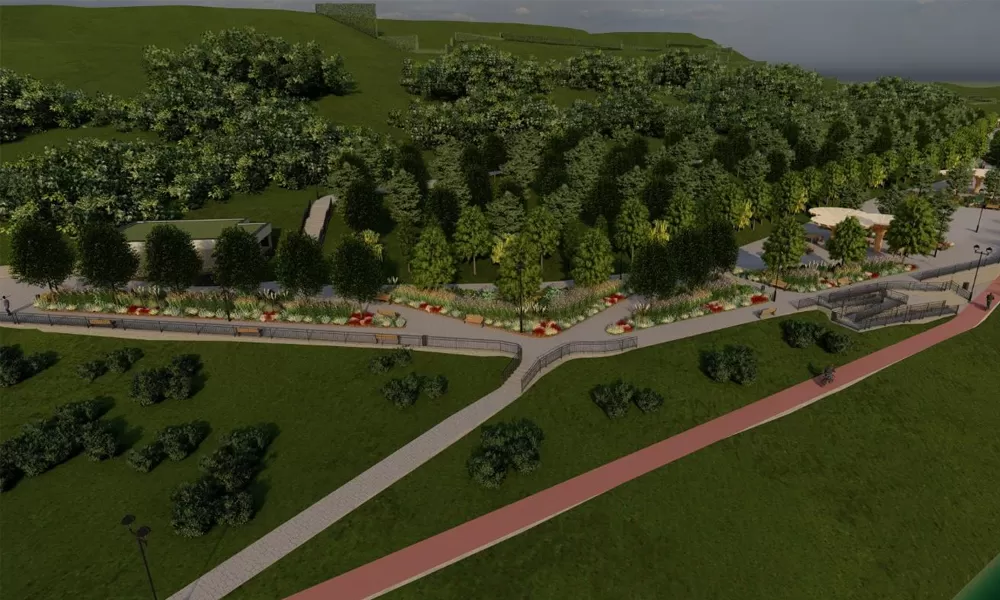
The park's design includes various facilities and amenities aimed at enhancing opportunities for recreation, exercise, and relaxation. Accessible paths for pedestrians and cyclists, as well as a parking lot, are also part of the plan. Additionally, two buildings are proposed for sanitary and administrative purposes, which would manage the projected installations of a lighting system, Wi-Fi, and surveillance cameras.
Environmentally, the project includes plans for managing the lake's banks to remove hydrophilic vegetation that could create an unhealthy environment, along with the construction of two bridges. The wilderness areas will be managed, and dendrological plants will be introduced to improve the ecosystem's quality. Overall, the project aims to increase and regenerate green spaces in the commune, enhancing the quality of life for residents and improving the area's aesthetic appeal. (1-8)
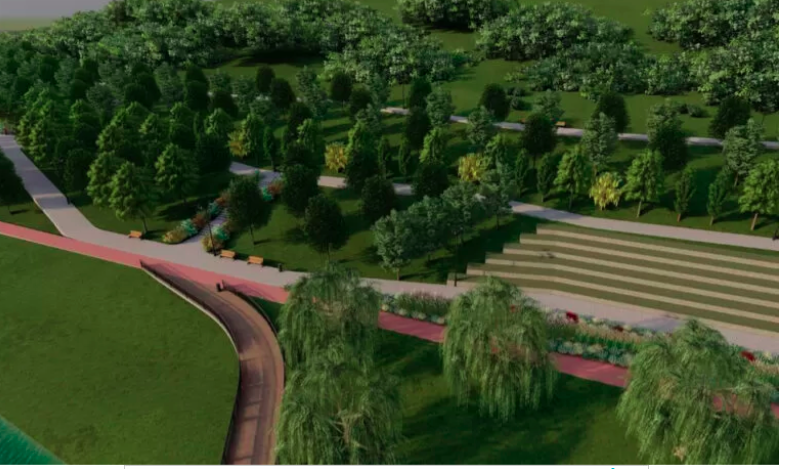
3D model of the design of the park
https://apix.ro/peste-10-milioane-euro-vor-fi-investiti-pentru-amenajarea-unui-parc-de-mari-dimensiuni-la-marginea-iasului/
Overview
Nature-based solution
- Blue infrastructure
- Riverbank/Lakeside greens
- Parks and urban forests
- Large urban parks or forests
- Green corridors and green belts
Key challenges
- Environmental quality
- Waste management
- Green space, habitats and biodiversity (SDG 15)
- Green space creation and/or management
- Habitat and biodiversity conservation
- Regeneration, land-use and urban development
- Promote natural styles of landscape design for urban development
- Water management (SDG 6)
- Improvements to water quality
- Cultural heritage and cultural diversity
- Preservation of natural heritage
- Health and well-being (SDG 3)
- Creation of opportunities for recreation
- Inclusive and effective governance (SDG 16)
- Inclusive governance
- Social justice, cohesion and equity (SDG 10)
- Social justice and equity
Principal problems in Functional Urban Area (FUA)
- Environmental Degradation
- Biodiversity loss
- Deforestation and forest degradation
- Land use and Socio-economic change
- Rapid urbanization
- Unequal availability and access to public green spaces
- Health, Well-being and Social cohesion
- Mental health issues (stress, anxiety)
- Inadequate access to recreational opportunities
Key priorities
Biodiversity (conservation and/or restoration), Social Justice and community
Focus
Creation of new green areas, Creation of green corridors (including connectivity between urban and rural ecosystems), Creation of large parks and urban and peri-urban forests, Ecological restoration of ecosystems, Restoration and protection of ecosystems (including water ecosystems), Protection of natural ecosystems, Habitat conservation, Transformation of previously derelict areas, Transformation of vacant land into green spaces, Improved governance of green or blue areas, Establishment of inclusive governance mechanisms involving local communities, Monitoring and maintenance of habitats and/or biodiversity, Clearing out invasive alien species and allow natural regeneration maintaining the functionality the ecosystem
Project objectives
To address the demands of civil society regarding the necessary increase in green space per inhabitant and natural protection through public consultations.
To protect aquatic bird species that may inhabit or migrate through the specified area by establishing the park as a green corridor.
To manage and reduce waste being discarded in the area.
To fulfill the relaxation, cultural, and educational needs of citizens.
To manage the water along the banks of the lake and enhance its quality.
To improve the overall quality of life for the citizens of the commune and reduce the urbanization process that impacts their access to green spaces.
To enhance the aesthetic image of the commune.
To increase the quality of the natural ecosystem in the implementation area by addressing habitat degradation and enhancing habitat protection for local species (including invasive species removal)
To regenerate unused and abandoned land. (1-8)
Implementation activities
1. Designing a natural park and starting the implementation processes in the green area of concern to address the necessities and demands of civil society (4 -8).
2. Planning to introduce dendrological species and to manage the existing wilderness of the area to improve the quality of the natural ecosystem, and remove hydrophilic vegetation that could create an unhealthy environment (4- 8).
3. Design the park to include infrastructure for better accessibility (walking paths, bike trails, a parking lot), playgrounds, a multifunctional area for exercising purposes, stands, benches, and artificial fountains (4 - 6 & 8).
4. Unclogging the shore of the lake to improve its water quality and constructing to bridges on it (6 & 8).
5. Include a rainwater drainage system to enhance the infrastructure of the park (6).
6. Construct two buildings, for sanitary and administrative purposes respectively, to manage the park, its infrastucture and facilities (6 & 8).
7. Publicly disclose the first design of the park for public consultation (4).
Biodiversity conservation or restoration-focused activities
Biodiversity conservation:
- Protect and enhance urban habitats
- Preserve and strengthen existing habitats and ecosystems
- Preserve and strengthen habitat connectivity
- Protect species
- Undertake specific measures to protect species
- Control and clean invasive alien species
- Means for conservation governance
- Raise public awareness
- Public engagement
Main beneficiaries
- Citizens or community groups
Governance
Management set-up
- Led by non-government actors
Type of initiating organisation
- Non-government organisation/civil society
Participatory approaches/ community involvement
- Co-planning (e.g. stakeholder workshops, focus groups, participatory mapping)
- Deliberative decision-making processes (e.g., consensus building, deliberative polling)
- Consultation (e.g. workshop, surveys, community meetings, town halls)
Details on the roles of the organisations involved in the project
The civil society group "Horpaz Asociația Civică" started a petition and send a request to the municipality of the commune of Miroslava to protect the green area next to the lake by creating a park (1 -4). An external company prepared a feasibiliy study to implement the park for the municipality (6 - 8). The municipality disclosed the project for public consultation, approved the project and is looking for funding to implement it (4 - 8). Diverse citizens signed the petition and had to possibility to participate in the consultation (1 - 4).
Project implemented in response to ...
... an EU policy or strategy?
Yes
(European standard of surface of green space per capita (1 - 3). )
... a national policy or strategy?
Unknown
... a local policy or strategy?
Yes
(Strategia de dezvoltare locală 2021-2027 Miroslava (Strategy of Local Development of Miroslava) (8). )
Type of enablers
NGOs/Community groups driving the implementation, Governance innovations (such as public private partnerships)
Financing
Total cost
More than €4,000,000
Source(s) of funding
- Public local authority budget
Non-financial contribution
Type of non-financial contribution
Who provided the non-financial contribution?
- Citizens (e.g. volunteering)
Impacts and Monitoring
Environmental impacts
- Water management and blue areas
- Improved water quality
- Expected improved water quality
- Green space and habitat
- Increase in protected green space areas
- Expected increase in protected green space areas
- Increased conservation or restoration of ecosystems
- Expected increased conservation or restoration of ecosystems
- Increased ecological connectivity across regeneration sites and scales
- Expected increased ecological connectivity across regeneration sites and scales
- Reduced biodiversity loss
- Expected reduced biodiversity loss
- Increased number of species present
- Expected increased number of species present
Socio-cultural impacts
- Social justice and cohesion
- Improved liveability
- Expected improved liveability
- Improved access to urban green space
- Expected improved access to urban green space
- Increased involvement of locals in the management of green spaces
- Achieved increased involvement of locals in the management of green spaces
- Health and wellbeing
- Gain in activities for recreation and exercise
- Expected gain in activities for recreation and exercise
- Cultural heritage and sense of place
- Protection of natural heritage
- Expected protection of natural heritage
- Increased appreciation for natural spaces
- Achieved increased appreciation for natural spaces
Presence of formal monitoring system
Yes
Presence of indicators used in reporting
Yes
Presence of monitoring/ evaluation reports
No evidence in public records
Availability of a web-based monitoring tool
No evidence in public records
Potential risks of implementation and trade-offs
Unknown
References
1.
Elena Mihat (2021). Demers civic_ Sute de oameni solicită înființarea Parcului Horpaz - Ezăreni ». APIX , Accessed on August 30, 2024, [
Source link];
2.
Horpaz Asociația Civică (n.d.). Parcul Horpaz-Ezareni, petite publice pentru infiintare. PetiteOnline, Accessed on August 30, 2024, [
Source link];
3.
CeRe (2022). Vrem ca autoritățile publice să ne audă, iar Parcul Horpaz-Ezăreni să devină realitate _ CeRe. Accessed on August 30, 2024, [
Source link];
4.
Alex Andrei (2023). VIDEO_FOTO Cum va arăta parcul din Horpaz_ proiectul este lansat în dezbatere publică ». APIX, Accessed on August 30, 2024, [
Source link];
5.
George Matei (2024). Peste 10 milioane euro vor fi investiti pentru amenajarea unui parc de mari dimensiuni la marginea Iasului. APIX , Accessed on August 30, 2024, [
Source link];
6.
S.C. KALANS CONCEPT S.R.L. (2023). Parc-Horpaz_Memoriu-Tehnic-General _. Primaria Comunei Miroslava , Accessed on August 30, 2024, [
Source link];
7.
Primaria Comunei Miroslava (2023 ). Proiectul de hotorare studului de fezabilitate n.5/2023. Accessed on August 30, 2024, [
Source link];
8.
Primaria Comuna Miroslava (2024). Hotorarea pentru aprobarea studiu de fezabulitate si a indicatorilor tehnico-economici Parc de Agrement si Spatiu Verde in Satul Horpaz . Accessed on August 30, 2024, [
Source link];
9.
Nastas Sabina (2023 ). Valoarea actualizată a parcului de agrement din zona lacului Ezăreni din comuna Miroslava este de aproximativ 6 milioane de euro. Moldova Invest , Accessed on September 2, 2024, [
Source link];
10.
Populatia Ro (n.d.). Populație Horpaz, Comuna Miroslava, Județul Iași - Populația.ro. Accessed on September 2, 2024, [
Source link];
11.
Populatia Ro (n.d.). Populația Comunei Miroslava, Jud. Iași - 2023 _ Populatia.ro. Accessed on September 2, 2024, [
Source link];
12.
Harta Blocuri (n.d.). Hartă blocuri Horpaz. Accessed on September 2, 2024, [
Source link];
3D Model of the desing of the park
https://apix.ro/peste-10-milioane-euro-vor-fi-investiti-pentru-amenajarea-unui-parc-de-mari-dimensiuni-la-marginea-iasului/
Parc1
https://apix.ro/peste-10-milioane-euro-vor-fi-investiti-pentru-amenajarea-unui-parc-de-mari-dimensiuni-la-marginea-iasului/
Parc1
https://apix.ro/peste-10-milioane-euro-vor-fi-investiti-pentru-amenajarea-unui-parc-de-mari-dimensiuni-la-marginea-iasului/

Information about this nature-based solution was collected as part of the
Naturescapes project funded by the European Union under Grant Agreement No 101084341.