

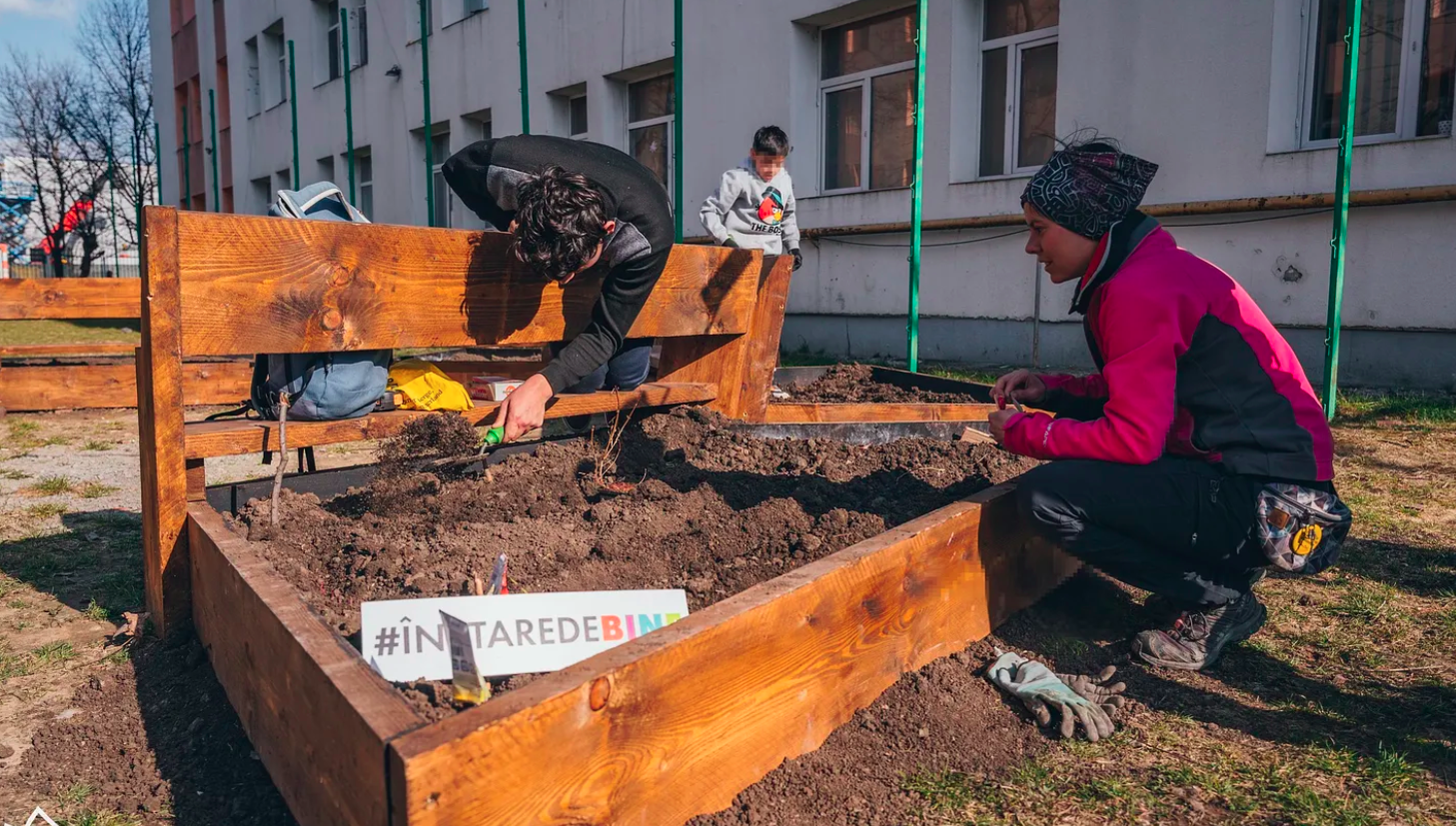
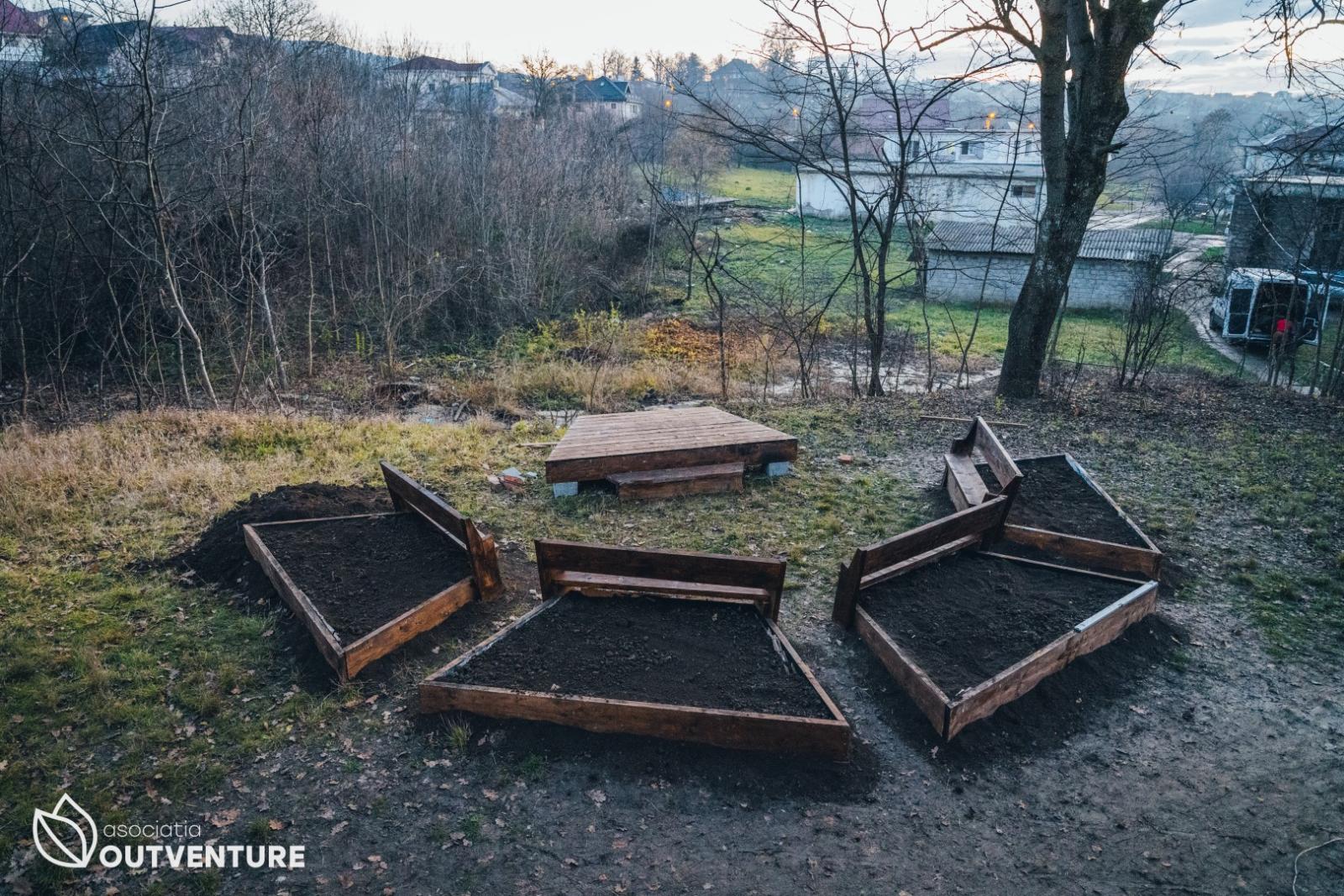
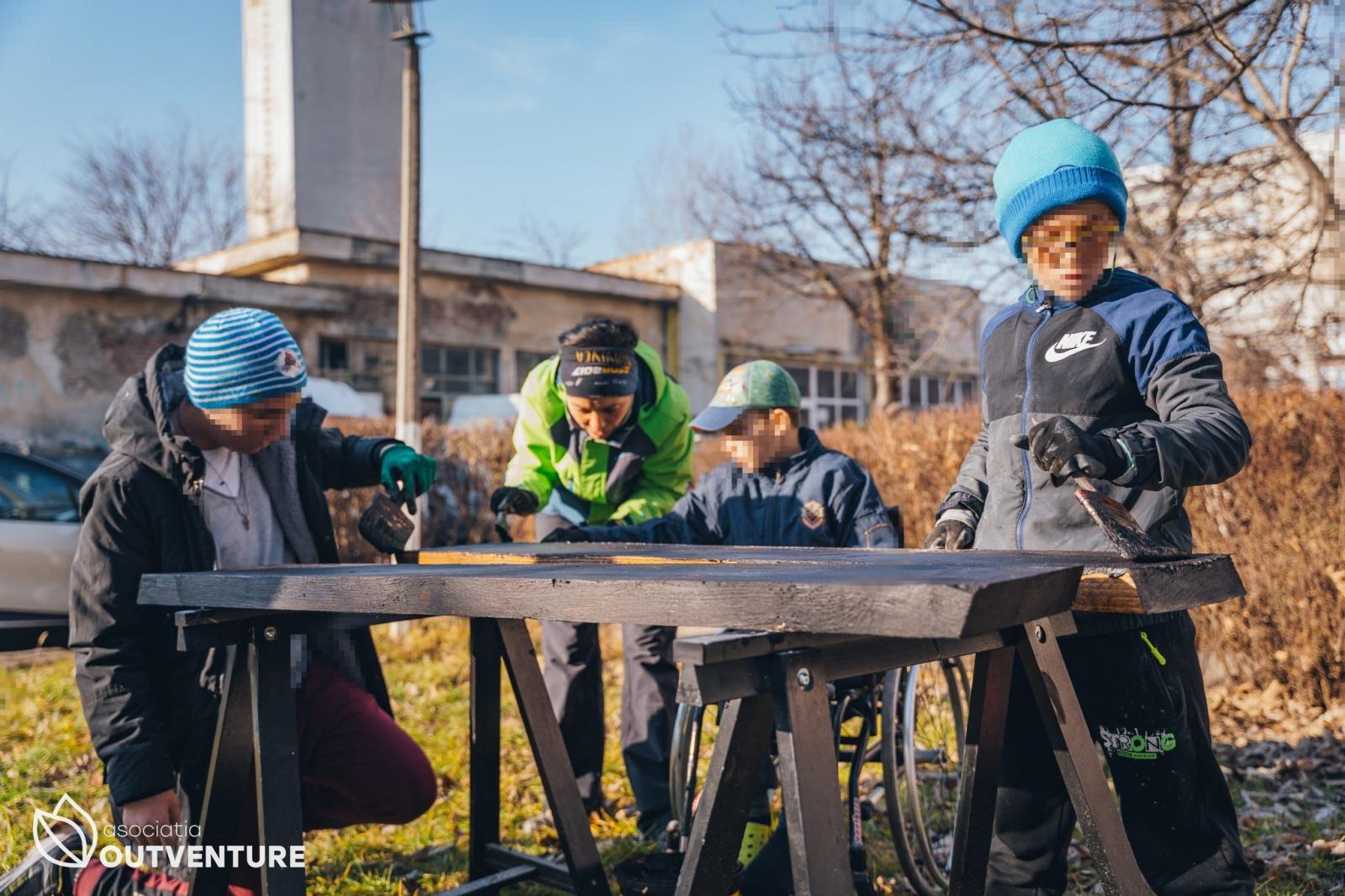
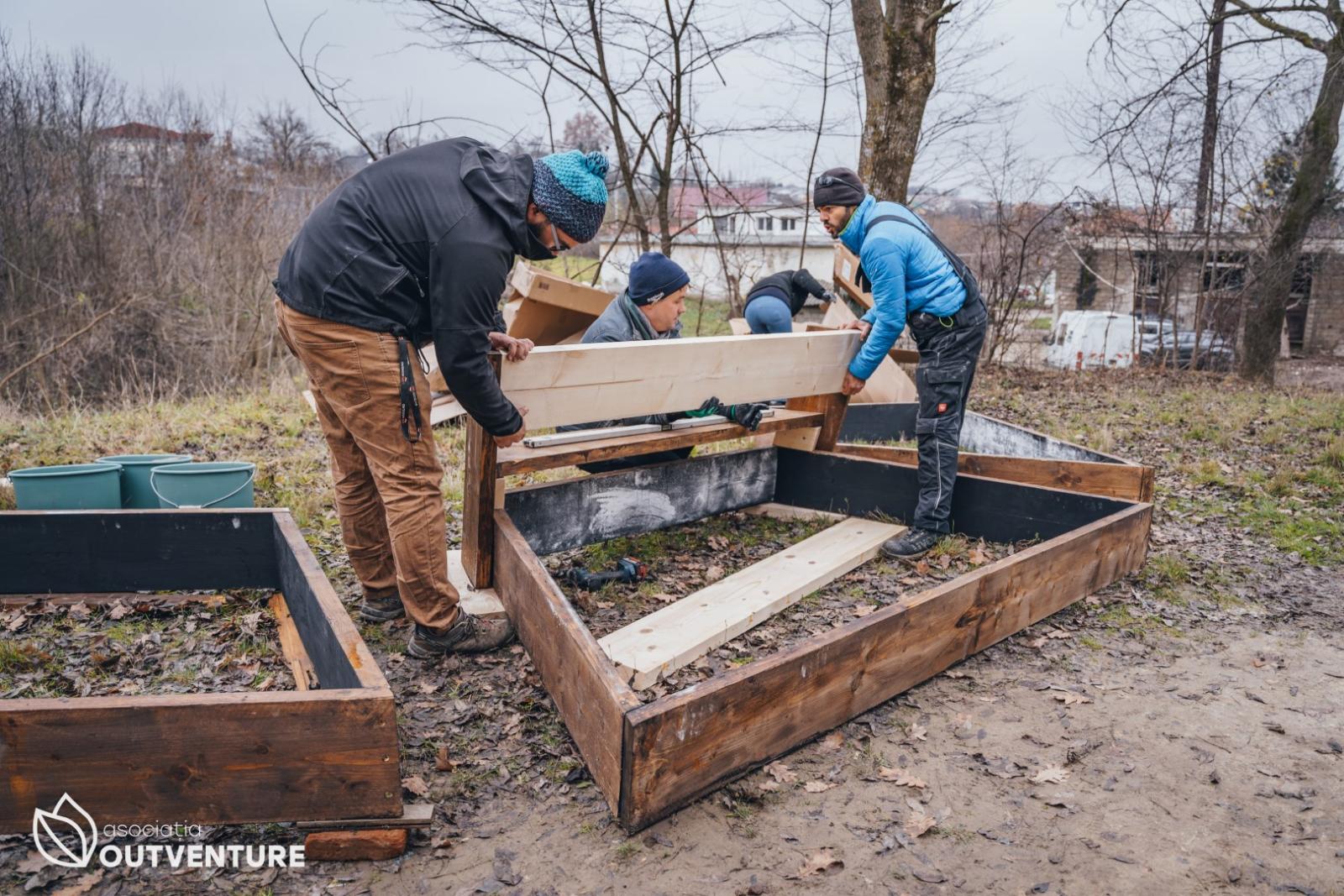
The initiative involved the creation of three educational spaces in social service centers for children (Bucium, Ion Holban, Bogdanesti) in Iasi and its peri-urban area that included urban gardens, the development of green spaces, and facilities for sports activities. In the urban gardens, raised and arranged in a circular design, various orchards and food-producing plants were planted, along with bushes and perennial plants introduced in the new green spaces. Additionally, benches, workshop stations, a volleyball court, and a ping-pong table were constructed alongside the green areas. The initiative was implemented by the NGO "Asociatia Outventure" and financed through the "In stare de Bine" program, funded by Kaufland Romania and managed by the Fundatia Pentru Dezvoltarea Societatii Civile (Foundation for the Development of Civil Society). The project also included training for permanent volunteers involved in the initiative and conducted 16 thematic workshops on healthy living and ecological behaviors. The primary target group for the initiative was children and young people at risk of social exclusion, whose circumstances worsened after the COVID-19 pandemic. The objective was to provide them with "an alternative space to develop their personalities, as well as the necessary tools to adopt a healthy lifestyle in harmony with the surrounding environment." The project had a budget of 22,127 euros and was implemented over the span of six months. (1-5)
Overview
Nature-based solution
- Community gardens and allotments
- Community gardens
- Horticulture
Key challenges
- Green space, habitats and biodiversity (SDG 15)
- Green space creation and/or management
- Health and well-being (SDG 3)
- Creation of opportunities for recreation
- Improving mental health
- Inclusive and effective governance (SDG 16)
- Inclusive governance
- Social justice, cohesion and equity (SDG 10)
- Social justice and equity
- Social interaction
- Environmental education
- Sense of community and community engagement
- Sustainable consumption and production (SDG 12)
- Sustainable consumption
- Sustainable production
Principal problems in Functional Urban Area (FUA)
- Land use and Socio-economic change
- Limited economic opportunities and local livelihoods
- Unequal availability and access to public green spaces
- Health, Well-being and Social cohesion
- Mental health issues (stress, anxiety)
- Inadequate access to recreational opportunities
- Disconnection from nature
- Social fragmentation and isolation
Key priorities
Focus
Project objectives
Implementation activities
Main beneficiaries
- Citizens or community groups
- Young people and children
Governance
Management set-up
- Led by non-government actors
Type of initiating organisation
- Non-government organisation/civil society
Participatory approaches/ community involvement
- Co-planning (e.g. stakeholder workshops, focus groups, participatory mapping)
- Dissemination of information and education
- Joint implementation (e.g. tree planting)
- Co-management/Joint management
Details on the roles of the organisations involved in the project
Project implemented in response to ...
Type of enablers
Financing
Total cost
Source(s) of funding
- Corporate investment
- Funds provided by non-governmental organization (NGO)
Type of funding
- Direct funding (grants, subsidies, or self-financed projects by private entities)
Non-financial contribution
- Provision of labour
- Citizens (e.g. volunteering)
Impacts and Monitoring
Environmental impacts
- Green space and habitat
- Increased green space area
- Achieved increased green space area
Economic impacts
- Increase in agricultural production (for profit or not)
- Expected increase in agricultural production (for profit or not)
Socio-cultural impacts
- Social justice and cohesion
- Improved social cohesion
- Achieved improved social cohesion
- Improved access to urban green space
- Achieved improved access to urban green space
- Increased visibility and opportunity for marginalised groups or indigenous peoples
- Achieved increased visibility and opportunity for marginalised groups or indigenous peoples
- Increased opportunities for social interaction
- Achieved increased opportunities for social interaction
- Increased involvement of locals in the management of green spaces
- Achieved increased involvement of locals in the management of green spaces
- Increased access to healthy/affordable food
- Expected increased access to healthy/affordable food
- Health and wellbeing
- Gain in activities for recreation and exercise
- Achieved gain in activities for recreation and exercise
- Improved mental health
- Achieved improved mental health
- Supporting ill-health communities facing loneliness, anxitey or depression
- Achieved supporting ill-health communities facing loneliness, anxitey or depression
- Education
- Increased knowledge of locals about local nature
- Achieved increased knowledge of locals about local nature
Type of reported impacts
Presence of formal monitoring system
Presence of indicators used in reporting
Presence of monitoring/ evaluation reports
Availability of a web-based monitoring tool
Potential risks of implementation and trade-offs
References
 Information about this nature-based solution was collected as part of the Naturescapes project funded by the European Union under Grant Agreement No 101084341.