

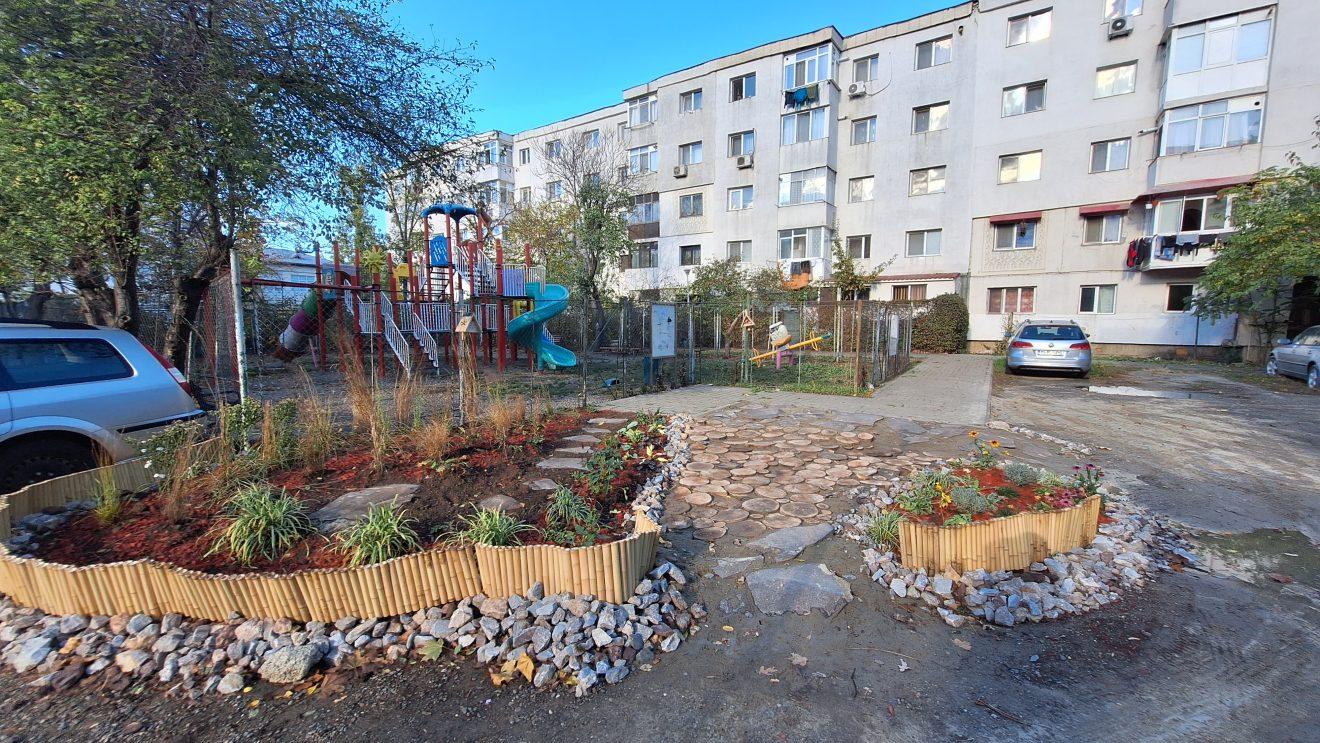
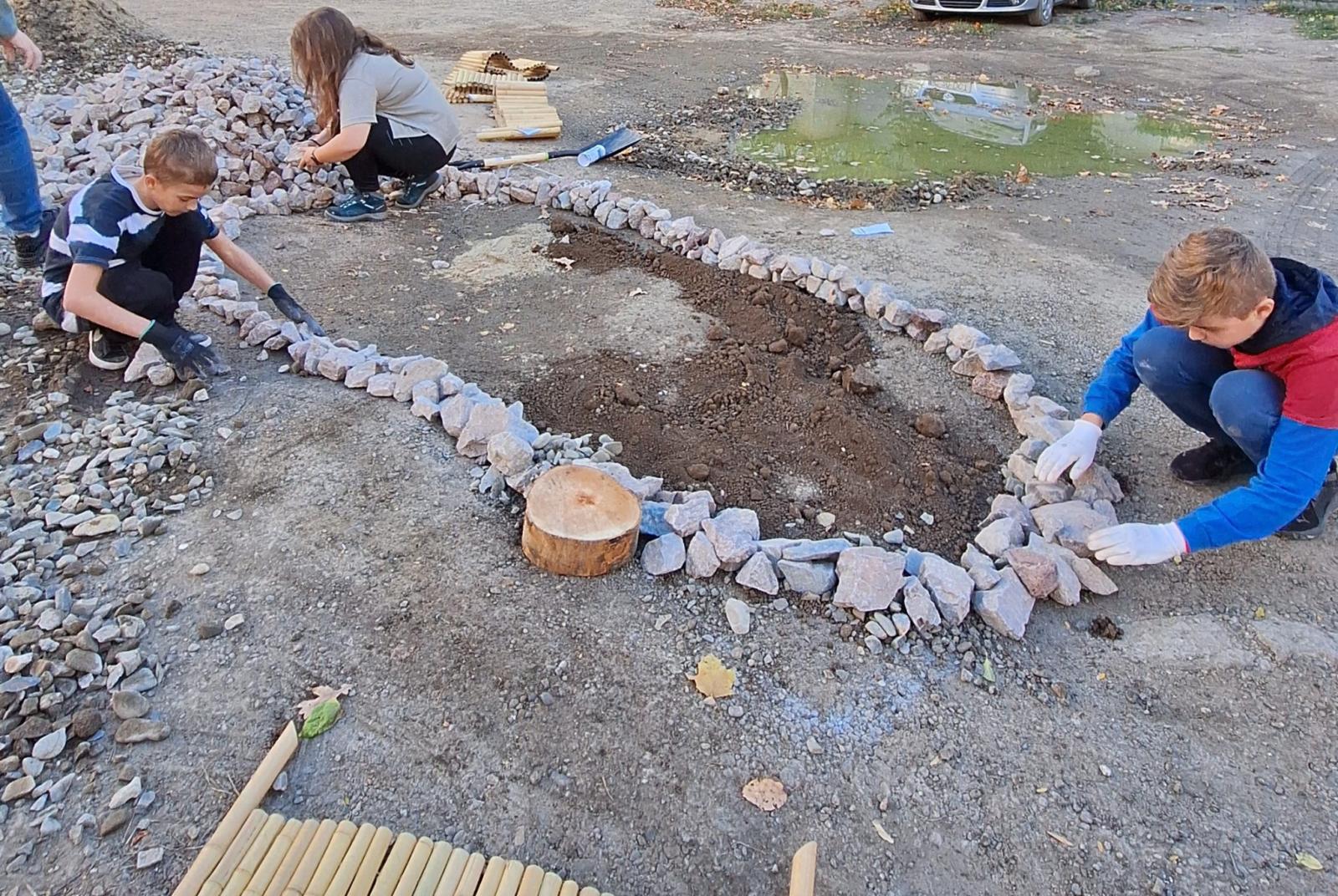
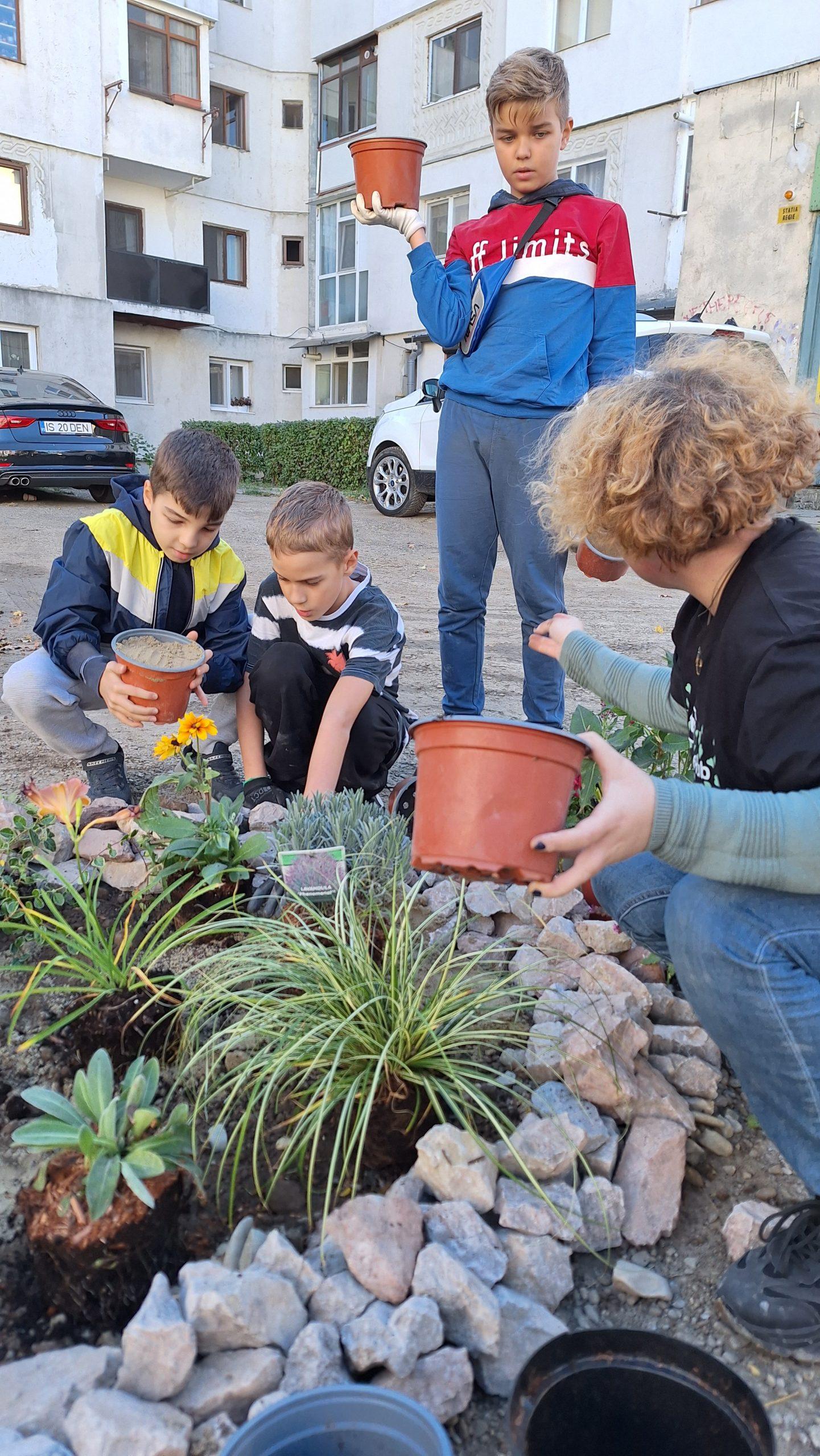
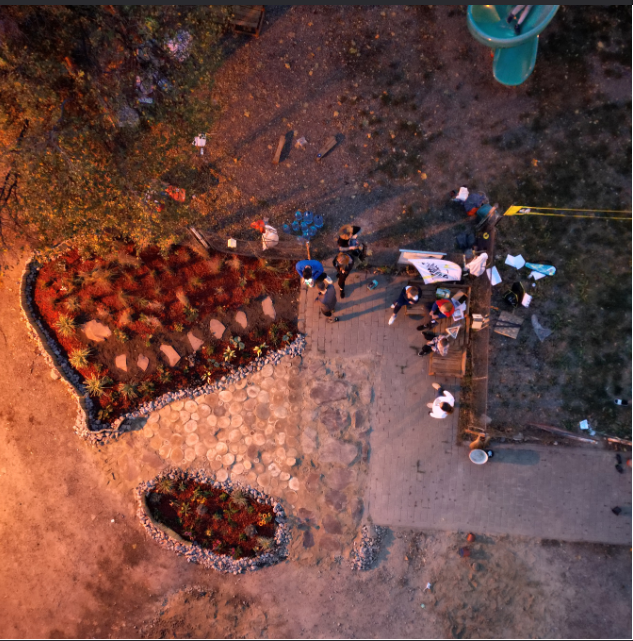
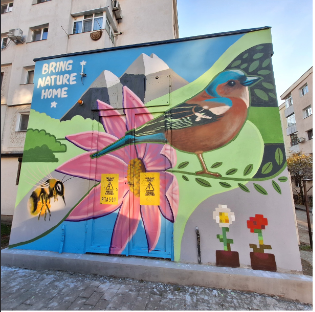
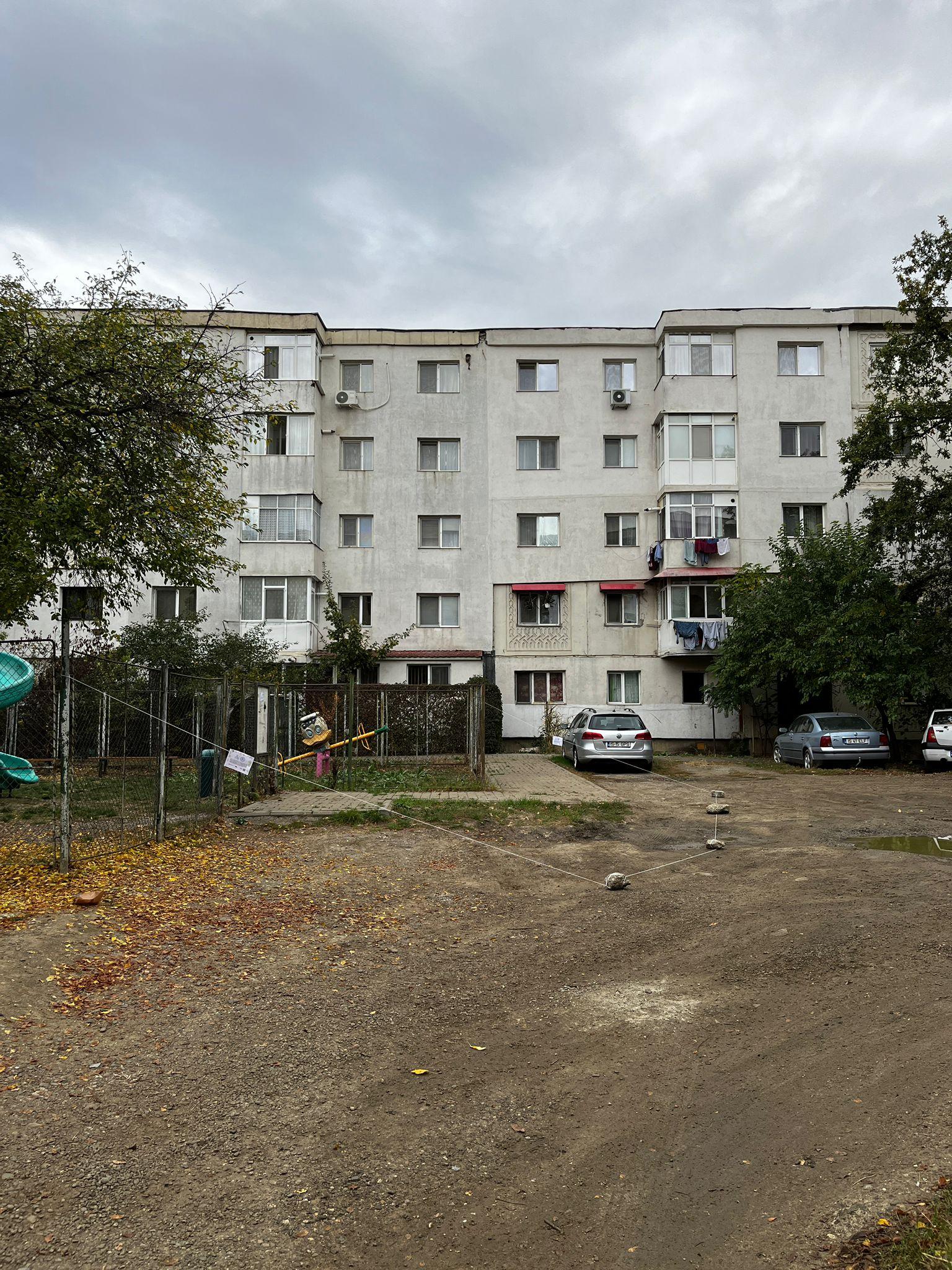
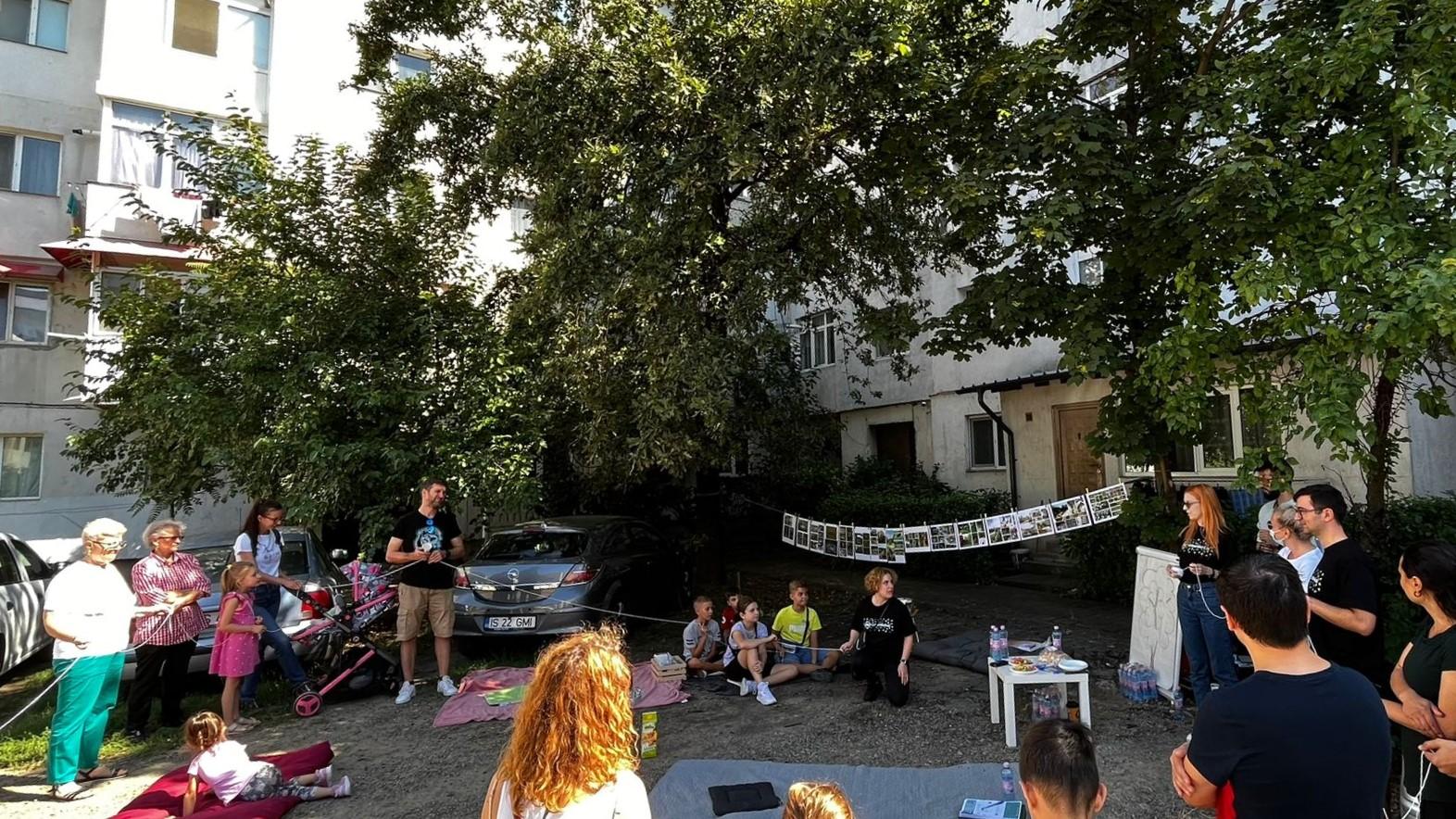
Bring Nature Home project, partly financed by and implemented under the New European Bauhaus programme by the organisation "UrbanizeHub", is an initiative focused on encouraging and helping the city of Iasi to become more green while strengthening urban communities (1 & 3). More concretely the project sought to transform an unused space in a residential area of a neighborhood in Iasi through a "biophilic design", with the involvement of the local community (1 - 5). The space was then transformed into a green area that would help the residents reconnect with nature (1 & 4). The implementation later helped develop a handbook that could be used to reproduce the methods of the initiative in other urban settings (4 & 5). Involving the local community, including children from the nearby daycare, the project conducted five workshops. These workshops focused on educational activities, improving the connection with urban nature, and ultimately creating an urban garden which included perennial plants, and insect and bird houses (5, pp. 53 to 58). Beyond community engagement and inter-generational dialogue, the project highlighted the importance of natural elements and biodiversity in urban settings. It also facilitated knowledge exchange among public institutions, NGOs, and private companies. With additional funding from IULIUS and municipal approval, the initiative successfully transformed the unused space into a thriving green area (4 & 5, p. 67 & 71).
Overview
Nature-based solution
- Community gardens and allotments
- Other
Key challenges
- Climate action for adaptation, resilience and mitigation (SDG 13)
- Climate change adaptation
- Green space, habitats and biodiversity (SDG 15)
- Green space creation and/or management
- Habitat and biodiversity restoration
- Regeneration, land-use and urban development
- Promote natural styles of landscape design for urban development
- Health and well-being (SDG 3)
- Creation of opportunities for recreation
- Inclusive and effective governance (SDG 16)
- Inclusive governance
- Social justice, cohesion and equity (SDG 10)
- Social interaction
- Environmental education
- Sense of community and community engagement
Principal problems in Functional Urban Area (FUA)
- Land use and Socio-economic change
- Rapid urbanization
- Unequal availability and access to public green spaces
- Health, Well-being and Social cohesion
- Disconnection from nature
- Loss of sense of place and identity
- Social fragmentation and isolation
- Poor community engagement
Key priorities
Focus
Project objectives
Implementation activities
Climate-focused activities
Climate change adaptation:
- Increase urban vegetation cover to reduce urban heat island effect
Biodiversity conservation or restoration-focused activities
Biodiversity restoration:
- Rehabilitate and restore damaged or destroyed ecosystems
- Restore species (native, endangered, or unspecified)
- Public engagement
Main beneficiaries
- Local government/Municipality
- Non-government organisation/Civil Society
- Citizens or community groups
- Young people and children
Governance
Management set-up
- Led by non-government actors
Type of initiating organisation
- Non-government organisation/civil society
Participatory approaches/ community involvement
- Co-planning (e.g. stakeholder workshops, focus groups, participatory mapping)
- Deliberative decision-making processes (e.g., consensus building, deliberative polling)
- Dissemination of information and education
- Consultation (e.g. workshop, surveys, community meetings, town halls)
- Joint implementation (e.g. tree planting)
- Co-management/Joint management
- Citizen monitoring and review
Details on the roles of the organisations involved in the project
Project implemented in response to ...
Type of enablers
Financing
Total cost
Source(s) of funding
- Corporate investment
- EU funds
Type of funding
- Direct funding (grants, subsidies, or self-financed projects by private entities)
Non-financial contribution
- Provision of land
- Provision of labour
- Provision of expertise
- Public authorities (e.g. land, utility services)
- Citizens (e.g. volunteering)
Impacts and Monitoring
Environmental impacts
- Climate change
- Lowered local temperature
- Expected lowered local temperature
- Green space and habitat
- Increased green space area
- Achieved increased green space area
- Enhanced support of pollination
- Achieved enhanced support of pollination
- Other
Economic impacts
- Generation of other type of work opportunities (e.g. voluntary, work for rehabilitation)
- Achieved generation of other type of work opportunities (e.g. voluntary, work for rehabilitation)
Socio-cultural impacts
- Social justice and cohesion
- Improved social cohesion
- Achieved improved social cohesion
- Improved access to urban green space
- Achieved improved access to urban green space
- Increased visibility and opportunity for marginalised groups or indigenous peoples
- Achieved increased visibility and opportunity for marginalised groups or indigenous peoples
- Increased opportunities for social interaction
- Achieved increased opportunities for social interaction
- Increased involvement of locals in the management of green spaces
- Achieved increased involvement of locals in the management of green spaces
- Health and wellbeing
- Gain in activities for recreation and exercise
- Achieved gain in activities for recreation and exercise
- Cultural heritage and sense of place
- Improvement in people’s connection to nature
- Achieved improvement in people’s connection to nature
- Increased sense of place identity, memory and belonging
- Achieved increased sense of place identity, memory and belonging
- Increased appreciation for natural spaces
- Achieved increased appreciation for natural spaces
Type of reported impacts
Presence of formal monitoring system
Presence of indicators used in reporting
Presence of monitoring/ evaluation reports
Availability of a web-based monitoring tool
Potential risks of implementation and trade-offs
References
 Information about this nature-based solution was collected as part of the Naturescapes project funded by the European Union under Grant Agreement No 101084341.