

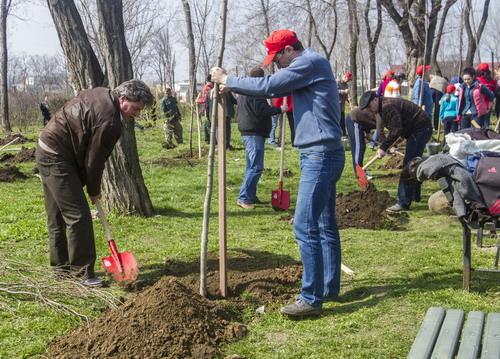
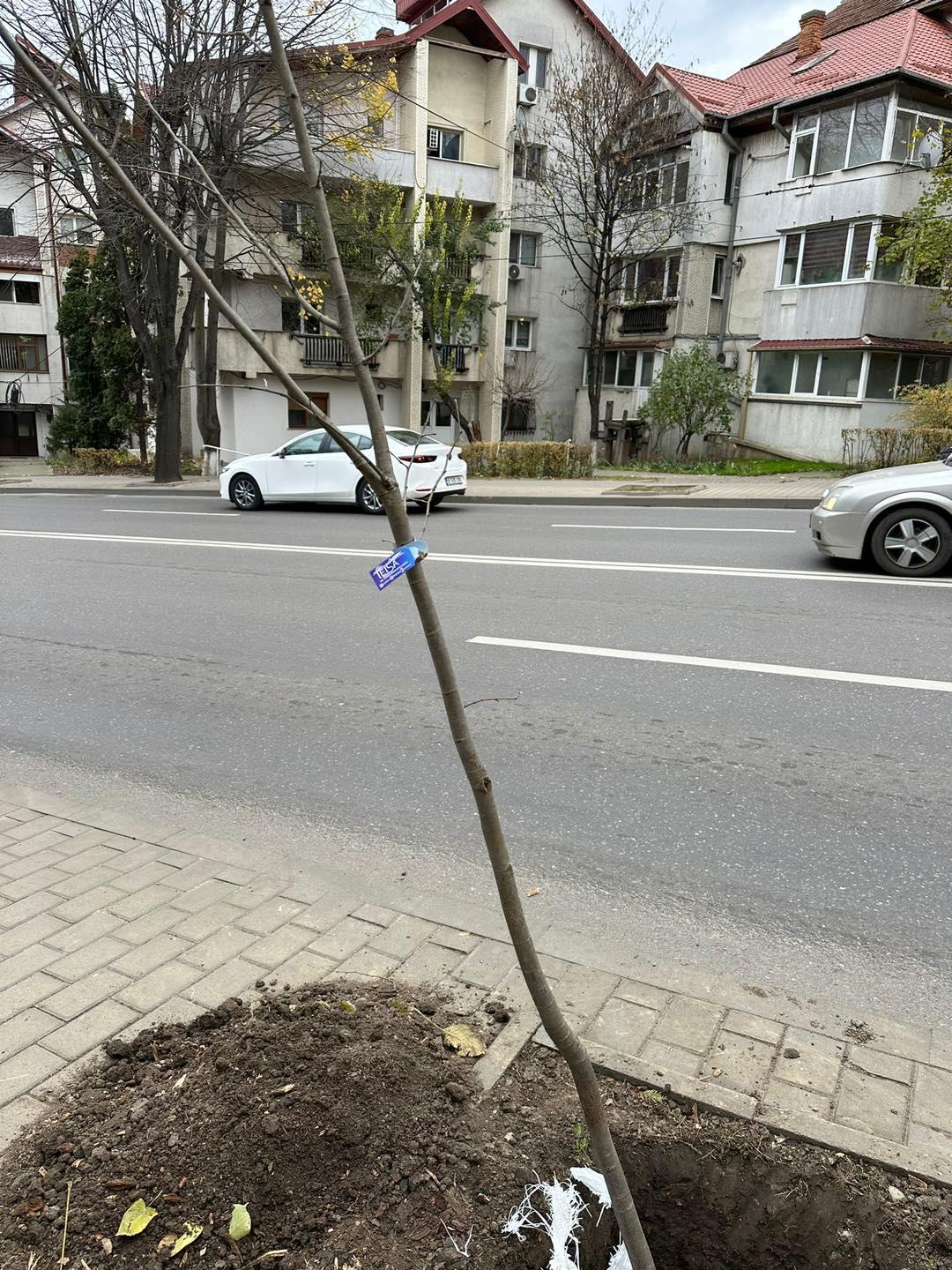
"Adopt a linden tree" is a project that involved the planting and adoption of linden trees in the city of Iași, spanning from 2019 to 2023 across three editions (1 to 8). The campaign was spearheaded by the National Athenaeum of Iași, in collaboration with the Mihai Eminescu Association from Vienna (2). This initiative was launched in celebration of the Athenaeum's 100th anniversary, and it specifically chose the linden tree because of its deep-rooted symbolism in the city of Iași. The tree is not only a natural landmark but also carries cultural and historical weight, as it is closely associated with Romania’s national poet, Mihai Eminescu, who is known for his love of linden trees. In 2019, 100 linden trees were planted, a number that was repeated in 2020. In the 2023 edition, 50 trees were added, bringing the total number of trees planted through this project to 250 (1 & 4 & 5). An important and unique aspect of the initiative is the "adoption" of the trees by volunteers who participated in the campaign. These volunteers not only lent their names to the trees but also took on the responsibility for their care, ensuring the trees' survival and growth until they reached maturity . Volunteers were encouraged to participate, and the campaign was supported by donations from individuals, businesses, and public institutions. The municipality of Iași also contributed by providing funds, approving the initiative, and preparing the land through its subsidiary, Servicii Publice Iași S.A., reflecting strong public-private collaboration. Beyond its cultural significance, the campaign aimed to achieve several other objectives. These included enhancing the city’s aesthetics, promoting community engagement, and improving the quality of life in Iași by contributing to cleaner air and a healthier environment . The initiative also aimed to raise environmental awareness among residents and foster a stronger sense of responsibility toward the natural world. (1-8)

Overview
Nature-based solution
- Grey infrastructure featuring greens
- Alley or street trees and other street vegetation
Key challenges
- Climate action for adaptation, resilience and mitigation (SDG 13)
- Climate change mitigation
- Environmental quality
- Air quality improvement
- Green space, habitats and biodiversity (SDG 15)
- Green space creation and/or management
- Regeneration, land-use and urban development
- Promote natural styles of landscape design for urban development
- Cultural heritage and cultural diversity
- Preservation of historic traditions
- Health and well-being (SDG 3)
- Improving physical health
- Inclusive and effective governance (SDG 16)
- Inclusive governance
- Social justice, cohesion and equity (SDG 10)
- Sense of community and community engagement
Principal problems in Functional Urban Area (FUA)
- Environmental Degradation
- Air pollution
- Land use and Socio-economic change
- Rapid urbanization
- Health, Well-being and Social cohesion
- Physical health harm (from pollution, wildfire, extreme temperature)
- Disconnection from nature
- Poor community engagement
Key priorities
Focus
Project objectives
Implementation activities
Climate-focused activities
Climate change mitigation:
- Increase the availability of green urban space for carbon storage (street tree cover)
- Raise public awareness of behaviours, lifestyle and cultural changes with mitigation potential
Main beneficiaries
- Non-government organisation/Civil Society
- Citizens or community groups
Governance
Management set-up
- Led by non-government actors
Type of initiating organisation
- Non-government organisation/civil society
Participatory approaches/ community involvement
- Co-planning (e.g. stakeholder workshops, focus groups, participatory mapping)
- Crowd-sourcing/Crowd-funding/Participatory budget
- Joint implementation (e.g. tree planting)
- Co-management/Joint management
- Citizen monitoring and review
Details on the roles of the organisations involved in the project
Project implemented in response to ...
Type of enablers
Financing
Total cost
Source(s) of funding
- Public local authority budget
- Corporate investment
- Crowdfunding
Type of funding
- Earmarked public budget
- Direct funding (grants, subsidies, or self-financed projects by private entities)
- Donations
Non-financial contribution
- Provision of land
- Provision of goods
- Provision of labour
- Provision of expertise
- Public authorities (e.g. land, utility services)
- Citizens (e.g. volunteering)
Impacts and Monitoring
Environmental impacts
- Climate change
- Enhanced carbon sequestration
- Expected enhanced carbon sequestration
- Environmental quality
- Improved air quality
- Expected improved air quality
- Green space and habitat
- Increased green space area
- Achieved increased green space area
- Increased number of species present
- Achieved increased number of species present
Economic impacts
- Generation of other type of work opportunities (e.g. voluntary, work for rehabilitation)
- Achieved generation of other type of work opportunities (e.g. voluntary, work for rehabilitation)
Socio-cultural impacts
- Social justice and cohesion
- Improved social cohesion
- Expected improved social cohesion
- Improved liveability
- Expected improved liveability
- Increased involvement of locals in the management of green spaces
- Achieved increased involvement of locals in the management of green spaces
- Health and wellbeing
- Improved physical health
- Expected improved physical health
- Improved prevention of respiratory problems
- Expected improved prevention of respiratory problems
- Cultural heritage and sense of place
- Increased sense of place identity, memory and belonging
- Achieved increased sense of place identity, memory and belonging
Type of reported impacts
Presence of formal monitoring system
Presence of indicators used in reporting
Presence of monitoring/ evaluation reports
Availability of a web-based monitoring tool
Potential risks of implementation and trade-offs
References

 Information about this nature-based solution was collected as part of the Naturescapes project funded by the European Union under Grant Agreement No 101084341.