

Last updated: October 2021
The aim of the project is to implement a sustainable rainwater management in Hamburg that is adjusted to the heavy rainfalls attributed to global climate change. The project involves the analysis of pilot projects, including GIS-based analysis and the development of the city's rainwater structure plan 2030, Strukturplan Regenwasser 2030, (Reference 1) that will serve as a basis for the Integrated RainWater Management (IRWM) in Hamburg (Reference 5).

Illustration of the RISA Project (2012)
Atelier Dreiseitl, retrieved 08/22/2018 from Ole Braukmann
Overview
Nature-based solution
- Green areas for water management
- Sustainable urban drainage systems
Key challenges
- Climate action for adaptation, resilience and mitigation (SDG 13)
- Climate change adaptation
- Water management (SDG 6)
- Flood protection
- Stormwater and rainfall management and storage
- Improvements to water quality
- Regeneration, land-use and urban development
- Regulation of built environment
Focus
Creation of semi-natural blue areas, Strategy, plan or policy development
Project objectives
Short-term goals:
- develop an integrated rainwater structure plan for Hamburg for fulfilling the long-term goals and providing a scientific basis for the city’s rainwater management strategy, called “Structural Plan Rainwater 2030”.
- integrate water management measures into urban and spatial planning and to adapt institutional framework conditions to the changes. (Reference 4)
Long-term goals:
- Future-oriented and sustainable handling of rainwater (Reference 4)
- Flood protection and inland flood control
- Water body conservation
- Near-natural water balance (Reference 1, 2)
Implementation activities
2010 – phase I: Joint problem and status quo analysis;
2011- phase II: Evaluation and Planning;
2012 – phase III: Establishment of pilot projects, recommendations for changes/adaptations in regulations or new regulations etc. and structural plan developed;
2016-2030: RISA Structural Plan Rainwater 2030 is being implemented, with the findings that rainwater should be retained where it falls, soaked up or evaporated on site. (Reference 1, 2, 3).
Climate-focused activities
Climate change adaptation:
- Implement sustainable urban drainage infrastructure (e.g. to make space for water)
Main beneficiaries
- Local government/Municipality
- Citizens or community groups
Governance
Management set-up
- Co-governance with government and non-government actors
Type of initiating organisation
- Local government/municipality
- Public sector institution
Participatory approaches/ community involvement
- Unknown
Details on the roles of the organisations involved in the project
RISA was s tarted as a joint project and funded by the State Ministry of Urban Development and Environment of Hamburg in September 2009 (Behörde für Stadtentwicklung und Umwelt, meanwhile renamed to: Behörde für Umwelt, Klima, Energie und Agrarwirtschaft and Behörde für Stadtentwicklung und Wohnen). In co-operation with HAMBURG WASSER, the municipal Water Supply and Wastewater Disposal Company, and other involved scientific, municipal and economic partners, a solid theoretical fundament was built in order to promote a successful adaptation of the urban rainwater infrastructure to the requirements of climate change. (Reference 1) Measures are carried out through the State Office for Roads, Bridges and Water Bodies (LSBG). (Reference 5)
The project was supported by a three year long research that involves the analysis of pilot projects (Reference 1) The results were published in journal articles and research papers (Reference 5). The research groups are from the following universities: HafenCity Universität Hamburg, Rheinisch-Westfälische Technische Hochschule Aachen, Technische Universität Kaiserlautern, Hochschule Ruhr West (Reference 6).
Project implemented in response to ...
... an EU policy or strategy?
Yes
(In 2011, Hamburg was chosen to be the Green Capital of the EU, which is in line with aims of the EU 7th Environmental Action Program of the EU. The RISA is in line with the green strategy that the Green Capital Award projected and it is mentioned in the selective report of the city ("Hamburg: European Green Capital: Five years on") being published in 2016 (Reference 3). )
... a national policy or strategy?
Unknown
... a local policy or strategy?
Yes
(The aim of the project was to develop the Rainwater Structure Plan 2030 (Strukturplan Regenwasser 2030). The strategy was published in 2015 (Reference 2). )
Financing
Total cost
Unknown
Source(s) of funding
- Public national budget
- Public local authority budget
Type of funding
- Direct funding (grants, subsidies, or self-financed projects by private entities)
- Other
Non-financial contribution
Unknown
Impacts and Monitoring
Environmental impacts
- Climate change
- Strengthened capacity to address climate hazards/natural disasters
- Water management and blue areas
- Improved water quality
- Increased protection against flooding
- Improved stormwater management
Economic impacts
- Unknown
Socio-cultural impacts
- Unknown
Type of reported impacts
Expected impacts
Presence of formal monitoring system
Yes
Presence of indicators used in reporting
No evidence in public records
Presence of monitoring/ evaluation reports
Yes
Availability of a web-based monitoring tool
No evidence in public records
References
1. Source link. (nd.) The RISA-Project - RainInfraStructureAdaptation. [online] Available at: Source link [Accessed: 1 Sept. 2020]
2. Hamburger Stadtentwässerung AöR and Behörde für Umwelt und Energie. (2015). RISA Strukturplan Regenwasser 2030, Ergebnisbericht des Projektes RISA – RegenInfraStrukturAnpassung. Hamburg: Hamburger Stadtentwässerung AöR and Behörde für Umwelt und Energie. Available at: Source link [Accessed: 1 Sept. 2020]
3. Ministry of Environment and Energy. (2016). Hamburg – European Green Capital: 5 Years On: The city takes further. Hamburg: Ministry of Environment and Energy. Available at: Source link [Accessed: 1 Sept. 2020]
4. Source link. (2009). Projektstart: Regeninfrastrukturanpassung [online] Available at: Source link. 1 Sept. 2020].
5. Bertram, N., Waldhoff, A., Bischoff, G., Ziegler, J., Meinzinger, F., Skambraks, A.-K. (2017). Synergistic benefits between stormwater management measures and a new pricing system for Stormwater in the City of Hamburg. Water Science and Technology. (76)1, pp. Available at: Source link [Accessed: 1 Sept. 2020]
6. Source link. (2017) Projektpartner. [online] Available at: Source link. 1 Sept. 2020].
7. Source link. (2017) Erster RISA Schulhof. [online] Available at: Source link 1 Sept. 2020].
8. Source link. (2017) Erster Regenspielplatz. [online] Available at: Source link. 1 Sept. 2020].
9. Source link. (2017) Notwasserweg, Ohlendorffspark. [online] Available at: Source link. 1 Sept. 2020].
10. Bertram, N., Waldhoff, A., Bischoff, G. (2015). Rain InfraStructure Adaption (RISA) in the City of Hamburg and suitable funding for Stormwater Management. Amsterdam International Water Week.
2. Hamburger Stadtentwässerung AöR and Behörde für Umwelt und Energie. (2015). RISA Strukturplan Regenwasser 2030, Ergebnisbericht des Projektes RISA – RegenInfraStrukturAnpassung. Hamburg: Hamburger Stadtentwässerung AöR and Behörde für Umwelt und Energie. Available at: Source link [Accessed: 1 Sept. 2020]
3. Ministry of Environment and Energy. (2016). Hamburg – European Green Capital: 5 Years On: The city takes further. Hamburg: Ministry of Environment and Energy. Available at: Source link [Accessed: 1 Sept. 2020]
4. Source link. (2009). Projektstart: Regeninfrastrukturanpassung [online] Available at: Source link. 1 Sept. 2020].
5. Bertram, N., Waldhoff, A., Bischoff, G., Ziegler, J., Meinzinger, F., Skambraks, A.-K. (2017). Synergistic benefits between stormwater management measures and a new pricing system for Stormwater in the City of Hamburg. Water Science and Technology. (76)1, pp. Available at: Source link [Accessed: 1 Sept. 2020]
6. Source link. (2017) Projektpartner. [online] Available at: Source link. 1 Sept. 2020].
7. Source link. (2017) Erster RISA Schulhof. [online] Available at: Source link 1 Sept. 2020].
8. Source link. (2017) Erster Regenspielplatz. [online] Available at: Source link. 1 Sept. 2020].
9. Source link. (2017) Notwasserweg, Ohlendorffspark. [online] Available at: Source link. 1 Sept. 2020].
10. Bertram, N., Waldhoff, A., Bischoff, G. (2015). Rain InfraStructure Adaption (RISA) in the City of Hamburg and suitable funding for Stormwater Management. Amsterdam International Water Week.
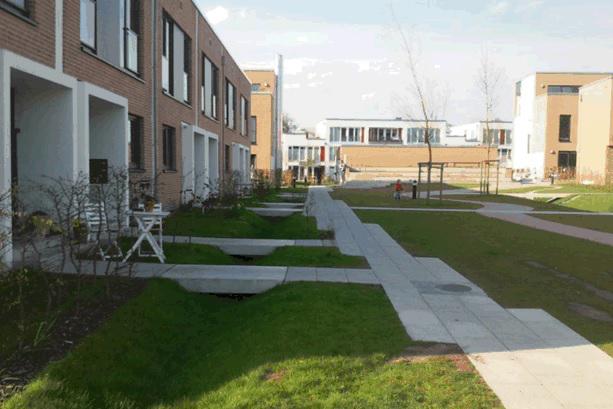
Implementation of the RISA Project (2018)
Behörde für Umwelt und Energie, retrieved 08/22/2018 from Ole Braukmann