

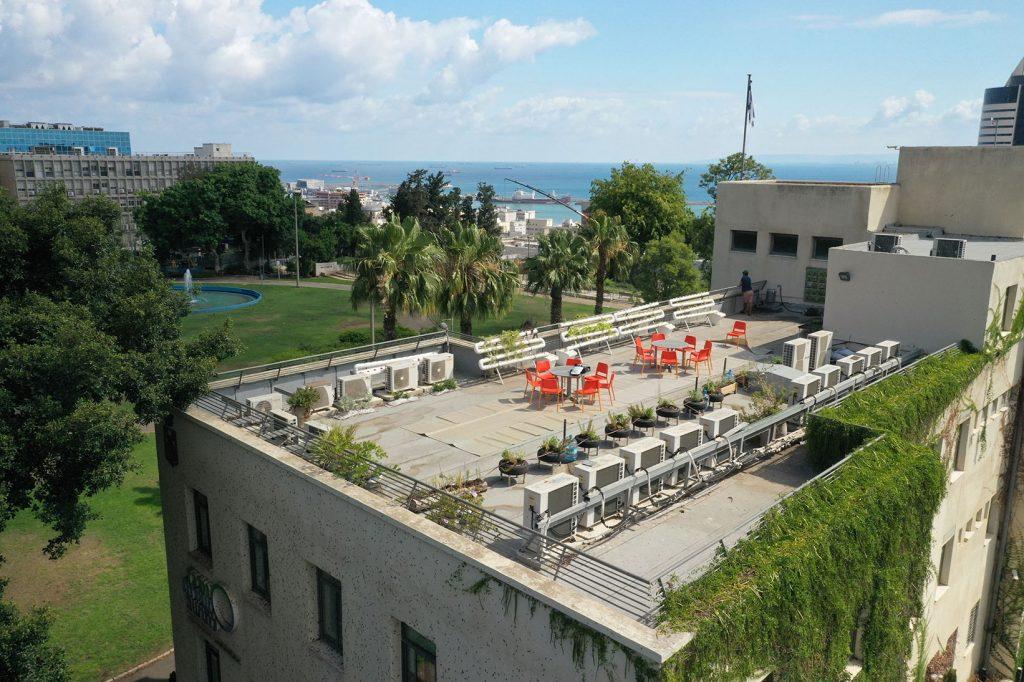
Climate change has become a constant topic for the administration of Israel, mainly due to the country's exposure to the effects of climate change. These include water shortages and pollution, the shrinking of the Dead Sea, waste production and disposal, air pollution and increased population density. Haifa is no stranger to these changes and the administration of the city is trying to align itself with international organisms that can help it to overcome such critical situations. The City of Haifa’s leadership strives to join the capitals of the world, share knowledge and establish operative cooperation. In December 2020 it joined the Paris Agreement, and in July 2021 signed the Urban Nature Declaration pledging a greener and more sustainable city with the 40C Cities Climate Leadership Group, an international organization of about 100 major cities worldwide. On a local level, the city initiated Haifa2030, a program that aims to prepare for global warming and to develop strategies for urban resilience. Among the actions taken into account by the municipality refers to green roofs, which the city intends to transform into an overall city program. Two demonstration roofs have been erected on municipal buildings, and additional roofs are planned. (2,3)
Overview
Nature-based solution
- Community gardens and allotments
- Community gardens
- Nature on buildings (external)
- Green roofs
Key challenges
- Climate action for adaptation, resilience and mitigation (SDG 13)
- Climate change adaptation
- Climate change mitigation
- Environmental quality
- Air quality improvement
- Noise reduction
- Green space, habitats and biodiversity (SDG 15)
- Green space creation and/or management
- Water management (SDG 6)
- Flood protection
- Stormwater and rainfall management and storage
- Social justice, cohesion and equity (SDG 10)
- Environmental education
- Environmental and climate justice
- Sustainable consumption and production (SDG 12)
- Sustainable consumption
- Sustainable production
Focus
Project objectives
Implementation activities
Climate-focused activities
Climate change adaptation:
- Increase or improve urban vegetation cover to help reduce outdoor temperature
- Create or improve outdoor spaces to help people escape from urban heat
- Implement green walls or roofs to lower indoor temperature and provide insulation
Climate change mitigation:
- Increase green urban nature for carbon storage (wetlands, tree cover)
- Raise public awareness of behaviours, lifestyle and cultural changes with mitigation potential
Main beneficiaries
- Local government/Municipality
- Researchers/University
- Citizens or community groups
- Marginalized groups: Socio-economically disadvantaged populations (e.g. low-income households, unemployed)
Governance
Management set-up
- Co-governance with government and non-government actors
Type of initiating organisation
- Local government/municipality
- Researchers/university
Participatory approaches/ community involvement
- Co-planning (e.g. stakeholder workshops, focus groups, participatory mapping)
- Dissemination of information and education
- Joint implementation (e.g. tree planting)
- Co-management/Joint management
Details on the roles of the organisations involved in the project
Project implemented in response to ...
Financing
Total cost
Source(s) of funding
- Public local authority budget
Type of funding
- Earmarked public budget
Non-financial contribution
- Provision of land
- Provision of goods
- Provision of labour
- Provision of expertise
- Exchange of services
- Public authorities (e.g. land, utility services)
- Citizens (e.g. volunteering)
- Other
Impacts and Monitoring
Environmental impacts
- Climate change
- Lowered local temperature
- Green space and habitat
- Increased green space area
- Increased number of species present
- Enhanced support of pollination
Economic impacts
- Unknown
Socio-cultural impacts
- Social justice and cohesion
- Improved social cohesion
- Fair distribution of social, environmental and economic benefits of the NBS project
- Increased access to healthy/affordable food
- Education
- Increased support for education and scientific research
- Increased awareness of NBS and their benefits
Type of reported impacts
Presence of formal monitoring system
Presence of indicators used in reporting
Presence of monitoring/ evaluation reports
Availability of a web-based monitoring tool
References
2. Municipality of Haifa (2021), Environmental and Social Strategic Program – Haifa 2030, available at Source link (accessed 20-03-2022)
3. News Haifa Kayrot (2021), חיפה תושבי חיפה עולים על הגג, available at Source link (accessed 20-03-2022)
4. Municipality of Haifa (2021), Official Website, available at Source link (accessed 20-03-2022)
5. University of Haifa’s Kadas Green Roofs Ecology Research Center (no date), Official Website, available at Source link (accessed 20-03-2022)

