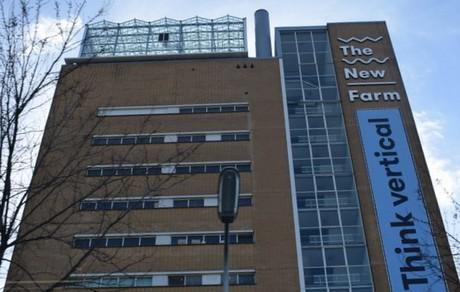
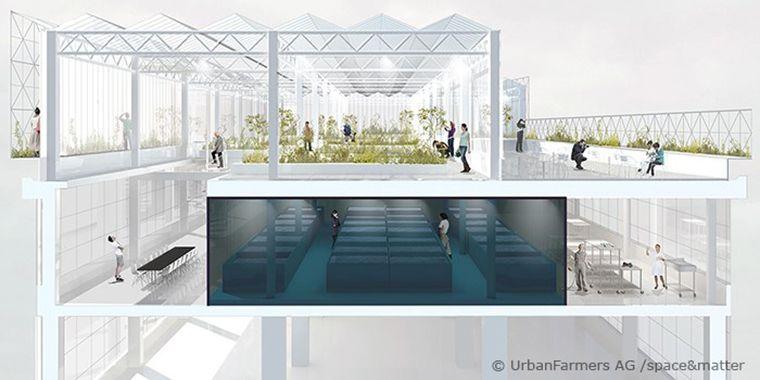
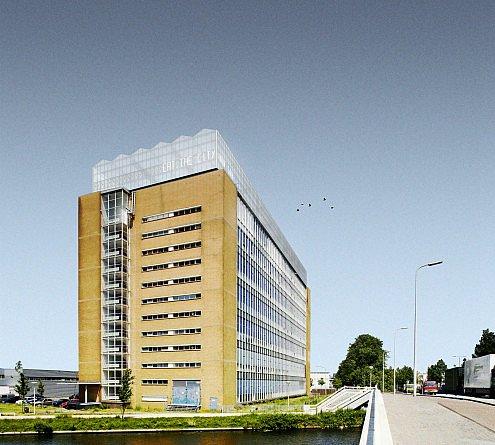
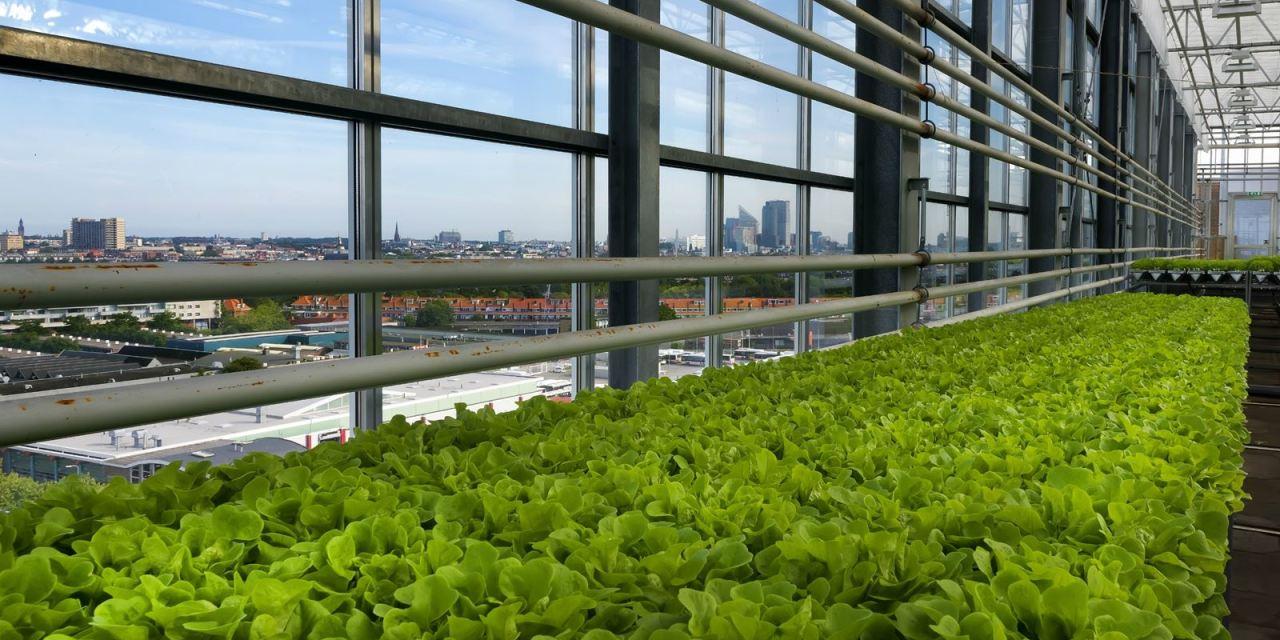
‘De Schilde’ in The Hague was the former factory of Philips Telecommunication that had been empty for years. In 2016, it become the home to the largest commercial city facility for food production in Europe: a 1,200 m2 roof greenhouse for specialized vegetables, a 370 m2 covered fish farm and a 250 m2 area for integrated processing and packaging. In addition, 250 m2 within the farm was exclusively reserved for events and guided tours. (5) The farm comprised two-storey greenhouses on the roof and uses the UF system for the sustainable production of fish and vegetables. (5) The urban farm was initiated by the the municipality of the Hague and realised by Urbanfarmers, a Swiss technology company focused on building food production facilities in cities (5). However, the initiative wasn't successful. In 2018, the company declared bankruptcy and terminated production in the rooftop farm as it did not produced any revenues. (12,13).
Overview
Nature-based solution
- Nature on buildings (external)
- Green roofs
- Other
- Community gardens and allotments
- Horticulture
- Blue infrastructure
- Other
Key challenges
- Water management (SDG 6)
- Stormwater and rainfall management and storage
- Green space, habitats and biodiversity (SDG 15)
- Green space creation and/or management
- Regeneration, land-use and urban development
- Conversion of former industrial areas
- Economic development and employment (SDG 8)
- Economic development: agriculture
- Sustainable consumption and production (SDG 12)
- Sustainable consumption
- Sustainable production
Focus
Project objectives
Implementation activities
Main beneficiaries
- Private sector/Corporate/Company
Governance
Management set-up
- Co-governance with government and non-government actors
Type of initiating organisation
- Local government/municipality
- Private sector/corporate actor/company
Participatory approaches/ community involvement
- Dissemination of information and education
- Consultation (e.g. workshop, surveys, community meetings, town halls)
Details on the roles of the organisations involved in the project
Project implemented in response to ...
Financing
Total cost
Source(s) of funding
- EU funds
- Public local authority budget
- Corporate investment
- Other
Type of funding
- Earmarked public budget
- Direct funding (grants, subsidies, or self-financed projects by private entities)
- Loan
- Equity funding (investment in shares)
- Other
Non-financial contribution
Impacts and Monitoring
Environmental impacts
- Environmental quality
- Improved waste management
- Water management and blue areas
- Improved stormwater management
- Other
Economic impacts
- Increase of green jobs (e.g. paid employment positions)
Socio-cultural impacts
- Health and wellbeing
- Gain in activities for recreation and exercise
Type of reported impacts
Presence of formal monitoring system
Presence of indicators used in reporting
Presence of monitoring/ evaluation reports
Availability of a web-based monitoring tool
References
2. Urban Farmers. (n.d.). UF002 De Schilde. Website not available
3. Vivaldi, S. (2016). Waarom verse groenten niet van ver hoeven te komen. Website not available
4. Geerts, P. (2016). Grootste stadsboerderij van Europa gaat open. Accessed on November 9, 2020, Source link
5. Rizkalla, M. (2014). Grootste stadslandbouwproject van Europa in Den Haag. Website not available
6. Den Haag. (n.d.) Urban Farmers. Website not available
7. Vastgoed Markt. (2015). SVn financiert Haagste stadsboerderij De Schilde. Accessed on November 9, 2020, Source link
8. Gemeente Den Haag. (2016). Nieuwe Toekomst voor de Schilde. The Hague: muncipality of the Hague. Accessed on November 9, 2020, Source link
9. The Hague Online. (2016). Europe's Largest Rooftop Farm Now Open to the Public in The Hague. Accessed on November 9, 2020, Source link
10. The Hague Online. (2015). Largest Urban Farming Project Started in The Hague. Accessed on November 9, 2020, Source link
11. The Hague Online. (2017). Urbanfarmers Roof Market. Accessed on November 9, 2020, Source link
12. The Hague Online. (2018). Urbanfarmers declares Bankruptcy. Accessed on November 9, 2020, Source link
13. I Grow. (n/a). Who Wants To Buy The Dutch Rooftop Greenhouse? And The Building Below. Accessed on November 9, 2020, Source link