

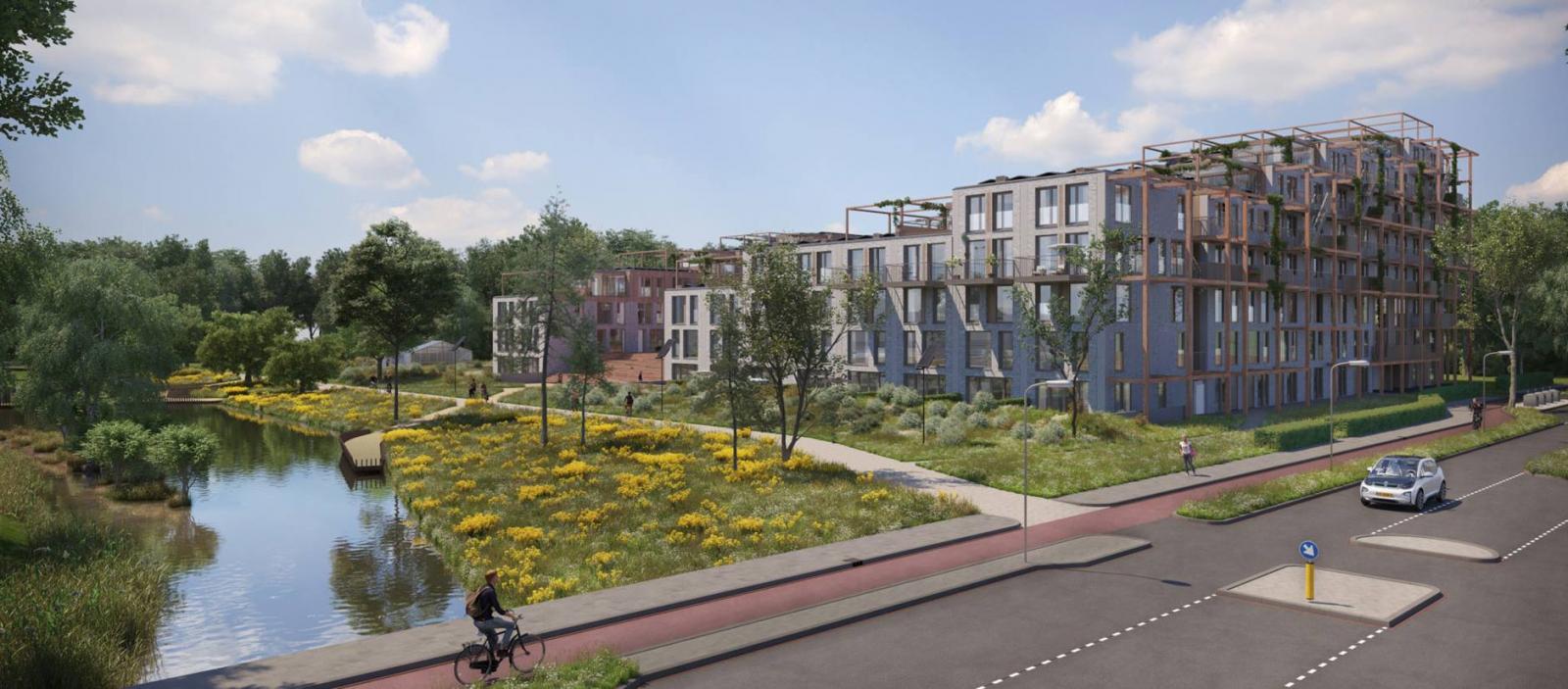
'Proeftuin Erasmusveld' is a new and sustainable urban residential area in The Hague. It will be a new nature-inclusive, energy-efficient, car-free neighbourhood that is created for plants, animals and people promoting healthy living (1). As of November 2020, The building of the neighbourhood with its unique houses and buildings is still in progress (1). Currently, the area is an 'experimental area' for all kinds of sustainability initiatives that may be used for the realization of the neighbourhood, including self-sufficient 'tiny houses' and urban farmland (1,2). The ambition for Erasmusveld is to become a leading sustainable neighbourhood with a sustainable water system, the use of sustainable energy and a vegetable garden with high connectedness between citizens (4).
Overview
Nature-based solution
- Parks and urban forests
- Pocket parks/neighbourhood green spaces
- Green corridors and green belts
- Community gardens and allotments
- Community gardens
- Blue infrastructure
- Lakes/ponds
- Green areas for water management
- Sustainable urban drainage systems
Key challenges
- Climate action for adaptation, resilience and mitigation (SDG 13)
- Climate change adaptation
- Climate change mitigation
- Water management (SDG 6)
- Stormwater and rainfall management and storage
- Green space, habitats and biodiversity (SDG 15)
- Green space creation and/or management
- Environmental quality
- Waste management
- Regeneration, land-use and urban development
- Promote natural styles of landscape design for urban development
- Inclusive and effective governance (SDG 16)
- Effective management
- Social justice, cohesion and equity (SDG 10)
- Social cohesion
- Health and well-being (SDG 3)
- Creation of opportunities for recreation
- Economic development and employment (SDG 8)
- Real estate development
- Sustainable consumption and production (SDG 12)
- Sustainable consumption
- Sustainable production
Focus
Project objectives
Implementation activities
Climate-focused activities
Climate change adaptation:
- Implement sustainable urban drainage infrastructure (e.g. to make space for water)
Climate change mitigation:
- Invest in public transport/bicycle infrastructure as a means to prevent car use
- Raise public awareness of behaviours, lifestyle and cultural changes with mitigation potential
Main beneficiaries
- Citizens or community groups
Governance
Management set-up
- Co-governance with government and non-government actors
Type of initiating organisation
- Local government/municipality
- Private sector/corporate actor/company
Participatory approaches/ community involvement
- Dissemination of information and education
- Consultation (e.g. workshop, surveys, community meetings, town halls)
- Co-management/Joint management
Details on the roles of the organisations involved in the project
Project implemented in response to ...
Financing
Total cost
Source(s) of funding
- Public local authority budget
- Corporate investment
Type of funding
- Earmarked public budget
- Direct funding (grants, subsidies, or self-financed projects by private entities)
Non-financial contribution
Impacts and Monitoring
Environmental impacts
- Climate change
- Reduced emissions
- Strengthened capacity to address climate hazards/natural disasters
- Environmental quality
- Improved waste management
- Green space and habitat
- Promotion of naturalistic styles of landscape design for urban development
- Increased conservation or restoration of ecosystems
Economic impacts
- Unknown
Socio-cultural impacts
- Social justice and cohesion
- Improved social cohesion
- Increased involvement of locals in the management of green spaces
- Increased access to healthy/affordable food
- Increased sustainability of agriculture practices
- Cultural heritage and sense of place
Type of reported impacts
Presence of formal monitoring system
Presence of indicators used in reporting
Presence of monitoring/ evaluation reports
Availability of a web-based monitoring tool
References
2. De Kleine Toekomst (2017). Proeftuin Erasmusveld: gezond, stads en samen. Accessed on November 10, 2020, Source link
3. Gemeente Den Haag (2016) Stand van Zaken Erasmusveld. The Hague: municipality of The Hague. Accessed on November 10, 2020, Source link
4. Municipality of The Hague. (2016). Manifest Duurzaam Erasmusveld. The Hague. Accessed on November 10, 2020, Source link
5. Gemeente Den Haag. (2008) Voorstel van het college inzake Masterplan Erasmusveld-Leywegzone. The Hague: municipality of The Hague. Accessed on November 10, 2020, Source link
6. Omroep West. (2017). Plannen voor Proeftuin Erasmus. Accessed on November 10, 2020, Source link
7. Gemeente Den Haag. (2016). Bijlage 1: Actualisatie Stedelijke Groene Hoofdstructuur. Den Haag: Municipality of The Hague. Accessed on November 10, 2020, Source link