

Last updated: June 2024
“Nottinghamshire Wildlife Trust (NWT) in partnership with Nottingham City Council (NCC) proposed enhancements to the Fairham Brook nature reserve to allow areas to be re-wetted, restoring areas to their former state. The Fairham Brook watercourse within the reserve was deepened in the 1970s to improve its drainage function for the adjoining agricultural land but it had the effect of draining the reserve also, which is one of the few areas of fen habitat remaining in Nottinghamshire. Fen is a Nottinghamshire Biodiversity Action Plan priority habitat and all efforts were to be made to protect and restore the areas that are remaining. Lowland Fen was also a UK Biodiversity Action Plan priority habitat (ref. 1).
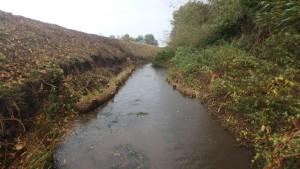
Fairham Brook
https://nottinghamlocalnews.com/wildlife-trust-work-on-fairham-brook/
Overview
Nature-based solution
- Blue infrastructure
- Lakes/ponds
- In-land wetlands, peatlands, swamps, and moors
- Other
- Green areas for water management
- Other
- Grey infrastructure featuring greens
- Riverbank/Lakeside greens
- Other
- Parks and urban forests
- Other
Key challenges
- Green space, habitats and biodiversity (SDG 15)
- Habitat and biodiversity restoration
- Habitat and biodiversity conservation
- Water management (SDG 6)
- Flood protection
- Cultural heritage and cultural diversity
- Preservation of natural heritage
Focus
Creation of semi-natural blue areas, Management and improved protection of rivers and other blue areas
Project objectives
“The main aim of this project was to rewet the area of fen habitat at the northern end of the nature reserve and to bring water onto the reserve to recreate that which once occurred naturally (i.e. occasional inundation and retention of water in the floodplain) to maintain and enhance the habitats on-site to allow them to attract and support the species that depend upon them”. (ref. 1)
Implementation activities
NWT intended to halt this decline by creating additional ponds on the site to retain water, reduce tree cover to slow water loss and create a figure-of-eight ditch. This would take in water from the brook at times of high water levels and transfer it through the fen area, connecting some of the deeper ponds and then slowly releasing the water back into the brook. Besides rewetting parts of the site, it also increased the flood water storage of the site (ref. 2, 3)
Biodiversity conservation or restoration-focused activities
Biodiversity conservation:
- Protect and enhance urban habitats
- Preserve and strengthen existing habitats and ecosystems
- Promote environmentally-sound development in and around protected areas
- Preserve and strengthen habitat connectivity
- Protect species
- Undertake specific measures to protect species
- Other
Biodiversity restoration:
- Rehabilitate and restore damaged or destroyed ecosystems
- Restore species (native, endangered, or unspecified)
- Restore native species
- Restore valued species
- Restore ecological connectivity
- Other
Main beneficiaries
- Local government/Municipality
Governance
Management set-up
- Co-governance with government and non-government actors
Type of initiating organisation
- Local government/municipality
- Non-government organisation/civil society
Participatory approaches/ community involvement
- Co-planning (e.g. stakeholder workshops, focus groups, participatory mapping)
- Dissemination of information and education
- Consultation (e.g. workshop, surveys, community meetings, town halls)
Details on the roles of the organisations involved in the project
Nottinghamshire Wildlife Trust in partnership with Nottingham City Council initiated the enhancements. (ref. 1)
Furthermore, in 2014: “letters of support were received from Nottingham City Council, Nottinghamshire Biodiversity Action Group, Trent Valley Internal Drainage Board and the Environment Agency, and 25 emails in of support received from local residents.” (ref. 1).
“1,023 Wildlife Trust members in the local area have been contacted regarding the project, and a flyer with details of the plans has been delivered to all local residents with an invitation to comment on the plans, and to attend an open afternoon which is being held on the Nature Reserve; letters sent to local organisations; posters have been displayed on the reserve.” (Ref. 2)
Project implemented in response to ...
... an EU policy or strategy?
Yes
(The EU’s Water Framework Directive. (Ref. 4) )
... a national policy or strategy?
Yes
(Lowland Fen is a UK Biodiversity Action Plan priority habitat. (Ref. 2) )
... a local policy or strategy?
Yes
(Fen is a Nottinghamshire Biodiversity Action Plan (the NCC is a member through the Biodiversity Action Group and works to deliver the BAP) priority habitat and all efforts should be made to protect and restore the areas that are remaining. (Ref. 2, 5))
Financing
Total cost
€10,000 - €50,000
Source(s) of funding
- Public local authority budget
- Funds provided by non-governmental organization (NGO)
- Other
Type of funding
- Direct funding (grants, subsidies, or self-financed projects by private entities)
Non-financial contribution
Unknown
Impacts and Monitoring
Environmental impacts
- Water management and blue areas
- Increased protection against flooding
- Reduced risk of damages by drought
- Green space and habitat
- Increased conservation or restoration of ecosystems
- Increased ecological connectivity across regeneration sites and scales
- Increased number of species present
Economic impacts
- Unknown
Socio-cultural impacts
Type of reported impacts
Expected impacts
Presence of formal monitoring system
Unknown
Presence of indicators used in reporting
No evidence in public records
Presence of monitoring/ evaluation reports
Yes
Availability of a web-based monitoring tool
Yes
References
1. Nottingham City Council. (2014). Rewetting Fairham Brook Nature Reserve - Nottinghamshire Wildlife Trust. Documents. Accessed 17 July 2020. Available at: Source link
2. Nottingham Local News. (2015). Wildlife Trust work on Fairham Brook. Accessed 17 July 2020. Available at: Source link
3. The Wildlife Trusts. (n.d). Fairham Brook Improvement Projects. South Notts Local Group. Accessed 17 July 2020. Available at: Source link
4. Nottingham City Council. (n.d.). Nature and Wildlife. Parks and Open Spaces. Accessed 17 July 2020. Available at: Source link
5. Nottingham City Council. (2008). Greater Nottingham Strategic Flood Risk Assessment. Summary of key findings for Nottingham City Council. NCC, EA, Nottingham Regeneration Ltd. Accessed 17 July 2020. Available at: Source link
2. Nottingham Local News. (2015). Wildlife Trust work on Fairham Brook. Accessed 17 July 2020. Available at: Source link
3. The Wildlife Trusts. (n.d). Fairham Brook Improvement Projects. South Notts Local Group. Accessed 17 July 2020. Available at: Source link
4. Nottingham City Council. (n.d.). Nature and Wildlife. Parks and Open Spaces. Accessed 17 July 2020. Available at: Source link
5. Nottingham City Council. (2008). Greater Nottingham Strategic Flood Risk Assessment. Summary of key findings for Nottingham City Council. NCC, EA, Nottingham Regeneration Ltd. Accessed 17 July 2020. Available at: Source link