

Last updated: October 2021
”Gothenburg is now greener and more beautiful. Urban farming is the name of the investment that Göteborgs Stads Fastighetskontor (The property office) makes to stimulate small-scale and residential/urban farming. The goal is to get new crops, crops in unconventional places, plants/farming that provide joy and help to spread knowledge and create contact between generations and people from different parts of the city and the world. But also to develop the already existing cultivation and colony areas.” (Ref. 1)
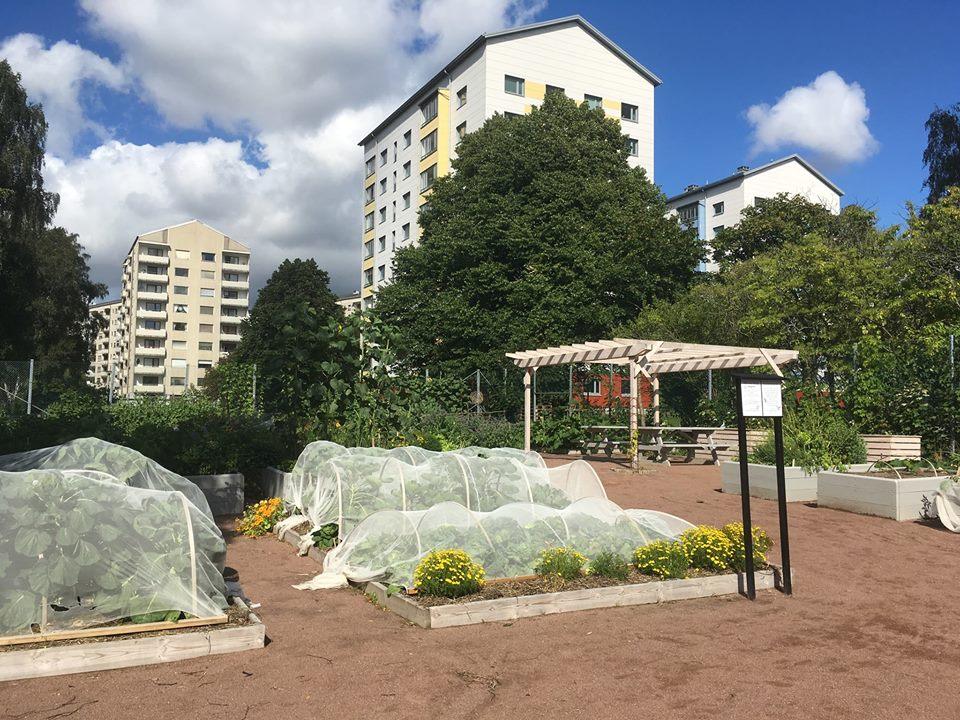
Brunnsbo Garden Collective
Paula Palm, retrieved 08/29/2018 from https://www.facebook.com/brunnsbotradgardskollektiv/
Overview
Nature-based solution
- Community gardens and allotments
- Allotments
- Community gardens
Key challenges
- Green space, habitats and biodiversity (SDG 15)
- Green space creation and/or management
- Regeneration, land-use and urban development
- Promote natural styles of landscape design for urban development
- Social justice, cohesion and equity (SDG 10)
- Social interaction
- Health and well-being (SDG 3)
- Creation of opportunities for recreation
- Economic development and employment (SDG 8)
- Economic development: agriculture
- Sustainable consumption and production (SDG 12)
- Sustainable production
Focus
Creation of new green areas
Project objectives
The goals of the project include:
1. Promoting the city's green development, as well as increasing knowledge and cooperation with various actors around urban farming. (Ref. 2)
2. Efficient land use so that the residential parts of the city are close to green areas.
3. Opportunity for recreation, rehabilitation, urban farming, while promoting biodiversity in the city. (Ref. 2, 3)
Implementation activities
The project presents around 15 new gardens/urban farming areas on their website, which have been supported by Urban Farming (Stadsnära odling). Activities such as transforming a sheep garden into woodland for farming is one example situated on the outskirts of the residential areas of Hisingsparken, the new cultivation area is nestled among horticulture and forests adapted to nature. (Ref. 2 and 5)
Another example is Biskopsgårdens farmers association (in the district of Biskopsgården). A where a piece of surface has been used for farming, and there are 16 farming plots in this area. (Ref. 2)
Main beneficiaries
- Local government/Municipality
- Citizens or community groups
- Food producers and cultivators (i.e. farmers, gardeners)
- Young people and children
Governance
Management set-up
- Co-governance with government and non-government actors
Type of initiating organisation
- Local government/municipality
Participatory approaches/ community involvement
- Co-management/Joint management
Details on the roles of the organisations involved in the project
The project has been started by the property office in the city of Göteborg, the citizens/community groups form associations in order to start urban farming projects and apply for funding. (Ref. 2)
Project implemented in response to ...
... an EU policy or strategy?
Unknown
... a national policy or strategy?
Unknown
... a local policy or strategy?
Yes
(Urban cultivation/farming is mentioned in the Göteborg's City environment programme from 2013, which aims to achieve the 12 national environmental quality objectives through various sub-objectives (mentions both large-scale and small-scale urban farming). (Ref. 7) Guidelines for urban farming in public places and natural parks were established in 2011, and are in line with guidelines from the programme of the Park and Nature Management office in Göteborg. (Ref. 2))
Financing
Total cost
€500,000 - €2,000,000
Source(s) of funding
- Public local authority budget
Type of funding
- Direct funding (grants, subsidies, or self-financed projects by private entities)
Non-financial contribution
Unknown
Impacts and Monitoring
Environmental impacts
- Climate change
- Reduced emissions
- Green space and habitat
- Increased green space area
- Increased number of species present
Economic impacts
- Increase in agricultural production (for profit or not)
- Generation of income from NBS
Socio-cultural impacts
- Social justice and cohesion
- Increased opportunities for social interaction
- Increased involvement of locals in the management of green spaces
- Increased access to healthy/affordable food
- Increased sustainability of agriculture practices
- Education
- Increased support for education and scientific research
Type of reported impacts
Achieved impacts
Presence of formal monitoring system
Unknown
Presence of indicators used in reporting
No evidence in public records
Presence of monitoring/ evaluation reports
No evidence in public records
Availability of a web-based monitoring tool
No
References
Ref. 1. Göteborgs Stad (n.d.) Stadsnära odling. Goda exempel på miljöarbetet i staden. Göteborgs stad. Available at Source link. Accessed on 12th November, 2020.
Ref. 2. Averdal, R. (2014) Stadodlingar som mötesplats - odlingar på allmän platsmark i Göteborg som exempel. Swedish university of agricultural sciences. Alnarp. Available at Source link. Accessed on 12th November, 2020.
Ref. 3. Source link (n.d.) Urban farming. Available at Source link. Accessed on 12th November, 2020.
Ref. 4. Göteborgs Stad (2011) Riktlinjer för stadsnära odling på allmän platsmark och naturmark. Park och natur, Göteborgs stad. Available at Source link. Accessed on 12th November, 2020.
Ref. 5. Green City Growers (n.d.) URBAN FARMING IN GOTHENBURG. Available at Source link. Accessed on 12th November, 2020.
Ref. 6. Göteborgs Stad (n.d.) Odlingsprojekt i staden. Växter och djur, Miljöläget i Göteborg. Available at Source link. Accessed on 12th November, 2020.
Ref. 7. Ramsauer, N. (2015) Stadsodling ur ett kommunalt perspektiv - en översiktlig genomgång av förvaltningars arbete med stadsodling, samt kopplingen mellan hållbar stadsutveckling och stadsodling. Swedish university of agricultural sciences. Alnarp. Available at Source link. Accessed on 12th November, 2020.
Ref. 8. KAJODLINGEN (n.d.) KAJODLINGEN. Available at Source link. Accessed on 12th November, 2020.
Ref. 9. Wikipedia (2020) Stadsnära odling i Göteborg. Accessed on 12th November, 2020.
Ref 10. Goteborg Stads (2020) Cultivation close to the city. Available at Source link. Accessed on 12th November, 2020.
Ref 11. Mistra Urban Futures (n.d.) Green Production - Grow food and jobs in the city. Available at Source link. Accessed on 12th November, 2020.
Ref 12. Our Gothenburg (2019) Higab tests urban cultivation Available at Source link. Accessed on 12th November, 2020.
Ref. 2. Averdal, R. (2014) Stadodlingar som mötesplats - odlingar på allmän platsmark i Göteborg som exempel. Swedish university of agricultural sciences. Alnarp. Available at Source link. Accessed on 12th November, 2020.
Ref. 3. Source link (n.d.) Urban farming. Available at Source link. Accessed on 12th November, 2020.
Ref. 4. Göteborgs Stad (2011) Riktlinjer för stadsnära odling på allmän platsmark och naturmark. Park och natur, Göteborgs stad. Available at Source link. Accessed on 12th November, 2020.
Ref. 5. Green City Growers (n.d.) URBAN FARMING IN GOTHENBURG. Available at Source link. Accessed on 12th November, 2020.
Ref. 6. Göteborgs Stad (n.d.) Odlingsprojekt i staden. Växter och djur, Miljöläget i Göteborg. Available at Source link. Accessed on 12th November, 2020.
Ref. 7. Ramsauer, N. (2015) Stadsodling ur ett kommunalt perspektiv - en översiktlig genomgång av förvaltningars arbete med stadsodling, samt kopplingen mellan hållbar stadsutveckling och stadsodling. Swedish university of agricultural sciences. Alnarp. Available at Source link. Accessed on 12th November, 2020.
Ref. 8. KAJODLINGEN (n.d.) KAJODLINGEN. Available at Source link. Accessed on 12th November, 2020.
Ref. 9. Wikipedia (2020) Stadsnära odling i Göteborg. Accessed on 12th November, 2020.
Ref 10. Goteborg Stads (2020) Cultivation close to the city. Available at Source link. Accessed on 12th November, 2020.
Ref 11. Mistra Urban Futures (n.d.) Green Production - Grow food and jobs in the city. Available at Source link. Accessed on 12th November, 2020.
Ref 12. Our Gothenburg (2019) Higab tests urban cultivation Available at Source link. Accessed on 12th November, 2020.
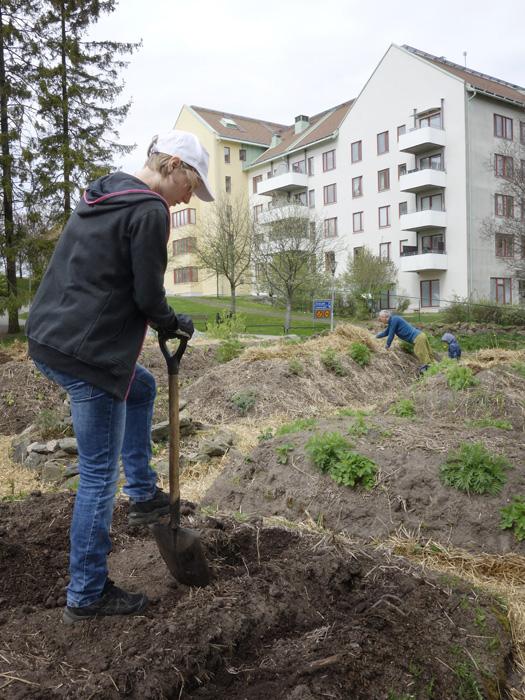
Jubilee Growers
Paula Palm, retrieved 08/29/2018 from https://hojdenstradgardskollektiv.wordpress.com/
Gothernburg City Council
https://stadsnaraodling.goteborg.se/vara-projekt/