

Last updated: October 2021
The largest rain gardens in Sweden (thus far) has been created in Göteborg (Kviberg park). Kviberg's multisport arena was completed in the summer of 2015 in the northeastern part of Göteborg. Around the facility, there are parking spaces with a capacity for 500 cars. In order to handle the rainwater flowing from the parking area, approximately five per cent of the total area has been used for rain gardens, which both clean and store the rainwater. (Ref. 1, 2)
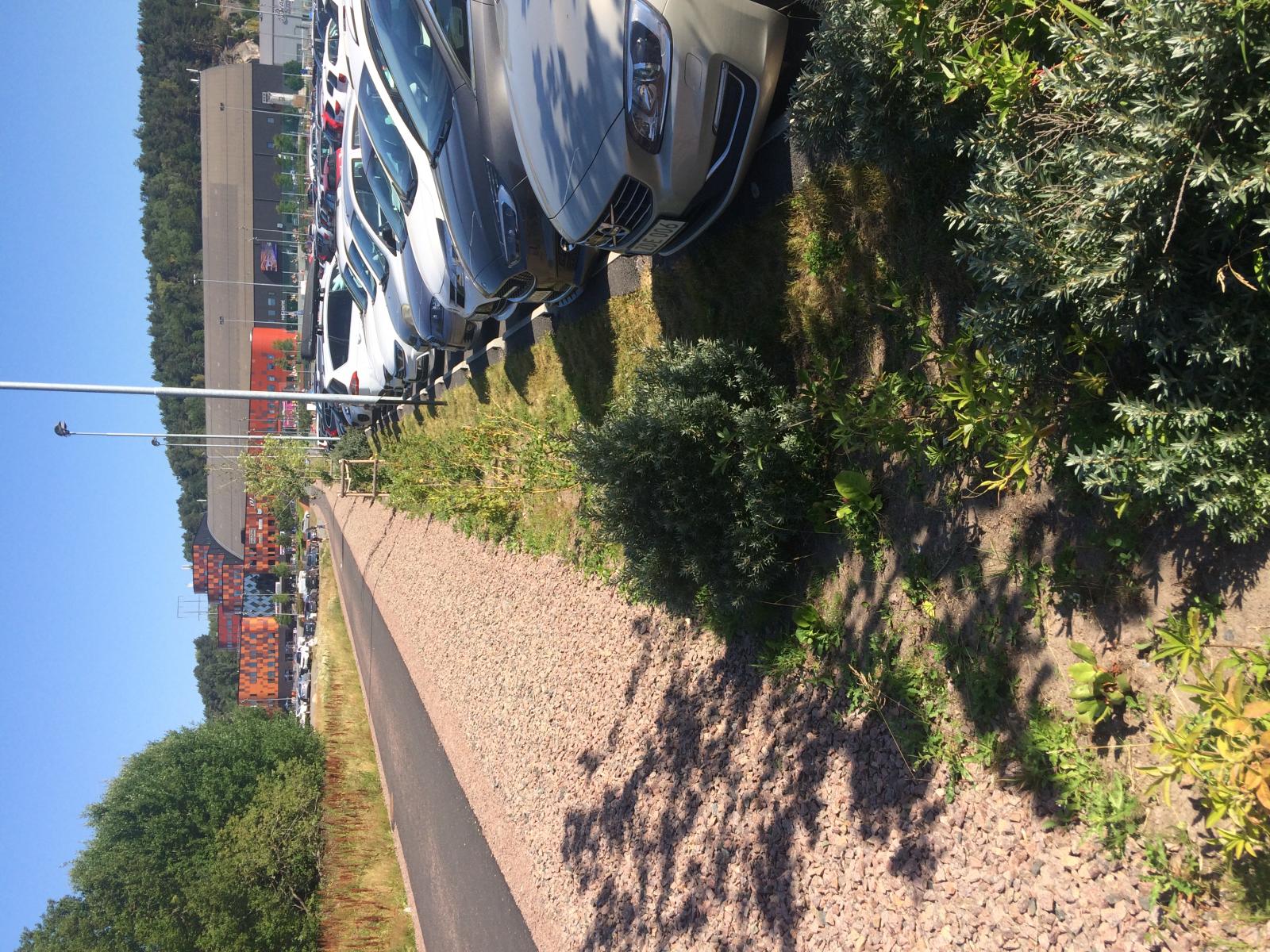
Rain gardens in Kviberg
Photographer: Lina Karlsson (2018), retrieved 07/18/2018
Overview
Nature-based solution
- Grey infrastructure featuring greens
- Green parking lots
- Green areas for water management
- Rain gardens
Key challenges
- Water management (SDG 6)
- Flood protection
- Stormwater and rainfall management and storage
- Improvements to water quality
- Green space, habitats and biodiversity (SDG 15)
- Green space creation and/or management
Focus
Creation of new green areas
Project objectives
The objectives of the project are:
1. To create rain gardens that clean the water from the parking at Kviberg’s multisports arena.
2. Fulfill the city of Göteborg's aim of natural water treatment that the city will strive for.
3. Save the Säveån, a closely located Natura 2000 area from the drained wastewater of the parking space.
4. Reduce the stormwater burden of the city. (Ref. 2, 1)
Implementation activities
In some parts of Göteborg floods have been a common problem. In heavy rain, it happens among other things that large amounts of rainwater from water pipes penetrate into wastewater pipes, which may overload them. The consequences are that unclean wastewater flows right into the city's watercourses. At Kviberg's multisport arena, it is extra important to clean the water flowing from the plant because Säveån, a Natura 2000 area, is located close by. In June 2015, the city completed one of the country's first rain gardens. The rain garden is a pilot project (demo site) for sluggish stormwater drainage and is located at the Kviberg's multisport arena. The rain gardens have two functions, to filter pollutants from the parking space and to slow down large water flows to avoid floods when it rains a lot. Using the right material in the plant bed is a must for a functioning plant. The top layer consists of plant soil, in this layer mainly the purification takes place. The water should flow through easily and therefore the soil should have a low content of clay and high sand content. It is also important to have the right content of organic material for the plants to thrive. The second layer is mineral soil and this gives stability to the plant bed. It must not contain too much organic material because then there may be settlements. At the bottom, there is a gravel layer and a drainage pipe to store and collect water. Between the finer grains and the drainage layers, there is a layer of sand that keeps the particles in the right place. (Ref. 1 , 3)
Main beneficiaries
- Local government/Municipality
Governance
Management set-up
- Government-led
Type of initiating organisation
- Local government/municipality
Participatory approaches/ community involvement
- Co-planning (e.g. stakeholder workshops, focus groups, participatory mapping)
Details on the roles of the organisations involved in the project
The project is a collaboration between municipal administrations; Cycle and water (Kretslopp- och vatten) and Park and nature (Park- och naturförvaltningen), along with Göteborg's city parking company (Göteborgs Stads Parkeringsaktiebolag). (Ref. 1, 2, 4)
Project implemented in response to ...
... an EU policy or strategy?
Unknown
... a national policy or strategy?
Unknown
... a local policy or strategy?
Yes
(The project was inspired by the City of Göteborg's environmental objectives for natural stormwater treatment. (Ref. 1, 3) )
Financing
Total cost
€100,000 - €500,000
Source(s) of funding
- Public local authority budget
Type of funding
- Earmarked public budget
- Direct funding (grants, subsidies, or self-financed projects by private entities)
Non-financial contribution
No
Impacts and Monitoring
Environmental impacts
- Environmental quality
- Improved air quality
- Water management and blue areas
- Improved water quality
- Increased protection against flooding
- Improved stormwater management
- Green space and habitat
- Increased green space area
- Reduced biodiversity loss
Economic impacts
- Reduce financial cost for urban management
Socio-cultural impacts
- Other
Type of reported impacts
Achieved impacts
Presence of formal monitoring system
Yes
Presence of indicators used in reporting
Yes
Presence of monitoring/ evaluation reports
Yes
Availability of a web-based monitoring tool
No
References
Ref. 1. Göteborgs Stad (n.d.) Kvibergs park har en av Sveriges första och största regnrabatter. Regnrabatter. Miljö ock klimat. Retrieved from Source link on 14th November, 2020.
Ref. 2. SMHI (2015) Regnrabatter i Göteborg, fördjupning. Klimat, exempel på klimatanpassning. Retrieved from Source link on 14th November, 2020.
Ref. 3. Göteborgs Stad (2016) Miljön i Göteborg 2016. Hållbar stad - öppen för världen. Retrieved from Source link on 14th November, 2020.
Ref. 4. Föreningen Vatten (2016) Regnrabatter eller biofilter för dagvatten - ett pilotprojekt inom Göteborgs stad. Retrieved from Source link on 14th November, 2020.
Ref. 5. Hellberg, M. (2016) Modeling detention and pollutant fate in bioretention systems. Master's thesis. Chalmers university of technology. Retrieved from Source link on 14th November, 2020.
Ref. 6. Göteborgs Stad (2010) Dagvatten, så här gör vi! Handbok för kommunal planering och förvaltning. Retrieved from Source link on 14th November, 2020.
Ref. 2. SMHI (2015) Regnrabatter i Göteborg, fördjupning. Klimat, exempel på klimatanpassning. Retrieved from Source link on 14th November, 2020.
Ref. 3. Göteborgs Stad (2016) Miljön i Göteborg 2016. Hållbar stad - öppen för världen. Retrieved from Source link on 14th November, 2020.
Ref. 4. Föreningen Vatten (2016) Regnrabatter eller biofilter för dagvatten - ett pilotprojekt inom Göteborgs stad. Retrieved from Source link on 14th November, 2020.
Ref. 5. Hellberg, M. (2016) Modeling detention and pollutant fate in bioretention systems. Master's thesis. Chalmers university of technology. Retrieved from Source link on 14th November, 2020.
Ref. 6. Göteborgs Stad (2010) Dagvatten, så här gör vi! Handbok för kommunal planering och förvaltning. Retrieved from Source link on 14th November, 2020.
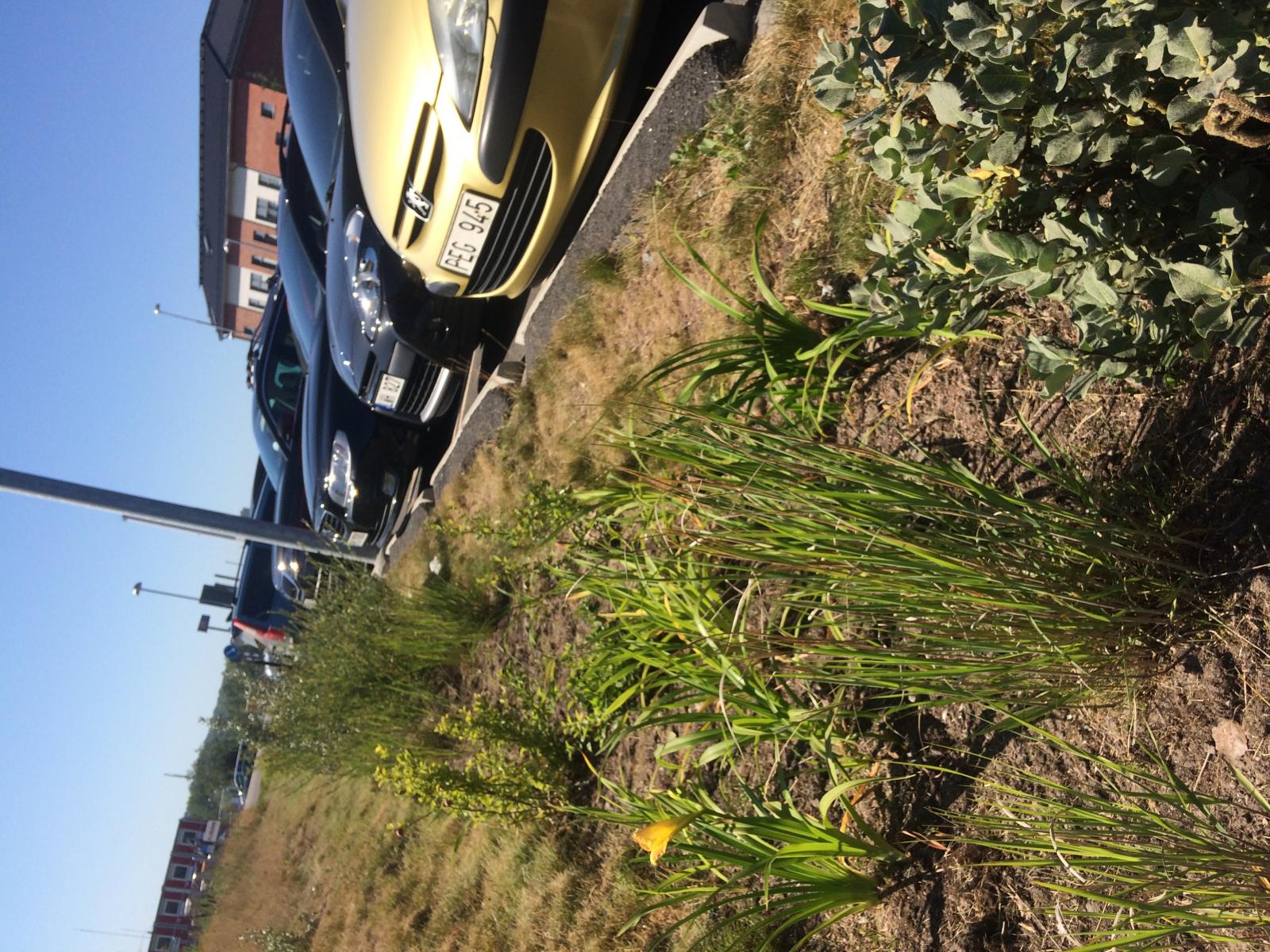
Rain gardens in Kviberg
Photographer: Lina Karlsson (2018), retrieved 07/18/2018
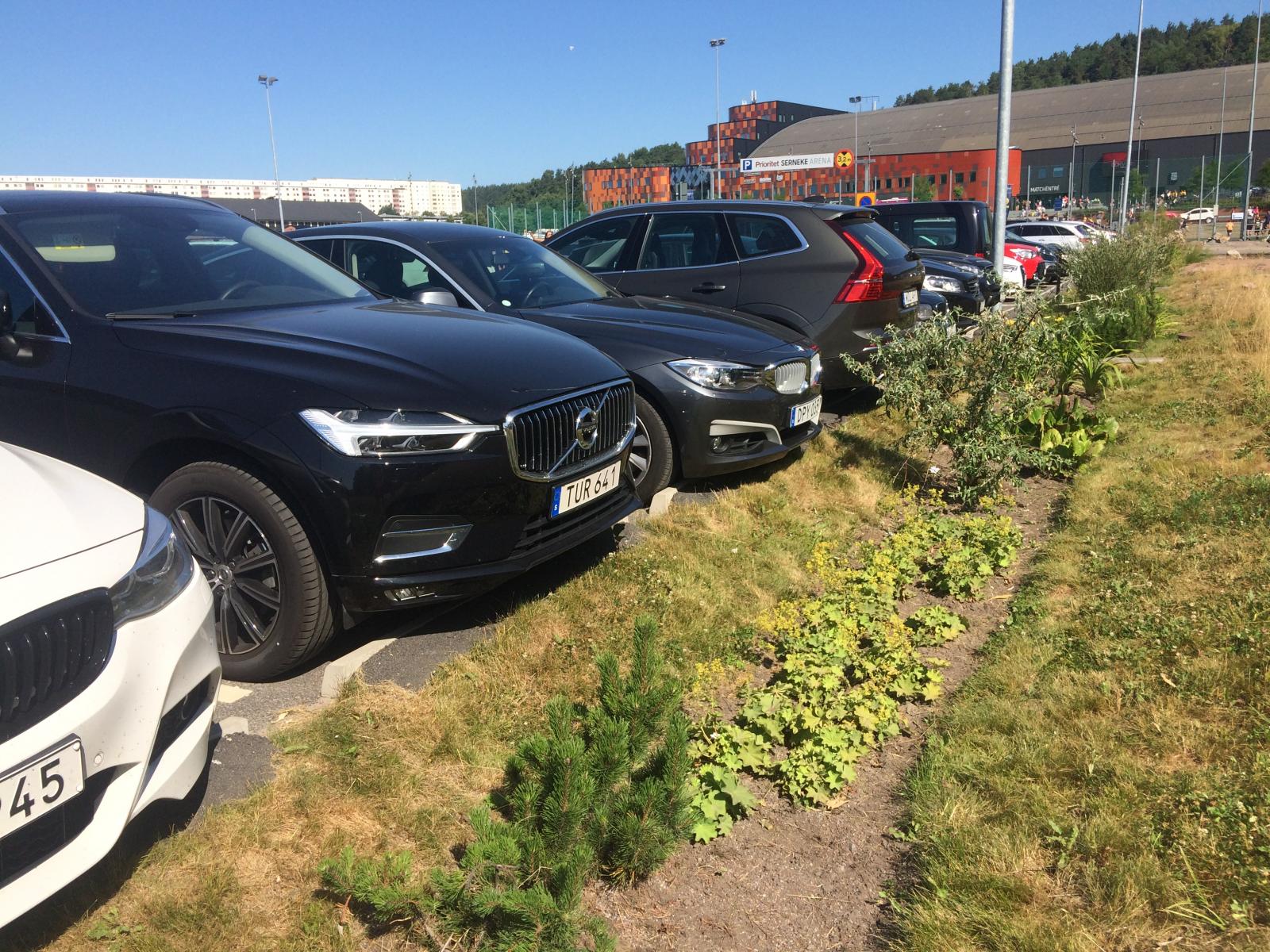
Rain gardens in Kviberg
Photographer: Lina Karlsson (2018), retrieved 07/18/2018
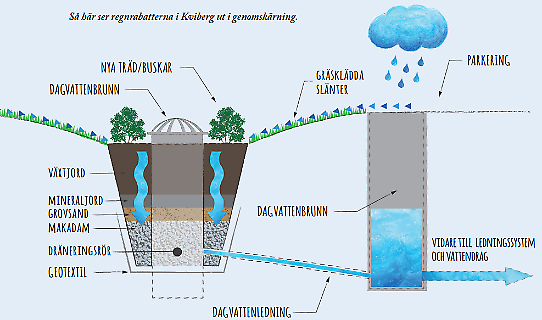
SMHI
https://www.smhi.se/klimat/klimatanpassa-samhallet/exempel-pa-klimatanpassning/regnrabatter-i-goteborg-fordjupning-1.117301