

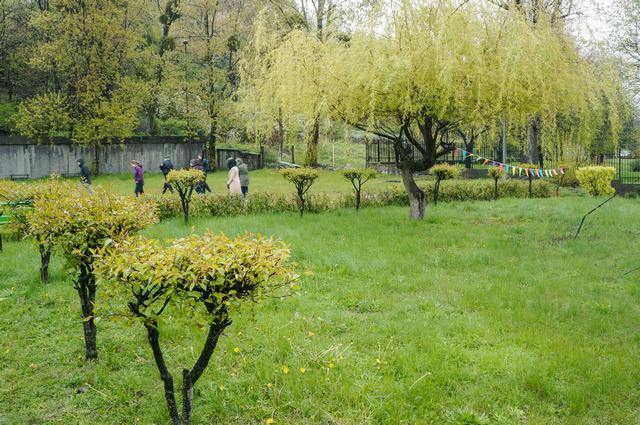
This pilot project to create social gardens in Gdynia was developed by a cooperative of the local government, NGO sector and businesses. The project involved creating 3 (and finally 6) social gardens in different locations of Gdynia (Oksywie, Grabówek and Redłowo). They serve ecologic (greenery planting), horticultural (jointly managed vegetable and herb gardens), social (community integration) and educational (workshops on topics such as healthy lifestyle or building bird boxes) purposes. The gardens are being co-managed on a voluntary basis by the local communities with the help of an appointed gardener and an animator [1,4]. The project is based on 4 pillars: 1) social participation; 2) innovation; 3) social sensitivity; 4) food anthropology [5].
Overview
Nature-based solution
- Parks and urban forests
- Pocket parks/neighbourhood green spaces
- Community gardens and allotments
- Community gardens
Key challenges
- Green space, habitats and biodiversity (SDG 15)
- Green space creation and/or management
- Regeneration, land-use and urban development
- Promote natural styles of landscape design for urban development
- Inclusive and effective governance (SDG 16)
- Inclusive governance
- Social justice, cohesion and equity (SDG 10)
- Social justice and equity
- Social cohesion
- Social interaction
- Health and well-being (SDG 3)
- Improving mental health
- Creation of opportunities for recreation
- Sustainable consumption and production (SDG 12)
- Sustainable consumption
- Sustainable production
Focus
Project objectives
Implementation activities
Main beneficiaries
- Non-government organisation/Civil Society
- Citizens or community groups
- Food producers and cultivators (i.e. farmers, gardeners)
Governance
Management set-up
- Co-governance with government and non-government actors
Type of initiating organisation
- Local government/municipality
- Non-government organisation/civil society
- Private sector/corporate actor/company
Participatory approaches/ community involvement
- Joint implementation (e.g. tree planting)
- Co-management/Joint management
Details on the roles of the organisations involved in the project
Project implemented in response to ...
Financing
Total cost
Source(s) of funding
- Public local authority budget
- Crowdfunding
Type of funding
- Direct funding (grants, subsidies, or self-financed projects by private entities)
Non-financial contribution
- Provision of labour
- Provision of expertise
- Citizens (e.g. volunteering)
Impacts and Monitoring
Environmental impacts
- Green space and habitat
- Increased green space area
- Reduced biodiversity loss
- Increased number of species present
Economic impacts
- Increase in agricultural production (for profit or not)
Socio-cultural impacts
- Social justice and cohesion
- Improved social cohesion
- Fair distribution of social, environmental and economic benefits of the NBS project
- Improved liveability
- Improved access to urban green space
- Increased opportunities for social interaction
- Increased involvement of locals in the management of green spaces
- Increased access to healthy/affordable food
- Health and wellbeing
- Gain in activities for recreation and exercise
- Education
- Increased awareness of NBS and their benefits
Type of reported impacts
Presence of formal monitoring system
Presence of indicators used in reporting
Presence of monitoring/ evaluation reports
Availability of a web-based monitoring tool
References
2. Online article, Szczerba,P., (2017), 'Social gardens will blossom in Gdynia' ('W Gdyni rozkwitną ogrody społeczne'), Source link (Accessed: 23 September 2020).
3. Food Bank (Bank Żywności) portal, (2017), 'We opened a social garden in Oksywie' ('Założyliśmy na Oksywiu ogród społeczny'), Source link (Accessed: 24 July 2017). Link not available in 2020.
4. Dzierżak, L., (2017), 'Social gardens will open in Gdynia. What will the inhabitants grow?' ('W Gdyni powstają Społeczne Ogrody. Co pod oknem będą uprawiać mieszkańcy?'), Source link (Accessed: 23 September 2020).
5. Garden portal, 'A start of an innovative project Open Gardens of Gdynia' ('Rusza innowacyjny projekt Otwarte Ogrody Gdyni'), Source link (Accessed: 24 July 2017). Link not available in 2020.
6. City Council website, 'Open gardens of Gdynia - implementation and care' ('Otwarte Ogrody Gdyni - wykonanie i pielęgnacja'), Source link (Accessed: 23 September 2020).
7. Otwarte Ogrody Gdyni. (n.d.). Facebook account. Available at: Source link (Accessed: 23 September 2020).
