

Last updated: October 2021
The Schwanheimer dune is one of the few inland dunes in Europe. Sand, silver grass and gnarled pines shape the landscape, but also orchards and ponds are part of it (8). The area was designated as a nature reserve by the State of Hesse in 1984. Since its expansion in 2002, it now covers 58.5 hectares. Since 2003 it has also been protected as a Flora-Fauna Habitat area under European law contributing to the Natura2000 landscape (8). An approximately 400-meter-long boardwalk made of chestnut wood leads through the center of the dune on which visitors can enjoy nature on site - without harming it (8, 10). It was built in 1999 and completely rebuilt in 2017 with a lot of effort on the old route (8).
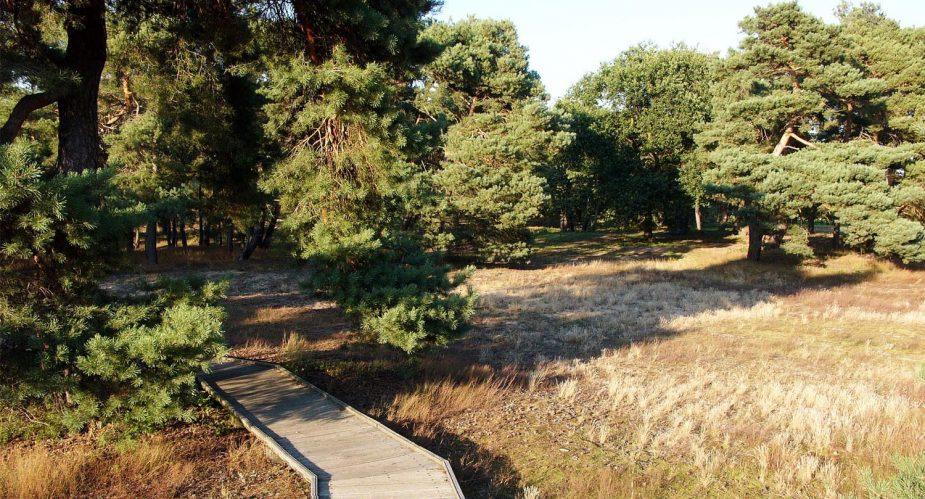
Source: https://www.regionalpark-rheinmain.de/portfolio-item/schwanheimer-duenen/
Overview
Nature-based solution
- Parks and urban forests
- Large urban parks or forests
- Blue infrastructure
- Lakes/ponds
Key challenges
- Green space, habitats and biodiversity (SDG 15)
- Habitat and biodiversity conservation
- Green space creation and/or management
- Health and well-being (SDG 3)
- Creation of opportunities for recreation
Focus
Protection of natural ecosystems
Project objectives
1. Preservation of the unique natural biotope of the sand dune (1);
2. Preserve and increase the number of species in the area (1);
3. Create a calm recreation space for Frankfurt citizens (2).
Implementation activities
1. Expansion of the designated nature conservation area and protected natural habitat from 38 to 58.5 hectares (1);
2. Infrastructure for pedestrians introduced on the whole territory of the conservation area (4).
Biodiversity conservation or restoration-focused activities
Biodiversity conservation:
- Protect and enhance urban habitats
- Preserve and strengthen existing habitats and ecosystems
- Protect species
- Undertake specific measures to protect species
- Undertake specific measures to protect native species
- Undertake specific measures to protect endangered species
Main beneficiaries
- Citizens or community groups
Governance
Management set-up
- Co-governance with government and non-government actors
Type of initiating organisation
- Local government/municipality
- Non-government organisation/civil society
Participatory approaches/ community involvement
- Dissemination of information and education
- Consultation (e.g. workshop, surveys, community meetings, town halls)
- Joint implementation (e.g. tree planting)
- Citizen monitoring and review
Details on the roles of the organisations involved in the project
Although the project is led by Frankfurt Environmental Department, non-government actors participated in the realization of the protection scheme by conducting observation. The observation was conducted by a non-governmental organization Flora Frankfurt (3). At the End of 2009, the project group Flora Frankfurt of the Senckenberg-Institute has released a "Flore work" Website, whose aim is to show all the wild growing plant species in Frankfurt. People who are interested can document the growing spot of a kind and so contribute to a growing "Flore work" (4).
Another remarkable non-governmental organisation contributing to the protection and conservation of the send dunes was the Frankfurt district association of the BUND. The association has cleared some areas in voluntary work and planted new fruit trees, employees of the rehabilitation workshop "Roter Hamm" of the Frankfurt association care for the trees and harvest fruit. Also, they commissioned a grazing plan to coordinate further de-bushing and care measures. Finally, in 1999, at the suggestion of BUND, the Bohlenweg a boardwalk was built through the core area of the Schwanheimer dunes, on which visitors can enjoy nature on site - without harming it (10). The pathway was rebuilt in 2017 from the financial support of the RheinMain Regional Park (8).
Project implemented in response to ...
... an EU policy or strategy?
Yes
(The expansion of the SEU Fauna-Flora Habitats Directive (2003) aimed at protection and development of unique natural habitats and species (5). FFH areas and bird sanctuaries make up the coherent network of ecological nature reserves Natura 2000 8 (11). )
... a national policy or strategy?
Yes
(Federal Nature Conservation Act)
... a local policy or strategy?
Unknown
(The city of Frankfurt has its own Nature Conservation Policy (6), however, it is unknown, if it addresses a specific GI/NBS vision in regard to this particular project.
)
Financing
Total cost
Unknown
Source(s) of funding
- Public local authority budget
- Unknown
Type of funding
- Earmarked public budget
Non-financial contribution
Unknown
Impacts and Monitoring
Environmental impacts
- Water management and blue areas
- Enhanced protection and restoration of freshwater ecosystems
- Green space and habitat
- Increased conservation or restoration of ecosystems
- Increase in protected green space areas
- Reduced biodiversity loss
- Increased number of species present
- Increased protection of threatened species
- Enhanced support of pollination
Economic impacts
- Unknown
Socio-cultural impacts
- Health and wellbeing
- Gain in activities for recreation and exercise
Type of reported impacts
Expected impacts, Achieved impacts
Presence of formal monitoring system
Yes
Presence of indicators used in reporting
Yes
Presence of monitoring/ evaluation reports
Yes
Availability of a web-based monitoring tool
No evidence in public records
References
1. Frankfurt Green City. (2017). Schwanheimer Düne : Stadt Frankfurt Am Main | Dezernat Umwelt Und Gesundheit | Umweltamt. Website not available in September 2020
2. Frankfurt Green City. (2011). Den Herbst in Der Düne Genießen | Höchster Kreisblatt. Höchster Kreisblatt. Website not available in September 2020
3. Frankfurt Green City. (2017). Frankfurt’s Flora : Stadt Frankfurt Am Main | Dezernat Umwelt Und Gesundheit | Umweltamt. Website not available in September 2020
4. Wikipedia. (2017). Schwanheimer Düne : Stadt Frankfurt Am Main | Dezernat Umwelt Und Gesundheit | Umweltamt. Accessed on September 30, 2020, Source link
5. Frankfurt Green City. (2017). Nature Conservation : Stadt Frankfurt Am Main | Dezernat Umwelt Und Gesundheit | Umweltamt. Website not available in September 2020
6. Frankfurt Green City. (2017). Biotope Mapping : Stadt Frankfurt Am Main | Dezernat Umwelt Und Gesundheit | Umweltamt. Website not available in September 2020
7. Flora Frankfurt. (2010). Flora Frankfurt. Accessed on September 30, 2020, Source link
8. Stadt Frankfurt am Main. (n/a). Schwanheimer Dune nature reserve. Accessed on September 30, 2020, Source link
9. Regional Park RheinMain. (n/a). Schwanheimer Dunes. Accessed on September 30, 2020, Source link
10. BUND Frankfurt. (n/a). Schwanheimer Dunes nature reserve. Accessed on September 30, 2020, Source link
11. Vonhof, H. (2020). Schwanheimer Dünen in Gefahr: Nester zerstört, Müll zurück gelassen, Frankfurter Neue Presse, Accessed on September 30, 2020, Source link
2. Frankfurt Green City. (2011). Den Herbst in Der Düne Genießen | Höchster Kreisblatt. Höchster Kreisblatt. Website not available in September 2020
3. Frankfurt Green City. (2017). Frankfurt’s Flora : Stadt Frankfurt Am Main | Dezernat Umwelt Und Gesundheit | Umweltamt. Website not available in September 2020
4. Wikipedia. (2017). Schwanheimer Düne : Stadt Frankfurt Am Main | Dezernat Umwelt Und Gesundheit | Umweltamt. Accessed on September 30, 2020, Source link
5. Frankfurt Green City. (2017). Nature Conservation : Stadt Frankfurt Am Main | Dezernat Umwelt Und Gesundheit | Umweltamt. Website not available in September 2020
6. Frankfurt Green City. (2017). Biotope Mapping : Stadt Frankfurt Am Main | Dezernat Umwelt Und Gesundheit | Umweltamt. Website not available in September 2020
7. Flora Frankfurt. (2010). Flora Frankfurt. Accessed on September 30, 2020, Source link
8. Stadt Frankfurt am Main. (n/a). Schwanheimer Dune nature reserve. Accessed on September 30, 2020, Source link
9. Regional Park RheinMain. (n/a). Schwanheimer Dunes. Accessed on September 30, 2020, Source link
10. BUND Frankfurt. (n/a). Schwanheimer Dunes nature reserve. Accessed on September 30, 2020, Source link
11. Vonhof, H. (2020). Schwanheimer Dünen in Gefahr: Nester zerstört, Müll zurück gelassen, Frankfurter Neue Presse, Accessed on September 30, 2020, Source link
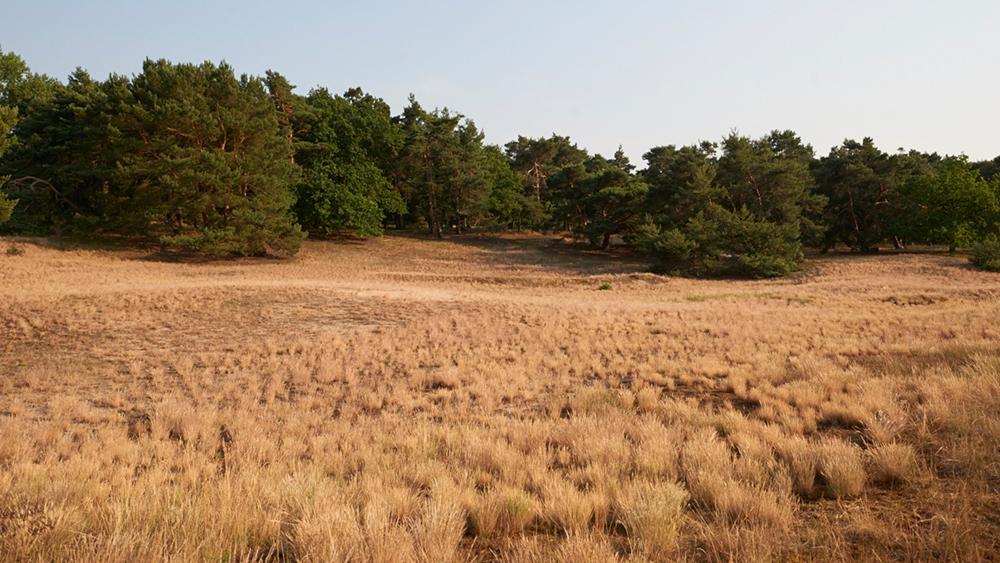
Source: https://frankfurt.de/themen/umwelt-und-gruen/orte/schutzgebiete/schwanheimer_duene
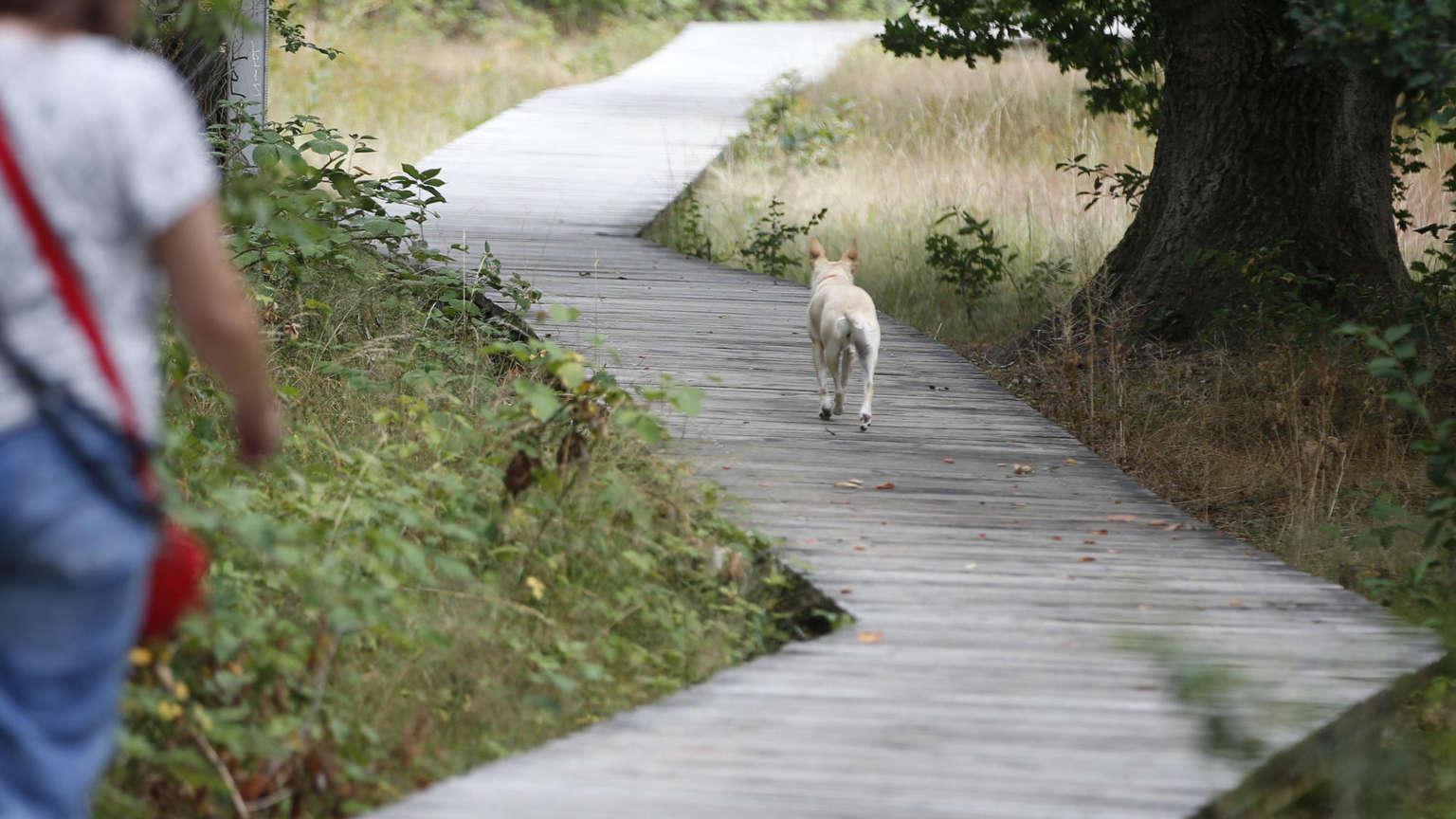
Source: https://www.fnp.de/frankfurt/frankfurt-corona-schwanheimer-duenen-naturschutzgebiet-besucher-muell-tiere-schaden-13827854.html