

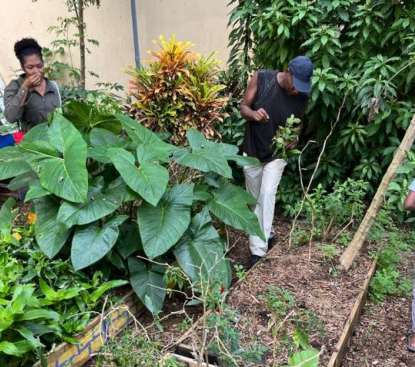
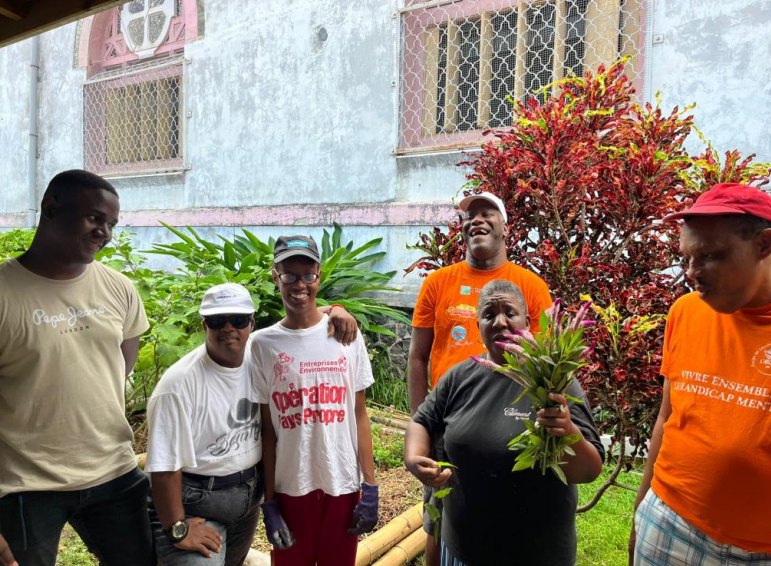
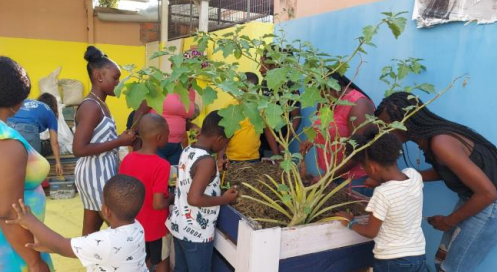
Terres Sainville is one of Fort-de-France's priority neighborhoods, known for the precarious living conditions of its residents and the prevalence of illicit activities. Many plots of land in the area have been abandoned and are used as informal dumpsites. In response, the City of Fort-de-France developed the "Jaden Lanmou" (Garden of Love) program, which aims to revitalize neglected spaces across the city’s 145 neighborhoods, Terres Sainville being one of them. With support from the Terres Sainville town hall, neighborhood associations (such as the Terres Sainville Citizens' Council and local schools), and the Ypiranga Martinique association, the community has been working to transform these wastelands into shared gardens. Since 2021, Ypiranga has created 10 productive gardens, designing each based on the land's configuration, soil quality, and the preferences of local residents, including options for market gardening, medicinal plants, fruit trees, and above-ground containers (Ref 1; 7). This initiative prioritizes the development of city-owned land and strategic transit sites, while also encouraging private landowners to maintain their abandoned plots or share them with the community. Additionally, the program seeks to enhance existing flowerbeds, create new ones, and incorporate artistic elements like street art and graffiti. Public meeting spaces are being developed to foster community interaction. The city aims to involve residents by providing equipment, training, workshops, and advice on best practices. Ultimately, neighborhood representatives and residents will be responsible for maintaining these new communal spaces and ensuring they are respected (Ref 2).
Overview
Nature-based solution
- Community gardens and allotments
- Community gardens
Key challenges
- Environmental quality
- Waste management
- Green space, habitats and biodiversity (SDG 15)
- Green space creation and/or management
- Regeneration, land-use and urban development
- Regulation of built environment
- Inclusive and effective governance (SDG 16)
- Inclusive governance
- Social justice, cohesion and equity (SDG 10)
- Social justice and equity
- Social interaction
- Environmental education
- Sense of community and community engagement
- Economic development and employment (SDG 8)
- Economic development: agriculture
- Sustainable consumption and production (SDG 12)
- Sustainable consumption
- Sustainable production
- Food scarcity / security
Principal problems in Functional Urban Area (FUA)
- Land use and Socio-economic change
- Agriculture/ crop production
- Limited economic opportunities and local livelihoods
- Unequal availability and access to public green spaces
- Health, Well-being and Social cohesion
- Disconnection from nature
- Social fragmentation and isolation
- Poor community engagement
- Insecurity in public spaces
- Resource Scarcity and Competition
- Food insecurity due to disruptions in food production and distribution
Key priorities
Focus
Project objectives
Implementation activities
Specification of climate or environmentally vulnerable communities
Main beneficiaries
- Marginalized groups: Children, young people or youth groups , Elderly people, Women, Socio-economically disadvantaged populations (e.g. low-income households, unemployed)
Governance
Management set-up
- Co-governance with government and non-government actors
Type of initiating organisation
- National government
- Local government/municipality
- Non-government organisation/civil society
Participatory approaches/ community involvement
- Co-planning (e.g. stakeholder workshops, focus groups, participatory mapping)
- Dissemination of information and education
- Consultation (e.g. workshop, surveys, community meetings, town halls)
- Joint implementation (e.g. tree planting)
Details on the roles of the organisations involved in the project
Project implemented in response to ...
Type of enablers
Financing
Total cost
Source(s) of funding
- Public national budget
Type of funding
- Earmarked public budget
Non-financial contribution
- Provision of land
- Provision of labour
- Citizens (e.g. volunteering)
Impacts and Monitoring
Environmental impacts
- Green space and habitat
- Increased conversion of degraded land or soil
- Achieved increased conversion of degraded land or soil
- Enhanced support of pollination
- Expected enhanced support of pollination
- Restoration of derelict areas
- Achieved restoration of derelict areas
- Expected restoration of derelict areas
Economic impacts
- Stimulate development in deprived areas
- Expected stimulate development in deprived areas
- Increase in agricultural production (for profit or not)
- Achieved increase in agricultural production (for profit or not)
Socio-cultural impacts
- Social justice and cohesion
- Improved access to urban green space
- Expected improved access to urban green space
- Increased opportunities for social interaction
- Expected increased opportunities for social interaction
- Increased involvement of locals in the management of green spaces
- Expected increased involvement of locals in the management of green spaces
- Cultural heritage and sense of place
- Increased sense of place identity, memory and belonging
- Achieved increased sense of place identity, memory and belonging
- Education
- Increased knowledge of locals about local nature
- Achieved increased knowledge of locals about local nature
- Other
Type of reported impacts
Presence of formal monitoring system
Presence of indicators used in reporting
Presence of monitoring/ evaluation reports
Availability of a web-based monitoring tool
Potential risks of implementation and trade-offs
References
 Information about this nature-based solution was collected as part of the Naturescapes project funded by the European Union under Grant Agreement No 101084341.