

Last updated: September 2024
The mangrove area of Morne Cabri, located in the municipality of Le Lamentin and sharing the bay of Fort-deFrance, is the largest mangrove area in Martinique. Since 2011, the municipality has led efforts to understand and better manage the area (Ref 1). The natural regeneration of the mangrove is threatened by fresh water run-off (from waste and rainwater), invasive species and pollution. However, it is an important protection against extreme weather events, operates as a carbon sink for the island and provides recreational activities (Ref 1). The municipality has led several initiatives supported by volunteers, local businesses, national subsidies and private donations (See: Ref 2, 3, 4, 11).
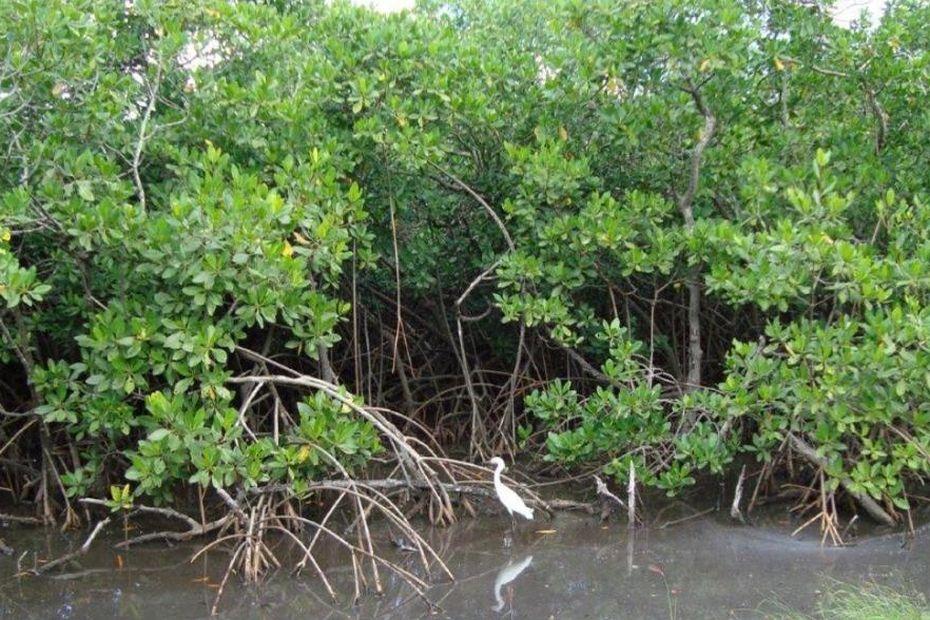
Mangrove of Morne Cabri
The image is retrieved from: https://la1ere.francetvinfo.fr/martinique/lamentin/la-restauration-de-la-mangrove-de-morne-cabri-au-lamentin-a-debute-1277588.html
Overview
Nature-based solution
- Blue infrastructure
- Coastal wetland, mangroves and salt marshes
- Mangroves
Key challenges
- Climate action for adaptation, resilience and mitigation (SDG 13)
- Climate change adaptation
- Coastal resilience and marine protection (SDG 14)
- Coastal protection / hazard mitigation
- Green space, habitats and biodiversity (SDG 15)
- Habitat and biodiversity restoration
- Habitat and biodiversity conservation
- Water management (SDG 6)
- Flood protection
- Stormwater and rainfall management and storage
- Cultural heritage and cultural diversity
- Preservation of natural heritage
- Health and well-being (SDG 3)
- Creation of opportunities for recreation
- Social justice, cohesion and equity (SDG 10)
- Environmental education
Principal problems in Functional Urban Area (FUA)
- Climate-Related Hazards
- Coastal hazards (e.g. erosion, flooding)
- Extreme weather events (e.g. storms, hurricanes)
- Degradation of carbon sinks
- Environmental Degradation
- Biodiversity loss
- Invasive alien species
Key priorities
Climate action (adaptation and/or mitigation), Biodiversity (conservation and/or restoration), Social Justice and community
Focus
Coastal landscape management or protection, Coastal ecosystems restoration and maintenance (mangroves, dunes, saltplains, underwater meadows), Improving coastal resilience, Protection of natural ecosystems, Habitat restoration, Habitat conservation, Knowledge creation and awareness raising, Educational and awareness raising programs, Monitoring and maintenance of habitats and/or biodiversity, Clearing out invasive alien species and allow natural regeneration maintaining the functionality the ecosystem
Project objectives
-Mitigating the impact of invasive species, pollution and freshwater run-off in order to reach satisfactory ecological conditions so that the mangrove area can naturally regenerate and protect coastal communities (Ref 1):
-Restoring and expanding the mangrove area, ultimately reconnecting the mangrove area of Morne Cabri with the natural reserve of Génipa, south of Morbe Cabri (Ref 4).
-Maintaining a valuable recreational area where people can connect with nature (Ref 4; 5).
-Educating locals on the importance of mangroves for coastal communities (Ref 4).
Implementation activities
Stage 1:
-between 2011-2013 a biological inventory study was conducted to assess the flora and fauna of the mangrove (Ref 2)
Stage 2:
-between 2019-2022 the project involved actions that were focused on invasive species control and reforestation with the the removal of 1000m² of invasive species, laying 500m² of tarpaulins to smother the invasive grasses, protecting 50 plants or trees threatened by the invasive grasses, planting 60 trees with a view to reforesting the degraded mangrove area, collecting 200 black mangrove seeds and planting 50 of these plants in a nursery in situ (Ref 6).
Stage 3:
-between 2022-2023 the project focused on habitat enhancement, waste management, and educational activities with actions that included planting of 300 trees and shrubs (specific species of the environment present on site or rare) in the wooded area and in the parking lot; digging-up areas to “return them to the mangrove”; setting up an “interpretation trail”; rehabilitating a pond and its immediate environment (Ref 7).
Stage 4 (ongoing)
-from 2023 onward the project involves erosion control, landowner engagement, and creation of wooded areas and wetlands (Ref 3).
-in this stage community engagement is also crucial as participatory kayaking clean-ups and workshops are organized by a local business, with municipal support (Ref 8; 9).
Climate-focused activities
Climate change adaptation:
- Restore mangroves, marshes, reefs and wetlands to dissipate the effects of storms and floodwaters
- Protect and restore coastal ecosystems, to address loss of land and livelihoods, due to rising sea levels
- Restore and protect forests to prevent water runoff and assets loss due to flooding
Communities vulnerable to environmental hazards or climate change impacts
Yes
Specification of climate or environmentally vulnerable communities
Low-income neighborhoods, Coastal communities
Biodiversity conservation or restoration-focused activities
Biodiversity conservation:
- Protect species
- Control and clean invasive alien species
- Means for conservation governance
- Raise public awareness
Biodiversity restoration:
- Rehabilitate and restore damaged or destroyed ecosystems
- Restore species (native, endangered, or unspecified)
- Restore native species
- Clear and control invasive alien species
- Restore ecological connectivity
- Public engagement
Main beneficiaries
- Citizens or community groups
- Young people and children
Governance
Management set-up
- Government-led
Type of initiating organisation
- Local government/municipality
Participatory approaches/ community involvement
- Co-planning (e.g. stakeholder workshops, focus groups, participatory mapping)
- Dissemination of information and education
- Joint implementation (e.g. tree planting)
Details on the roles of the organisations involved in the project
This initiative is led by the municipality of Fort-de-France, which has partnered with various stakeholders since 2011. The municipality partnered with:
-the Research Cuban Institute for the initial inventory study
-local companies and landowners for joint planning, planting, participatory clean-ups, and workshops
-the local community to participate in joint planning, planting and educational/awareness raising activities
-Fondation du Patrimoine (NGO), the French Office for Biodiversity (national government), Primagaz (LPG supplier company) to provide funding
(Ref 1; 2; 5; 10; 11).
Project implemented in response to ...
... an EU policy or strategy?
Unknown
... a national policy or strategy?
Unknown
... a local policy or strategy?
Yes
(Ref 1 mentions that "In 2011, the municipality of Le Lamentin began taking action to better understand, enhance and manage its mangrove." Since then, sources indicate a consistent policy of mangrove restoration led by the municipality by engaging with and gaining the support of other stakeholders.)
Type of enablers
Governance innovations (such as public private partnerships), Funds, subsidies or investment for GI/NBS in the city (available for the city or provided by the city)
Financing
Total cost
€500,000 - €2,000,000
Source(s) of funding
- Public national budget
- Corporate investment
- Funds provided by non-governmental organization (NGO)
Type of funding
- Direct funding (grants, subsidies, or self-financed projects by private entities)
Non-financial contribution
Type of non-financial contribution
- Provision of land
- Provision of labour
Who provided the non-financial contribution?
- Public authorities (e.g. land, utility services)
- Citizens (e.g. volunteering)
Impacts and Monitoring
Environmental impacts
- Climate change
- Storm / wave induced erosion and flooding
- Expected storm / wave induced erosion and flooding
- Enhanced protection against extreme weather events (e.g. storms, cyclones, tidal surges, coastal erosion)
- Expected enhanced protection against extreme weather events (e.g. storms, cyclones, tidal surges, coastal erosion)
- Water management and blue areas
- Improved stormwater management
- Expected improved stormwater management
- Green space and habitat
- Increased conservation or restoration of ecosystems
- Achieved increased conservation or restoration of ecosystems
- Expected increased conservation or restoration of ecosystems
- Increased ecological connectivity across regeneration sites and scales
- Expected increased ecological connectivity across regeneration sites and scales
- Increased number of species present
- Achieved increased number of species present
- Improved prevention or control of invasive alien species
- Achieved improved prevention or control of invasive alien species
Economic impacts
- Increase of green jobs (e.g. paid employment positions)
- Achieved increase of green jobs (e.g. paid employment positions)
- Generation of other type of work opportunities (e.g. voluntary, work for rehabilitation)
- Achieved generation of other type of work opportunities (e.g. voluntary, work for rehabilitation)
- More sustainable tourism
- Achieved more sustainable tourism
- Generation of income from NBS
- Achieved generation of income from NBS
Socio-cultural impacts
- Health and wellbeing
- Gain in activities for recreation and exercise
- Achieved gain in activities for recreation and exercise
- Education
- Increased awareness of NBS and their benefits
- Achieved increased awareness of NBS and their benefits
Type of reported impacts
Presence of formal monitoring system
Yes
Presence of indicators used in reporting
Yes
Presence of monitoring/ evaluation reports
Yes
Availability of a web-based monitoring tool
No evidence in public records
Potential risks of implementation and trade-offs
Unknown
References
1.
Mission Nature (n.d.). Sauvegarde de la mangrove du Lamentin. Accessed on August 8, 2024, [Source link];
2.
Mairie Le Lamentin (2021). IBR : UN OUVRAGE POUR DÉCOUVRIR LA MANGROVE. Le Lamentin: Accessed on August 8, 2024, [Source link];
3.
Office français de la biodiversité (n.d.). Mission Nature. Dossier de presse Accessed on August 8, 2024, [Source link];
4.
Fondation du Patrimoine (n.d.). La mangrove de Morne-Cabri au Lamentin. Accessed on August 8, 2024, [Source link];
5.
Agence Francaise pour la biodiversité (2019). Les Lauréats de l'appel : « Initiatives pour la reconquête de la biodiversité en outre-mer ». Communiqué de presse Accessed on August 8, 2024, [Source link];
6.
Guy Etienne (2022). La restauration de la mangrove de Morne Cabri au Lamentin a débuté. la1ère, Accessed on August 8, 2024, [Source link];
7.
Pole Tropicale.org (2022). Opération de renaturation de la mangrove du Morne Cabri (Martinique). Accessed on August 8, 2024, [Source link];
8.
Mairie Le Lamentin (2022). Nettoyons nos mangroves. Le Lamentin: Accessed on August 9, 2024, [Source link];
9.
West Indies Prokayak (n.d.). West Indies Prokayak : Des activités ludo-récréatives autour de la mangrove. Accessed on August 9, 2024, [Source link];
10.
L’Institut national de la statistique et des études économiques (2024). Dossier complet : Commune du Lamentin (97213). Accessed on August 9, 2024, [Source link];
11.
Caroline Papovic (2024). La sauvegarde de la mangrove du Lamentin en Martinique sous l'oeil d'une caméra d'un média national. La 1ère, Accessed on August 9, 2024, [Source link];
12.
Lorand, K., and Vincent, C. (2022). Des salariés nettoient et replantent des arbres dans la mangrove de Morne Cabri. RCI, Accessed on August 9, 2024, [Source link];
 Information about this nature-based solution was collected as part of the Naturescapes project funded by the European Union under Grant Agreement No 101084341.