Sainte-Luce, Fort-de-France (FUA), Martinique
City population: 140947
Duration: 2017 – ongoing
Implementation status: Ongoing
Scale: Micro-scale: District/neighbourhood level
Project area: unknown
Type of area: Freshwater setting (e.g. river, channel, lake, pond), Sea coast (e.g. dunes, beach)
Last updated: October 2024

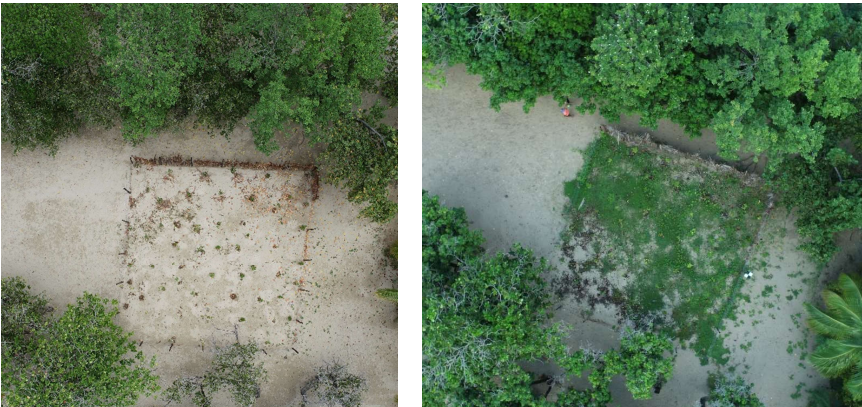
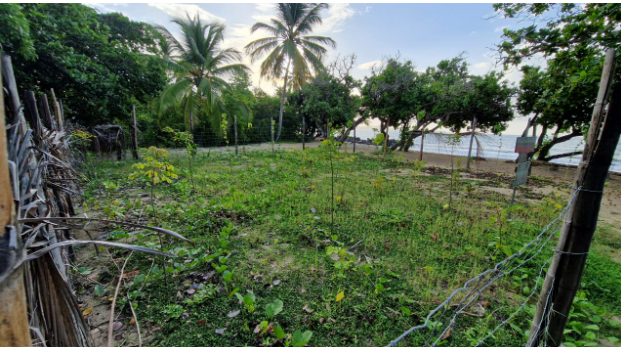
The Waliwa project, launched in 2017 by the municipality of Sainte-Luce, is a collaborative effort dedicated to restoring marine biodiversity, enhancing the ecological balance of the bay area, revitalizing the local ecosystem and supporting sustainable economic activities. By focusing on marine biodiversity conservation, Waliwa addresses several critical environmental challenges. The project helps mitigate coastline erosion, support the blue economy through artisanal fishing and tourism, and foster an environmentally friendly culture among the local community. So far, the Waliwa project has implemented three initiatives: it restored the Gros Raisin backshore to address erosion and provide nesting sea turtles with protected space (Ref 4). The project also intervened to restore the Pont Café pond, which was covered in Salvinia Molesta, preventing the intake of oxygen and hampering its role as a water filter, habitat for species and flood regulator . Furthermore, the project has conducted studies and raised awareness about the challenges posed by wastewater management on the health of municipal water bodies. Through these efforts, Waliwa is working to create a more sustainable and resilient marine environment for future generations. (Ref 4, 5, 6; 12)
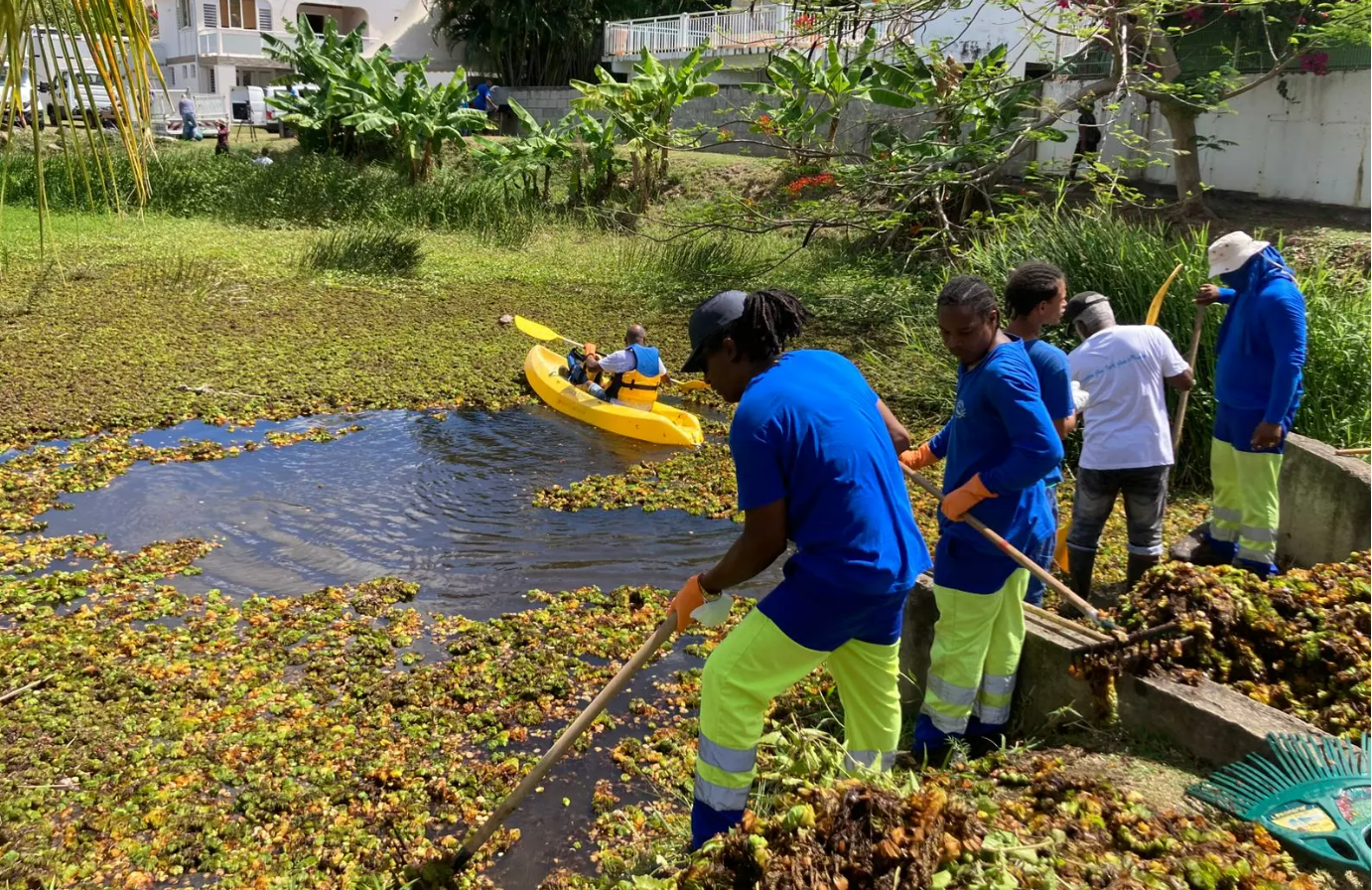
Restoration of the Pont-Café pond
https://rci.fm/deuxiles/node/4001728

Overview

Nature-based solution

  • Blue infrastructure
  • Lakes/ponds
  • Coastlines

Key challenges

  • Climate action for adaptation, resilience and mitigation (SDG 13)
  • Climate change adaptation
  • Coastal resilience and marine protection (SDG 14)
  • Coastal protection / hazard mitigation
  • Marine and coastal biodiversity protection
  • Marine and coastal research and/or education
  • Green space, habitats and biodiversity (SDG 15)
  • Green space creation and/or management
  • Habitat and biodiversity restoration
  • Water management (SDG 6)
  • Flood protection
  • Improvements to water quality
  • Inclusive and effective governance (SDG 16)
  • Inclusive governance
  • Effective management
  • Social justice, cohesion and equity (SDG 10)
  • Environmental education
  • Economic development and employment (SDG 8)
  • Economic development: service sectors
  • Tourism support
  • Employment/job creation

Principal problems in Functional Urban Area (FUA)

  • Climate-Related Hazards
  • Coastal flooding
  • Coastal hazards (e.g. erosion, flooding)
  • Sea level rise
  • Environmental Degradation
  • Biodiversity loss
  • Invasive alien species
  • Poor water quality
  • Land use and Socio-economic change
  • Limited economic opportunities and local livelihoods
  • Health, Well-being and Social cohesion
  • Poor community engagement

Key priorities

Climate action (adaptation and/or mitigation), Biodiversity (conservation and/or restoration), Social Justice and community

Focus

Maintenance and management of urban nature, Maintenance or upgrade of exisiting green spaces (e.g. parks), Management and improved protection of rivers and other blue areas, Restoration, protecion and sustainable manage floodplains, Coastal landscape management or protection, Coastal ecosystems restoration and maintenance (mangroves, dunes, saltplains, underwater meadows), Improving coastal resilience, Ecological restoration of ecosystems, Ecological restoration of existing green spaces, Restoration and protection of ecosystems (including water ecosystems), Protection of natural ecosystems, Expansion of protected areas, Habitat restoration, Marine and coastal conservation initiatives, Knowledge creation and awareness raising, Educational and awareness raising programs, Scientific research of biodiversity or ecosystems, Strategy, plan or policy development, Creation of city-wide or neighborhood green and blue infrastrcuture protection or enhancement strategies/plans, Improved governance of green or blue areas, Creation of new, innovative governance and management approaches, Monitoring and maintenance of habitats and/or biodiversity, Clearing out invasive alien species and allow natural regeneration maintaining the functionality the ecosystem

Project objectives

1) Restoring local marine biodiversity, enhancing reproductive success and providing habitat with active management (nursing, cleaning-up, clearing invasive alien species, planting native and valued species). 2) Engage with the public and raise awareness so that people of Sainte-Luce appropriate the environmental challenges the municipality experiences. 3) Restore the ecological balance to support local coastal economic activities: guarantee a healthy ecosystem that regenerates for biodiversity-based tourism and fishing (e.g. increase catches). 4) Research and monitoring water quality: learn from experience and improve the understanding of the stressors affecting biodiversity loss, with particular emphasis on wastewater management and water quality. 5) Improve coastal resilience: maintaining the ecological status of the coral reef to mitigate swells ( reducing the impact of large waves caused by storms and sea level rising) and increase the network of roots and sediment run-off to mitigate coastline erosion. 6) Involve relevant stakeholders in the conservation of marine biodiversity and creating a stakeholders platform to manage the project (Ref 1; 5; 12).

Implementation activities

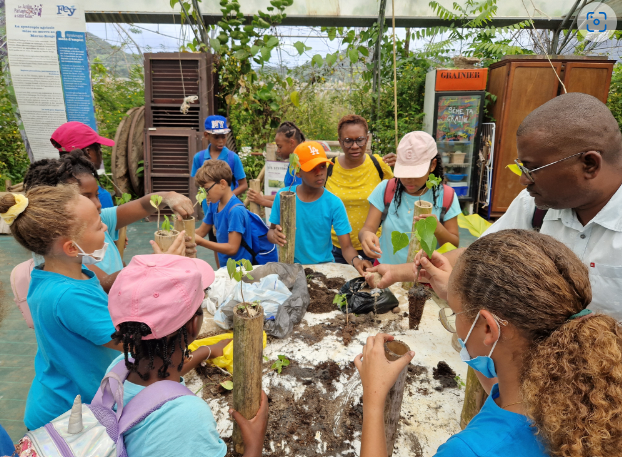
2019-2023: wastewater management knowledge creation and dissemination conducted a study on wastewater as a pressure on the coastline. raised awareness among stakeholders about necessary improvements for better wastewater management. implemented regular water quality monitoring activities (ref 7; 12). gros raisin sea turtle nesting intervention 15.10.2021: planned intervention at “gros raisin” on the backshore, a publicly owned space. 07.06.2022: educated school children (aged 9-11) on the objectives of the project, environmental characteristics, and turtle nesting protocols. children participated in defining the planting activity protocol. 08.06.2022: created two fenced areas (12m² and 144m²) for turtle nesting on the backshore. 17.06.2022: schoolchildren participated in applying mulch, planting, watering, and labeling native plants. erected an information board (ref 1; 4). 19.06.2022: conducted a workshop for schoolchildren on nursing plants. 25.07.2022: established a 15m² fenced area on the backshore. pont-café intervention (pond restoration) 03.05.2022: organized a volunteering day to clear invasive species, conduct a trash clean-up, and replant native species in the pond area (ref 8).

Climate-focused activities

Climate change adaptation:

  • Implement measures that prevent/manage desertification, soil erosion and landslides
  • Restore mangroves, marshes, reefs and wetlands to dissipate the effects of storms and floodwaters
  • Protect and restore coastal ecosystems, to address loss of land and livelihoods, due to rising sea levels
Communities vulnerable to environmental hazards or climate change impacts
Yes

Specification of climate or environmentally vulnerable communities

Coastal communities

Biodiversity conservation or restoration-focused activities

Biodiversity restoration:

  • Rehabilitate and restore damaged or destroyed ecosystems
  • Restore species (native, endangered, or unspecified)
  • Restore native species
  • Restore valued species
  • Clear and control invasive alien species
  • Public engagement

Main beneficiaries

  • Private sector/Corporate/Company
  • Researchers/University
  • Citizens or community groups
  • Coastal-dependent communities (e.g. small-scale fishers, coastal farmers, and indigenous peoples)

Governance

Management set-up

  • Government-led

Type of initiating organisation

  • National government
  • Local government/municipality

Participatory approaches/ community involvement

  • Co-planning (e.g. stakeholder workshops, focus groups, participatory mapping)
  • Taskforce groups
  • Dissemination of information and education
  • Joint implementation (e.g. tree planting)
  • Co-management/Joint management
  • Citizen monitoring and review

Details on the roles of the organisations involved in the project

The Waliwa project is a municipal stakeholder platform launched in 2017 by the municipality of Sainte-Luce, with financial support from the National Ministry for Ecology. The management board is composed of representatives from the coastal economic sectors, the municipality, and researchers, and is responsible for defining the action program. Work on wastewater management was carried out by the intermunicipal entity "CAESM" and financed by a combination of local, regional, and national government funds. The beach restoration project was funded by the French Office for Biodiversity and the municipality, with not-for-profits, schools, and the University of the Antilles collaborating. Schoolchildren participated, and the Martinican Botanical Conservatory donated trees, while seaside restaurateurs monitored the enclosures. The pond restoration was handled by municipal staff, with volunteer assistance and support from a research project. (Ref 1; 4-7; 12)

Project implemented in response to ...

... an EU policy or strategy? Unknown
... a national policy or strategy? Yes (The project was kickstarted with the financial support of the National Ministry for Ecology granted by the call for projects: "Territoire à Energie Positive pour la Croissance Verte". It is part of a strategy to reward and support territories engaging in ecological transition projects of excellence (Ref 5; 6).)
... a local policy or strategy? Yes (The Waliwa project is part of a municipal strategy born out of the realisation that maintaing biodiveristy is essential for the prosperity of Sainte-Luce (Ref 5).)

Type of enablers

City network or regional partnerships focused on climate change, sustainability, GI or NBS in the city, NBS research project (e.g., H2020, Urban Living Labs, national research projects), Funds, subsidies or investment for GI/NBS in the city (available for the city or provided by the city)

Financing

Total cost

€100,000 - €500,000

Source(s) of funding

  • Public local authority budget
  • Public national budget
  • Public regional budget

Type of funding

  • Earmarked public budget
  • Direct funding (grants, subsidies, or self-financed projects by private entities)

Non-financial contribution

Type of non-financial contribution
  • Provision of goods
  • Provision of labour
  • Provision of expertise
  • Provision of other services
Who provided the non-financial contribution?
  • Public authorities (e.g. land, utility services)
  • Citizens (e.g. volunteering)
  • Private sector (businesses, financial institution)

Impacts and Monitoring

Environmental impacts

  • Climate change
  • Storm / wave induced erosion and flooding
  • Expected storm / wave induced erosion and flooding
  • Green space and habitat
  • Increase in protected green space areas
  • Achieved increase in protected green space areas
  • Increased number of protection areas
  • Achieved increased number of protection areas
  • Increased conservation or restoration of ecosystems
  • Achieved increased conservation or restoration of ecosystems
  • Increased number of species present
  • Achieved increased number of species present
  • Increased presence and recovery of wild species
  • Expected increased presence and recovery of wild species
  • Improved prevention or control of invasive alien species
  • Achieved improved prevention or control of invasive alien species

Economic impacts

  • Increase of green jobs (e.g. paid employment positions)
  • Expected increase of green jobs (e.g. paid employment positions)
  • Generation of income from NBS
  • Expected generation of income from NBS

Socio-cultural impacts

  • Education
  • Increased support for education and scientific research
  • Achieved increased support for education and scientific research
  • Increased knowledge of locals about local nature
  • Achieved increased knowledge of locals about local nature

Type of reported impacts

Presence of formal monitoring system

Yes

Presence of indicators used in reporting

Yes

Presence of monitoring/ evaluation reports

Yes

Availability of a web-based monitoring tool

No evidence in public records

Potential risks of implementation and trade-offs

Unknown

References

Before and after the Gros-Raisin beach intervention
http://temeum.ofb.fr/sites/default/files/documents/retours-experience/revegetalisation-des-plages-de-gros-raisin-et-de-gros-raisin-deuxieme-anse-de-la-ville-de-sainte/rapport_d_execution_projet.pdf
Fenced area for sea turtle nesting
http://temeum.ofb.fr/fr/retour-experience/revegetalisation-des-plages-de-gros-raisin-et-de-gros-raisin-deuxieme-anse-de-la
Workshop given by Jardins de Gaïac on nursing plants.
http://temeum.ofb.fr/fr/retour-experience/revegetalisation-des-plages-de-gros-raisin-et-de-gros-raisin-deuxieme-anse-de-la
naturescapes bannerInformation about this nature-based solution was collected as part of the Naturescapes project funded by the European Union under Grant Agreement No 101084341.