

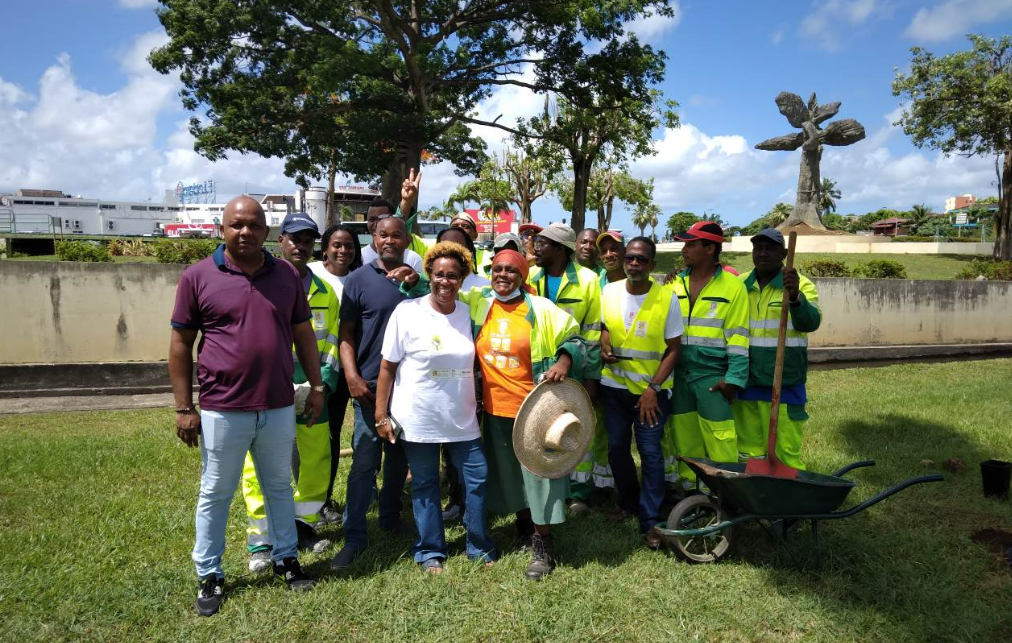
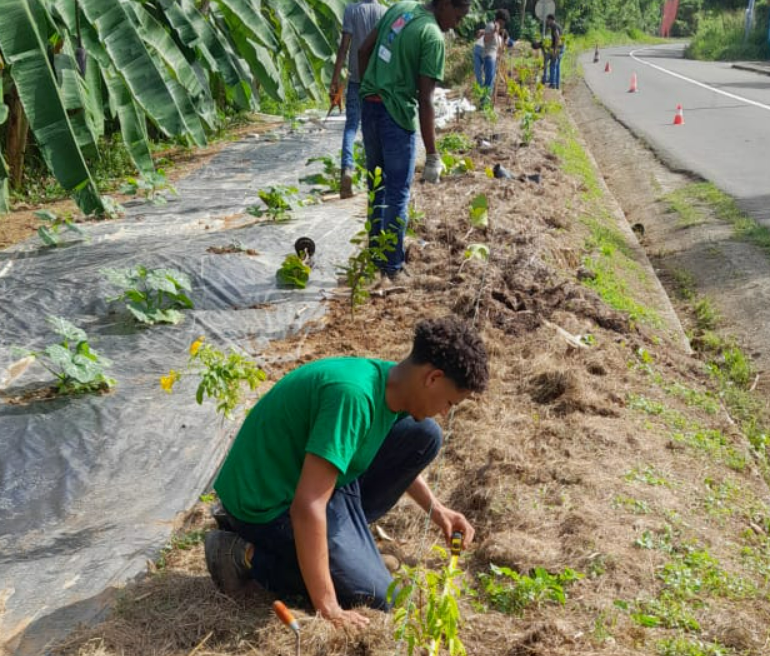
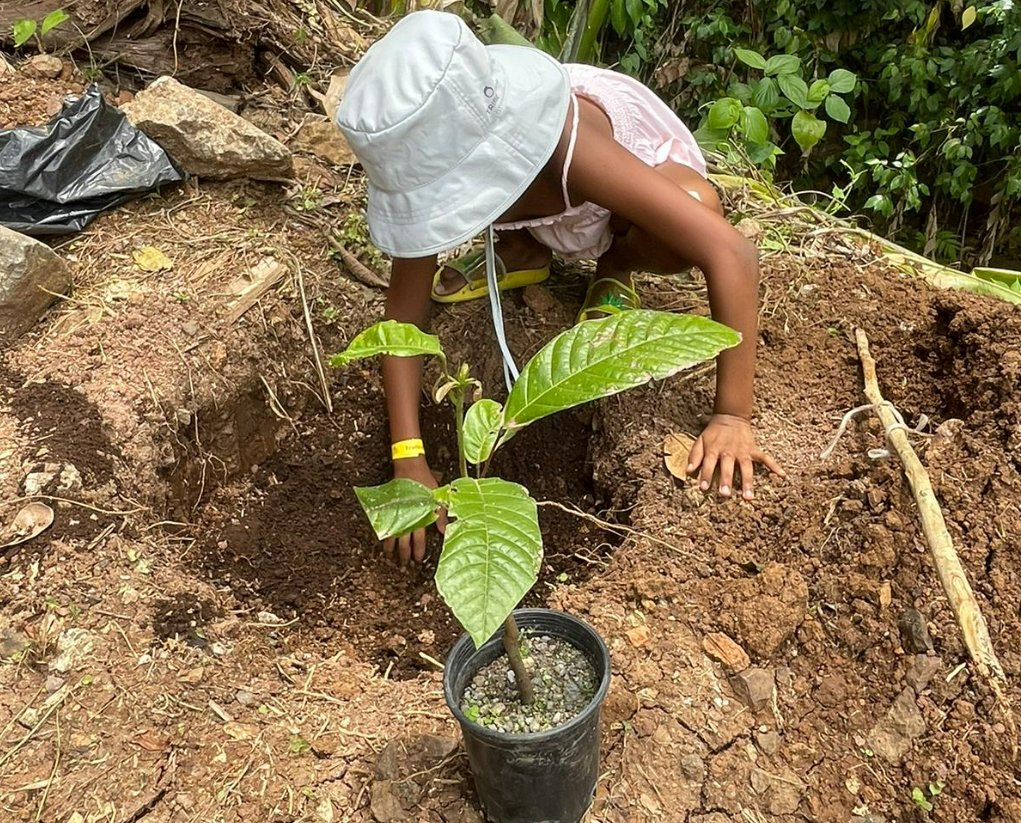
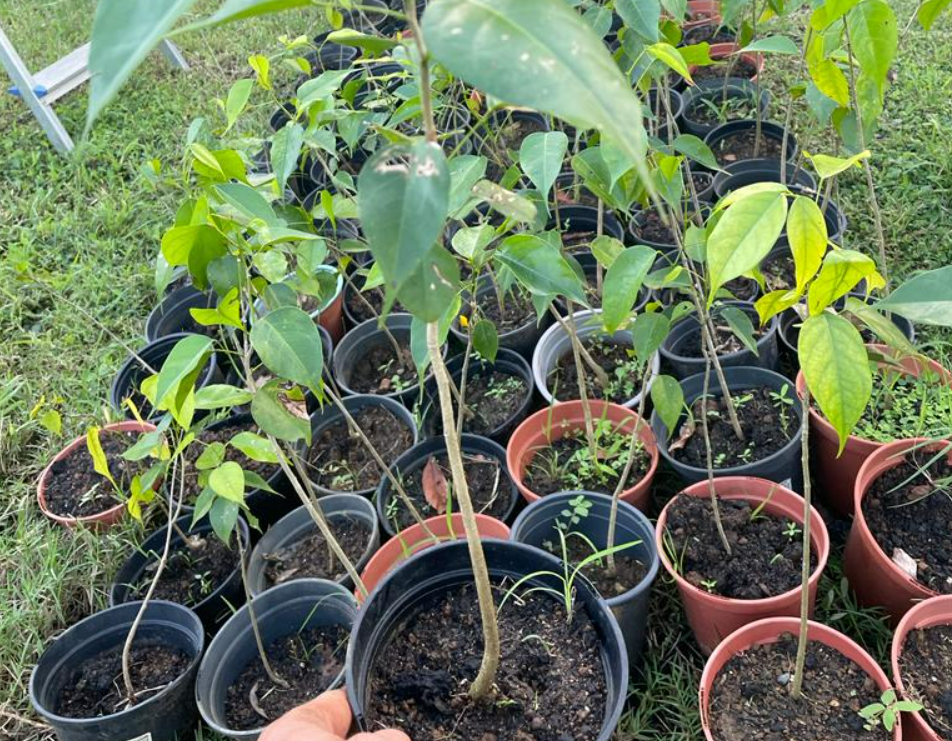
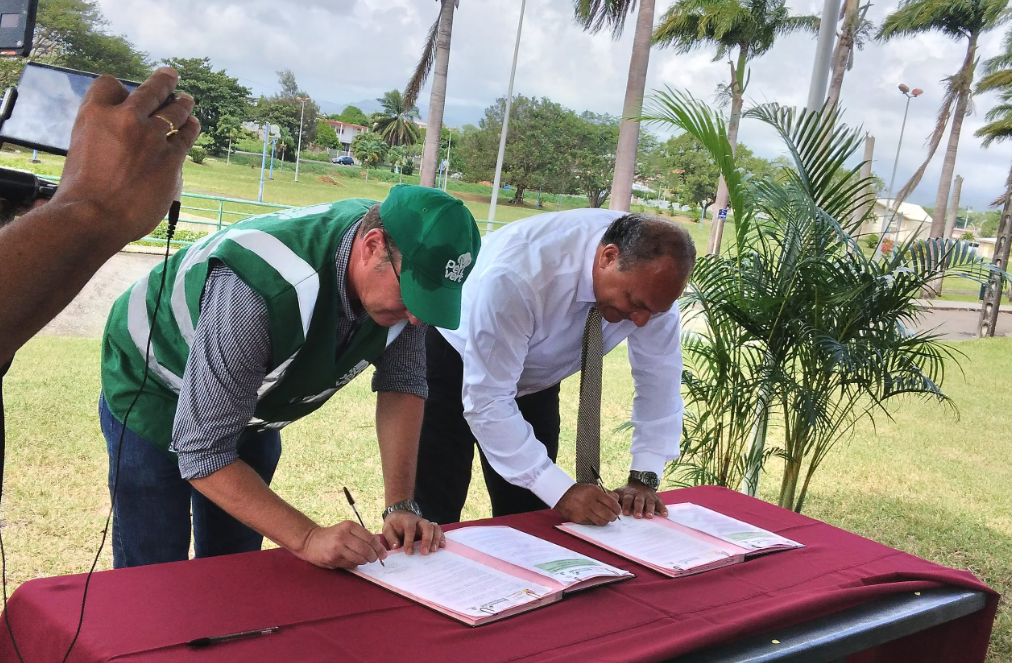
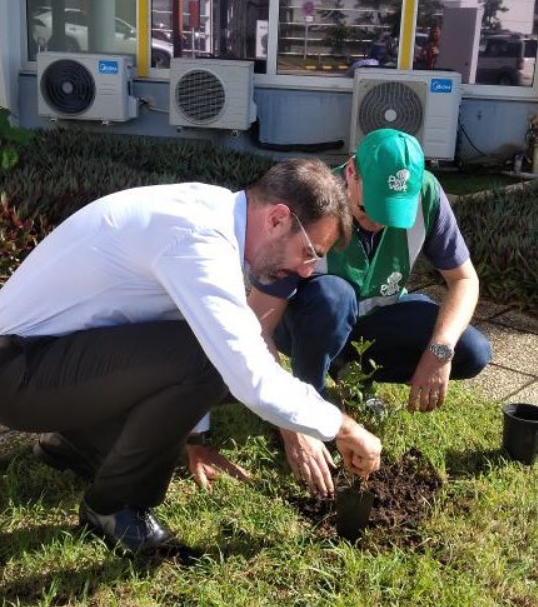
Martinique is a biodiversity hotspot, home to over 1,500 endemic plants, 70% of which are under threat from human activities. In response to these pressures, the Péyi Vert [Green Country] initiative was launched to plant endemic trees and strengthen the island's biodiversity. Beyond simply preserving species, these trees are crucial in maintaining healthy ecosystems, as they provide essential services such as carbon sequestration, shade, food for human consumption, soil decontamination, pollination, and protection against coastline erosion. Launched in June 2020 by Entreprises et Environnement (EE), a not-for-profit business association representing 80 Martinican companies, the Péyi Vert initiative aims to plant 1 million native trees (either Martinican or Caribbean) over five years. It can be seen as a Martinique-wide strategy to adapt to and mitigate climate change. Péyi Vert facilitates connections between people who want to plant trees and Martinican companies that serve as financial sponsors. The initiative emphasizes conserving natural heritage by planting endangered species, as well as promoting native species that, while not necessarily threatened, provide valuable ecosystem services or contribute to biodiversity restoration. Between 2020 and 2023, EE reported planting 50,000 trees (Refs 1, 4, 6, 7). Although individuals can make donations, Péyi Vert primarily seeks funding from companies looking to offset their carbon emissions or enhance their Corporate Social Responsibility (CSR). To achieve its goals, the initiative mainly collaborates with municipalities, companies, and farmers (Ref 3).
Overview
Nature-based solution
- Blue infrastructure
- Coastlines
- Mangroves
- Community gardens and allotments
- Other
- Grey infrastructure featuring greens
- Alley or street trees and other street vegetation
- Parks and urban forests
- Large urban parks or forests
- Pocket parks/neighbourhood green spaces
- Green corridors and green belts
Key challenges
- Climate action for adaptation, resilience and mitigation (SDG 13)
- Climate change adaptation
- Climate change mitigation
- Coastal resilience and marine protection (SDG 14)
- Coastal protection / hazard mitigation
- Marine and coastal biodiversity protection
- Environmental quality
- Air quality improvement
- Noise reduction
- Soil quality improvement
- Green space, habitats and biodiversity (SDG 15)
- Green space creation and/or management
- Habitat and biodiversity restoration
- Cultural heritage and cultural diversity
- Preservation of natural heritage
- Social justice, cohesion and equity (SDG 10)
- Environmental education
- Sense of community and community engagement
- Economic development and employment (SDG 8)
- Economic development: agriculture
Principal problems in Functional Urban Area (FUA)
- Climate-Related Hazards
- Coastal hazards (e.g. erosion, flooding)
- Heat stress & Extreme temperatures
- Extreme weather events (e.g. storms, hurricanes)
- Degradation of carbon sinks
- Environmental Degradation
- Biodiversity loss
- Soil degradation and loss
- Air pollution
- Land use and Socio-economic change
- Agriculture/ crop production
- Health, Well-being and Social cohesion
- Physical health harm (from pollution, wildfire, extreme temperature)
- Loss of sense of place and identity
Key priorities
Focus
Project objectives
Implementation activities
Climate-focused activities
Climate change adaptation:
- Implement measures that prevent/manage desertification, soil erosion and landslides
- Increase urban vegetation cover to reduce urban heat island effect
- Restore sediment supply to coastal zone
- Protect and restore coastal ecosystems, to address loss of land and livelihoods, due to rising sea levels
- Increase the use of or more efficient agroforestry practices (e.g. soil moisture, reduce evaporation) or drought-resistant species for agriculture
Climate change mitigation:
- Increase the availability of green urban space for carbon storage (street tree cover)
- Raise public awareness of behaviours, lifestyle and cultural changes with mitigation potential
Specification of climate or environmentally vulnerable communities
Biodiversity conservation or restoration-focused activities
Biodiversity restoration:
- Rehabilitate and restore damaged or destroyed ecosystems
- Restore species (native, endangered, or unspecified)
- Restore ecological connectivity
- Public engagement
Main beneficiaries
- Local government/Municipality
- Private sector/Corporate/Company
- Citizens or community groups
- Coastal-dependent communities (e.g. small-scale fishers, coastal farmers, and indigenous peoples)
Governance
Management set-up
- Led by non-government actors
Type of initiating organisation
- National government
- Non-government organisation/civil society
- Private sector/corporate actor/company
- Business association or network
Participatory approaches/ community involvement
- Co-planning (e.g. stakeholder workshops, focus groups, participatory mapping)
- Deliberative decision-making processes (e.g., consensus building, deliberative polling)
- Crowd-sourcing/Crowd-funding/Participatory budget
- Consultation (e.g. workshop, surveys, community meetings, town halls)
- Joint implementation (e.g. tree planting)
- Citizen monitoring and review
Details on the roles of the organisations involved in the project
Project implemented in response to ...
Type of enablers
Financing
Total cost
Source(s) of funding
- Corporate investment
- Crowdfunding
Type of funding
- Direct funding (grants, subsidies, or self-financed projects by private entities)
- Tax exemption
- Donations
Non-financial contribution
- Provision of labour
- Public authorities (e.g. land, utility services)
- Citizens (e.g. volunteering)
- Private sector (businesses, financial institution)
Impacts and Monitoring
Environmental impacts
- Climate change
- Storm / wave induced erosion and flooding
- Expected storm / wave induced erosion and flooding
- Enhanced carbon sequestration
- Expected enhanced carbon sequestration
- Enhanced protection against extreme weather events (e.g. storms, cyclones, tidal surges, coastal erosion)
- Expected enhanced protection against extreme weather events (e.g. storms, cyclones, tidal surges, coastal erosion)
- Prevent the frequency and/or intensity of heatwaves
- Expected prevent the frequency and/or intensity of heatwaves
- Environmental quality
- Improved air quality
- Expected improved air quality
- Reduced noise exposure
- Expected reduced noise exposure
- Improved soil quality
- Expected improved soil quality
- Green space and habitat
- Increased ecological connectivity across regeneration sites and scales
- Expected increased ecological connectivity across regeneration sites and scales
- Increased number of species present
- Achieved increased number of species present
- Increased protection of threatened species
- Expected increased protection of threatened species
- Enhanced support of pollination
- Expected enhanced support of pollination
Economic impacts
- Attraction of business and investment
- Expected attraction of business and investment
Socio-cultural impacts
- Social justice and cohesion
- Increased access to healthy/affordable food
- Expected increased access to healthy/affordable food
- Increased sustainability of agriculture practices
- Expected increased sustainability of agriculture practices
- Cultural heritage and sense of place
- Increased sense of place identity, memory and belonging
- Expected increased sense of place identity, memory and belonging
- Education
- Increased knowledge of locals about local nature
- Expected increased knowledge of locals about local nature
Type of reported impacts
Presence of formal monitoring system
Presence of indicators used in reporting
Presence of monitoring/ evaluation reports
Availability of a web-based monitoring tool
Potential risks of implementation and trade-offs
References
 Information about this nature-based solution was collected as part of the Naturescapes project funded by the European Union under Grant Agreement No 101084341.