

Last updated: October 2021
The ‘University Park Essen’ is developed on a former railway site in the inner city of Essen, that had been a wasteland for almost 30 years. By revitalizing this about the 13-hectare large plot, an urban green quarter for residential and commercial use is created. The centricity of the park within the new quarter between the city center, shopping mall Limbecker Square and the university campus is the first visible component of the development and therefore shapes the new identity of the quarter (Ref. 4).
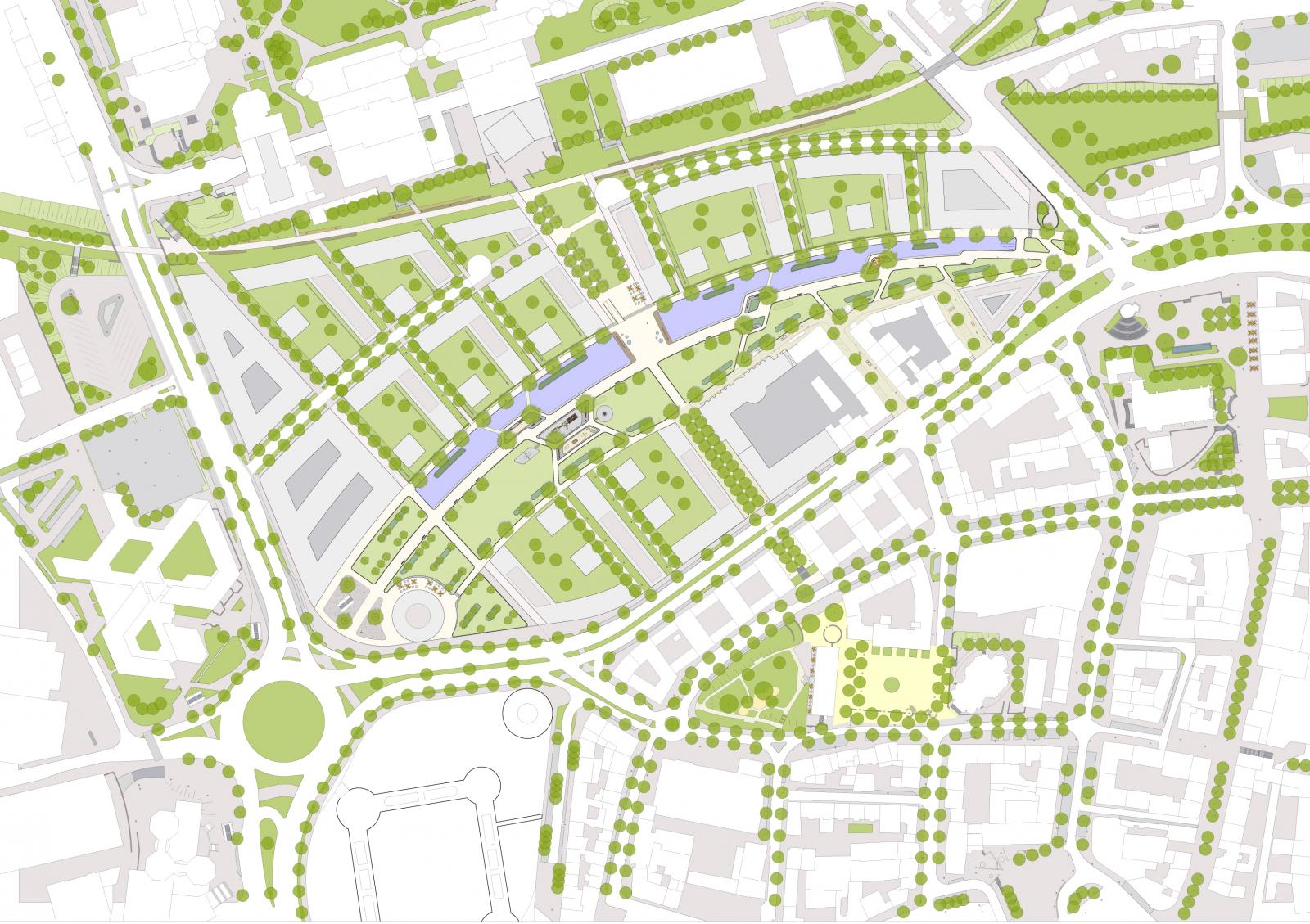
University Park Essen Layout (2008)
Matthias Funk, retrieved 08/15/2018
Overview
Nature-based solution
- Grey infrastructure featuring greens
- Alley or street trees and other street vegetation
- Railroad bank and track greens
- Green playgrounds and school grounds
- Blue infrastructure
- Riverbank/Lakeside greens
- Parks and urban forests
- Pocket parks/neighbourhood green spaces
- Green corridors and green belts
- Lakes/ponds
Key challenges
- Water management (SDG 6)
- Stormwater and rainfall management and storage
- Improvements to water quality
- Green space, habitats and biodiversity (SDG 15)
- Habitat and biodiversity conservation
- Green space creation and/or management
- Environmental quality
- Air quality improvement
- Noise reduction
- Regeneration, land-use and urban development
- Conversion of former industrial areas
- Social justice, cohesion and equity (SDG 10)
- Social interaction
- Health and well-being (SDG 3)
- Creation of opportunities for recreation
- Economic development and employment (SDG 8)
- Economic development: service sectors
- Real estate development
- Cultural heritage and cultural diversity
- Protection of historic and cultural landscape/infrastructure
Focus
Creation of new green areas, Transformation of previously derelict areas
Project objectives
1. Increase in the economic potential of the neighboring areas (Ref. 2)
2. Create new green and blue spaces (Ref. 1)
3. A disused railway site near the heart of Essen to be transformed into a usable public space (Ref. 3)
4. Improve the living conditions of the neighborhood (ex. noise reduction, air conditions improvement, security improvement) (Ref. 2, 4)
5. Create recreational facilities for all (Ref. 3)
6. Improve University campus infrastructure (Ref. 2)
7. Increase the biodiversity of the area (Ref. 3)
8. Keeping the character of the old foundry lives in the new park (Ref. 3).
Implementation activities
Four phases of the park have been completed and are open to the public (Ref. 3). Area size of the park is 5.1 ha (Ref. 5)."A multifunctional main event area is located at the intersection of the major pathways. At one entrance to the park is a grove of ornamental fruit trees. A little further along is a place known as Play Park that is dedicated to games and sunbathing. Next is Garden Park, which includes lawns and ponds and is suitable for quiet recreation. Beside another entrance is Park Lounge, an attractive place for reading under the trees" (Ref. 3).
"Plants For Many Purposes are selected for character, to give the illusion of space, and for ease of maintenance. Shrubs are avoided for security reasons. Existing Sycamore (Acer pseudoplatanus) trees mark the entrance near Berliner Square. A grove of ornamental fruit trees lies immediately to the west. Outer rows are planted in Japanese style. Trees lining the promenade include Magnolia, the Empress Tree (Paulownia tomentosa), American Sweetgum (Liquidambar styraciflua), and the Indian Bean Tree (Catalpa speciosa). Red Maples (Acer rubrum) line the avenues of the University Downtown axis" (Ref. 3).
"Water from surrounding areas is channeled into the central pond, where it is purified mechanically through an underground filter and biologically through the use of water-loving plants. Excess water is discharged into an adjacent creek" (Ref. 3).
Biodiversity conservation or restoration-focused activities
Biodiversity conservation:
- Protect and enhance urban habitats
- Create new habitats
Main beneficiaries
- Researchers/University
- Citizens or community groups
Governance
Management set-up
- Co-governance with government and non-government actors
Type of initiating organisation
- Local government/municipality
- Private sector/corporate actor/company
Participatory approaches/ community involvement
- Unknown
Details on the roles of the organisations involved in the project
Clients: Grün und Gruga Essen (department of the city of Essen), a development agency 'University Quarter Essen'; Landscape architects: scape Landschaftsarchitekten GmbH, Düsseldorf; Water management: Dahlem – Beratende Ingenieure GmbH & Co, Essen (Ref. 4).
Project implemented in response to ...
... an EU policy or strategy?
Unknown
... a national policy or strategy?
Unknown
... a local policy or strategy?
Yes
(Planning guidance 'Open space planning LP 2 - 9 for the redesign of a parking system on an industrial brownfield in the center of the city of Essen' ('Freiraumplanung LP 2 – 9 zur Neugestaltung einer Parkanlage auf einer industriellen Brachfläche im Zentrum der Stadt Essen') (Ref. 5).)
Financing
Total cost
More than €4,000,000
Source(s) of funding
- Public local authority budget
- Corporate investment
Type of funding
- Earmarked public budget
- Direct funding (grants, subsidies, or self-financed projects by private entities)
Non-financial contribution
Unknown
Impacts and Monitoring
Environmental impacts
- Environmental quality
- Reduced noise exposure
- Water management and blue areas
- Improved water quality
- Improved stormwater management
- Green space and habitat
- Increased green space area
- Restoration of derelict areas
Economic impacts
- Attraction of business and investment
Socio-cultural impacts
- Safety
- Increased perception of safety
- Social justice and cohesion
- Improved liveability
- Improved access to urban green space
- Health and wellbeing
- Gain in activities for recreation and exercise
- Cultural heritage and sense of place
- Protection of historic and cultural landscape / infrastructure
Type of reported impacts
Achieved impacts
Presence of formal monitoring system
Unknown
Presence of indicators used in reporting
No evidence in public records
Presence of monitoring/ evaluation reports
No evidence in public records
Availability of a web-based monitoring tool
No evidence in public records
References
1. Wikipedia (2016). Segeroth. Available at: Source link (Accessed: November 6, 2020).
2. Stenglein, Frank (2010). Der Park für das Essener Uni-Viertel ist fertig. Available at: Source link (Accessed: November 6, 2020).
3. Landscape Architects Network (2015). From Urban Wasteland to the World Class University Park Essen. Available at: Source link (Accessed: November 6, 2020).
4. Landezine (2015). University Park Essen. Landezine. Available at: Source link (Accessed: November 6, 2020).
5. Scape (2016). Grüne Mitte Essen. Available at: Source link (Accessed: November 6, 2020).
6. Marcus Schymiczek (2017). Dreck, Dealer und Einbrüche – Essens „Grüne Mitte“ verkommt. Available at: Source link (Accessed: November 6, 2020).
2. Stenglein, Frank (2010). Der Park für das Essener Uni-Viertel ist fertig. Available at: Source link (Accessed: November 6, 2020).
3. Landscape Architects Network (2015). From Urban Wasteland to the World Class University Park Essen. Available at: Source link (Accessed: November 6, 2020).
4. Landezine (2015). University Park Essen. Landezine. Available at: Source link (Accessed: November 6, 2020).
5. Scape (2016). Grüne Mitte Essen. Available at: Source link (Accessed: November 6, 2020).
6. Marcus Schymiczek (2017). Dreck, Dealer und Einbrüche – Essens „Grüne Mitte“ verkommt. Available at: Source link (Accessed: November 6, 2020).
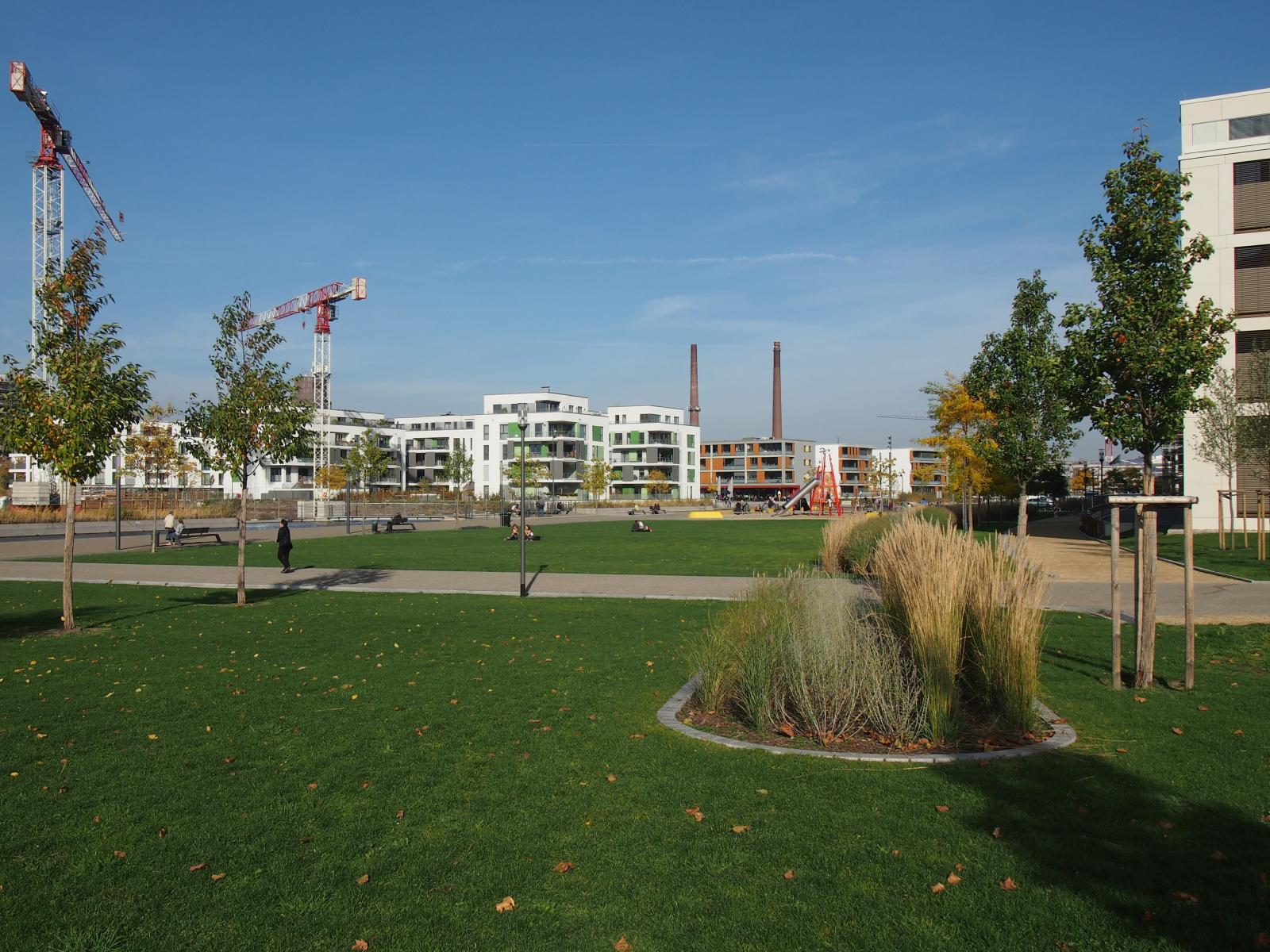
University Park Essen (2013)
Matthias Funk, retrieved 08/15/2018

University Park Essen (2011)
Matthias Funk, retrieved 08/15/2018