

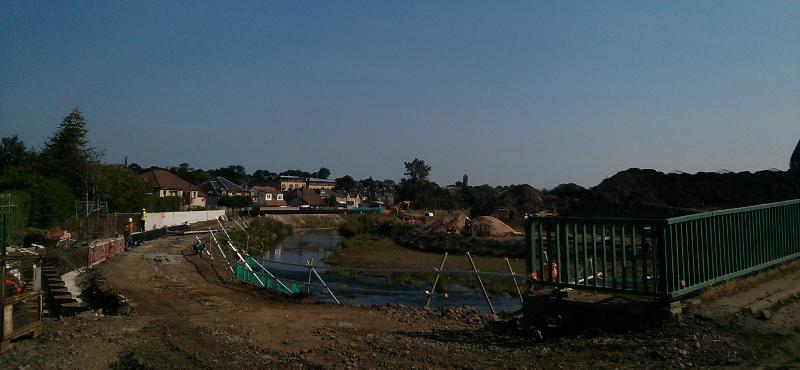
The Water of Leith is home to a wide diversity of plants and animals. The river performs an important flood control function in the city. A management plan envisions to create a healthy river that flows through a green corridor from the hills to the sea and is a haven for wildlife, is enjoyed and managed by the public, and is valued for its built and cultural heritage. The current intervention is about an extensive Flood Prevention Scheme. Walls and other flood defence measures have been constructed from Murrayfield downstream to Bonnington. A re-modelling exercise is being carried out to include the impact of climate change on the river system and the efficacy of the flood prevention scheme. The Water of Leith Conservation Trust works to conserve and enhance the river, its heritage and wildlife. It also promotes education and recreation and works with volunteers and community groups (ref 1, 2, 3).
Overview
Nature-based solution
- Grey infrastructure featuring greens
- Blue infrastructure
- Riverbank/Lakeside greens
- Lakes/ponds
- Rivers/streams/canals/estuaries
Key challenges
- Climate action for adaptation, resilience and mitigation (SDG 13)
- Climate change adaptation
- Water management (SDG 6)
- Flood protection
- Improvements to water quality
- Green space, habitats and biodiversity (SDG 15)
- Habitat and biodiversity restoration
- Green space creation and/or management
- Cultural heritage and cultural diversity
- Preservation of natural heritage
Focus
Project objectives
Implementation activities
Climate-focused activities
Climate change adaptation:
- Restore wetlands and/or coastal ecosystems to dissipate the effects of flooding and/or storms
- Renaturalization of rivers and other water bodies
Biodiversity conservation or restoration-focused activities
Biodiversity restoration:
- Restore species (native, endangered, or unspecified)
- Clear and control invasive alien species
- Restore ecological connectivity
- Public engagement
Main beneficiaries
- Local government/Municipality
- Citizens or community groups
Governance
Management set-up
- Co-governance with government and non-government actors
Type of initiating organisation
- Local government/municipality
- Private foundation/trust
Participatory approaches/ community involvement
- Dissemination of information and education
- Joint implementation (e.g. tree planting)
- Citizen monitoring and review
Details on the roles of the organisations involved in the project
Project implemented in response to ...
Financing
Total cost
Source(s) of funding
- Public regional budget
- Public local authority budget
- Funds provided by non-governmental organization (NGO)
Type of funding
- Direct funding (grants, subsidies, or self-financed projects by private entities)
Non-financial contribution
Impacts and Monitoring
Environmental impacts
- Climate change
- Strengthened capacity to address climate hazards/natural disasters
- Water management and blue areas
- Improved water quality
- Increased protection against flooding
- Green space and habitat
- Promotion of naturalistic styles of landscape design for urban development
- Reduced biodiversity loss
- Increased number of species present
- Improved prevention or control of invasive alien species
Economic impacts
- Reduce financial cost for urban management
Socio-cultural impacts
- Social justice and cohesion
- Increased involvement of locals in the management of green spaces
- Cultural heritage and sense of place
- Protection of natural heritage
- Education
- Increased support for education and scientific research
- Increased knowledge of locals about local nature
Type of reported impacts
Presence of formal monitoring system
Presence of indicators used in reporting
Presence of monitoring/ evaluation reports
Availability of a web-based monitoring tool
References
Published 3rd April 2020. Available at: Source link. Accessed on 25th August, 2020.
2. Edinburgh City Council. (no date) Water of Leith flood prevention scheme phase 2. Available at: Source link. Accessed on 25th August, 2020.
3. Edinburgh City Council. (no date) Natural Heritage Sites. Available at: Source link. Accessed on 25th August, 2020.
4. Water of Leith Conservation Trust (no date) Available at: Source link. Accessed on 25th August, 2020.
5. McLaughlin & Harvey (no date )Water of Leith Flood Prevention Scheme Phase 2. Available at: Source link. Accessed on 25th August, 2020.
6. Lagan Specialist Contracting (no date) Water of Leith Flood Prevention Scheme. Available at: Source link. Accessed on 25th August, 2020.