

Last updated: October 2021
Royal Botanic Garden Edinburgh (RBGE) is endorsing - Edinburgh Adapts - the city’s first climate change adaptation action plan as a demonstration site of the ClimateXChange project. The 2012 persistent heavy raining incident brought flooding and damage to beds, lawns and paths at RBGE. A study is being carried out to see the impact of weather events on their gardens and how this can be used to best deal with projected climate change. Horticulture and visitor services staff at the Royal Botanic Garden Edinburgh (RBGE) and its Regional Gardens are already adapting to climate uncertainty. (ref 2, 3)
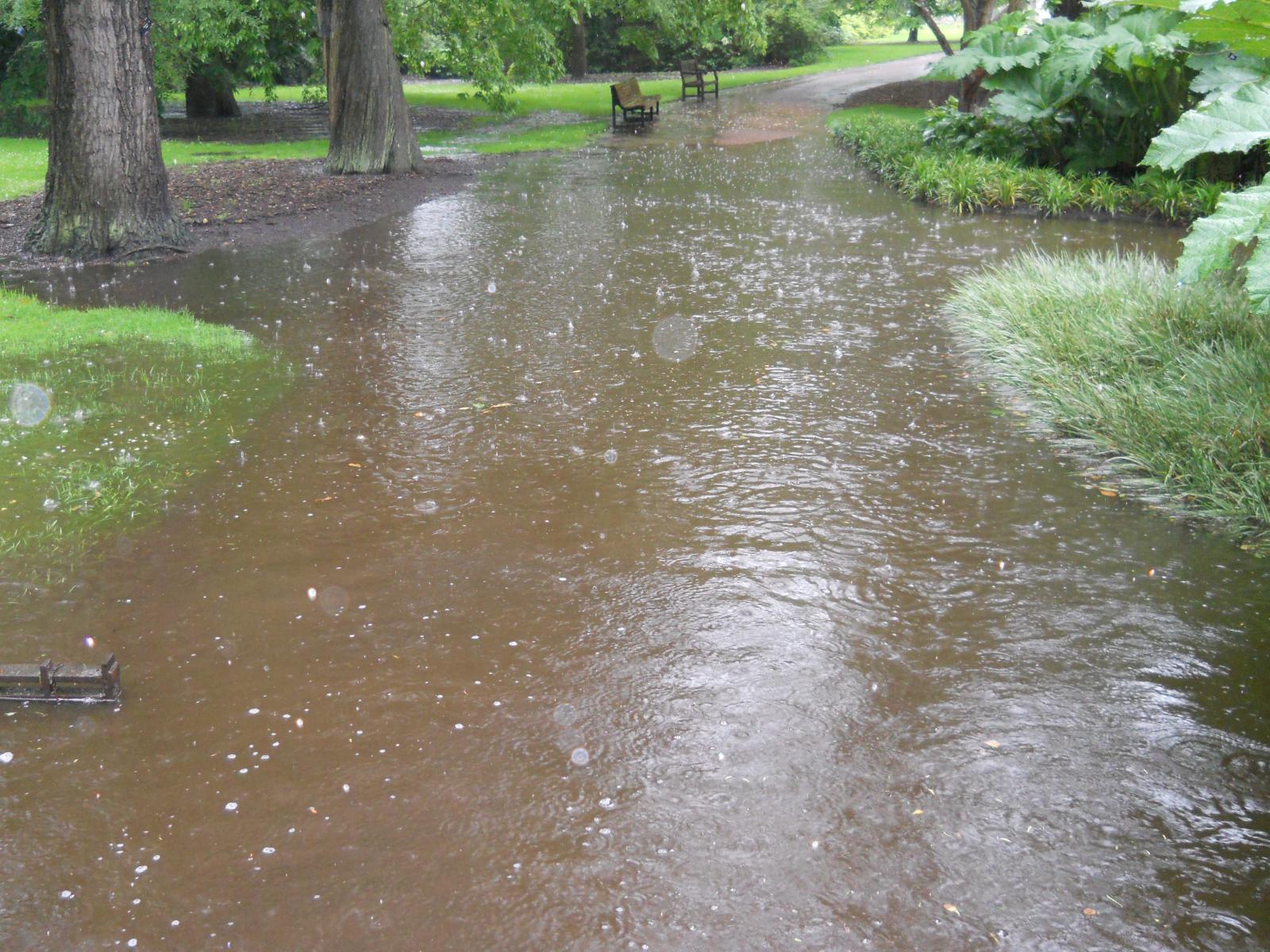
Flooding at the Royal Botanic Garden Edinburgh (2012)
Ruth Monfries, retrieved 08/18/2018
Overview
Nature-based solution
- Parks and urban forests
- Botanical gardens
- Green areas for water management
- Other
Key challenges
- Climate action for adaptation, resilience and mitigation (SDG 13)
- Climate change adaptation
- Water management (SDG 6)
- Flood protection
- Stormwater and rainfall management and storage
- Green space, habitats and biodiversity (SDG 15)
- Habitat and biodiversity restoration
- Green space creation and/or management
Focus
Creation of semi-natural blue areas, Improved governance of green or blue areas
Project objectives
RBGE has been taken as a ClimateXChange project Demonstration Site where the aim is to ensure that the lessons learned at RBGE during day-to-day operations are captured and fed into a climate-proof strategy for the Garden, while also informing policy development. The goals are defined as different adaptation measures such as-
1. Planting a mix of species for increased resilience to pests and diseases and a more effective windbreak and structure to shelterbelts;
2. Replacing paths with gravel or other porous materials;
3. Providing additional drainage;
4. Researching glasshouse structures and glazing systems less susceptible to wind damage. (ref 3)
Implementation activities
Under the Edinburgh Adapts action plan - to gain a deeper understanding of the implications of climate change for Edinburgh and to share knowledge and expertise in helping the city adapt to a changing climate, these activities are performed: excessive vegetative growth to be pruned back, changes in grass cutting regime and the use of matting or aeration techniques to reduce lawn compaction. A regular regime of maintaining existing, and installing new, drains and soakaways and facilities for water collection (such as ponds). Replacement of concrete or tarmac paths with porous paving. The study will inform climate change adaptation policy making. The new drainage and soakaways have been installed in critical areas where capacity was not sufficient. This remains a rolling programme of work as different areas of the Garden are upgraded – climate-proofing is built into all ongoing maintenance plans of RBGE. (ref 1, 2, 4)
Climate-focused activities
Climate change adaptation:
- Implement sustainable urban drainage infrastructure (e.g. to make space for water)
- Increase the use of climate-resilient plant species (resistant to drought, fire, and pests)
Biodiversity conservation or restoration-focused activities
Biodiversity restoration:
- Restore species (native, endangered, or unspecified)
- Public engagement
Main beneficiaries
- National-level government
- Local government/Municipality
- Researchers/University
Governance
Management set-up
- Co-governance with government and non-government actors
Type of initiating organisation
- National government
- Researchers/university
Participatory approaches/ community involvement
- Dissemination of information and education
Details on the roles of the organisations involved in the project
1. Edinburgh Adapts is the city’s first adaptation action plan developed by the city council and The Royal Botanic Garden Edinburgh is to endorse this Action Plan, engage with partner organisations and contribute throughout its development. 2. Horticulture and visitor services at the Royal Botanic Garden Edinburgh (RBGE) and its Regional Gardens are already adapting to climate uncertainty by implementing certain measures. (ref 2, 3)
Project implemented in response to ...
... an EU policy or strategy?
Unknown
... a national policy or strategy?
Yes
(Climate Change (Scotland) Act 2009 created a framework for mitigating and adapting to climate change. (ref 2))
... a local policy or strategy?
Yes
(Edinburgh Sustainable Development Partnership, comprising key public and private stakeholders, third sector and community groups, is aligned with Sustainable Edinburgh 2020 (SE2020). The City of Edinburgh Council is committed to SE 2020. (ref 2))
Financing
Total cost
€2,000,000 - €4,000,000
Source(s) of funding
- Public national budget
- Public local authority budget
Type of funding
- Direct funding (grants, subsidies, or self-financed projects by private entities)
Non-financial contribution
Unknown
Impacts and Monitoring
Environmental impacts
- Water management and blue areas
- Increased protection against flooding
- Improved stormwater management
- Green space and habitat
- Increase in protected green space areas
- Reduced biodiversity loss
- Increased number of species present
Economic impacts
- Reduce financial cost for urban management
Socio-cultural impacts
- Safety
- Increased perception of safety
- Cultural heritage and sense of place
- Protection of natural heritage
- Protection of historic and cultural landscape / infrastructure
- Increased awareness of flora and fauna as culturally and historically meaningful
Type of reported impacts
Expected impacts, Achieved impacts
Presence of formal monitoring system
Yes
Presence of indicators used in reporting
Yes
Presence of monitoring/ evaluation reports
No evidence in public records
Availability of a web-based monitoring tool
No evidence in public records
References
1. Martin, S. (2015). Climate Ready? Exploring The Impacts And Lessons From Recent Extreme Events At Royal Botanic Garden Edinburgh For Climate Change Adaptation In The Horticulture Sector. Sibbaldia: the Journal of Botanic Garden Horticulture, (12), Source link. Available at: Source link. Accessed on 3rd September, 2020.
2. MacLeod, F. (2016). Edinburgh Adapts - Climate Change Adaptation Action Plan 2016-2020. Available at: Source link. Accessed on 3rd September, 2020.
3. Adaptation Scotland. (2015). Assessing and adapting to the impact of past weather events in the Horticulture Sector. Available at: Source link. Accessed on 3rd September, 2020.
4. RBGE. (2018). Annual report (2017-2018). Available at: Source link. Accessed on 3rd September, 2020.
5. RBGE. (2019). Annual report (2018-2019). Available at: hSource link. Accessed on 3rd September, 2020.
6. The Royal Botanic Garden Edinburgh (no date) The Rain garden. Available at: Source link. Accessed on 3rd September, 2020.
2. MacLeod, F. (2016). Edinburgh Adapts - Climate Change Adaptation Action Plan 2016-2020. Available at: Source link. Accessed on 3rd September, 2020.
3. Adaptation Scotland. (2015). Assessing and adapting to the impact of past weather events in the Horticulture Sector. Available at: Source link. Accessed on 3rd September, 2020.
4. RBGE. (2018). Annual report (2017-2018). Available at: Source link. Accessed on 3rd September, 2020.
5. RBGE. (2019). Annual report (2018-2019). Available at: hSource link. Accessed on 3rd September, 2020.
6. The Royal Botanic Garden Edinburgh (no date) The Rain garden. Available at: Source link. Accessed on 3rd September, 2020.
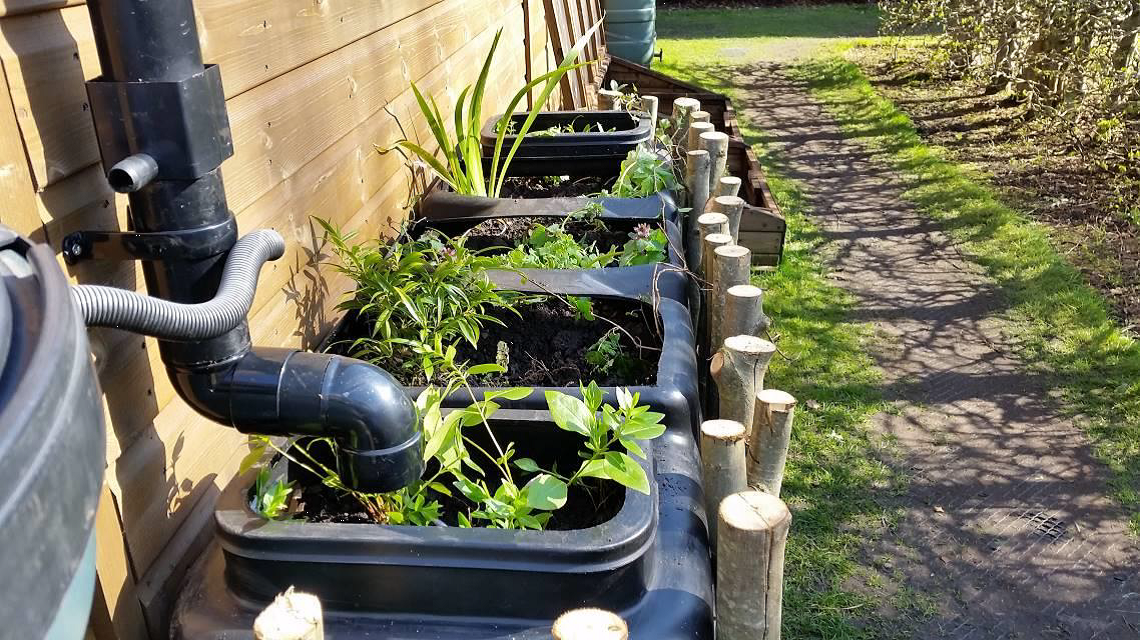
Raingarden Planters at the Royal Botanic Garden Edinburgh
Ruth Monfries, retrieved 08/18/2018