

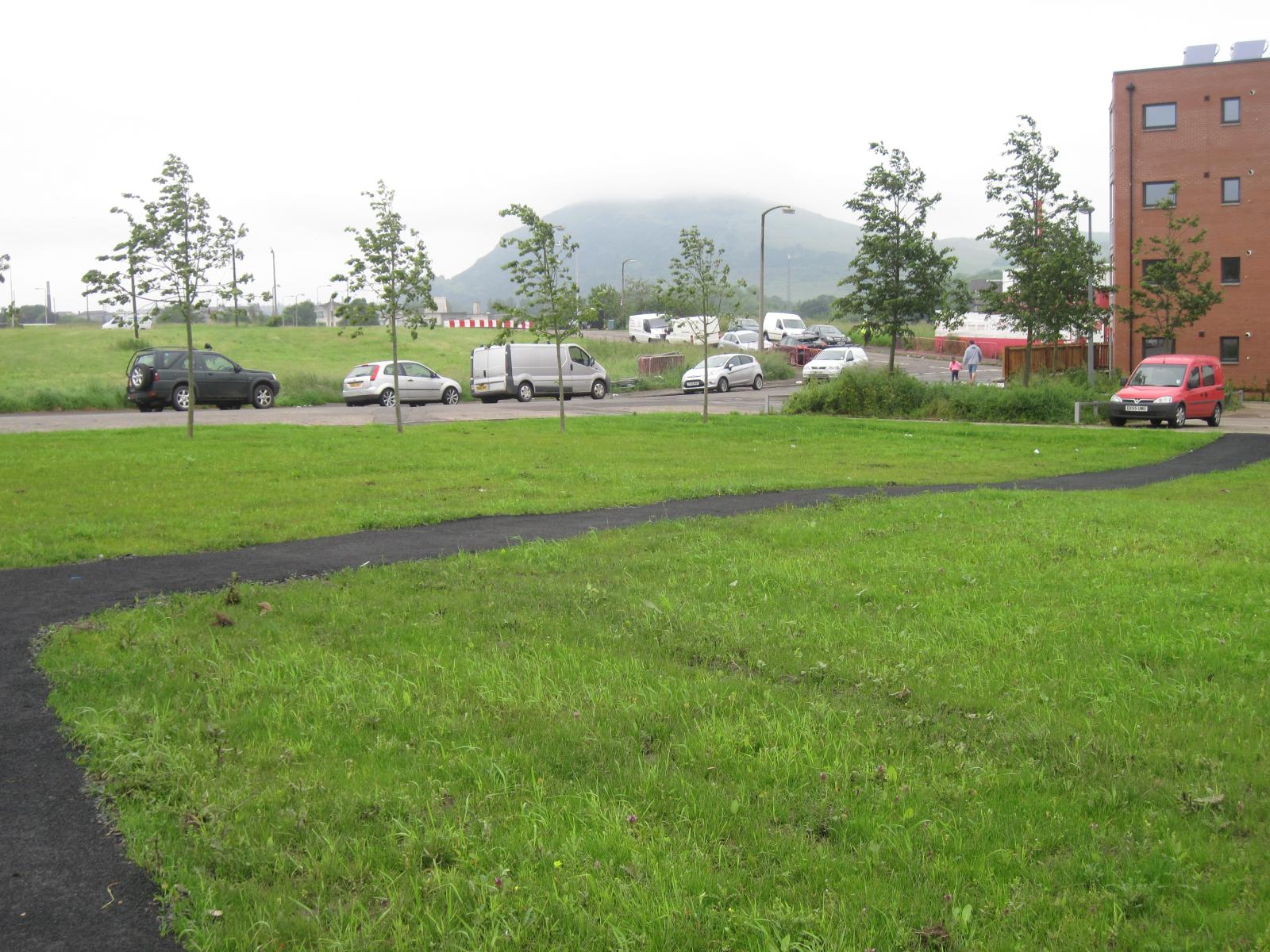
Craigmillar Town Centre Temporary Greening project transformed a vacant development site in Craigmillar which is reserved for a new high school, not scheduled to be built until late 2020, into a temporary green space. The site is at the centre of the wider Craigmillar regeneration area, adjacent to the newly-built Community Hub and neighbouring plots at varying stages of development. EDI's PARC Craigmillar Ltd is responsible for the regeneration in Craigmilar, working in partnership with Edinburgh & Lothians Greenspace Trust (ELGT) and the City of Edinburgh Council. The initiative will create a meanwhile space for community use, while works begin on the town centre development. The greening will allow the area to become an active space for the local community to enjoy and ease the construction process. Craigmillar Town Centre Temporary Greening forms part of a wider plan for the redevelopment of Craigmillar Town Centre. The masterplan, which was approved in December 2014, includes 330 homes, a retail centre, restaurant, community play area and high school – where the temporary greenspace will be situated until building commences. (ref 1, 3)
Overview
Nature-based solution
- Grey infrastructure featuring greens
- Alley or street trees and other street vegetation
- Parks and urban forests
- Pocket parks/neighbourhood green spaces
- Community gardens and allotments
- Horticulture
Key challenges
- Climate action for adaptation, resilience and mitigation (SDG 13)
- Climate change mitigation
- Green space, habitats and biodiversity (SDG 15)
- Habitat and biodiversity restoration
- Green space creation and/or management
- Health and well-being (SDG 3)
- Improving mental health
- Creation of opportunities for recreation
Focus
Project objectives
Implementation activities
Climate-focused activities
Climate change mitigation:
- Increase green urban nature for carbon storage (wetlands, tree cover)
Biodiversity conservation or restoration-focused activities
Biodiversity restoration:
- Rehabilitate and restore damaged or destroyed ecosystems
- Restore species (native, endangered, or unspecified)
- Restore native species
Main beneficiaries
- Local government/Municipality
- Public sector institution (e.g. school or hospital)
- Citizens or community groups
Governance
Management set-up
- Co-governance with government and non-government actors
Type of initiating organisation
- Local government/municipality
Participatory approaches/ community involvement
- Joint implementation (e.g. tree planting)
Details on the roles of the organisations involved in the project
Project implemented in response to ...
Financing
Total cost
Source(s) of funding
- Public local authority budget
- Corporate investment
- Private Foundation/Trust
Type of funding
- Direct funding (grants, subsidies, or self-financed projects by private entities)
Non-financial contribution
Impacts and Monitoring
Environmental impacts
- Climate change
- Enhanced carbon sequestration
- Green space and habitat
- Increased green space area
- Reduced biodiversity loss
- Restoration of derelict areas
Economic impacts
- Unknown
Socio-cultural impacts
- Social justice and cohesion
- Improved access to urban green space
- Increased opportunities for social interaction
- Health and wellbeing
- Gain in activities for recreation and exercise
Type of reported impacts
Presence of formal monitoring system
Presence of indicators used in reporting
Presence of monitoring/ evaluation reports
Availability of a web-based monitoring tool
References
temporary greening. Available at: Source link. Accessed on 31st August, 2020.
2. Central Scotland Green Network. Craigmillar Town Centre Temporary Greening. Available at: Source link. Accessed on 31st August, 2020.
3. Central Scotland green network. (2010). Greening Vacant and Derelict Land in Edinburgh. Accessed: Source link. Accessed on 31st August, 2020.