

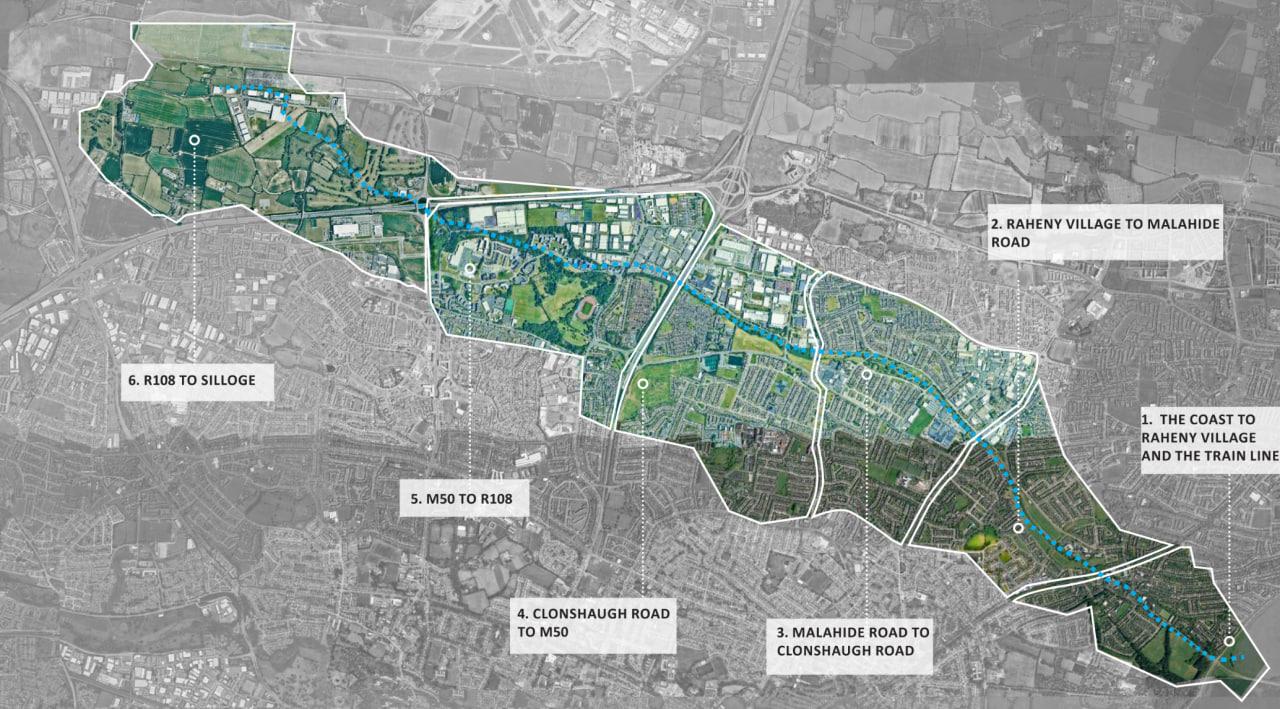
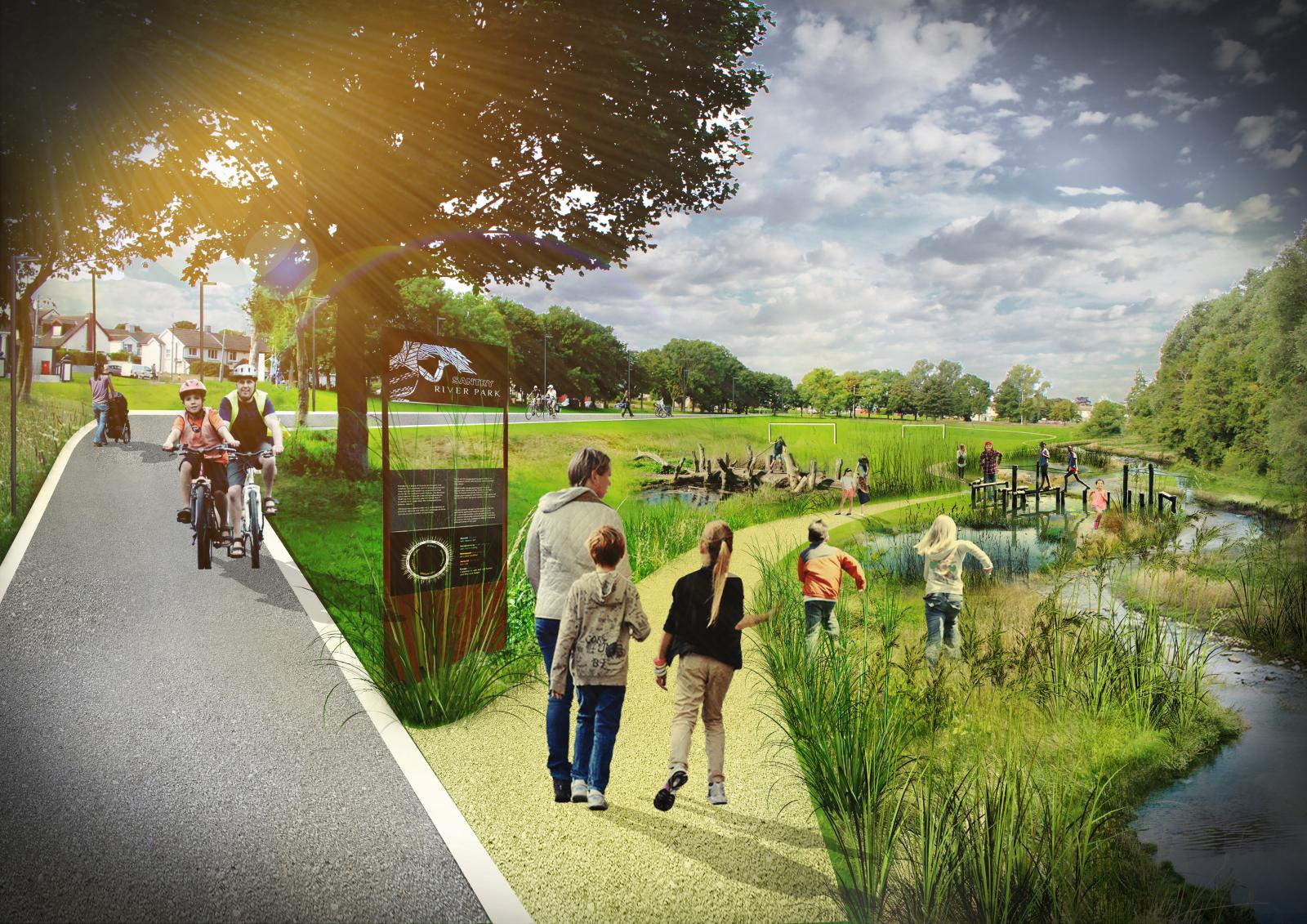
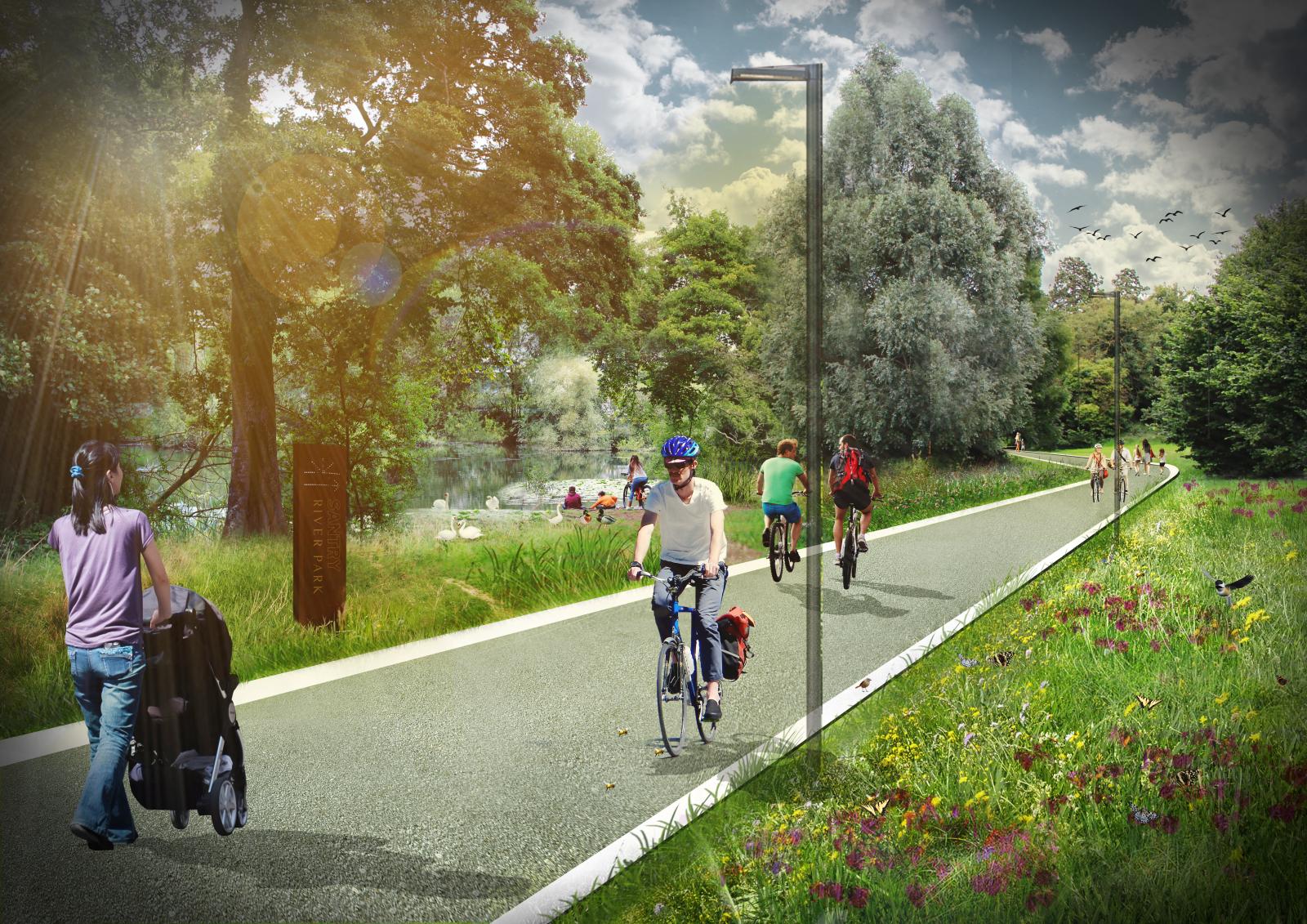
A new landscape plan for the Santry River, developed since 2019, envisions it as “the backbone of a green infrastructure project,” designed to support nature, pedestrians, and cyclists. The project will create a continuous route from the Dublin Bay Biosphere at St Anne’s Park to the wider hinterlands of Dublin at Sillogue. The plan proposes transforming the Santry River into an “integrated green-blue landscape for ecology and recreation,” incorporating a variety of sports, cultural, and leisure activities. Through an agreement with Fingal County Council and the National Transport Authority, Dublin City Council has commissioned studies to address the existing flood risks along the river. The council’s goals for the Santry River include river restoration, flood mitigation, greenway development, and environmental protection, extending from the river’s origin in Harristown within Fingal County to its outlet at James Larkin Road. The project framework will span four years, with annual reviews and budget assessments. The project team has engaged the public in early autumn of 2022 to gather input on these plans, as the Santry River project aims to create a vibrant River Park that integrates natural and recreational elements. Running through North Dublin, this new green-blue infrastructure will serve both ecological and community needs, offering opportunities for sports, culture, and relaxation. Ultimately, it will form a natural corridor linking the Dublin Bay Biosphere at St Anne’s Park with Sillogue, promoting biodiversity while enhancing accessibility for pedestrians and cyclists (2).
Overview
Nature-based solution
- Blue infrastructure
- Rivers/streams/canals/estuaries
Key challenges
- Climate action for adaptation, resilience and mitigation (SDG 13)
- Climate change adaptation
- Green space, habitats and biodiversity (SDG 15)
- Green space creation and/or management
- Habitat and biodiversity conservation
- Water management (SDG 6)
- Flood protection
- Improvements to water quality
- Health and well-being (SDG 3)
- Creation of opportunities for recreation
- Enabling opportunities for physical activity
- Inclusive and effective governance (SDG 16)
- Inclusive governance
- Disaster-risk reduction
Principal problems in Functional Urban Area (FUA)
- Climate-Related Hazards
- River flooding
- Urban flooding (stormwater)
- Health, Well-being and Social cohesion
- Inadequate access to recreational opportunities
Key priorities
Focus
Project objectives
Implementation activities
Climate-focused activities
Climate change adaptation:
- Restore rivers and other fresh water bodies to reduce flood or drought risk
Specification of climate or environmentally vulnerable communities
Biodiversity conservation or restoration-focused activities
Biodiversity conservation:
- Protect and enhance urban habitats
- Preserve and strengthen existing habitats and ecosystems
- Preserve and strengthen habitat connectivity
- Protect species
- Undertake specific measures to protect species
- Means for conservation governance
- Create and use scientific knowledge for conservation
Main beneficiaries
- Citizens or community groups
Governance
Management set-up
- Co-governance with government and non-government actors
Type of initiating organisation
- Local government/municipality
- Public sector institution
Participatory approaches/ community involvement
- Co-planning (e.g. stakeholder workshops, focus groups, participatory mapping)
- Taskforce groups
- Consultation (e.g. workshop, surveys, community meetings, town halls)
Details on the roles of the organisations involved in the project
Project implemented in response to ...
Type of enablers
Financing
Total cost
Source(s) of funding
- Public local authority budget
Type of funding
- Earmarked public budget
Non-financial contribution
Impacts and Monitoring
Environmental impacts
- Climate change
- Storm / wave induced erosion and flooding
- Expected storm / wave induced erosion and flooding
- Water management and blue areas
- Improved water quality
- Expected improved water quality
- Increased protection against flooding
- Expected increased protection against flooding
- Enhanced protection and restoration of freshwater ecosystems
- Expected enhanced protection and restoration of freshwater ecosystems
Economic impacts
- More sustainable tourism
- Expected more sustainable tourism
Socio-cultural impacts
- Health and wellbeing
- Gain in activities for recreation and exercise
- Expected gain in activities for recreation and exercise
- Cultural heritage and sense of place
- Protection of natural heritage
- Expected protection of natural heritage
Type of reported impacts
Presence of formal monitoring system
Presence of indicators used in reporting
Presence of monitoring/ evaluation reports
Availability of a web-based monitoring tool
Potential risks of implementation and trade-offs
References




 Information about this nature-based solution was collected as part of the Naturescapes project funded by the European Union under Grant Agreement No 101084341.