Last updated: November 2024
Pollution from roadways is often carried by rainwater into gullies, which then direct this runoff to the nearest watercourse, ultimately polluting local rivers and degrading water quality (1). To address this issue, Dublin City Council is exploring potential green infrastructure solutions to reduce roadway pollution in rivers, focusing on nine pilot sites within the Dodder catchment area (1). Green infrastructure has the advantage of treating pollutants before they enter rivers or watercourses, which can significantly improve water quality in the area (1).
In addition to enhancing water quality, green infrastructure helps manage flood risks by slowing water flow to rivers, which can lessen the frequency and severity of flood events (1). These green spaces also foster biodiversity, creating more pleasant and ecologically supportive environments for the community (1). As an added benefit, green infrastructure serves as an important climate change adaptation strategy (1).
Upon completion of these pilots, Dublin City Council plans to expand successful methods to other locations across the city and potentially further afield (1). The project will involve creating new green spaces, enhancing existing ones, and transforming certain hard surfaces, all of which will contribute to protecting the Dodder and Santry rivers. By treating roadway runoff before it reaches the rivers, the initiative will also offer valuable benefits to the local community (2).
The proposed changes will be designed to support health and well-being, provide informal play areas, attract desirable wildlife, reduce flood risks, and help urban areas adapt to the impacts of climate change (2). The Council also plans to monitor the performance of these green infrastructure measures to assess their effectiveness in filtering pollutants from roadway runoff (1).
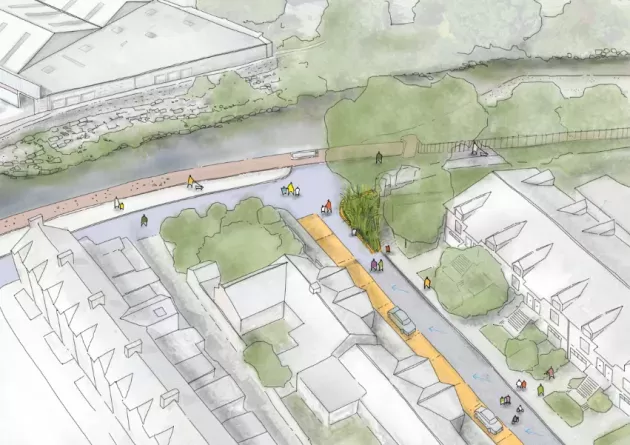
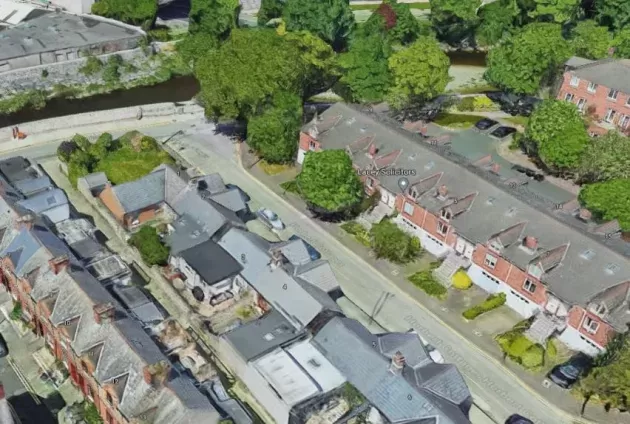
Proposals include the installation of permeable paving in parking areas and the construction of a raingarden. Surface water flow will be collected in the paving and garden and allow for removal of pollutants from the road, prior to discharge to the Dodder
Dublin City Council
Overview
Nature-based solution
- Blue infrastructure
- Rivers/streams/canals/estuaries
- Green areas for water management
- Rain gardens
- Sustainable urban drainage systems
Key challenges
- Climate action for adaptation, resilience and mitigation (SDG 13)
- Climate change adaptation
- Green space, habitats and biodiversity (SDG 15)
- Green space creation and/or management
- Habitat and biodiversity restoration
- Regeneration, land-use and urban development
- Promote natural styles of landscape design for urban development
- Water management (SDG 6)
- Flood protection
- Stormwater and rainfall management and storage
- Improvements to water quality
- Health and well-being (SDG 3)
- Creation of opportunities for recreation
- Inclusive and effective governance (SDG 16)
- Inclusive governance
- Social justice, cohesion and equity (SDG 10)
- Social interaction
Principal problems in Functional Urban Area (FUA)
- Climate-Related Hazards
- River flooding
- Urban flooding (stormwater)
- Other
Key priorities
Climate action (adaptation and/or mitigation), Biodiversity (conservation and/or restoration)
Focus
Creation of semi-natural blue areas, Implementation of green areas for water management (e.g. rain gardens), Improved governance of green or blue areas, Establishment of inclusive governance mechanisms involving local communities
Project objectives
The goals of the Dodder Rainscapes project are to:
To adapt conventional drainage systems, typically reliant on gullypots and pipes, into a Rainscape by introducing various Sustainable Drainage features (SuDS).
To modify rainfall collection methods to slow water flow to watercourses, enabling the removal and natural breakdown of pollutants and thus protecting rivers.
To create new green spaces, enhance existing green areas, and alter some hard surfaces to promote environmental and aesthetic benefits.
To provide benefits to the local community while protecting the Dodder River by filtering roadway runoff before it reaches the river.
To transform the approach to rainfall management, fostering urban environments that are more resilient to climate change.
To support health and well-being in the community by providing recreational spaces
To provide informal play opportunities and create gathering spaces for the community.
To attract desirable wildlife to local green spaces, enhancing biodiversity.
To involve the local community in decision making processes (1, 2)
Implementation activities
To reduce flooding and contribute to healthier blue ecosystems the Doddy River Rainscapes project has engaged in a variety of activites including:
1. Created the project in compliance with the Dublin Water Framework Directive and to further understand the full benefits of this type of approach so that it can be rolled out into other parts of the city in years to come (2).
2. Appointed McCloy Consulting (SuDS designers and Engineers) as a main consultant in delivery of design services (2).
3. Chose a multidisciplinary approach by incorporating Robert Bray Associates (SuDS designers and Landscape Architects) in providing supporting design services (2).
4. Published the Initial concept designs for initial consultation open to review and feedback (2).
5. Conducted site surveys and a public consultation (2).
Climate-focused activities
Climate change adaptation:
- Implement sustainable urban drainage schemes to manage stormwater
Communities vulnerable to environmental hazards or climate change impacts
Yes
Specification of climate or environmentally vulnerable communities
Riverfront communities
Biodiversity conservation or restoration-focused activities
Biodiversity restoration:
- Rehabilitate and restore damaged or destroyed ecosystems
- Restore native species
- Restore ecological connectivity
Main beneficiaries
- Local government/Municipality
- Citizens or community groups
- Young people and children
Governance
Management set-up
- Co-governance with government and non-government actors
Type of initiating organisation
- Local government/municipality
Participatory approaches/ community involvement
- Co-planning (e.g. stakeholder workshops, focus groups, participatory mapping)
- Consultation (e.g. workshop, surveys, community meetings, town halls)
Details on the roles of the organisations involved in the project
DCC are funding this project as part of our commitment to comply with the Water Framework Directive and to further understand the full benefits of this type of approach so that it can be rolled out into other parts of the city in years to come.
McCloy Consulting (SuDS designers and Engineers) have been appointed by DCC as main consultant in delivery of design services. Robert Bray Associates (SuDS designers and Landscape Architects) are providing supporting design services to McCloy Consulting as part of a multi-disciplinary approach to designing the Rainscapes.
Initial concept designs are being developed and there will be public consultation in early summer 2021. (1, 2)
Project implemented in response to ...
... an EU policy or strategy?
Yes
( EU Water Frameworks Directive (2))
... a national policy or strategy?
Yes
(Ireland Climate Change Policy (2))
... a local policy or strategy?
Yes
(Dublin Climate Change Action Plan (2))
Type of enablers
Governance innovations (such as public private partnerships), City network or regional partnerships focused on climate change, sustainability, GI or NBS in the city
Financing
Source(s) of funding
- Public local authority budget
Non-financial contribution
Unknown
Impacts and Monitoring
Environmental impacts
- Water management and blue areas
- Improved water quality
- Expected improved water quality
- Increased protection against flooding
- Expected increased protection against flooding
- Green space and habitat
- Increased green space area
- Expected increased green space area
Socio-cultural impacts
- Social justice and cohesion
- Improved access to urban green space
- Expected improved access to urban green space
- Increased opportunities for social interaction
- Expected increased opportunities for social interaction
- Health and wellbeing
- Improved physical health
- Expected improved physical health
Presence of formal monitoring system
Yes
Presence of indicators used in reporting
No evidence in public records
Presence of monitoring/ evaluation reports
No evidence in public records
Availability of a web-based monitoring tool
No evidence in public records
Potential risks of implementation and trade-offs
Unknown
References
1.
CARO (n.d.). Dodder and Santry Rainscapes. [
Source link];
2.
Dublin City Council (n.d.). River Dodder Rainscapes. [
Source link];
3.
Dalby, C (2023). Council Plans to Add “Rainscapes” in Five Places in the City to Sop up Heavy Rainfall. [
Source link];
4.
Central Statistics Office (n.d.). Census Interactive Map . [
Source link];
Project locations
https://www.dublincity.ie/residential/environment/protection-water-bodies/green-infastructure/river-santry-and-river-dodder-rainscapes
Project locations
https://www.dublincity.ie/residential/environment/protection-water-bodies/green-infastructure/river-santry-and-river-dodder-rainscapes
Project locations
https://www.dublincity.ie/residential/environment/protection-water-bodies/green-infastructure/river-santry-and-river-dodder-rainscapes
Project locations
https://www.dublincity.ie/residential/environment/protection-water-bodies/green-infastructure/river-santry-and-river-dodder-rainscapes
Project locations
https://www.dublincity.ie/residential/environment/protection-water-bodies/green-infastructure/river-santry-and-river-dodder-rainscapes
Project locations
https://www.dublincity.ie/residential/environment/protection-water-bodies/green-infastructure/river-santry-and-river-dodder-rainscapes
Project locations
https://www.dublincity.ie/residential/environment/protection-water-bodies/green-infastructure/river-santry-and-river-dodder-rainscapes
Project locations
https://www.dublincity.ie/residential/environment/protection-water-bodies/green-infastructure/river-santry-and-river-dodder-rainscapes

Information about this nature-based solution was collected as part of the
Naturescapes project funded by the European Union under Grant Agreement No 101084341.