

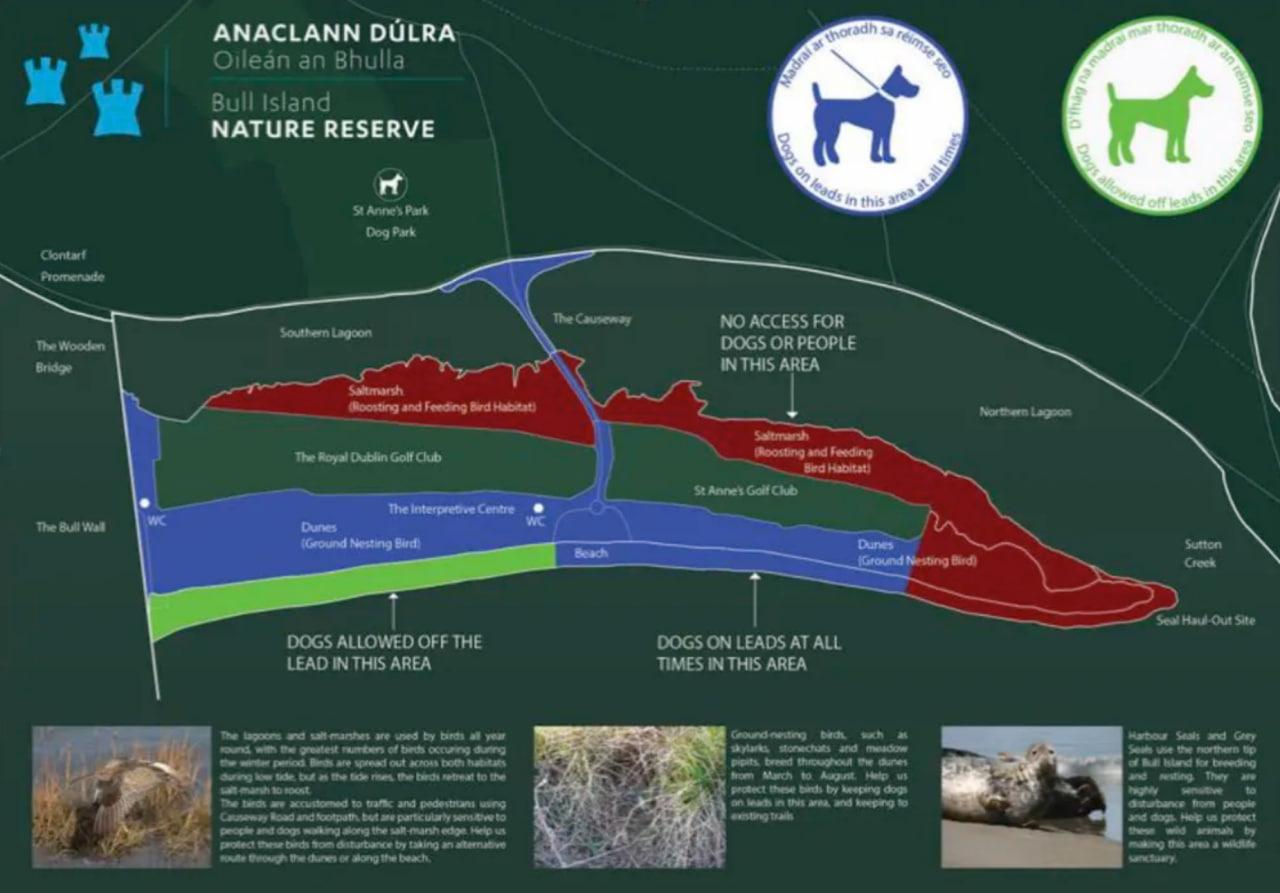
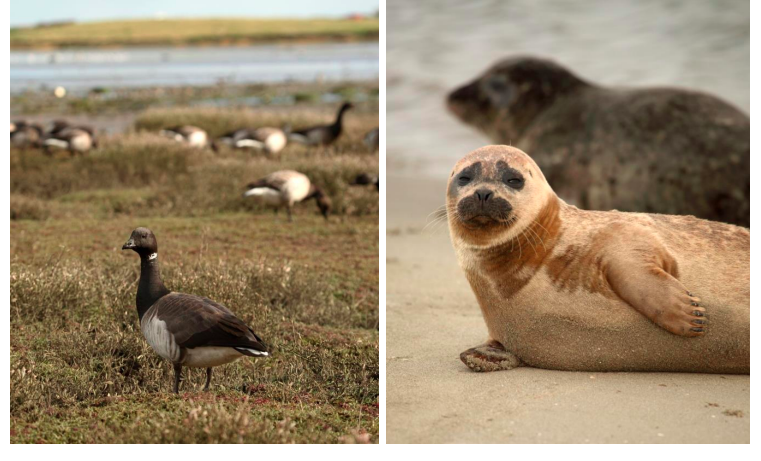
North Bull Island is a national nature reserve located in Dublin Bay on the north side of Dublin. Supporting both local and migratory wildlife, the area holds several nature conservation designations. It is designated as a special amenity area for its aesthetic and recreational value and forms an integral part of the Dublin Bay Biosphere. The Island, with its 5 km beach located within the capital city and close to the city center, serves as a unique and important public amenity. (1) The Island is estimated to attract up to 1.4 million visitors annually, including walkers, swimmers, beachgoers, birdwatchers, nature enthusiasts, kite-surfers, and various other interest groups from the local area. Additionally, it is a popular destination for schools, universities, and visitors from Ireland and abroad who come to experience accessible examples of ecological succession across nationally and internationally significant habitats, and to learn about the intricate stories that make North Bull Island Nature Reserve central to a UNESCO Biosphere Reserve and part of a global network of Biosphere Reserves. (1) The Island and Nature Reserve are managed by the Parks, Biodiversity, and Landscape Services of Dublin City Council in collaboration with the National Parks and Wildlife Service. Dublin City Council has prepared an Action Plan for North Bull Island for 2020-2025 to implement the objectives of the North Bull Island Management Plan 2020. The North Bull Island Oversight Forum, which represents a range of stakeholders, monitors the action plan’s implementation (2). The goal is to conserve the island's environmental qualities and scientific significance while balancing its recreational and amenity value for the benefit of the local community and visitors (8).

Overview
Nature-based solution
- Blue infrastructure
- Coastlines
- Coastal wetland, mangroves and salt marshes
Key challenges
- Climate action for adaptation, resilience and mitigation (SDG 13)
- Climate change adaptation
- Climate change mitigation
- Coastal resilience and marine protection (SDG 14)
- Coastal protection / hazard mitigation
- Marine and coastal biodiversity protection
- Marine and coastal research and/or education
- Environmental quality
- Waste management
- Green space, habitats and biodiversity (SDG 15)
- Habitat and biodiversity conservation
- Inclusive and effective governance (SDG 16)
- Effective management
- Social justice, cohesion and equity (SDG 10)
- Social justice and equity
- Environmental and climate justice
Principal problems in Functional Urban Area (FUA)
- Climate-Related Hazards
- Coastal flooding
- Coastal hazards (e.g. erosion, flooding)
- Environmental Degradation
- Biodiversity loss
- Land use and Socio-economic change
- Rapid urbanization
- Resource Scarcity and Competition
- Human-wildlife conflicts
Key priorities
Focus
Project objectives
Implementation activities
Climate-focused activities
Climate change adaptation:
- Implement measures that prevent/manage desertification, soil erosion and landslides
Climate change mitigation:
- Protect and restore coastal wetlands, mangroves and salt marshes, aiming at sequestering carbon dioxide and storing it in their soils
- Raise public awareness of behaviours, lifestyle and cultural changes with mitigation potential
Biodiversity conservation or restoration-focused activities
Biodiversity conservation:
- Protect and enhance urban habitats
- Preserve and strengthen existing habitats and ecosystems
- Promote environmentally-sound development in and around protected areas
- Preserve and strengthen habitat connectivity
- Reduce negative impacts and avoid the alteration/damage of ecosystem
- Protect species
- Undertake specific measures to protect species
- Control and clean invasive alien species
- Means for conservation governance
- Manage biological resources for conservation and sustainable use
- Raise public awareness
- Create and use scientific knowledge for conservation
Main beneficiaries
- Local government/Municipality
- Researchers/University
- Citizens or community groups
- Young people and children
Governance
Management set-up
- Government-led
Type of initiating organisation
- Local government/municipality
Participatory approaches/ community involvement
- Taskforce groups
- Dissemination of information and education
- Co-management/Joint management
Details on the roles of the organisations involved in the project
Project implemented in response to ...
Type of enablers
Financing
Total cost
Source(s) of funding
- Public local authority budget
Type of funding
- Earmarked public budget
Non-financial contribution
- Provision of labour
- Citizens (e.g. volunteering)
Impacts and Monitoring
Environmental impacts
- Climate change
- Storm / wave induced erosion and flooding
- Expected storm / wave induced erosion and flooding
- Environmental quality
- Improved waste management
- Expected improved waste management
- Green space and habitat
- Increased conservation or restoration of ecosystems
- Expected increased conservation or restoration of ecosystems
- Reduced biodiversity loss
- Expected reduced biodiversity loss
Economic impacts
- Generation of other type of work opportunities (e.g. voluntary, work for rehabilitation)
- Expected generation of other type of work opportunities (e.g. voluntary, work for rehabilitation)
- More sustainable tourism
- Expected more sustainable tourism
Socio-cultural impacts
- Social justice and cohesion
- Improved access to urban green space
- Expected improved access to urban green space
- Cultural heritage and sense of place
- Protection of natural heritage
- Expected protection of natural heritage
- Increased awareness of flora and fauna as culturally and historically meaningful
- Expected increased awareness of flora and fauna as culturally and historically meaningful
- Increased appreciation for natural spaces
- Expected increased appreciation for natural spaces
- Education
- Increased support for education and scientific research
- Expected increased support for education and scientific research
- Increased knowledge of locals about local nature
- Expected increased knowledge of locals about local nature
Type of reported impacts
Presence of formal monitoring system
Presence of indicators used in reporting
Presence of monitoring/ evaluation reports
Availability of a web-based monitoring tool
Potential risks of implementation and trade-offs
References
 Information about this nature-based solution was collected as part of the Naturescapes project funded by the European Union under Grant Agreement No 101084341.