

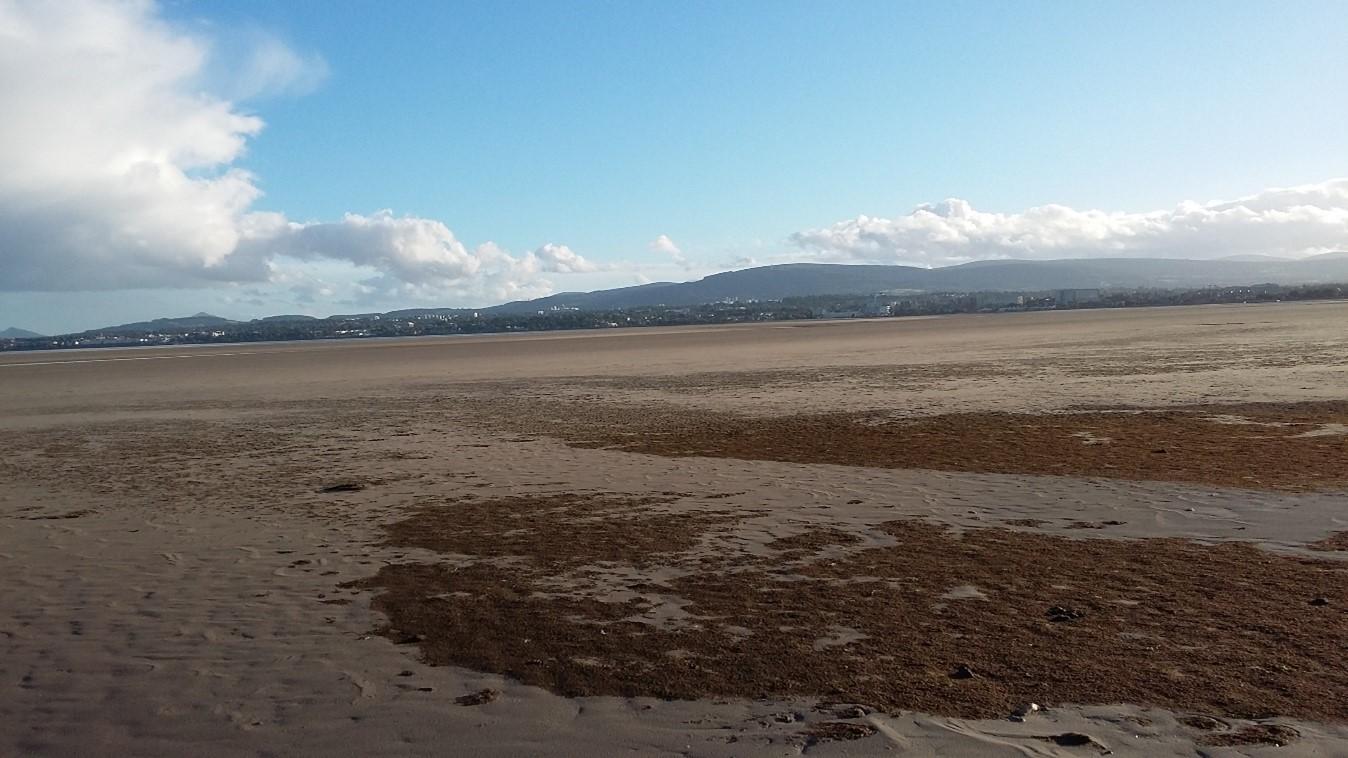
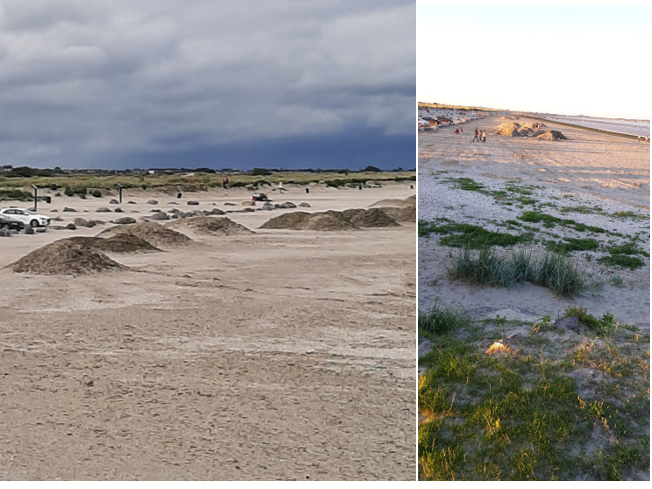
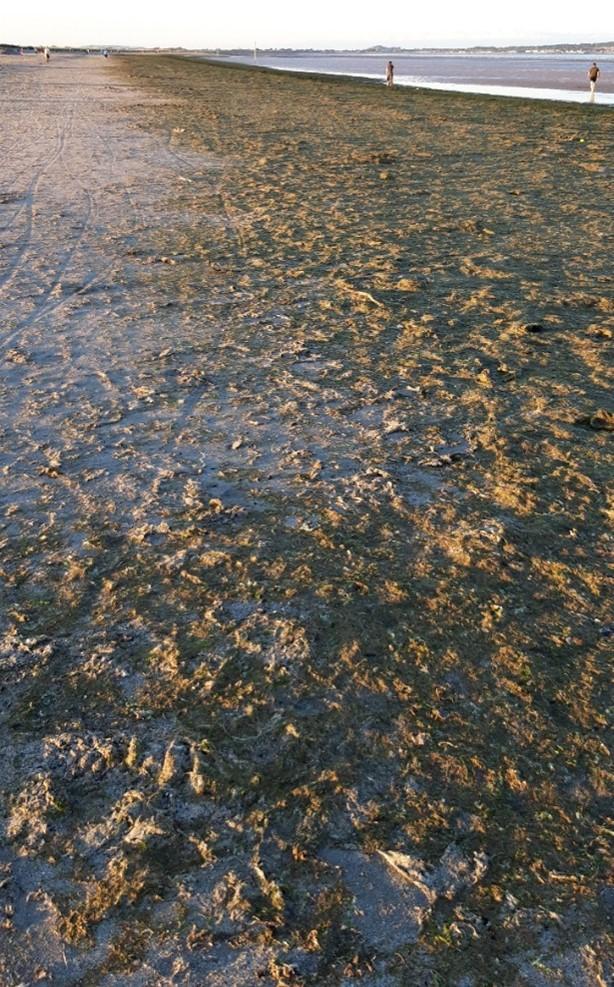
Coastal erosion is a well-known consequence of climate change, driven by rising sea levels, extreme storms, and powerful coastal surges. Dollymount Strand, a popular spot for bathing and water sports in Dublin, is particularly vulnerable. Located on North Bull Island and managed by Dublin City Council, the area is part of several protected zones, including a Special Area of Amenity, a Special Area of Conservation, a Special Protection Area, a Ramsar Wetland, a Natura 2000 site, and the UNESCO Dublin Bay Biosphere. To help mitigate this issue, Dublin City Council has implemented a solution that works with, rather than against, natural processes. During late summer and autumn—particularly following high tides, warm weather, and storms—a type of seaweed called Ectocarpus siliculosis naturally accumulates along Dublin Bay’s beaches. Instead of removing it, the council allows the seaweed to remain, recognizing its essential role in maintaining the beach’s rich biodiversity. Ectocarpus contributes to the health of the coastal ecosystem, supporting marine life and enhancing the natural resilience of Dublin Bay. (1.2)
Overview
Nature-based solution
- Blue infrastructure
- Coastlines
Key challenges
- Climate action for adaptation, resilience and mitigation (SDG 13)
- Climate change adaptation
- Environmental quality
- Waste management
- Green space, habitats and biodiversity (SDG 15)
- Habitat and biodiversity conservation
- Health and well-being (SDG 3)
- Creation of opportunities for recreation
Principal problems in Functional Urban Area (FUA)
- Climate-Related Hazards
- Coastal hazards (e.g. erosion, flooding)
- Extreme weather events (e.g. storms, hurricanes)
- Environmental Degradation
- Biodiversity loss
Key priorities
Focus
Project objectives
Implementation activities
Climate-focused activities
Climate change adaptation:
- Implement measures that prevent/manage desertification, soil erosion and landslides
- Restore sediment supply to coastal zone
- Reducing socio-economic vulnerability to climate impacts (e.g. awareness raising)
Biodiversity conservation or restoration-focused activities
Biodiversity conservation:
- Protect and enhance urban habitats
- Preserve and strengthen existing habitats and ecosystems
- Reduce negative impacts and avoid the alteration/damage of ecosystem
- Means for conservation governance
- Raise public awareness
Biodiversity restoration:
- Rehabilitate and restore damaged or destroyed ecosystems
Main beneficiaries
- Local government/Municipality
- Researchers/University
- Citizens or community groups
Governance
Management set-up
- Government-led
Type of initiating organisation
- Local government/municipality
Participatory approaches/ community involvement
- Dissemination of information and education
- Co-management/Joint management
Details on the roles of the organisations involved in the project
Project implemented in response to ...
Type of enablers
Financing
Total cost
Source(s) of funding
- Public local authority budget
Type of funding
- Earmarked public budget
Non-financial contribution
Impacts and Monitoring
Environmental impacts
- Climate change
- Strengthened capacity to address climate hazards/natural disasters
- Expected strengthened capacity to address climate hazards/natural disasters
- Enhanced protection against extreme weather events (e.g. storms, cyclones, tidal surges, coastal erosion)
- Expected enhanced protection against extreme weather events (e.g. storms, cyclones, tidal surges, coastal erosion)
- Water management and blue areas
- Enhanced protection and restoration of coastal and marine ecosystems
- Expected enhanced protection and restoration of coastal and marine ecosystems
- Green space and habitat
- Reduced biodiversity loss
- Expected reduced biodiversity loss
Economic impacts
- Unknown
Socio-cultural impacts
- Unknown
Type of reported impacts
Presence of formal monitoring system
Presence of indicators used in reporting
Presence of monitoring/ evaluation reports
Availability of a web-based monitoring tool
Potential risks of implementation and trade-offs
References
 Information about this nature-based solution was collected as part of the Naturescapes project funded by the European Union under Grant Agreement No 101084341.