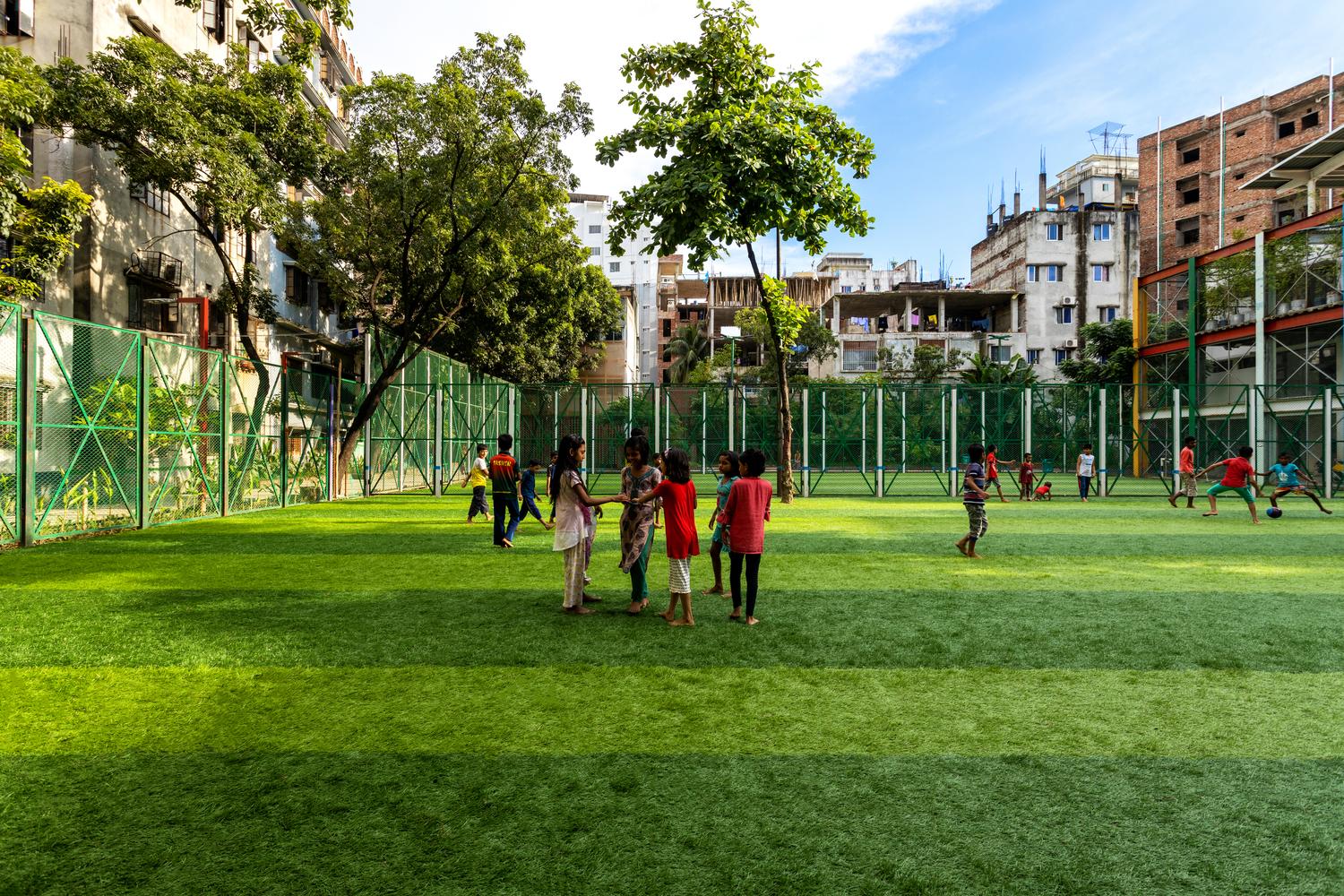
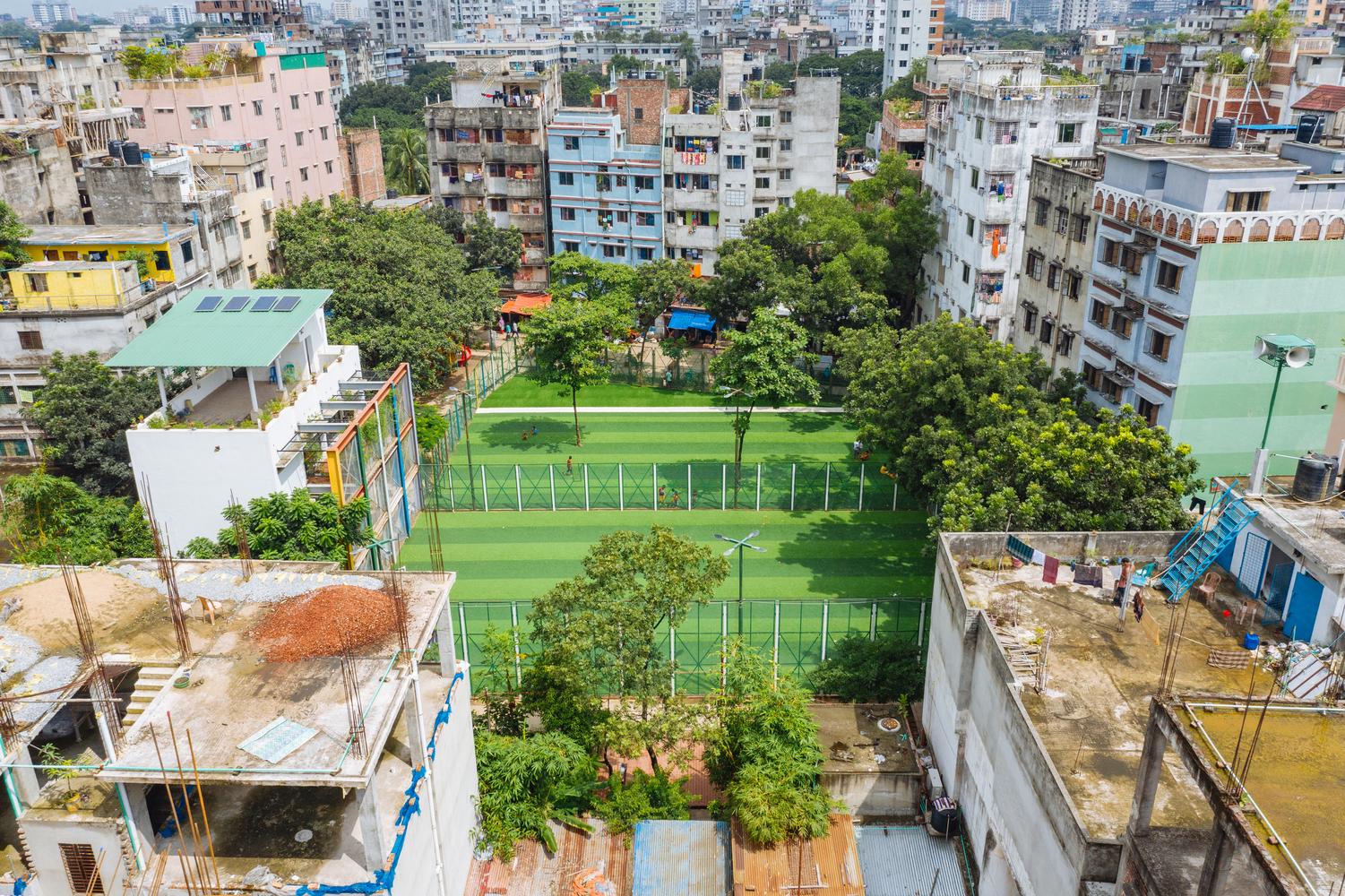
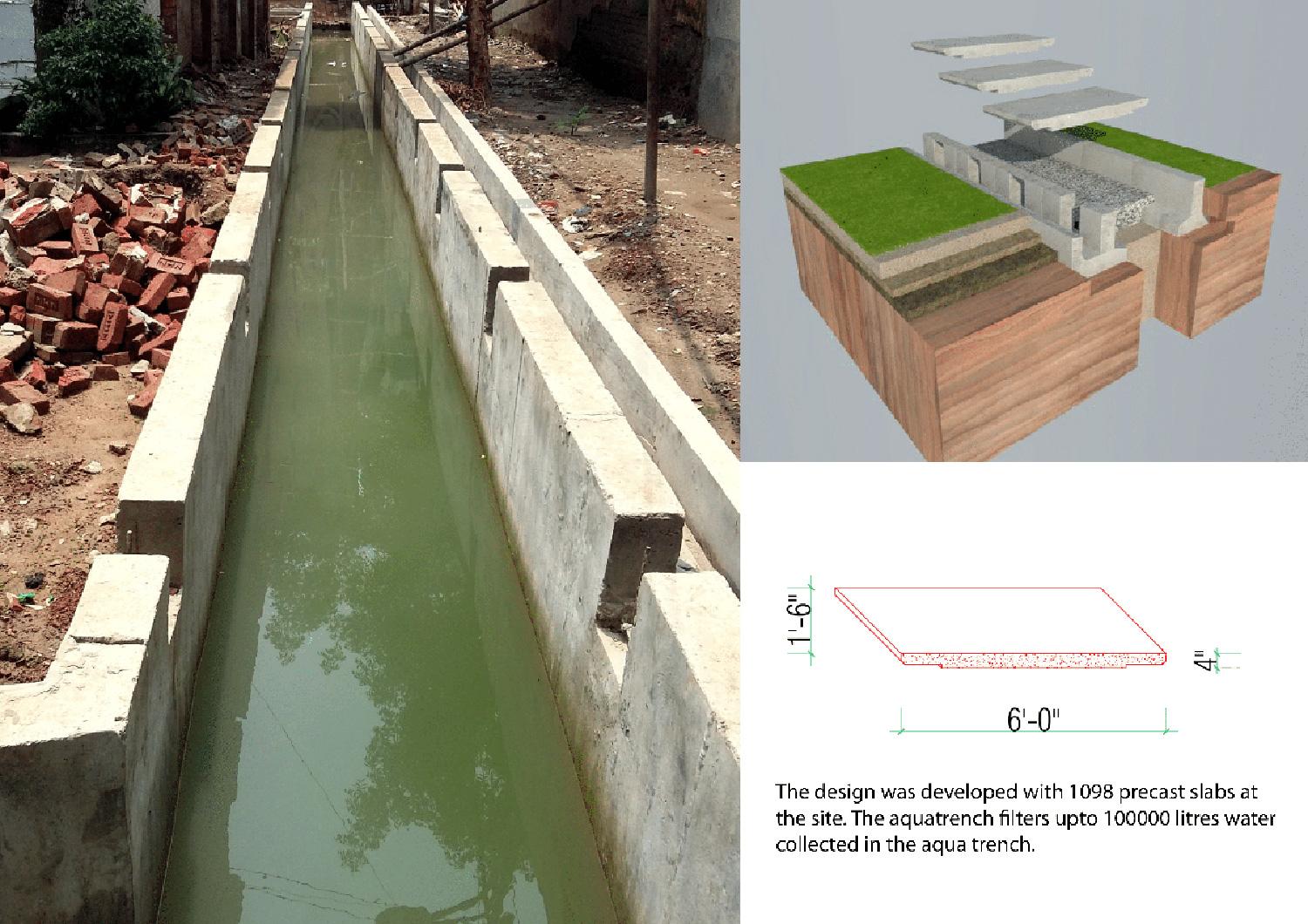
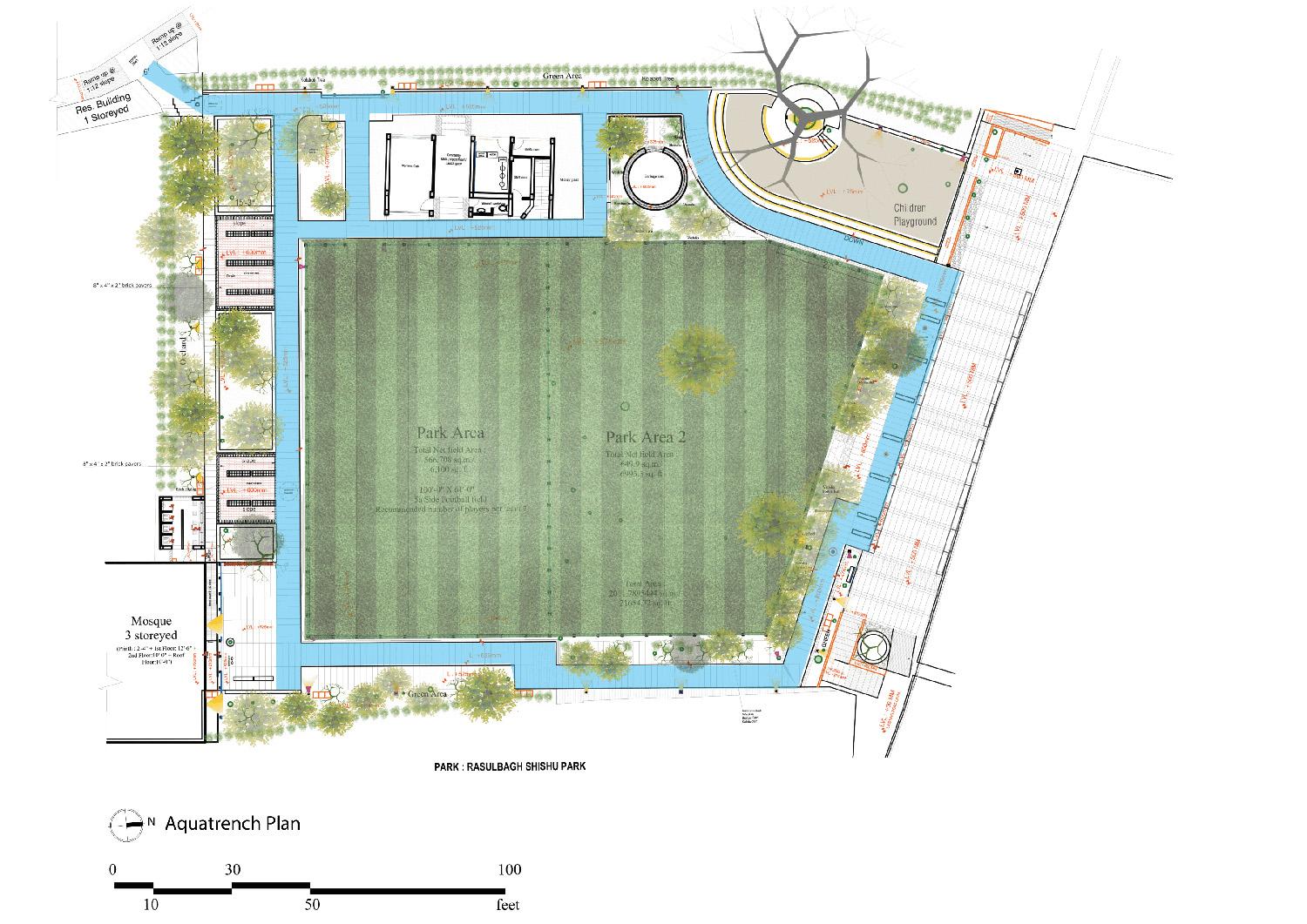
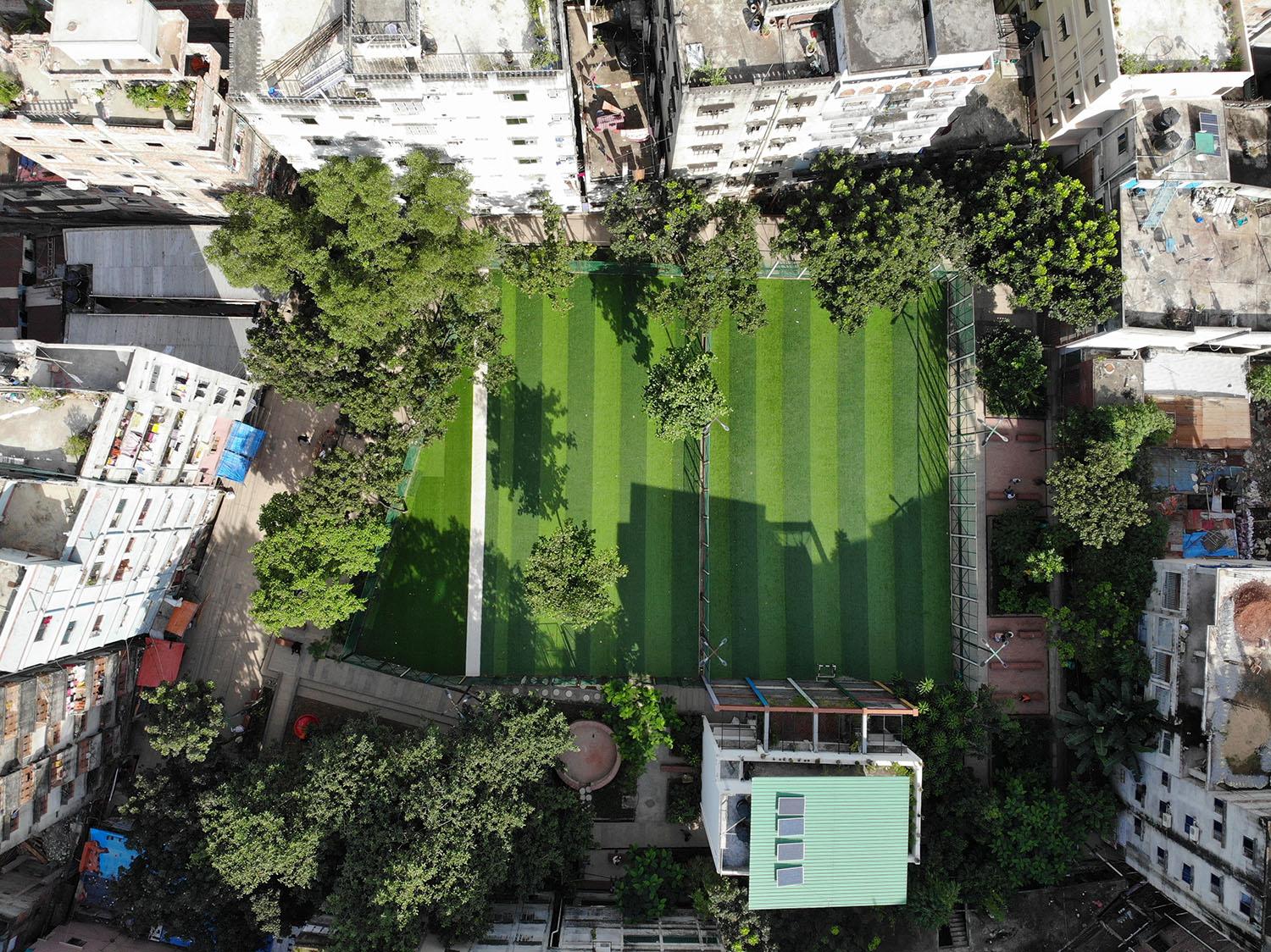
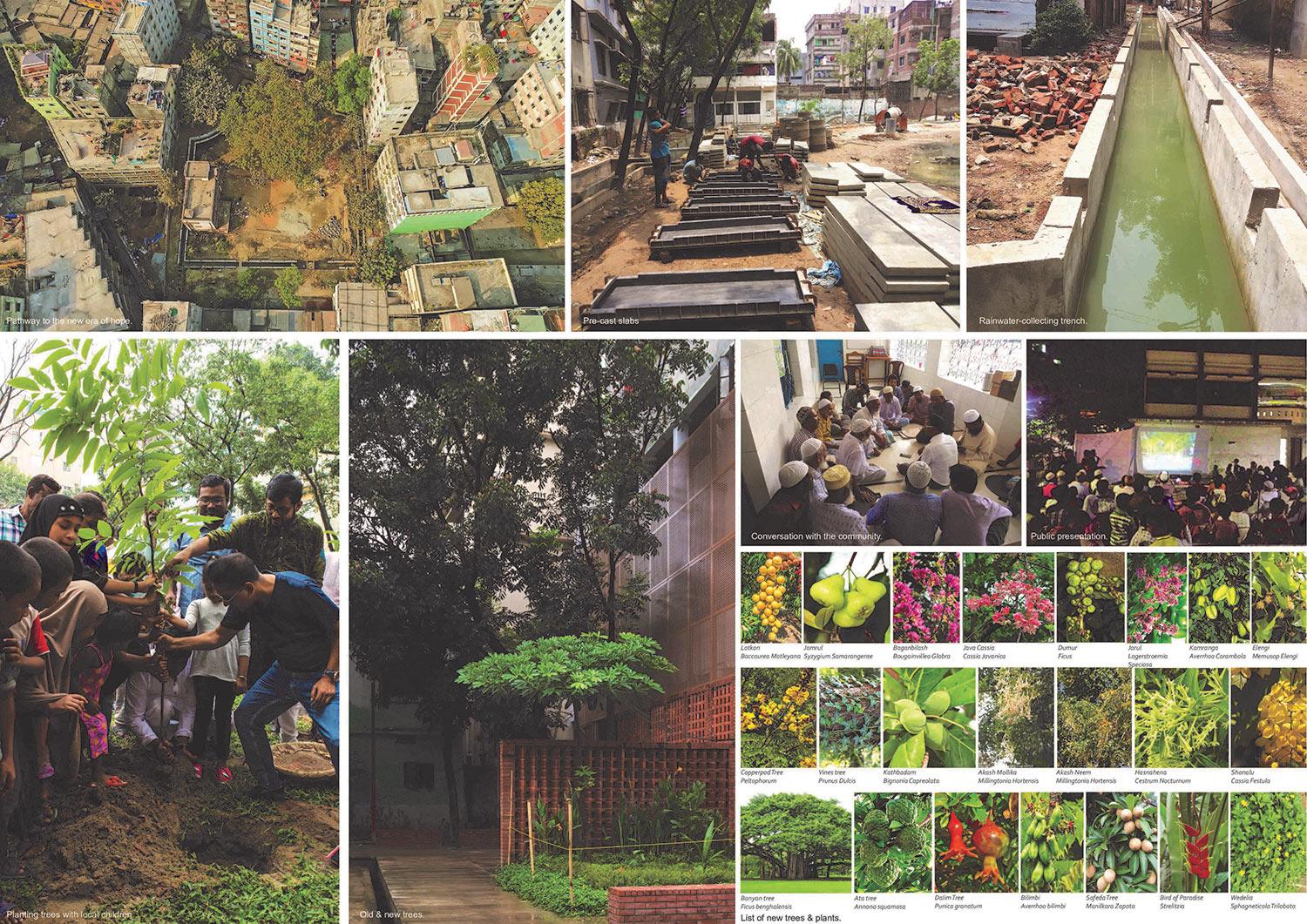
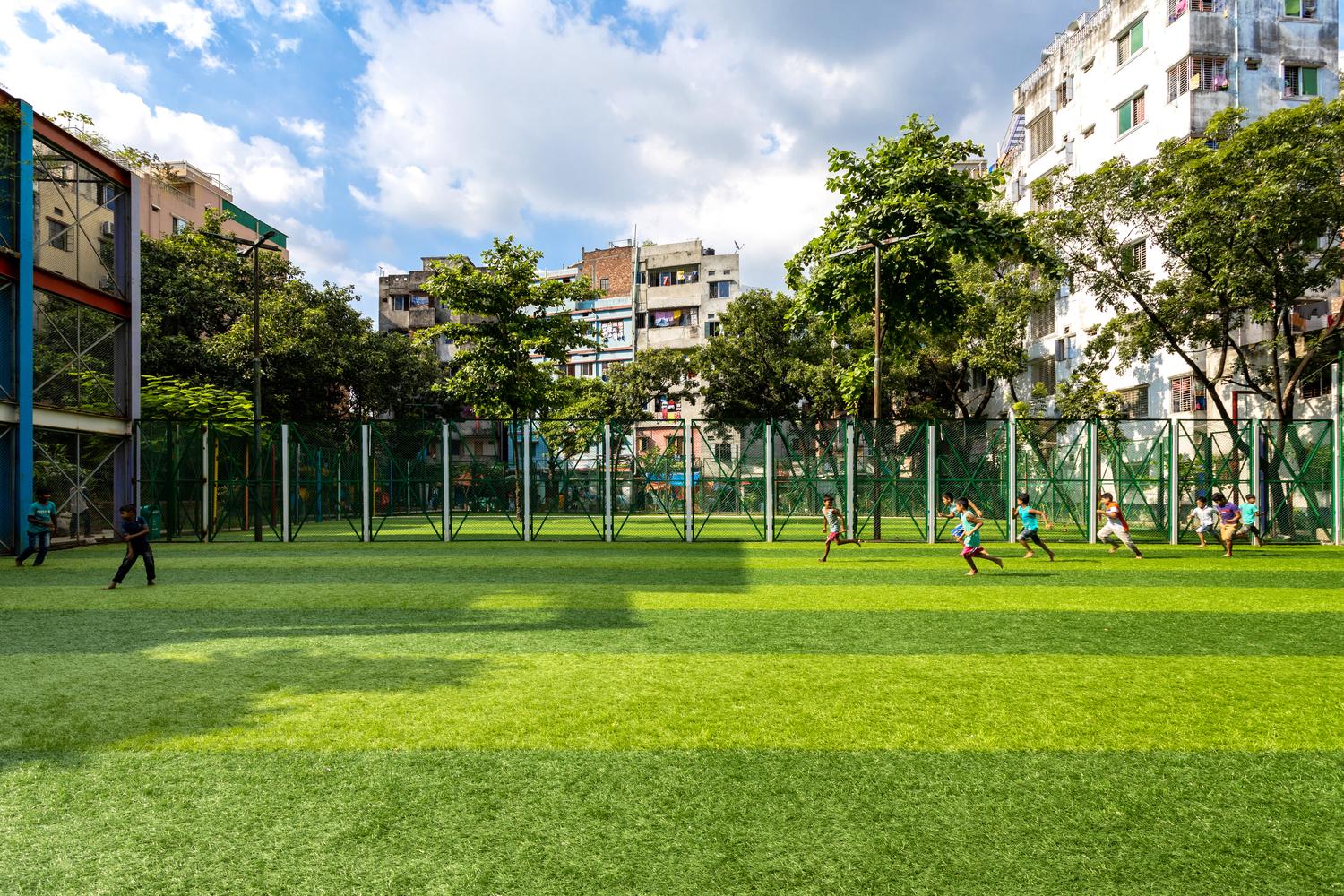
In 2016 the Dhaka South City Corporation (DSCC), one of the municipal local government authorities of Dhaka initiated a plan to revitalise 19 of the city’s parks and 12 playgrounds. One of them is Rasulbag Shishu Park, previously a derelict area surrounded by residential tower blocks, tiny shops and street market stalls. Besides reconditioning a derelict area, DSCC considered it of utmost importance to address some environmental and planning aspects. One of them is the fact that Dhaka is located in a region severely exposed to flooding during the rainy seasons. Poor planning of the city, with narrow alleyways, which have no proper drainage, contributes greatly to transforming streets into rivers. As such, in 2018 DSCC started redesigning the area, counting on a participatory approach throughout the community. No trees were taken down throughout the entire process; all other already-existing trees in the park were included in the design. Most of the native shrubs and trees make up the rows of orchards that line the park's perimeter, disguising its crumbling walls and softly merging them into its surroundings. To establish an environmentally friendly and aesthetically beautiful boundary, various plants, including flowers and fruit trees, have been planted around the park's furthest edges. It was expected that the intervention would revitalize a sense of community in an already failed public space. (Ref 1, 2, 6)
Overview
Nature-based solution
- Green areas for water management
- Rain gardens
- Sustainable urban drainage systems
- Grey infrastructure featuring greens
- Green playgrounds and school grounds
- Parks and urban forests
- Pocket parks/neighbourhood green spaces
Key challenges
- Green space, habitats and biodiversity (SDG 15)
- Green space creation and/or management
- Water management (SDG 6)
- Flood protection
- Stormwater and rainfall management and storage
- Health and well-being (SDG 3)
- Creation of opportunities for recreation
- Inclusive and effective governance (SDG 16)
- Effective management
- Social justice, cohesion and equity (SDG 10)
- Social interaction
Focus
Project objectives
Implementation activities
Biodiversity conservation or restoration-focused activities
Biodiversity restoration:
- Restore species (native, endangered, or unspecified)
- Restore native species
Main beneficiaries
- Local government/Municipality
- Citizens or community groups
- Young people and children
Governance
Management set-up
- Government-led
Type of initiating organisation
- Local government/municipality
Participatory approaches/ community involvement
- Co-management/Joint management
- Citizen oversight (e.g. boards, advisory)
- Citizen monitoring and review
Details on the roles of the organisations involved in the project
Project implemented in response to ...
Financing
Total cost
Source(s) of funding
- Public local authority budget
Type of funding
- Earmarked public budget
Non-financial contribution
Impacts and Monitoring
Environmental impacts
- Water management and blue areas
- Increased protection against flooding
- Improved stormwater management
- Green space and habitat
- Increased green space area
Economic impacts
- Increase of green jobs (e.g. paid employment positions)
Socio-cultural impacts
- Social justice and cohesion
- Improved access to urban green space
- Increased opportunities for social interaction
- Increased involvement of locals in the management of green spaces
- Safety
- Increased perception of safety
Type of reported impacts
Presence of formal monitoring system
Presence of indicators used in reporting
Presence of monitoring/ evaluation reports
Availability of a web-based monitoring tool
References
2. Old Dhaka New Story (n.d). Revitalization of Rasulbagh Children's Source link Source link (Accessed on 24 January, 2023).
3. The Source link RASULBAGH CHILDREN'S PARK, A BEACON OF HOPE IN THE DARK. URL: Source link (Accessed on 24 January, 2023).
4. LUVA N. C.(2022)Rasulbagh children’s park in Dhaka, Bangladesh by Shatotto. URL: Source link (Accessed on 24 January, 2023).
5. Damian H(2020) Rasulbagh Shishu Park | Source link Source link (Accessed on 24 January, 2023).
6. WAF Landscape: Urban (n.d) Revitalization of Rasulbagh Children's Source link Source link (Accessed on 24 January, 2023).
7. Hana A.(n.d) Rasulbagh Children’s Park / Source link Source link (Accessed on 24 January, 2023).
8. contextbd (2016) Initiative- ‘জল সবুজে ঢাকা’ | Index of Projects and Source link Source link (Accessed on 24 January, 2023).
9. Jala sabujē ḍhākā (2018), Rasulbag Shishu Park, Rasulbag, URL: Source link (Accessed on 15 February, 2023)