

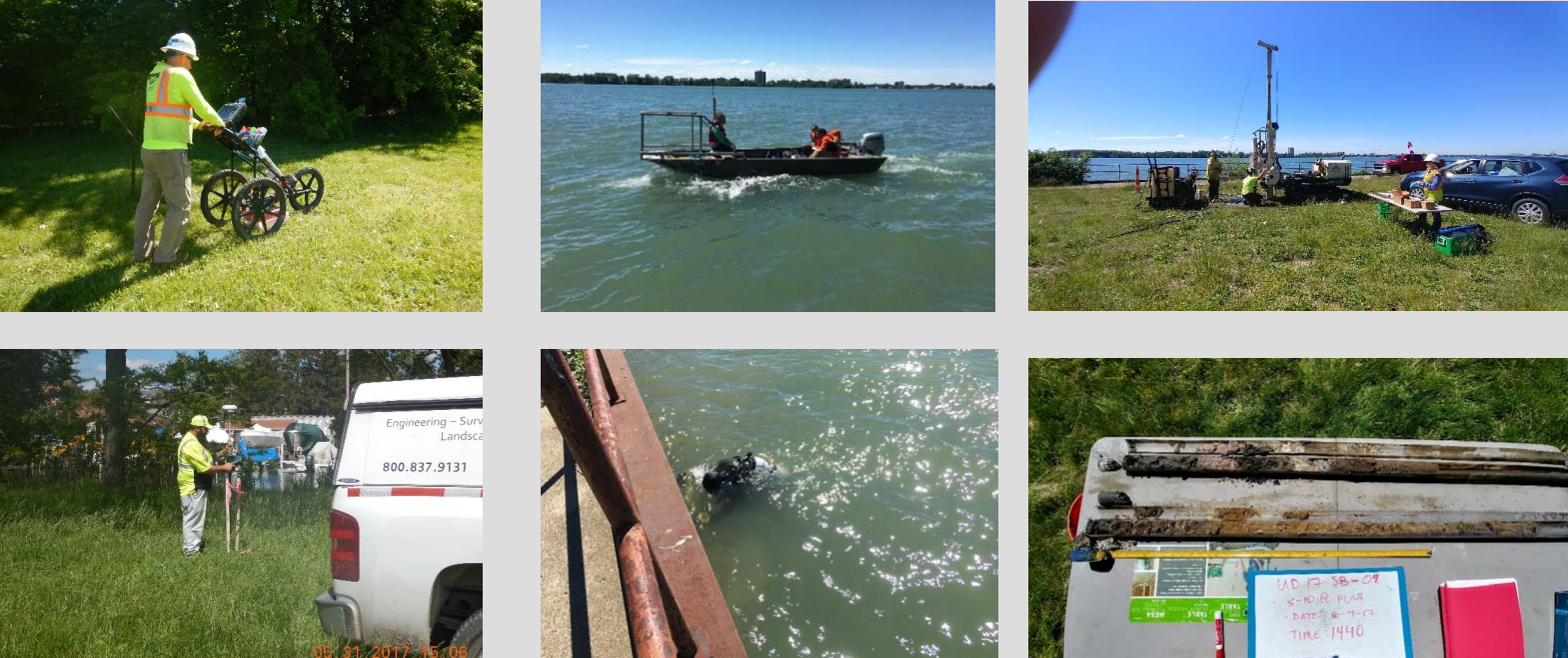
The Upper Detroit Riverfront Habitat and Parks Restoration Project aims to restore and enhance vital fish and wildlife habitats along the Detroit River. This initiative seeks to rehabilitate approximately 30 acres of upland and shoreline habitats within Riverfront-Lakewood East Park, A.B. Ford Park, and Mariners Park (all located alongside the river), covering nearly one mile of the Detroit River and its shorelines. Key outcomes include improving approximately 1,000 linear feet of existing shoreline along the Detroit River by incorporating native wetland edges and fish spawning shelves into the restoration efforts. The project also plans to enhance around 2,000 linear feet of canal shoreline and 800 linear feet along Fox Creek to create or improve habitats for fish and herpetological species. In Riverfront-Lakewood East Park, 28 acres are targeted for the establishment or enhancement of native vegetation to support birds, mammals, and pollinators. If feasible, the creation of about 7 acres of wetlands, along with shallow and deep-water habitats, is also part of the vision. The project is guided by the City of Detroit's 2017 Parks and Recreation Improvement Plan and represents part of a broader strategy to revitalize the city’s green spaces after years of underfunding. With renewed commitment, the city has allocated nearly $12 million to enhance neighborhood parks, particularly in areas that have lacked investment over the past decade. However, the project was temporarily halted in 2020 due to high water levels causing flooding in the adjacent neighborhood. As of 2024, it remains on hold while the City of Detroit conducts a flood mitigation study. Despite this delay, the project remains a critical step toward fostering community stewardship and creating sustainable green spaces that improve the quality of life for all Detroit residents. (Ref. 1, 4, 5)
Overview
Nature-based solution
- Blue infrastructure
- Rivers/streams/canals/estuaries
- In-land wetlands, peatlands, swamps, and moors
- Riverbank/Lakeside greens
- Parks and urban forests
- Large urban parks or forests
Key challenges
- Green space, habitats and biodiversity (SDG 15)
- Green space creation and/or management
- Habitat and biodiversity restoration
- Health and well-being (SDG 3)
- Creation of opportunities for recreation
- Inclusive and effective governance (SDG 16)
- Inclusive governance
- Social justice, cohesion and equity (SDG 10)
- Social justice and equity
- Social interaction
- Sense of community and community engagement
Principal problems in Functional Urban Area (FUA)
- Environmental Degradation
- Biodiversity loss
- Health, Well-being and Social cohesion
- Disconnection from nature
- Poor community engagement
Key priorities
Focus
Project objectives
Implementation activities
Specification of climate or environmentally vulnerable communities
Biodiversity conservation or restoration-focused activities
Biodiversity restoration:
- Rehabilitate and restore damaged or destroyed ecosystems
- Restore native species
- Restore ecological connectivity
- Public engagement
Main beneficiaries
- Citizens or community groups
Governance
Management set-up
- Co-governance with government and non-government actors
Type of initiating organisation
- National government
- Regional government
- Local government/municipality
Participatory approaches/ community involvement
- Co-planning (e.g. stakeholder workshops, focus groups, participatory mapping)
- Consultation (e.g. workshop, surveys, community meetings, town halls)
- Co-management/Joint management
- Citizen oversight (e.g. boards, advisory)
Details on the roles of the organisations involved in the project
Project implemented in response to ...
Type of enablers
Financing
Total cost
Source(s) of funding
- Public local authority budget
- Public national budget
- Public regional budget
Type of funding
- Earmarked public budget
- Direct funding (grants, subsidies, or self-financed projects by private entities)
Non-financial contribution
Impacts and Monitoring
Environmental impacts
- Water management and blue areas
- Enhanced protection and restoration of freshwater ecosystems
- Expected enhanced protection and restoration of freshwater ecosystems
- Green space and habitat
- Increased green space area
- Expected increased green space area
- Increased conservation or restoration of ecosystems
- Expected increased conservation or restoration of ecosystems
- Increased number of species present
- Expected increased number of species present
- Increased presence and recovery of wild species
- Expected increased presence and recovery of wild species
- Increased spread of native/heirloom/open-pollinated seed
- Expected increased spread of native/heirloom/open-pollinated seed
Economic impacts
- Unknown
Socio-cultural impacts
- Social justice and cohesion
- Improved liveability
- Expected improved liveability
- Improved access to urban green space
- Expected improved access to urban green space
- Increased opportunities for social interaction
- Expected increased opportunities for social interaction
- Increased involvement of locals in the management of green spaces
- Expected increased involvement of locals in the management of green spaces
- Health and wellbeing
- Gain in activities for recreation and exercise
- Expected gain in activities for recreation and exercise
- Cultural heritage and sense of place
- Improvement in people’s connection to nature
- Expected improvement in people’s connection to nature
Type of reported impacts
Presence of formal monitoring system
Presence of indicators used in reporting
Presence of monitoring/ evaluation reports
Availability of a web-based monitoring tool
Potential risks of implementation and trade-offs
References

 Information about this nature-based solution was collected as part of the Naturescapes project funded by the European Union under Grant Agreement No 101084341.