

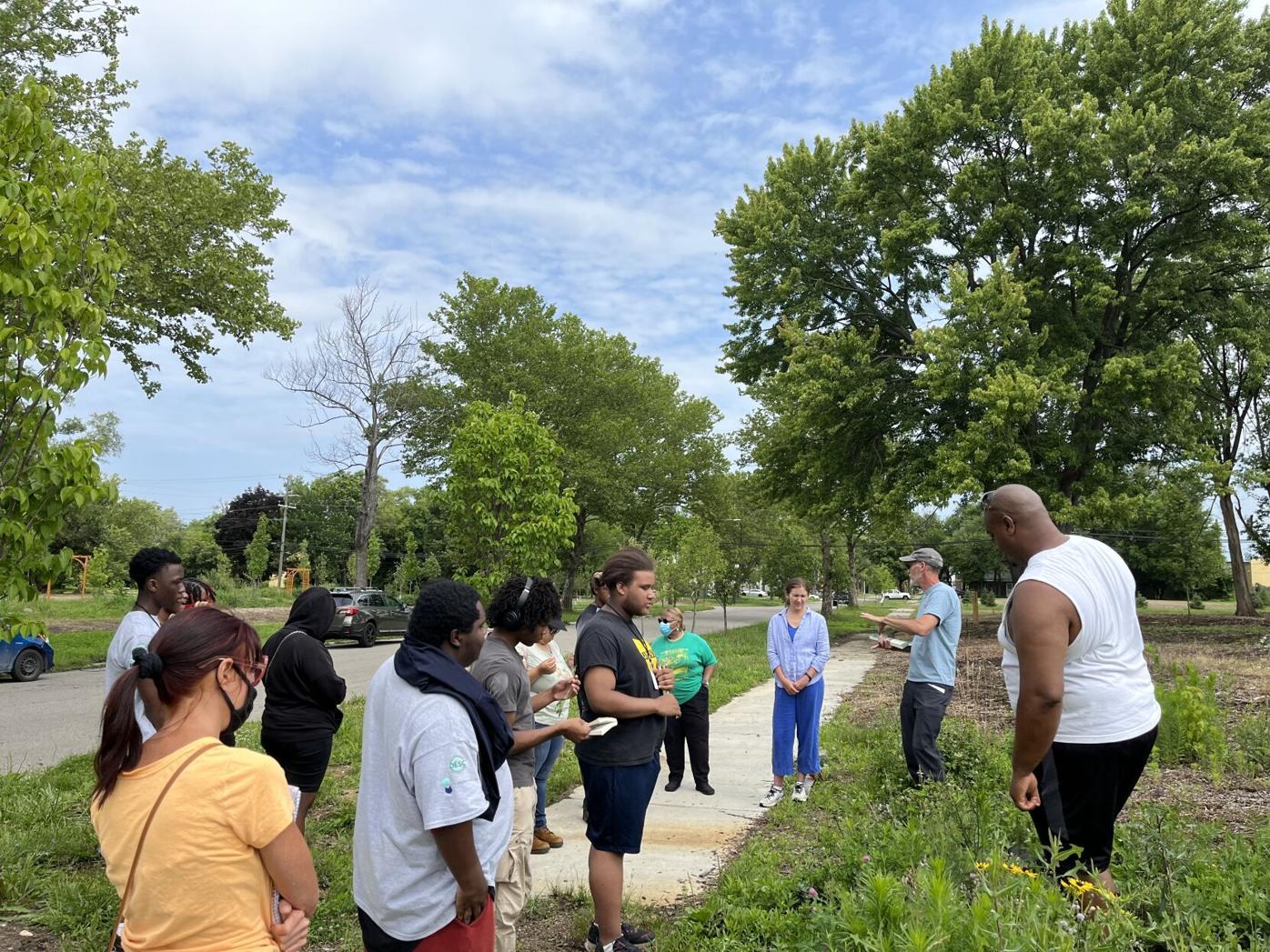
The Therapy Forest project in Nolan, Detroit, initiated in 2022 and completed in 2024, represents a step forward in urban renewal and ecological restoration, led by Rescue MI Nature Now (RMNN) and local volunteers. RMNN, founded in 2019, aims to transform vacant lots in the Nolan neighborhood—an area heavily impacted by the mortgage lending crisis—into green spaces that combat urban decay. The Therapy Forest, a 2.25-acre site, is designed as an accessible, restorative environment inspired by the Japanese practice of “Shinrin-Yoku,” or forest bathing, which encourages individuals to engage with nature through all their senses. This project not only enhances the aesthetic appeal of the neighborhood but also serves as a habitat for native plants and pollinators, such as goldenrod and honeybees. Through a participatory planning and design process, RMNN has actively involved community members, particularly youth, in the development and ongoing maintenance of the forest. The project includes flowering beds, perennial gardens, and other landscaping features aimed at creating a serene and therapeutic environment. The Southeast Michigan Resilience Fund provided key financial support, recognizing the project's potential to transform neighborhood decay into a green space that serves both ecological and social purposes. The Therapy Forest is expected to become a communal asset, offering hands-on learning opportunities for local students while also providing a peaceful retreat for residents and visitors. By converting over 2.25-acre of vacant land, RMNN’s Therapy Forest stands as a model for how urban areas can reclaim unused spaces, fostering resilience, community engagement, and environmental stewardship. This initiative not only revitalizes the Nolan neighborhood but also serves as a beacon of hope and renewal, demonstrating the impact of green spaces on urban communities. (Ref.1-4)

Overview
Nature-based solution
- Parks and urban forests
- Large urban parks or forests
Key challenges
- Green space, habitats and biodiversity (SDG 15)
- Green space creation and/or management
- Habitat and biodiversity restoration
- Regeneration, land-use and urban development
- Promote natural styles of landscape design for urban development
- Health and well-being (SDG 3)
- Creation of opportunities for recreation
- Inclusive and effective governance (SDG 16)
- Inclusive governance
- Social justice, cohesion and equity (SDG 10)
- Social justice and equity
- Environmental education
- Sense of community and community engagement
Principal problems in Functional Urban Area (FUA)
- Environmental Degradation
- Biodiversity loss
- Soil degradation and loss
- Land use and Socio-economic change
- Unequal availability and access to public green spaces
- Health, Well-being and Social cohesion
- Disconnection from nature
- Poor community engagement
Key priorities
Focus
Project objectives
Implementation activities
Biodiversity conservation or restoration-focused activities
Biodiversity restoration:
- Rehabilitate and restore damaged or destroyed ecosystems
- Restore native species
- Clear and control invasive alien species
- Public engagement
Main beneficiaries
- Citizens or community groups
- Young people and children
- Marginalized groups: Children, young people or youth groups
Governance
Management set-up
- Led by non-government actors
Type of initiating organisation
- Non-government organisation/civil society
Participatory approaches/ community involvement
- Co-planning (e.g. stakeholder workshops, focus groups, participatory mapping)
- Dissemination of information and education
- Consultation (e.g. workshop, surveys, community meetings, town halls)
- Joint implementation (e.g. tree planting)
Details on the roles of the organisations involved in the project
Project implemented in response to ...
Type of enablers
Financing
Total cost
Source(s) of funding
- Public national budget
- Private Foundation/Trust
Type of funding
- Earmarked public budget
- Direct funding (grants, subsidies, or self-financed projects by private entities)
Non-financial contribution
- Provision of labour
- Provision of expertise
- Citizens (e.g. volunteering)
Impacts and Monitoring
Environmental impacts
- Green space and habitat
- Increased green space area
- Achieved increased green space area
- Enhanced support of pollination
- Achieved enhanced support of pollination
- Restoration of derelict areas
- Achieved restoration of derelict areas
Economic impacts
- Generation of other type of work opportunities (e.g. voluntary, work for rehabilitation)
- Achieved generation of other type of work opportunities (e.g. voluntary, work for rehabilitation)
Socio-cultural impacts
- Social justice and cohesion
- Improved access to urban green space
- Expected improved access to urban green space
- Increased involvement of locals in the management of green spaces
- Expected increased involvement of locals in the management of green spaces
- Cultural heritage and sense of place
- Improvement in people’s connection to nature
- Expected improvement in people’s connection to nature
- Education
- Increased knowledge of locals about local nature
- Expected increased knowledge of locals about local nature
Type of reported impacts
Presence of formal monitoring system
Presence of indicators used in reporting
Presence of monitoring/ evaluation reports
Availability of a web-based monitoring tool
Potential risks of implementation and trade-offs
References



 Information about this nature-based solution was collected as part of the Naturescapes project funded by the European Union under Grant Agreement No 101084341.