

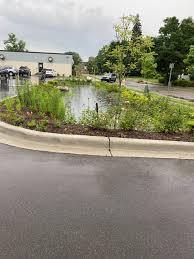
The PARC Rain Garden project in Plymouth, Michigan, is an innovative initiative led by the Plymouth Arts and Recreation Complex (PARC) and Friends of the Rouge, aimed at addressing stormwater management and enhancing local environmental quality. Supported by a $400,000 grant from Michigan’s Department of Environment, Great Lakes, and Energy (EGLE) through its Nonpoint Source Program, this project will involve the construction of over 31,500 square feet of rain gardens located on the property of Plymouth Arts and Recreation Complex (PARC). These gardens are designed to filter up to 240,000 gallons of stormwater per rainfall event, preventing runoff from entering local waterways like the Tonquish Creek. The rain gardens will also mitigate flooding, reduce pollution, and create a more stable water flow in the Rouge River watershed, which is heavily impacted by urban development. In addition to their environmental benefits, the rain gardens will provide aesthetic and ecological value to the PARC campus. The plantings, featuring native Michigan species, will create habitats for pollinators such as bees, butterflies, and birds, complementing the existing beehives on the PARC rooftop. The project aims to showcase the feasibility of integrating green infrastructure into routine construction, encouraging its adoption in other urban areas and residential spaces. Ultimately, the PARC Rain Garden project will not only improve stormwater management but also serve as a model for sustainable urban development, enhancing the landscape while fostering environmental stewardship in the Plymouth community. (Ref.1,2)
Overview
Nature-based solution
- Green areas for water management
- Rain gardens
Key challenges
- Climate action for adaptation, resilience and mitigation (SDG 13)
- Climate change adaptation
- Green space, habitats and biodiversity (SDG 15)
- Green space creation and/or management
- Habitat and biodiversity restoration
- Water management (SDG 6)
- Flood protection
- Stormwater and rainfall management and storage
- Improvements to water quality
- Inclusive and effective governance (SDG 16)
- Effective management
Principal problems in Functional Urban Area (FUA)
- Climate-Related Hazards
- Urban flooding (stormwater)
- Environmental Degradation
- Poor water quality
- Land use and Socio-economic change
- Rapid urbanization
Key priorities
Focus
Project objectives
Implementation activities
Climate-focused activities
Climate change adaptation:
- Implement measures that prevent/manage desertification, soil erosion and landslides
- Implement sustainable urban drainage schemes to manage stormwater
Biodiversity conservation or restoration-focused activities
Biodiversity restoration:
- Restore species (native, endangered, or unspecified)
Main beneficiaries
- Citizens or community groups
Governance
Management set-up
- Led by non-government actors
Type of initiating organisation
- Non-government organisation/civil society
Participatory approaches/ community involvement
- Joint implementation (e.g. tree planting)
- Co-management/Joint management
- Citizen monitoring and review
Details on the roles of the organisations involved in the project
Project implemented in response to ...
Type of enablers
Financing
Total cost
Source(s) of funding
- Public national budget
- Funds provided by non-governmental organization (NGO)
Type of funding
- Earmarked public budget
- Direct funding (grants, subsidies, or self-financed projects by private entities)
Non-financial contribution
- Provision of labour
- Provision of expertise
- Citizens (e.g. volunteering)
Impacts and Monitoring
Environmental impacts
- Water management and blue areas
- Increased protection against flooding
- Expected increased protection against flooding
- Improved stormwater management
- Expected improved stormwater management
- Green space and habitat
- Increased green space area
- Achieved increased green space area
- Increased number of species present
- Achieved increased number of species present
- Enhanced support of pollination
- Expected enhanced support of pollination
- Restoration of derelict areas
- Achieved restoration of derelict areas
Economic impacts
- Generation of other type of work opportunities (e.g. voluntary, work for rehabilitation)
- Achieved generation of other type of work opportunities (e.g. voluntary, work for rehabilitation)
Socio-cultural impacts
- Social justice and cohesion
- Increased involvement of locals in the management of green spaces
- Achieved increased involvement of locals in the management of green spaces
- Education
- Increased awareness of NBS and their benefits
- Expected increased awareness of NBS and their benefits
Type of reported impacts
Presence of formal monitoring system
Presence of indicators used in reporting
Presence of monitoring/ evaluation reports
Availability of a web-based monitoring tool
Potential risks of implementation and trade-offs
References
 Information about this nature-based solution was collected as part of the Naturescapes project funded by the European Union under Grant Agreement No 101084341.