

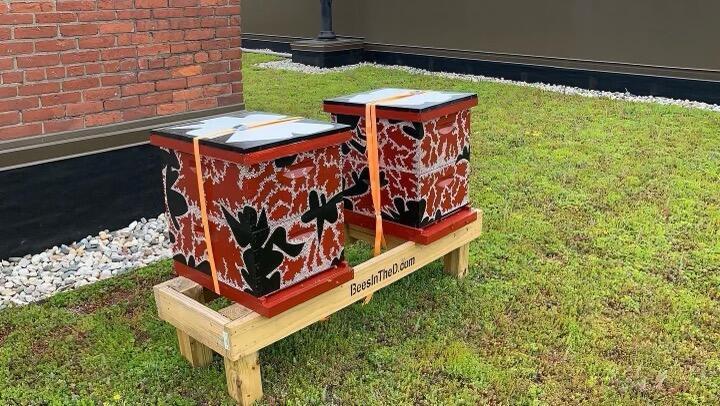
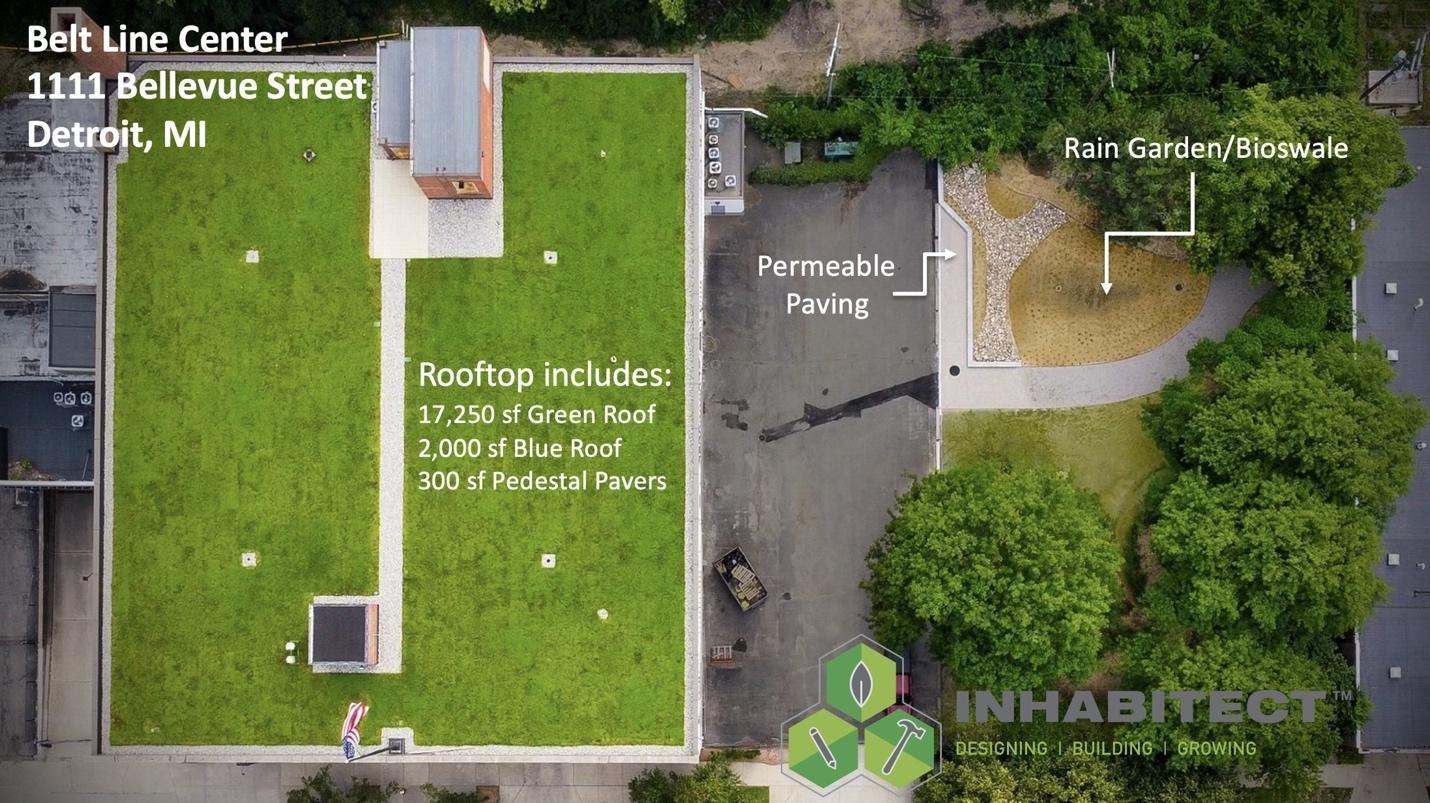
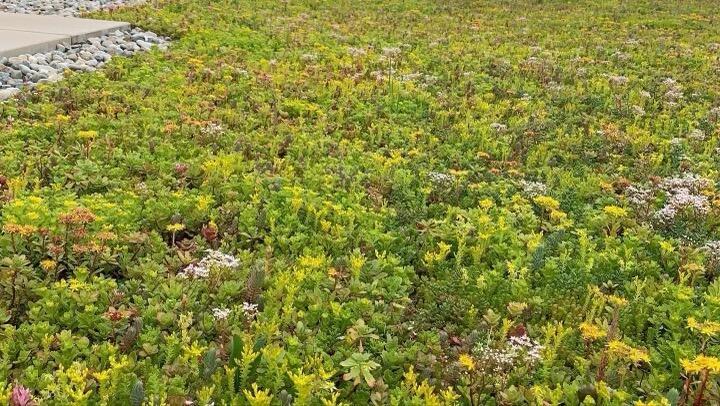
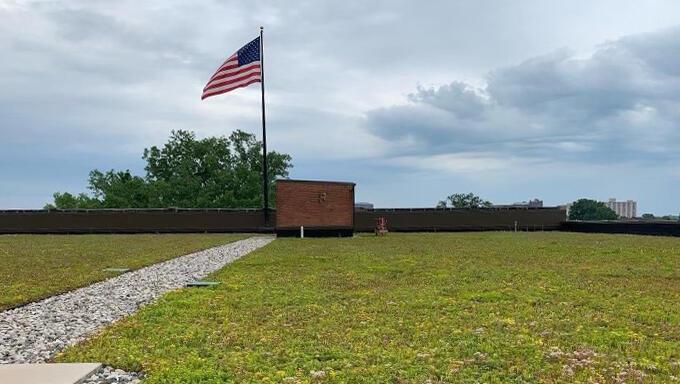
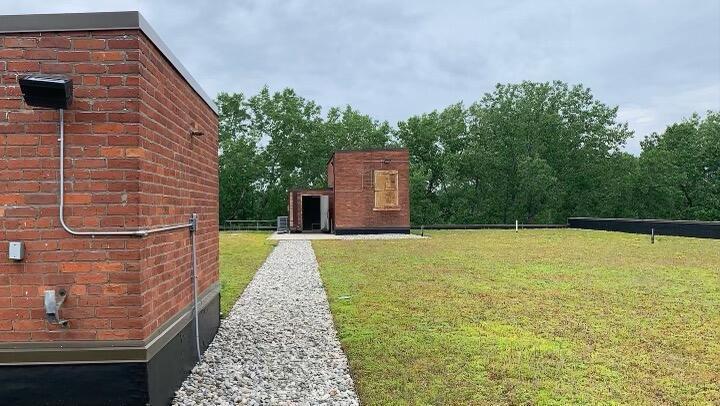
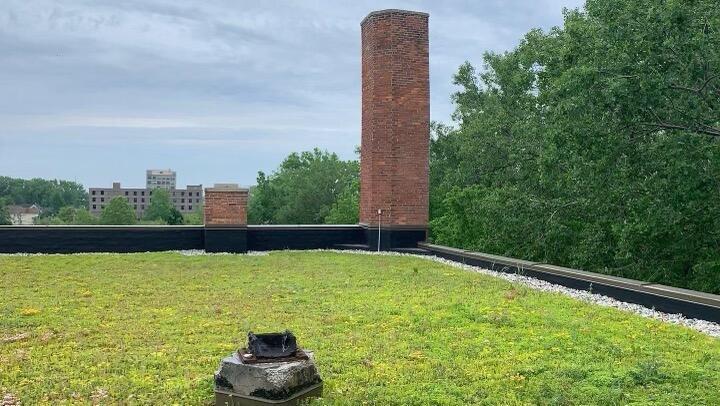
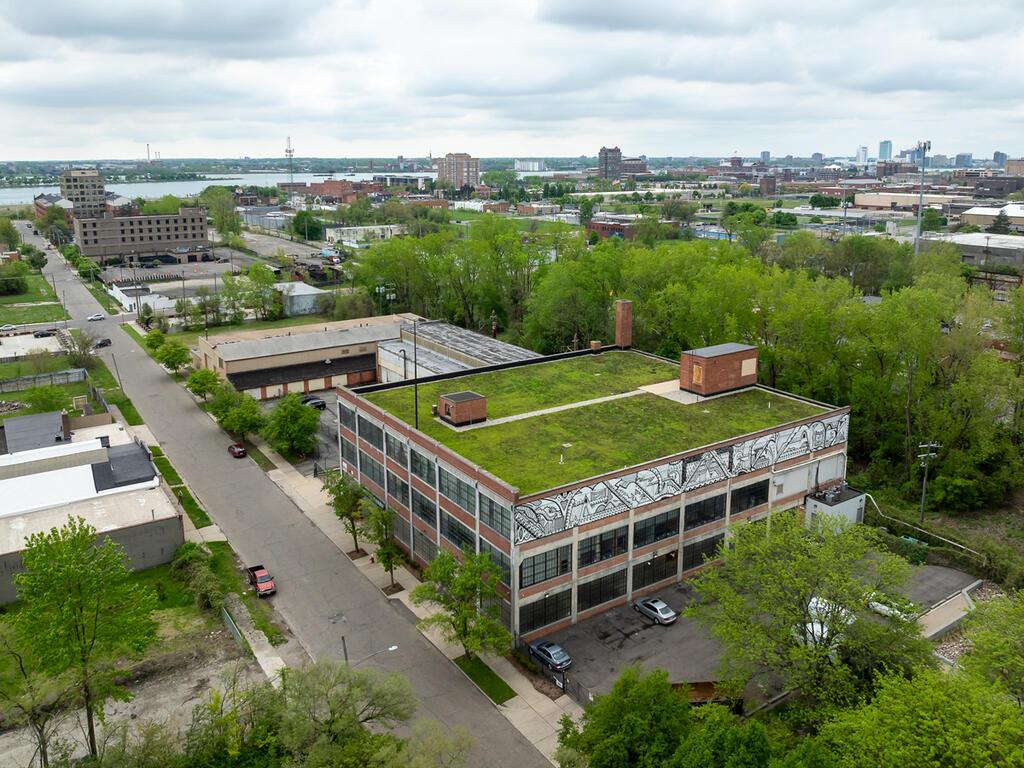
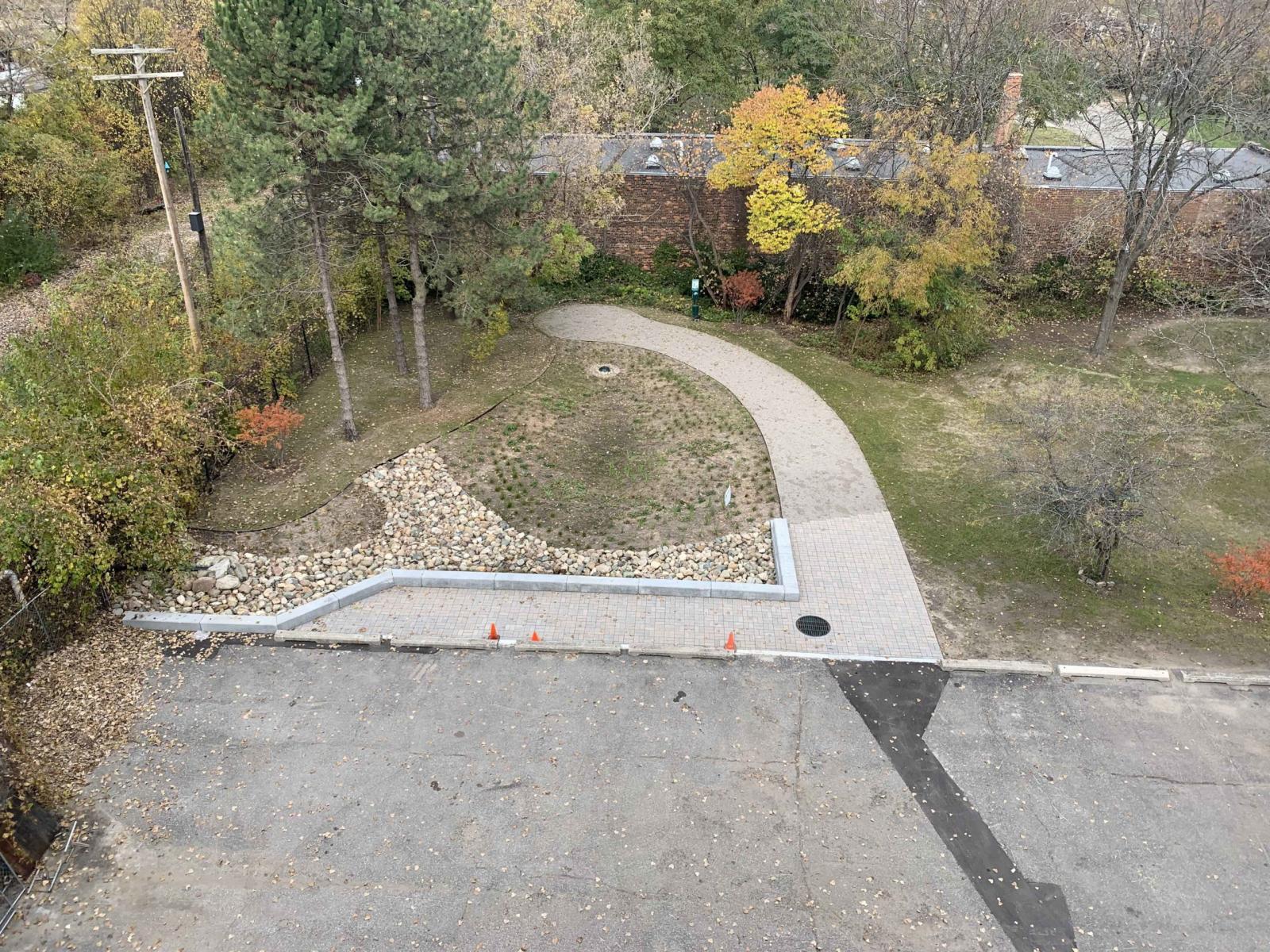
The Belt Line Center building, located in Detroit, Michigan, property of Letts Industries, features a green-blue roof, along with a rain garden, showcasing the benefits of green infrastructure in historic properties. The idea for this retrofit emerged in 2015 after a major renovation, when Chip Letts, CEO of Letts Industries, recognized the potential of green infrastructure for long-term energy efficiency and storm-water management. The initiative gained momentum in 2018, following the Detroit Water and Sewerage Department's (DWSD) introduction of new drainage fees, which charged $750 per acre of impermeable surfaces. The DWSD also offered up to 80% discounts for properties implementing green solutions, further incentivizing the project. The project officially began in 2020 after securing PACE funding (Property Assessed Clean Energy funding, a financing mechanism that enables property owners to fund energy efficiency, renewable energy, and water conservation projects) from CounterpointeSRE (financial institution), marking the first use of commercial PACE financing for a green roof in Michigan. The green roof, covering 17,250 square feet, includes 300 square feet of pedestal pavers and a 2,500 square foot blue roof. These features enhance stormwater management, energy efficiency, and roof longevity; the center also incorporates two beehives to support local biodiversity. These systems work in tandem with the ground-level rain garden to capture and infiltrate stormwater runoff, significantly reducing the impact on Detroit’s stormwater system. The project aligns with the city’s broader sustainability goals, including the Beltline Greenway initiative, which will pass directly behind the property, integrating the building into Detroit’s expanding network of green spaces and bike paths. The Belt Line Center serves as a model for revitalizing historic buildings through innovative financing and sustainable design, enhancing Detroit’s environmental resilience. (Ref.1-5)
Overview
Nature-based solution
- Green areas for water management
- Rain gardens
- Sustainable urban drainage systems
- Nature on buildings (external)
- Green roofs
Key challenges
- Climate action for adaptation, resilience and mitigation (SDG 13)
- Climate change adaptation
- Climate change mitigation
- Environmental quality
- Air quality improvement
- Green space, habitats and biodiversity (SDG 15)
- Green space creation and/or management
- Regeneration, land-use and urban development
- Promote natural styles of landscape design for urban development
- Water management (SDG 6)
- Stormwater and rainfall management and storage
- Economic development and employment (SDG 8)
- Real estate development
Principal problems in Functional Urban Area (FUA)
- Climate-Related Hazards
- Urban flooding (stormwater)
- Environmental Degradation
- Biodiversity loss
- Other
Key priorities
Focus
Project objectives
Implementation activities
Climate-focused activities
Climate change adaptation:
- Increase urban vegetation cover to reduce urban heat island effect
- Implement green walls or roofs to lower indoor temperature and provide insulation
- Implement sustainable urban drainage schemes to manage stormwater
Climate change mitigation:
- Install vertical or horizontal artificial surfaces that help with carbon storage and cooling
Main beneficiaries
- Private sector/Corporate/Company
Governance
Management set-up
- Led by non-government actors
Type of initiating organisation
- Private sector/corporate actor/company
Participatory approaches/ community involvement
- Co-planning (e.g. stakeholder workshops, focus groups, participatory mapping)
- Taskforce groups
- Joint implementation (e.g. tree planting)
Details on the roles of the organisations involved in the project
Project implemented in response to ...
Type of enablers
Financing
Total cost
Source(s) of funding
- Public local authority budget
- Corporate investment
Type of funding
- Earmarked public budget
- Direct funding (grants, subsidies, or self-financed projects by private entities)
Non-financial contribution
- Provision of land
- Private sector (businesses, financial institution)
Impacts and Monitoring
Environmental impacts
- Climate change
- Lowered local temperature
- Expected lowered local temperature
- Reduced emissions
- Achieved reduced emissions
- Energy efficiency improvements
- Achieved energy efficiency improvements
- Environmental quality
- Improved air quality
- Expected improved air quality
- Water management and blue areas
- Improved stormwater management
- Achieved improved stormwater management
- Green space and habitat
- Increased green space area
- Achieved increased green space area
- Enhanced support of pollination
- Achieved enhanced support of pollination
Economic impacts
- Reduce financial cost for urban management
- Achieved reduce financial cost for urban management
- Attraction of business and investment
- Achieved attraction of business and investment
Socio-cultural impacts
- Unknown
Type of reported impacts
Presence of formal monitoring system
Presence of indicators used in reporting
Presence of monitoring/ evaluation reports
Availability of a web-based monitoring tool
Potential risks of implementation and trade-offs
References
 Information about this nature-based solution was collected as part of the Naturescapes project funded by the European Union under Grant Agreement No 101084341.