

Last updated: October 2021
“The Hub, a new purpose-built student building (at the heart of the Coventry University campus) was designed to enhance the student experience, i.e. offers space to meet up with friends or study informally.” The building also includes a number of green credentials such as: ground source cooling from a borehole on-site; natural ventilation; grey water harvesting (rain water for the toilets); solar water heating and a green roof.” (Ref. 1)
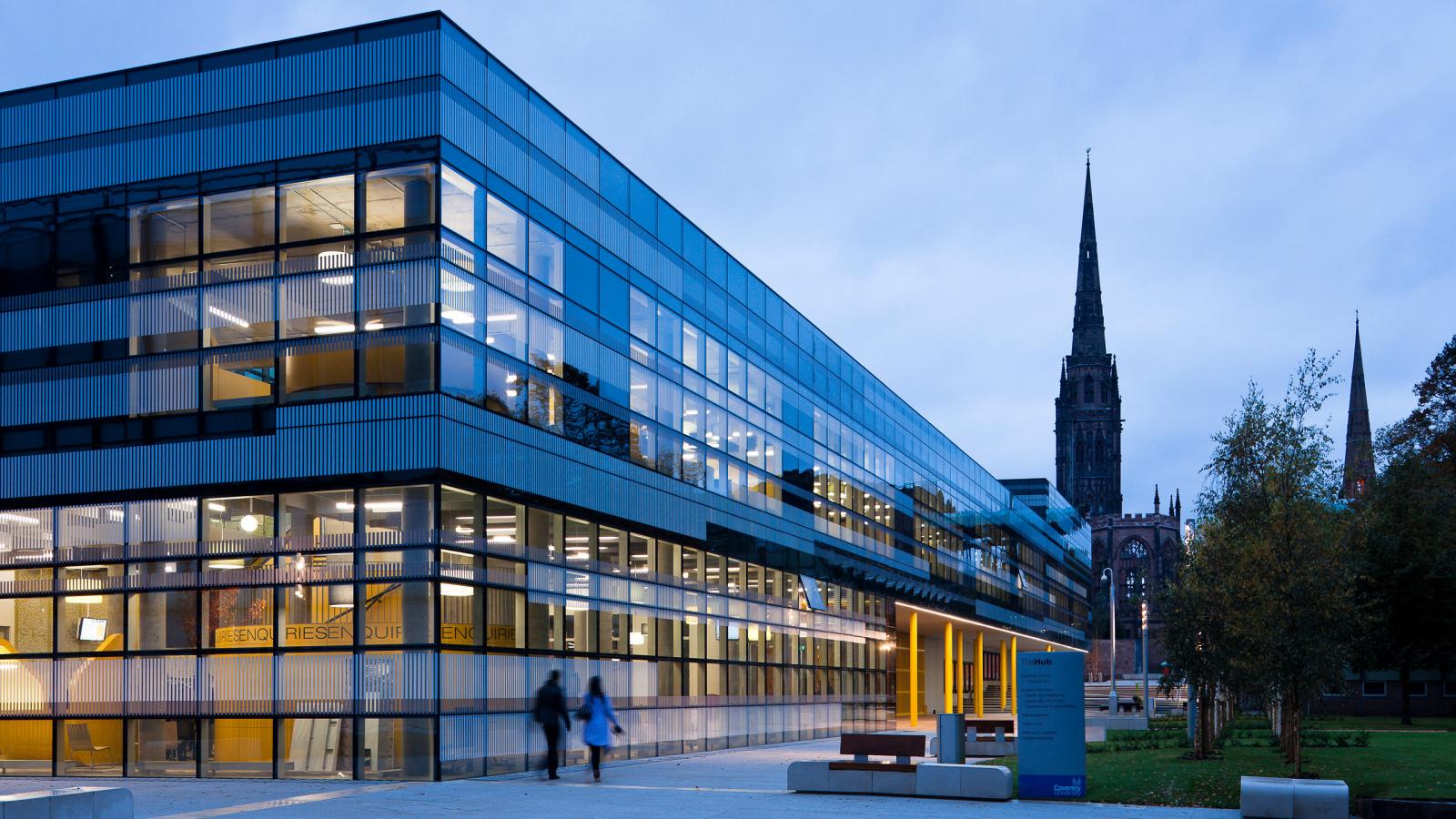
Source: https://www.google.com/url?sa=i&url=https%3A%2F%2Fwww.hawkinsbrown.com%2Fprojects%2Fcoventry-university-the-hub&psig=AOvVaw1_v3xEovIvDrgoNk1KUlE2&ust=1598509435820000&source=images&cd=vfe&ved=0CAIQjRxqFwoTCLjjrvCduOsCFQAAAAAdAAAAABAD
Overview
Nature-based solution
- Nature on buildings (external)
- Green roofs
- Other
- Grey infrastructure featuring greens
- Institutional green space
- Other
- Green areas for water management
- Other
Key challenges
- Water management (SDG 6)
- Stormwater and rainfall management and storage
- Green space, habitats and biodiversity (SDG 15)
- Green space creation and/or management
- Social justice, cohesion and equity (SDG 10)
- Social cohesion
- Social interaction
- Health and well-being (SDG 3)
- Improving mental health
- Creation of opportunities for recreation
Focus
Creation of new green areas
Project objectives
The Hub aims to "[bring] together state-of-the-art facilities for student's informal learning and well-being under one roof". This includes the creation of green spaces (i.e. a green roof), which aims to support student well-being and increase biodiversity. (Ref. 1, 2, 3)
Implementation activities
Completed Coventry University Hub, a new 8950 sq m building. (Ref. 2)
The “building also includes a number of green credentials such as ground source cooling from a bore hole on-site; natural ventilation; grey water harvesting (rainwater for the toilets); solar water heating and a green roof.” (Ref. 1)
The building includes sustainable water technologies, and the green roof “helps slow down the flow of rainwater run-off into the drainage system mitigating the effects of flash flooding”. (Ref. 4)
The roof terrace also “maximises the opportunity for green spaces and offers striking views across the university campus and city centre beyond.” (Ref. 2)
Main beneficiaries
- Researchers/University
- Citizens or community groups
- Other
Governance
Management set-up
- Led by non-government actors
Type of initiating organisation
- Researchers/university
- Citizens or community group
Participatory approaches/ community involvement
- Co-planning (e.g. stakeholder workshops, focus groups, participatory mapping)
- Citizen monitoring and review
Details on the roles of the organisations involved in the project
Coventry University commissioned Hawkins\Brown (London-based architects) to create a ‘home from home’ for its 10,000+ students. (Ref. 1, 2)
Project implemented in response to ...
... an EU policy or strategy?
Unknown
... a national policy or strategy?
Unknown
... a local policy or strategy?
Unknown
( )
Financing
Total cost
More than €4,000,000
Source(s) of funding
- Other
Type of funding
- Other
Non-financial contribution
Unknown
Impacts and Monitoring
Environmental impacts
- Environmental quality
- Improved air quality
- Reduced noise exposure
- Water management and blue areas
- Increased protection against flooding
- Improved stormwater management
- Green space and habitat
- Increased green space area
- Reduced biodiversity loss
- Other
Economic impacts
- Unknown
Socio-cultural impacts
- Social justice and cohesion
- Improved access to urban green space
- Increased opportunities for social interaction
- Health and wellbeing
- Improved physical health
- Improved mental health
- Gain in activities for recreation and exercise
- Cultural heritage and sense of place
- Improvement in people’s connection to nature
- Increased appreciation for natural spaces
- Education
- Increased support for education and scientific research
Type of reported impacts
Achieved impacts
Presence of formal monitoring system
Yes
Presence of indicators used in reporting
Yes
Presence of monitoring/ evaluation reports
Yes
Availability of a web-based monitoring tool
No
References
Ref. 1. Coventry University (2012) Coventry University building wins prestigious architecture award. Available at: Source link (Accessed 25 August 2020).
Ref. 2. Divisare (2011) Hawkins\Brown Coventry University Hub. Projects. Available at: Source link (Accessed 25 August 2020).
Ref. 3. Max Fordham (n.d.) The Hub, Coventry University. Projects. Available at: Source link (Accessed 25 August 2020).
Ref. 4. Coventry University (2016) Environmental Sustainability Report. Coventry. [Not available in 2020].
Ref. 5. Coventry Telegraph (2015) Look: Three Coventry University buildings which have changed the face of the city. Available at: Source link (Accessed 25 August 2020).
Ref. 6. Coventry City Council (n.d.) Climate change strategy for Coventry. [Document provided].
Ref. 7. Coventry University (n.d.) Environmental Information. Available at: Source link (Accessed 25 August 2020).
Ref. 8. Building 4 Change (2011) How best to green the city. Article #802, Charlesworth, S. [Not available in 2020].
Ref. 9. Coventry University (2015) University announces 'most significant' campus development in its history. Available at: Source link (Accessed 25 August 2020).
Ref. 10. Made (n.d.) The Hub. Coventry University. [Document provided].
Ref. 11. Coventry University (n.d.) Landscape and Management Plan 2019-2023. Available at: Source link (Accessed 25 August 2020).
Ref. 12. Coventry University (n.d.) Our plans to welcome students to campus in September. Available at: Source link (Accessed 25 August 2020).
Ref. 2. Divisare (2011) Hawkins\Brown Coventry University Hub. Projects. Available at: Source link (Accessed 25 August 2020).
Ref. 3. Max Fordham (n.d.) The Hub, Coventry University. Projects. Available at: Source link (Accessed 25 August 2020).
Ref. 4. Coventry University (2016) Environmental Sustainability Report. Coventry. [Not available in 2020].
Ref. 5. Coventry Telegraph (2015) Look: Three Coventry University buildings which have changed the face of the city. Available at: Source link (Accessed 25 August 2020).
Ref. 6. Coventry City Council (n.d.) Climate change strategy for Coventry. [Document provided].
Ref. 7. Coventry University (n.d.) Environmental Information. Available at: Source link (Accessed 25 August 2020).
Ref. 8. Building 4 Change (2011) How best to green the city. Article #802, Charlesworth, S. [Not available in 2020].
Ref. 9. Coventry University (2015) University announces 'most significant' campus development in its history. Available at: Source link (Accessed 25 August 2020).
Ref. 10. Made (n.d.) The Hub. Coventry University. [Document provided].
Ref. 11. Coventry University (n.d.) Landscape and Management Plan 2019-2023. Available at: Source link (Accessed 25 August 2020).
Ref. 12. Coventry University (n.d.) Our plans to welcome students to campus in September. Available at: Source link (Accessed 25 August 2020).
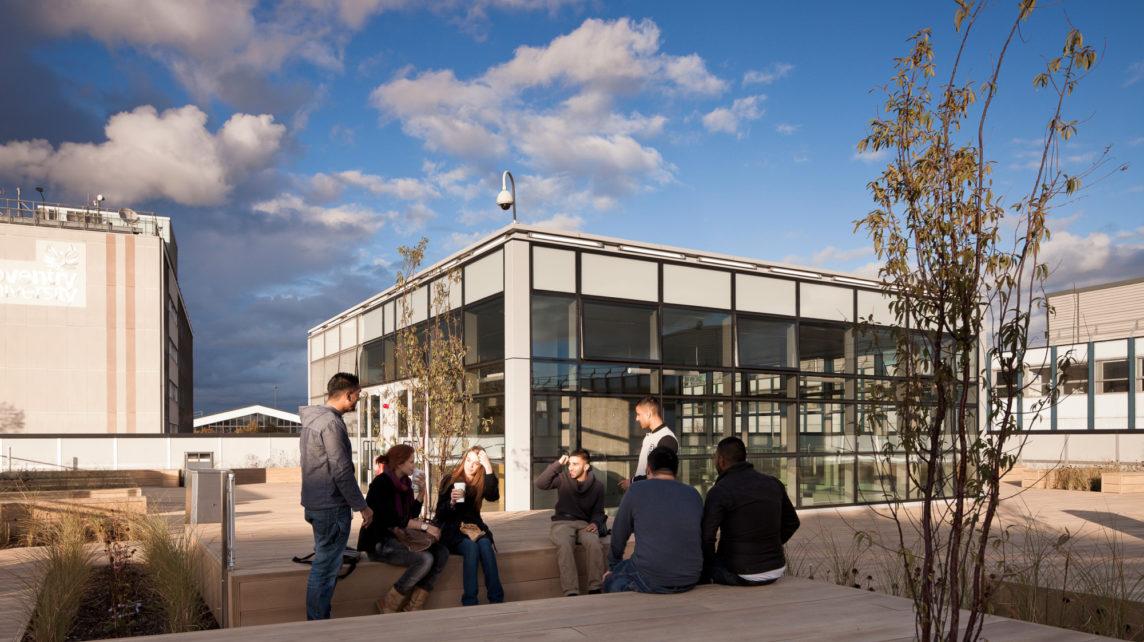
Source: https://www.hawkinsbrown.com/projects/coventry-university-the-hub

Source: https://www.akt-uk.com/projects/the%20hub%2C%20coventry%20university