

Last updated: October 2021
The Friargate is a major regeneration project that covers 37 acres around Coventry train station. This includes enhancing the Greyfriars Green (the only green space in the city), the development of Station Square Boulevard (a new tree-lined public realm), and a number of green belt sites around the city. (Ref. 3) The Friargate is expected to vastly improve the area’s public spaces and create new jobs (Ref. 1).
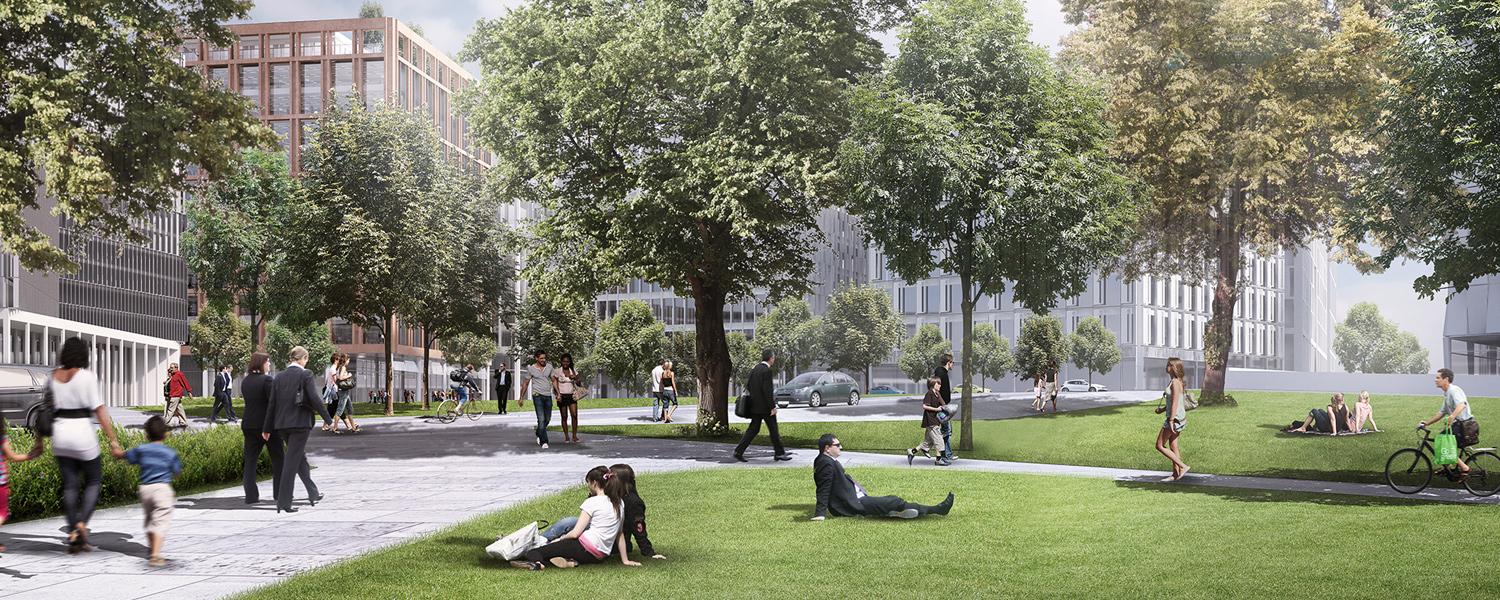
Source: Ref. 1
Overview
Nature-based solution
- Grey infrastructure featuring greens
- Alley or street trees and other street vegetation
- Other
- Parks and urban forests
- Large urban parks or forests
- Other
Key challenges
- Green space, habitats and biodiversity (SDG 15)
- Habitat and biodiversity restoration
- Green space creation and/or management
- Economic development and employment (SDG 8)
- Economic development: service sectors
- Tourism support
- Real estate development
- Employment/job creation
- Cultural heritage and cultural diversity
- Preservation of natural heritage
- Protection of historic and cultural landscape/infrastructure
Focus
Creation of new green areas, Maintenance and management of urban nature
Project objectives
The Friargate development aims to "generate jobs, attract inward investment, draw visitors, create homes, encourage access to the city centre and bring new life and energy to the city", thereby vastly improving the public realm (Ref. 1, 6, 12)
Implementation activities
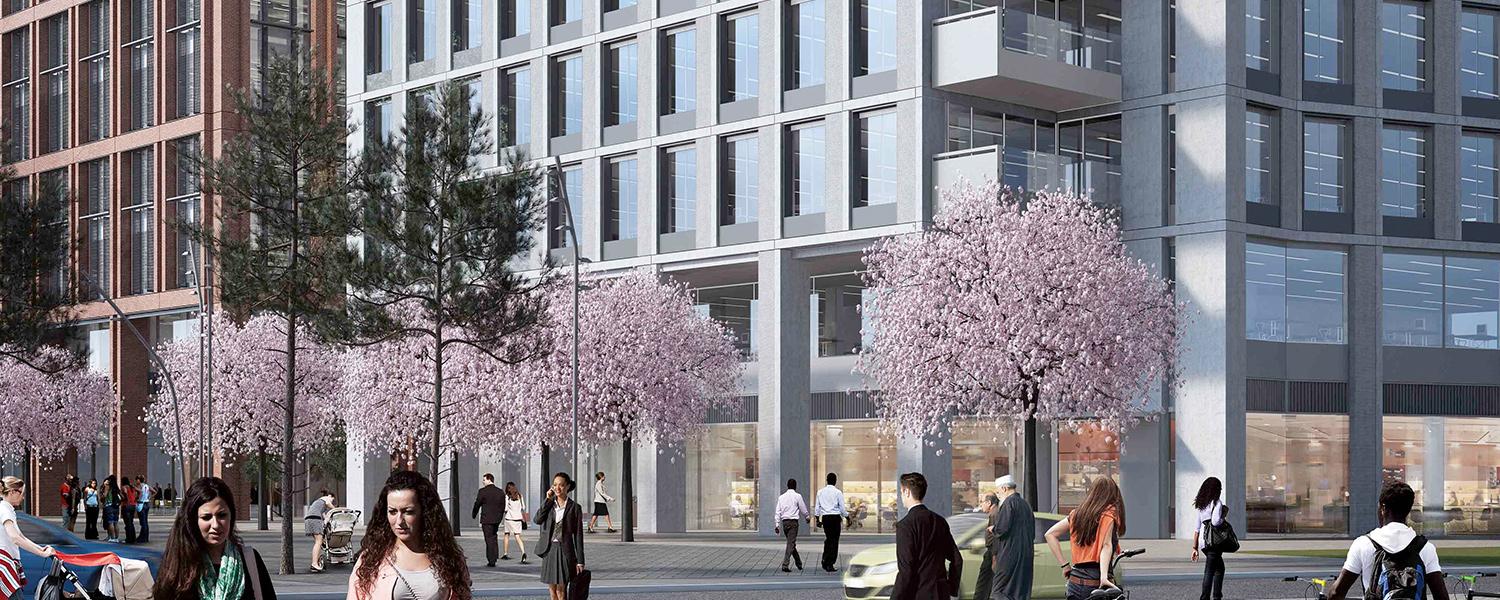
- A new tree-lined public realm (Ref. 1, 4)
- Creating new jobs (Ref. 1)
- Recreational offers (Ref. 1)
- Work on the new layout at Junction 6: features landscaped areas which link into Greyfriars Green. (Ref. 5)
- “Council leaders have pledged to re-plant at least two trees for every one removed at junction six - it follows an unsuccessful bid by campaigners to place a tree preservation order on 37 trees in Greyfriars Green.” (Ref. 2)
- Develop on brownfield as opposed to greenfield spaces (Ref. 3)
The master plan (Ref. 3) also includes the following to extend and enhance the historic Greyfriars Green:
- Park - Soft landscaped area with public paths, mature trees and lawns. Any trafficked routes running through these areas should be ‘shared surfaces’ with details and materials appropriate to give priority to pedestrians and cyclists.
- Ring Road Edge - Treelined or planted spaces
- Public Squares - Hard landscaped open spaces with fixed seating, and tree planting.
- Residential Courtyards and Gardens - Landscaped spaces with a mixture of hard materials, trees and planting.
Biodiversity conservation or restoration-focused activities
Biodiversity conservation:
- Protect and enhance urban habitats
- Promote environmentally-sound development in and around protected areas
- Reduce negative impacts and avoid the alteration/damage of ecosystem
Biodiversity restoration:
- Restore species (native, endangered, or unspecified)
- Restore valued species
- Other
Main beneficiaries
- Local government/Municipality
- Private sector/Corporate/Company
- Citizens or community groups
Governance
Management set-up
- Co-governance with government and non-government actors
Type of initiating organisation
- Local government/municipality
- Private sector/corporate actor/company
Participatory approaches/ community involvement
- Co-planning (e.g. stakeholder workshops, focus groups, participatory mapping)
- Taskforce groups
Details on the roles of the organisations involved in the project
The Friargate project is part of a city-wide regeneration effort. The City Council invested £40m+ to develop the first building in the scheme (Ref. 13). In February 2019, a 50/50 joint venture was established between the City Council and Friargate Coventry Development Ltd to lead the delivery of the business district (Ref. 13) The development of Friargate is led by Friargate Coventry LLP – which is part of the Cannon Kirk Group. Allies and Morrison, the internationally renowned architecture practice, has led the design of Friargate. The design team has also been supported by landscape architects, GROSS.MAX. The agents for Friargate are Avison Young. (Ref. 7)
The project is also supported by regional government actors and the EU.
- ”In May 2013 the government awarded £24.4M [27 million EUR] of Regional Growth Funding to the Coventry and Warwickshire Local Economic Partnership, £12.7M [13 million EUR] of this allocated to infrastructure works at Friargate.” (Ref. 9)
- "The project also received £9.1m [10 million EUR] from the European Union Regional Development Fund to deliver key infrastructure to connect the site to the city (Ref. 13)"
- For the 2nd phase of buildings, funding has been secured from West Midlands Combined Authority (Ref. 13)
Project implemented in response to ...
... an EU policy or strategy?
Unknown
... a national policy or strategy?
Unknown
... a local policy or strategy?
Yes
(Regeneration vision (including economic growth in the city, where Friargate is included: "Friargate development set to transform the area adjacent to Coventry Station and its relationship to the City Centre"). (Ref. 8)
Coventry Local Plan, which includes Friargate as regeneration scheme (Ref. 14))
Financing
Total cost
More than €4,000,000
Source(s) of funding
- EU funds
- Public regional budget
- Public local authority budget
Type of funding
- Direct funding (grants, subsidies, or self-financed projects by private entities)
Non-financial contribution
Unknown
Impacts and Monitoring
Environmental impacts
- Green space and habitat
- Increased green space area
- Increased ecological connectivity across regeneration sites and scales
Economic impacts
- Increase of green jobs (e.g. paid employment positions)
- Attraction of business and investment
Socio-cultural impacts
- Safety
- Increased perception of safety
- Social justice and cohesion
- Improved access to urban green space
- Increased opportunities for social interaction
- Health and wellbeing
- Gain in activities for recreation and exercise
- Cultural heritage and sense of place
- Protection of natural heritage
- Protection of historic and cultural landscape / infrastructure
Type of reported impacts
Expected impacts, Achieved impacts
Presence of formal monitoring system
Yes
Presence of indicators used in reporting
Yes
Presence of monitoring/ evaluation reports
Yes
Availability of a web-based monitoring tool
No
References
Ref. 1. Friargate Coventry (n.d.) The vision. The development. Available at: Source link [Accessed 24 August 2020].
Ref. 2. The Telegraph (2014) Seven facts you need to know about Coventry's new Friargate development. Available at: Source link [Accessed 24 August 2020].
Ref. 3. Friargate Coventry (2009) Outline Planning application Planning Design and access overview. Part 2. [Document provided].
Ref. 4. Allies and Morrison (2016) Second Friargate building secures planning permission. News. [Not available in 2020].
Ref. 5. The Telefraph (2015) Coventry's £14.9million Friargate bridge deck and public boulevard will be opened on Thursday. Available at: Source link [Accessed 24 August 2020].
Ref. 6. Friargate Coventry (n.d.) Creating a new business district for Coventry. Home. Available at: Source link [Accessed 24 August 2020].
Ref. 7. Friargate Coventry (n.d.) The Team . Contact. Available at: Source link [Accessed 24 August 2020].
Ref. 8. WSP (2013) Coventry Station Masterplan Report. Available at: Source link [Accessed 24 August 2020].
Ref. 9. Friargate coventry (2013) GW planning, Planning Statement. [document provided].
Ref. 10. Waterman Environmental (2010) EIA Scoping Report. Friargate, Coventry. Waterman Energy Environment & Design Limited. [document provided].
Ref. 11. Waterman Environmental (2007) EIA Scoping Study. Friargate, Coventry. [document provided].
Ref. 12. Friargate Coventry (n.d.) Friargate Coventry Leaflet. [document provided].
Ref. 13. Coventry & Warwickshire Local Enterprise Partnership (n.d.) Friargate Coventry. Available at: Source link [Accessed 24 August 2020].
Ref. 14. Coventry City Council (2017) Coventry City Council Local Plan: 2011-2031. [document provided].
Ref. 2. The Telegraph (2014) Seven facts you need to know about Coventry's new Friargate development. Available at: Source link [Accessed 24 August 2020].
Ref. 3. Friargate Coventry (2009) Outline Planning application Planning Design and access overview. Part 2. [Document provided].
Ref. 4. Allies and Morrison (2016) Second Friargate building secures planning permission. News. [Not available in 2020].
Ref. 5. The Telefraph (2015) Coventry's £14.9million Friargate bridge deck and public boulevard will be opened on Thursday. Available at: Source link [Accessed 24 August 2020].
Ref. 6. Friargate Coventry (n.d.) Creating a new business district for Coventry. Home. Available at: Source link [Accessed 24 August 2020].
Ref. 7. Friargate Coventry (n.d.) The Team . Contact. Available at: Source link [Accessed 24 August 2020].
Ref. 8. WSP (2013) Coventry Station Masterplan Report. Available at: Source link [Accessed 24 August 2020].
Ref. 9. Friargate coventry (2013) GW planning, Planning Statement. [document provided].
Ref. 10. Waterman Environmental (2010) EIA Scoping Report. Friargate, Coventry. Waterman Energy Environment & Design Limited. [document provided].
Ref. 11. Waterman Environmental (2007) EIA Scoping Study. Friargate, Coventry. [document provided].
Ref. 12. Friargate Coventry (n.d.) Friargate Coventry Leaflet. [document provided].
Ref. 13. Coventry & Warwickshire Local Enterprise Partnership (n.d.) Friargate Coventry. Available at: Source link [Accessed 24 August 2020].
Ref. 14. Coventry City Council (2017) Coventry City Council Local Plan: 2011-2031. [document provided].

Source: Ref. 1
Source: Ref. 1