

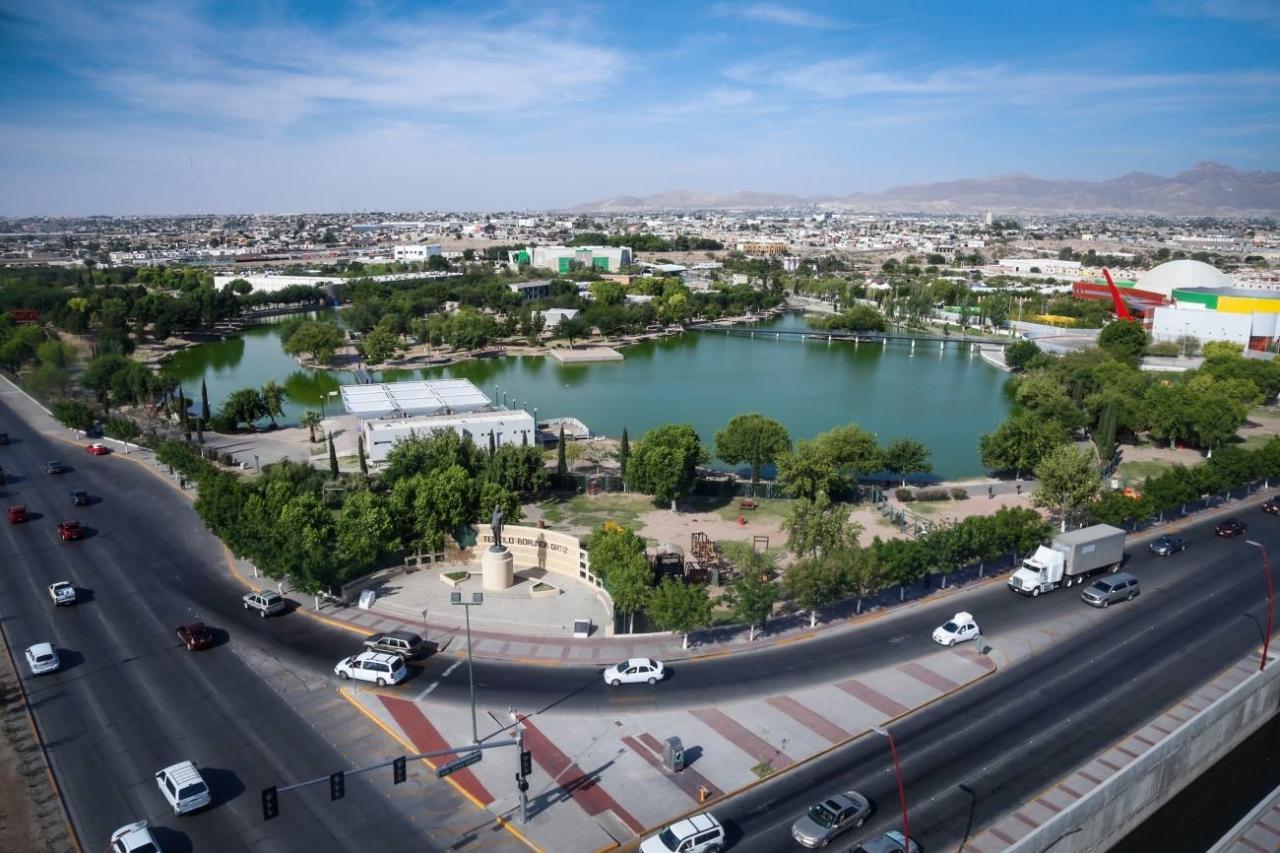
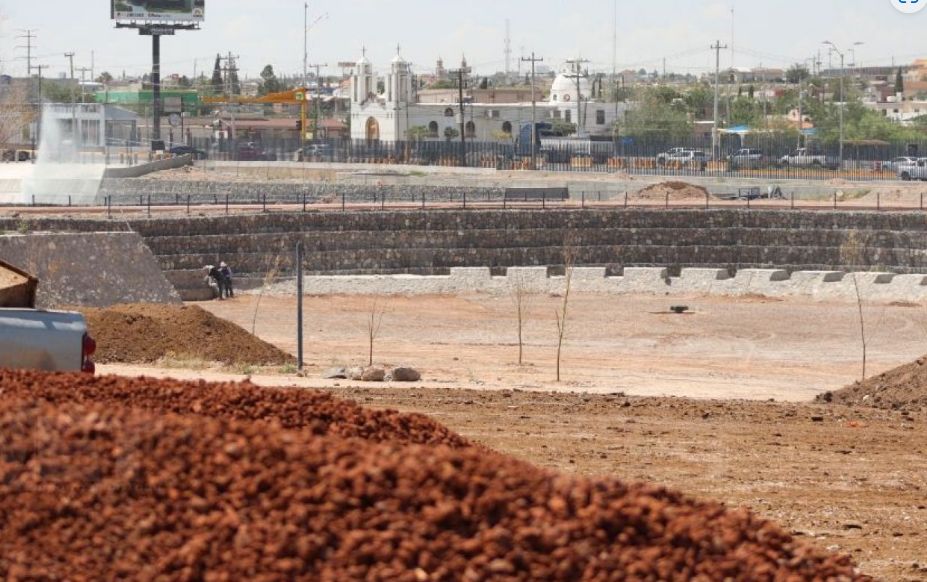
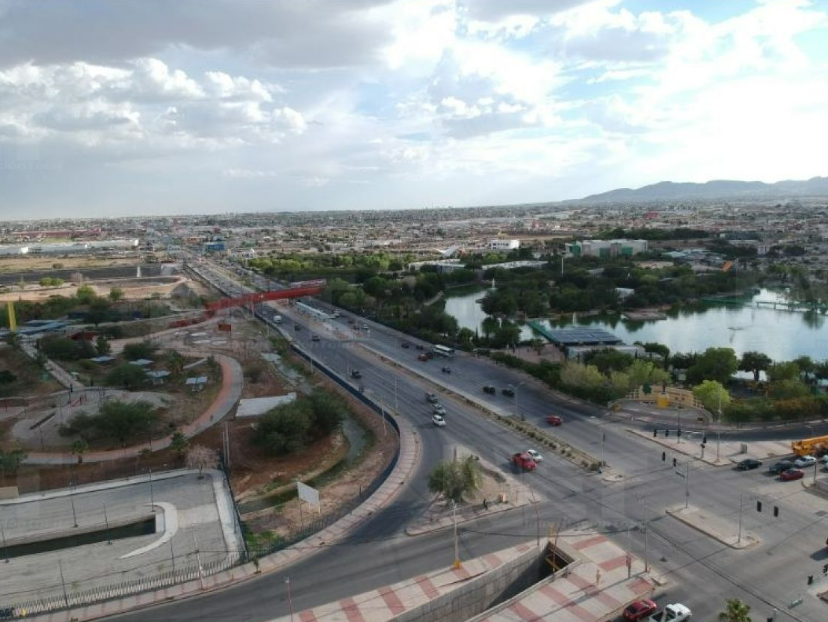
Parque Central Hermanos Escobar had been neglected for years, but in 2022, it was fully reopened following a public investment aimed at redesigning some of its features. The renovations provided better amenities, new and improved recreational opportunities, and enhanced the city's resilience to flooding and water stress. Although the park already had a dedicated blue space, the renovations increased permeable surfaces (e.g., parking lots) and boosted its water retention capacity with cisterns, stormwater basins, and an artificial lake designed to function "like a natural one" (Ref 1). The artificial lake was one of the most anticipated additions with a depth of one meter and being used for recreational purposes. It is supplied with water from the existing treatment plant in the park’s western section, which complies with the National Water Commission (Conagua) standards. The lake features recreational facilities, such as boats and a pier, and serves as a habitat for local wildlife, including ducks, turtles, and several amphibian species that have already begun to naturally populate the area. (1,2) Overall, the improvements were intended to enhance the park's recreational offerings while strengthening the city's defenses against flood risks and water shortages. The local community will have a space to relax and enjoy various facilities, including an open-air auditorium, scenic viewpoints, an indoor pool, and a baseball field, among many other features.
Overview
Nature-based solution
- Blue infrastructure
- Lakes/ponds
- Green areas for water management
- Sustainable urban drainage systems
- Parks and urban forests
- Large urban parks or forests
Key challenges
- Climate action for adaptation, resilience and mitigation (SDG 13)
- Climate change adaptation
- Green space, habitats and biodiversity (SDG 15)
- Green space creation and/or management
- Regeneration, land-use and urban development
- Promote natural styles of landscape design for urban development
- Water management (SDG 6)
- Flood protection
- Stormwater and rainfall management and storage
- Water security
- Health and well-being (SDG 3)
- Creation of opportunities for recreation
- Social justice, cohesion and equity (SDG 10)
- Social cohesion
- Social justice and equity
- Social interaction
Principal problems in Functional Urban Area (FUA)
- Climate-Related Hazards
- Urban flooding (stormwater)
- Drought
- Heat stress & Extreme temperatures
Key priorities
Focus
Project objectives
Implementation activities
Climate-focused activities
Climate change adaptation:
- Implement sustainable urban drainage schemes to manage stormwater
Specification of climate or environmentally vulnerable communities
Main beneficiaries
- Citizens or community groups
- Young people and children
Governance
Management set-up
- Government-led
Type of initiating organisation
- Regional government
Participatory approaches/ community involvement
- Unknown
Details on the roles of the organisations involved in the project
Project implemented in response to ...
Type of enablers
Financing
Total cost
Source(s) of funding
- Public regional budget
Type of funding
- Earmarked public budget
Non-financial contribution
Impacts and Monitoring
Environmental impacts
- Water management and blue areas
- Increased protection against flooding
- Achieved increased protection against flooding
- Improved stormwater management
- Achieved improved stormwater management
- Green space and habitat
- Restoration of derelict areas
- Achieved restoration of derelict areas
Economic impacts
- More sustainable tourism
- Achieved more sustainable tourism
Socio-cultural impacts
- Health and wellbeing
- Gain in activities for recreation and exercise
- Achieved gain in activities for recreation and exercise
Type of reported impacts
Presence of formal monitoring system
Presence of indicators used in reporting
Presence of monitoring/ evaluation reports
Availability of a web-based monitoring tool
Potential risks of implementation and trade-offs
References
 Information about this nature-based solution was collected as part of the Naturescapes project funded by the European Union under Grant Agreement No 101084341.