

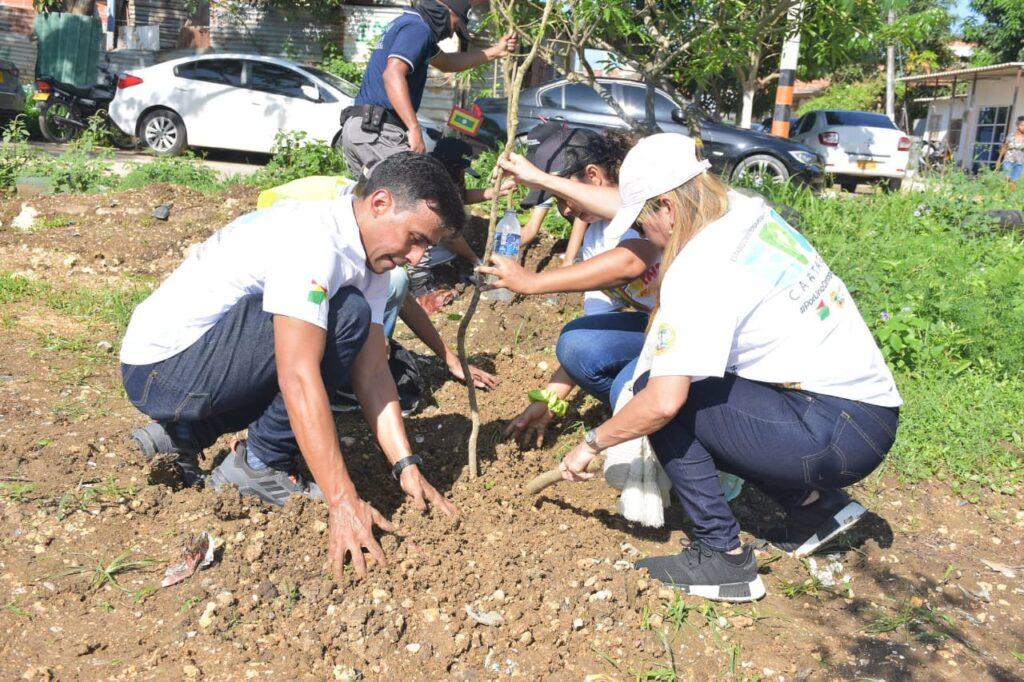
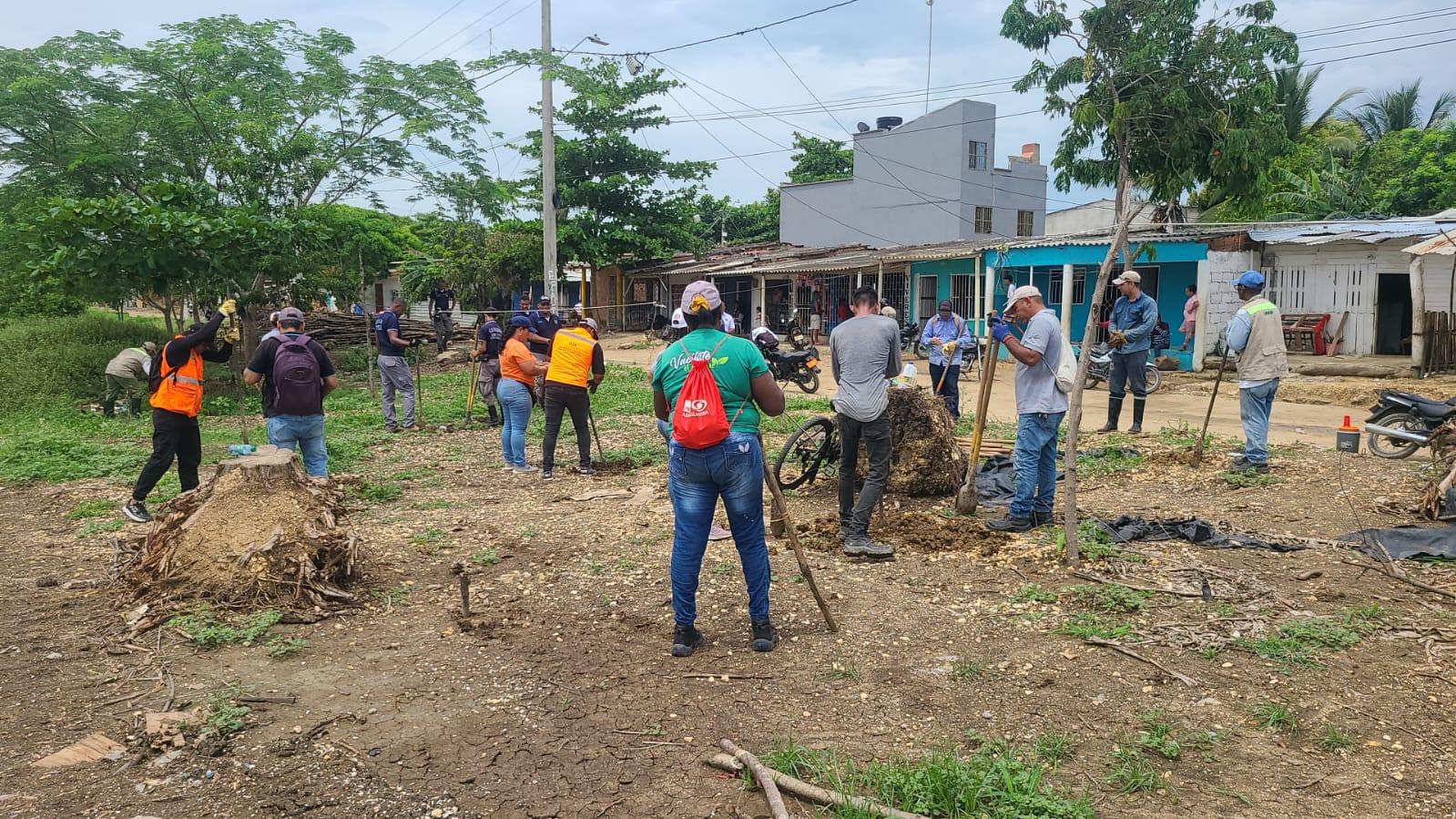
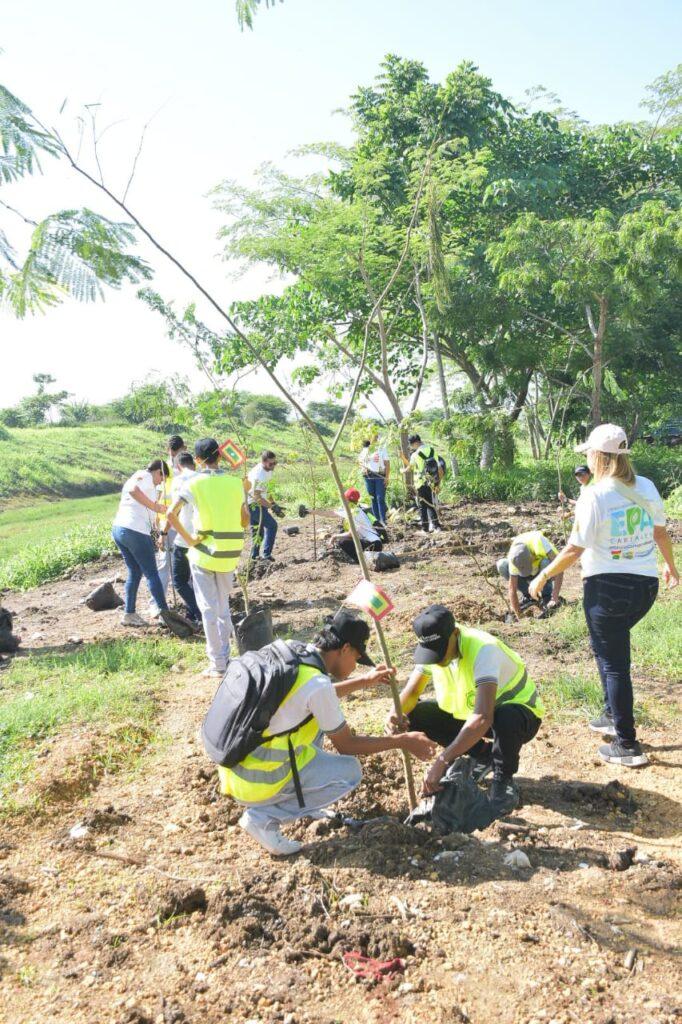
This initiative is a community-based urban greening effort targeting environmental and social co-benefits in Cartagena’s El Pozón neighbourhood. It involved the planting of 491 fruit and timber trees along a 1,500-meter linear stretch, covering nearly two hectares in the Terraplén sector of the neighbourhood. Led by the "Establecimiento Público Ambiental" (EPA), it was developed in collaboration with various stakeholders, including the Gerencia de Espacio Público, Guardia Ambiental, SENA students, the Police, and community members (ref 1, 2). The project's primary goal was to enhance the environmental quality and aesthetics of the El Pozón neighbourhood by planting trees that provide ecological benefits, such as improving air quality, reducing temperatures, and enhancing biodiversity. Additionally, the initiative aimed to foster community engagement in environmental conservation, particularly in raising awareness about the importance of protecting and maintaining nature. The community is also expected to take on the responsibility of maintaining the planted trees, promoting a sense of ownership and sustainable stewardship (ref 1).
Overview
Nature-based solution
- Grey infrastructure featuring greens
- Alley or street trees and other street vegetation
Key challenges
- Climate action for adaptation, resilience and mitigation (SDG 13)
- Climate change adaptation
- Environmental quality
- Air quality improvement
- Waste management
- Green space, habitats and biodiversity (SDG 15)
- Green space creation and/or management
- Regeneration, land-use and urban development
- Promote natural styles of landscape design for urban development
- Social justice, cohesion and equity (SDG 10)
- Environmental education
Principal problems in Functional Urban Area (FUA)
- Climate-Related Hazards
- Heat stress & Extreme temperatures
- Environmental Degradation
- Biodiversity loss
- Air pollution
Key priorities
Focus
Project objectives
Implementation activities
Climate-focused activities
Climate change adaptation:
- Increase urban vegetation cover to reduce urban heat island effect
Specification of climate or environmentally vulnerable communities
Main beneficiaries
- Citizens or community groups
Governance
Management set-up
- Government-led
Type of initiating organisation
- Local government/municipality
Participatory approaches/ community involvement
- Joint implementation (e.g. tree planting)
- Co-management/Joint management
Details on the roles of the organisations involved in the project
Project implemented in response to ...
Type of enablers
Financing
Total cost
Source(s) of funding
- Public local authority budget
Type of funding
- Earmarked public budget
Non-financial contribution
- Provision of labour
- Citizens (e.g. volunteering)
Impacts and Monitoring
Environmental impacts
- Green space and habitat
- Increased green space area
- Achieved increased green space area
- Increased conversion of degraded land or soil
- Expected increased conversion of degraded land or soil
- Increased number of species present
- Achieved increased number of species present
Economic impacts
- Unknown
Socio-cultural impacts
- Social justice and cohesion
- Increased involvement of locals in the management of green spaces
- Expected increased involvement of locals in the management of green spaces
- Education
- Increased knowledge of locals about local nature
- Achieved increased knowledge of locals about local nature
Type of reported impacts
Presence of formal monitoring system
Presence of indicators used in reporting
Presence of monitoring/ evaluation reports
Availability of a web-based monitoring tool
Potential risks of implementation and trade-offs
References
 Information about this nature-based solution was collected as part of the Naturescapes project funded by the European Union under Grant Agreement No 101084341.