Last updated: May 2025
The "Recuperación del Laguito" project aims to restore El Laguito, a coastal water body in Cartagena, Colombia, severely affected by sedimentation that blocks natural water exchange with the Caribbean Sea. This blockage has led to stagnant, low-oxygen water, degrading water quality and aquatic ecosystems (ref 1). The project seeks to restore El Laguito’s environmental and social functions by reestablishing seawater flow, reducing sediment impact, improving water quality, and reviving the ecosystem. Additionally, it aims to provide data to guide long-term solutions for sustainably managing this community resource (ref 1).
The project is a response to recurring ecological crises, such as frequent fish die-offs due to low oxygen levels. Local residents initially took matters into their own hands, manually attempting to reopen the channel. The formal intervention started following a 2019 directive from the Ministry of Environment and Sustainable Development, outlining a phased strategy: short-term installation of an axial pump for water exchange, medium-term studies for a permanent fix, and long-term construction plans (ref 3). Currently, the project involves using heavy machinery to clear sediment and allow seawater inflow, supported by the Gobernación de Bolívar, Cardique, and the Cartagena Mayor's Office. This phase serves as a transitional step towards a more sustainable, permanent solution (ref 2). The project’s impacts focus on ecological restoration. Short-term benefits include better oxygenation, reduced harmful algal blooms, and revived marine life. Long-term goals encompass sustainable water management, ecosystem stabilization, tourism enhancement, and the development of recreational and sports facilities in harmony with environmental conservation (ref 4).
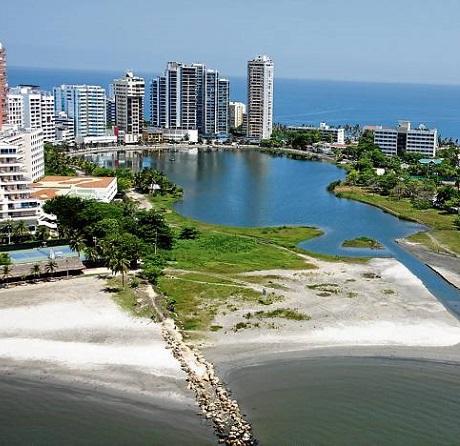
picture of El Laguito
https://www.tierrabombacartagena.com/cartagena/playas-de-el-laguito/
Overview
Nature-based solution
- Blue infrastructure
- Lakes/ponds
- Coastlines
- Grey infrastructure featuring greens
- Coastal defences / dikes
Key challenges
- Coastal resilience and marine protection (SDG 14)
- Coastal protection / hazard mitigation
- Marine and coastal biodiversity protection
- Water management (SDG 6)
- Improvements to water quality
- Health and well-being (SDG 3)
- Creation of opportunities for recreation
- Economic development and employment (SDG 8)
- Tourism support
Principal problems in Functional Urban Area (FUA)
- Environmental Degradation
- Poor water quality
- Physical water retention and availability
Key priorities
Biodiversity (conservation and/or restoration)
Focus
Coastal landscape management or protection, Coastal ecosystems restoration and maintenance (mangroves, dunes, saltplains, underwater meadows), Ecological restoration of ecosystems, Restoration and protection of ecosystems (including water ecosystems)
Project objectives
The project aims to "reinstate the natural exchange of seawater" to address the blocked water flow between El Laguito and the Caribbean Sea, which has caused stagnation and poor water quality (ref 1). Other project goals include:
- Mitigate the impacts of sediment build-up, enhancing water quality (ref1).
- Recovery of this body of water and marine species (ref. 4).
- Provide data to inform a definitive long-term solution for maintaining this valuable common resource for the people of Cartagena (ref 1).
- Strengthen tourism, with the aim of making El Laguito a new hub for water sports. (ref 4).
- Create a long-term ecological solution for El Laguito, reorganizing the beaches in this area, supporting sports, and connecting the Castillogrande promenade to El Laguito (ref 4).
Implementation activities
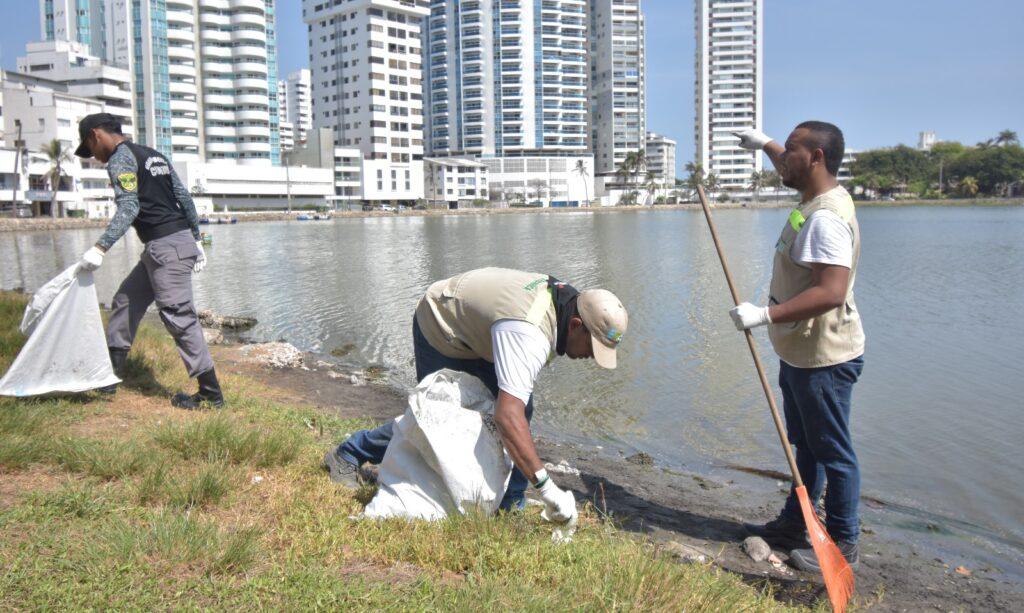
-The EPA attended to collecting solid waste (such as plastic and glass bottles, tyres, and iron rods) from the affected water body and surrounding areas.
- Removal of organic waste like algae and dead fish from the water.
- EPA conducted water quality monitoring, revealing that oxygen saturation, pH, and electrical conductivity levels were below the acceptable minimum for such ecosystems (ref 5).
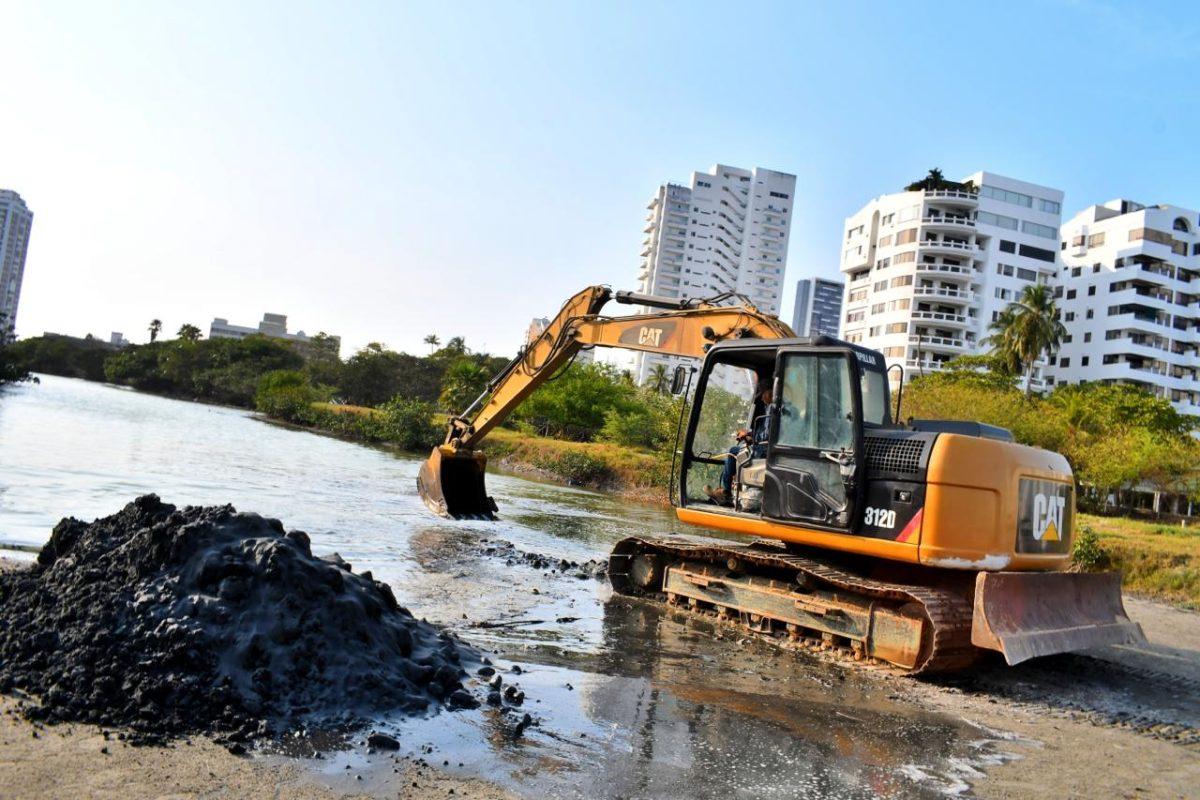
- Intervening in the water access channel to El Laguito, to allow for water to flow in and out of the body of water.
- Building a pier for those travelling to Tierrabomba and a tourist complex in this area (ref 3).
- Build a new breakwater that extends to the depth of the beach profile closure, thereby containing the sedimentary material on the nearby beaches (ref 3).
- Change the land ordinance guidelines to prioritize restoring the environmental component of this body of water and its marine species and strengthening tourism (ref 4).
Communities vulnerable to environmental hazards or climate change impacts
Yes
Specification of climate or environmentally vulnerable communities
Coastal communities
Main beneficiaries
- Citizens or community groups
- Coastal-dependent communities (e.g. small-scale fishers, coastal farmers, and indigenous peoples)
Governance
Type of initiating organisation
- Regional government
- Local government/municipality
Participatory approaches/ community involvement
- Consultation (e.g. workshop, surveys, community meetings, town halls)
Details on the roles of the organisations involved in the project
The incoming city's administration, in partnership with the Governor's Office of Bolívar, proposed this project that includes various improvements, such as the expansion of the canal that links the sea with the water body, the renovation of the pedestrian walkway, and the construction of two breakwaters and a dock for motorboats. (ref 3). The Governor of Bolívar, Yamil Arana, emphasized that the interventions in El Laguito also have the support of the Mayor's Office of Cartagena, Cardique, the Fundación Bahía y Ecosistemas de Colombia and the Delegate Attorney for Environmental Affairs (ref 4).
Project implemented in response to ...
... an EU policy or strategy?
Yes
(The formal intervention started following a 2019 directive from the Ministry of Environment and Sustainable Development (ref 3). )
... a national policy or strategy?
Unknown
(The formal intervention started following a 2019 directive from the Ministry of Environment and Sustainable Development, outlining a phased strategy: short-term installation of an axial pump for water exchange, medium-term studies for a permanent fix, and long-term construction plans (ref 3). )
... a local policy or strategy?
Unknown
Type of enablers
Capacity-building projects, Governance innovations (such as public private partnerships)
Financing
Total cost
€2,000,000 - €4,000,000
Source(s) of funding
- Public local authority budget
- Public regional budget
Non-financial contribution
Unknown
Impacts and Monitoring
Environmental impacts
- Water management and blue areas
- Improved water quality
- Achieved improved water quality
- Enhanced protection and restoration of coastal and marine ecosystems
- Achieved enhanced protection and restoration of coastal and marine ecosystems
- Enhanced protection and restoration of freshwater ecosystems
- Achieved enhanced protection and restoration of freshwater ecosystems
- Green space and habitat
- Increased conversion of degraded land or soil
- Achieved increased conversion of degraded land or soil
- Restoration of derelict areas
- Achieved restoration of derelict areas
Economic impacts
- More sustainable tourism
- Expected more sustainable tourism
Socio-cultural impacts
- Health and wellbeing
- Gain in activities for recreation and exercise
- Expected gain in activities for recreation and exercise
Presence of formal monitoring system
Unknown
Presence of indicators used in reporting
Yes
Presence of monitoring/ evaluation reports
No evidence in public records
Availability of a web-based monitoring tool
No evidence in public records
Potential risks of implementation and trade-offs
Unknown
References
1.
Fundación Bahía y Ecosistemas de Colombia (2024). Recuperación del Laguito. Accessed on August 30, 2024, [
Source link];
2.
Gobernacion de Bolivar (2024). Gobernación envía maquinarias a El Laguito para recuperar intercambio de aguas.. Accessed on August 30, 2024, [
Source link];
3.
El Universal (2024). El largo camino hacia la recuperación ambiental de El Laguito. Accessed on August 30, 2024, [
Source link];
4.
El Tiempo (2024). Cartagena: así sería la recuperación y plan ambiental para cuerpo de agua ‘El Laguito’. Accessed on August 30, 2024, [
Source link];
5.
EPA Cartagena (2023). EPA Cartagena, activó plan de mitigación ambiental y recoge peces muertos, con ocasión a la atención de la emergencia en El Laguito. Accessed on August 30, 2024, [
Source link];
6.
La Guía Turística de Cartagena de Indias (n.d.). El Laguito. Accessed on August 30, 2024, [
Source link];
cleaning activities by the EPA Cartagena
https://epacartagena.gov.co/web/epa-cartagena-activo-plan-de-mitigacion-ambiental-y-recoge-peces-muertos-con-ocasion-a-la-atencion-de-la-emergencia-en-el-laguito/
intervention in El Laguito by the government
https://www.bolivar.gov.co/web/gobernacion-envia-maquinarias-a-el-laguito-para-recuperar-intercambio-de-aguas/

Information about this nature-based solution was collected as part of the
Naturescapes project funded by the European Union under Grant Agreement No 101084341.