

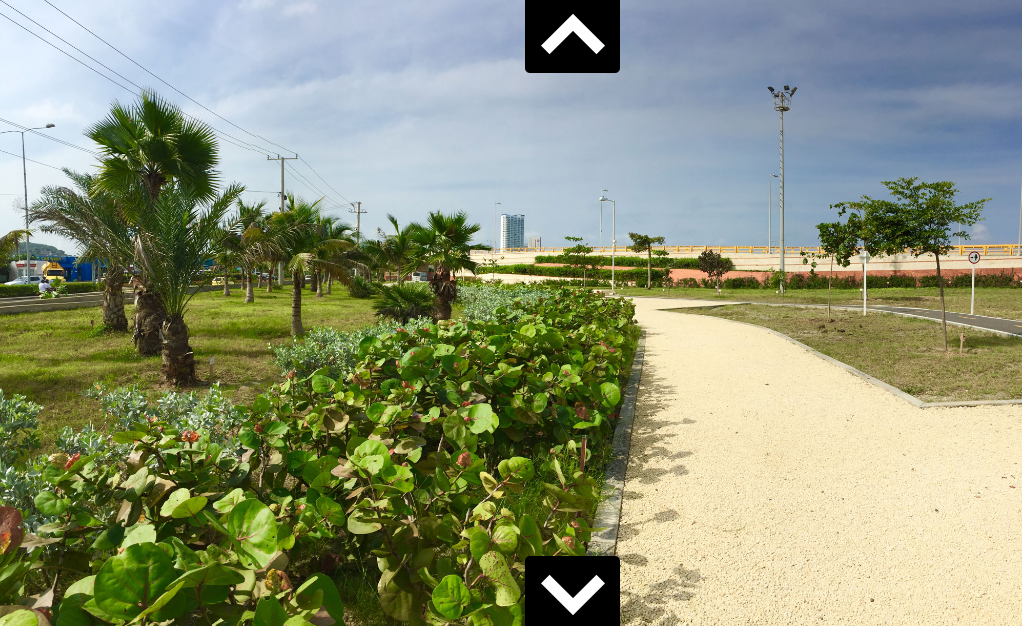
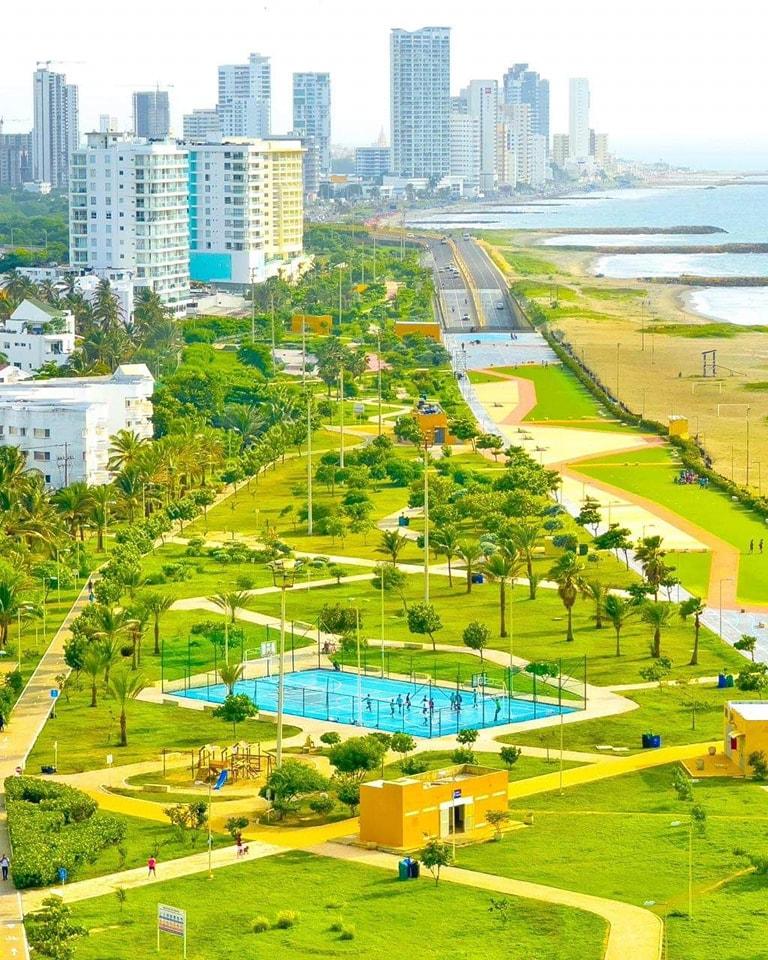
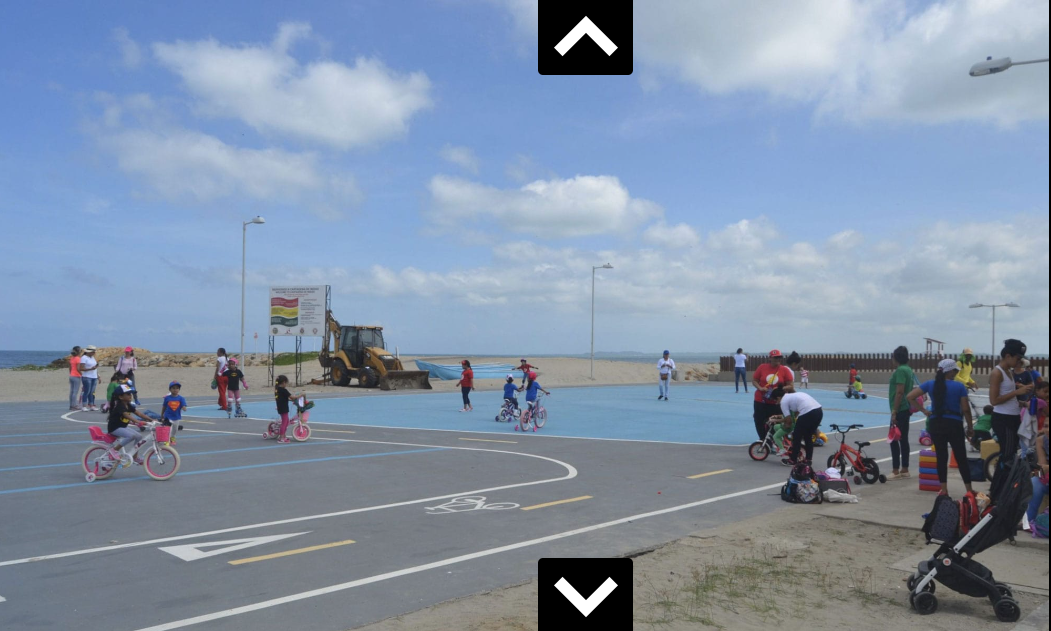
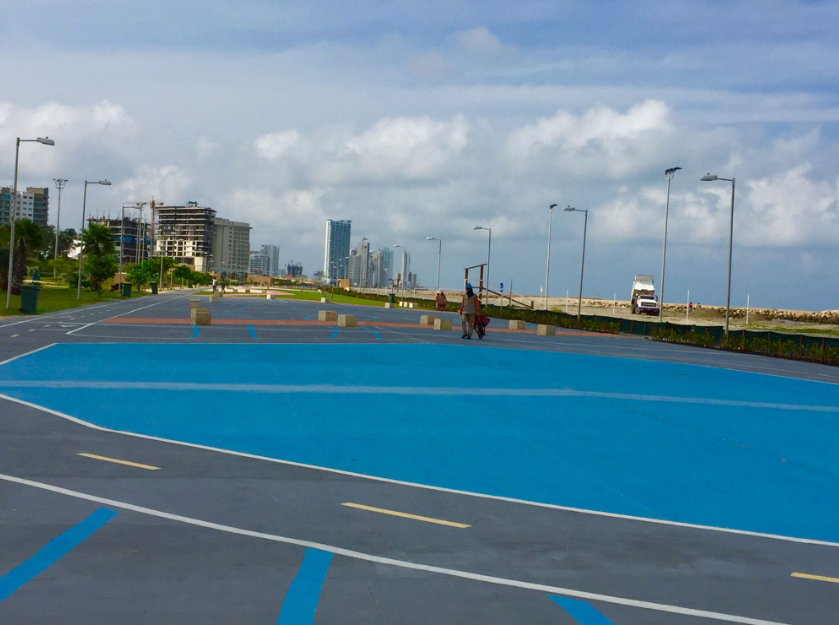
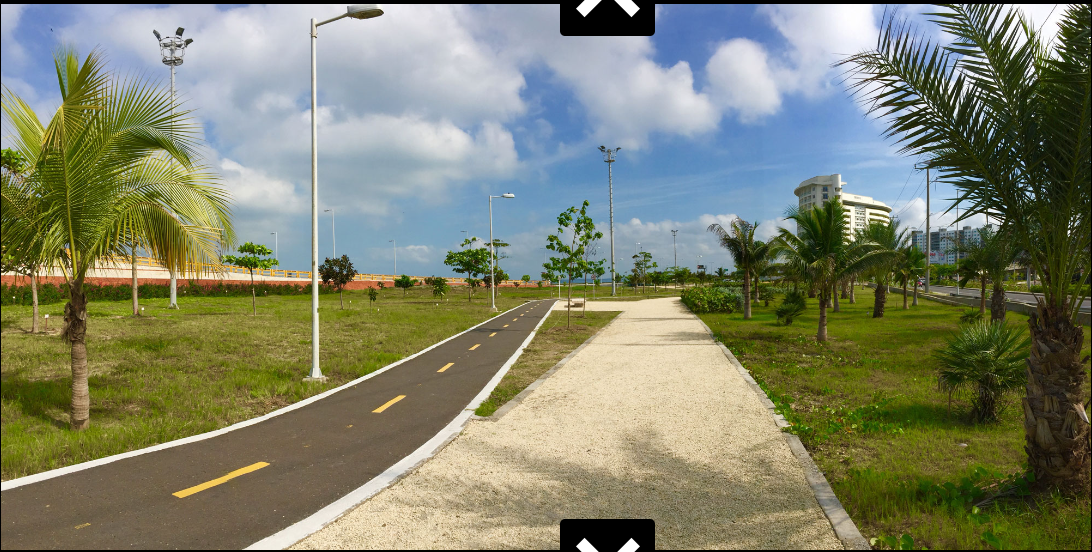
The Parque Lineal de Crespo in Cartagena, Colombia, is an urban green space built in 2016-2017 that had fallen into neglect (ref 4) and recently has undergone revitalization initiatives (ref 2). Announced in January 2024 by the Mayor of Cartagena, Dumek Turbay Paz, the project aims to reclaim and enhance this public park as a hub for recreation and community activities, fostering urban well-being and environmental stewardship (ref 2 and 3). The local government spearheads the intervention, and the Instituto Distrital de Deporte y Recreación (IDER) has been tasked with the park's management, ensuring its upkeep and the development of activities. The project was launched following an inspection by the Mayor and other local officials, who underscored the need for better infrastructure, safety, lighting, and green coverage through tree planting (ref 2 and 3). The primary objectives of the Parque Lineal de Crespo project include revitalising the park through enhanced maintenance, security, and the introduction of recreational and sports facilities. The project also aims to relocate weekend recreational activities, such as a popular bike path (ciclovía), from the congested Avenida Santander to the park, thereby reducing traffic disruptions and enhancing safety (ref 2 and 3). The park is relevant for the city because it combats coastal erosion caused by the rising Caribbean waters (Ref 1). The Park aims to be an icon of culture and recreation (ref 1). The project inspired a neighbours initiative, the Friends of the Crespo Linear Park, are a non-profit organization whose objective is to collaborate in the conservation of the Park by contributing awareness initiatives to the population, alerting authorities, and developing new ways to interact with the environment, such as guided bird watching activities and sports (ref 1).
Overview
Nature-based solution
- Blue infrastructure
- Coastlines
- Parks and urban forests
- Large urban parks or forests
Key challenges
- Climate action for adaptation, resilience and mitigation (SDG 13)
- Climate change adaptation
- Green space, habitats and biodiversity (SDG 15)
- Green space creation and/or management
- Health and well-being (SDG 3)
- Creation of opportunities for recreation
- Social justice, cohesion and equity (SDG 10)
- Social interaction
- Environmental education
Principal problems in Functional Urban Area (FUA)
- Climate-Related Hazards
- Coastal hazards (e.g. erosion, flooding)
- Land use and Socio-economic change
- Unequal availability and access to public green spaces
Key priorities
Focus
Project objectives
Implementation activities
Climate-focused activities
Climate change adaptation:
- Managed retreat / realignment: allowing landward migration of coastal habitats
- Protect and restore coastal ecosystems, to address loss of land and livelihoods, due to rising sea levels
Main beneficiaries
- Citizens or community groups
Governance
Management set-up
- Government-led
Type of initiating organisation
- Public sector institution
Participatory approaches/ community involvement
- Unknown
Details on the roles of the organisations involved in the project
Project implemented in response to ...
Type of enablers
Financing
Total cost
Source(s) of funding
- Public local authority budget
Type of funding
- Earmarked public budget
Non-financial contribution
Impacts and Monitoring
Environmental impacts
- Climate change
- Storm / wave induced erosion and flooding
- Achieved storm / wave induced erosion and flooding
- Water management and blue areas
- Enhanced protection and restoration of coastal and marine ecosystems
- Achieved enhanced protection and restoration of coastal and marine ecosystems
- Green space and habitat
- Increased green space area
- Achieved increased green space area
- Reduced biodiversity loss
- Achieved reduced biodiversity loss
- Increased number of species present
- Achieved increased number of species present
Economic impacts
- Unknown
Socio-cultural impacts
- Social justice and cohesion
- Improved access to urban green space
- Achieved improved access to urban green space
- Increased opportunities for social interaction
- Achieved increased opportunities for social interaction
- Increased involvement of locals in the management of green spaces
- Achieved increased involvement of locals in the management of green spaces
- Health and wellbeing
- Gain in activities for recreation and exercise
- Achieved gain in activities for recreation and exercise
- Education
- Increased knowledge of locals about local nature
- Achieved increased knowledge of locals about local nature
Type of reported impacts
Presence of formal monitoring system
Presence of indicators used in reporting
Presence of monitoring/ evaluation reports
Availability of a web-based monitoring tool
Potential risks of implementation and trade-offs
References
 Information about this nature-based solution was collected as part of the Naturescapes project funded by the European Union under Grant Agreement No 101084341.