

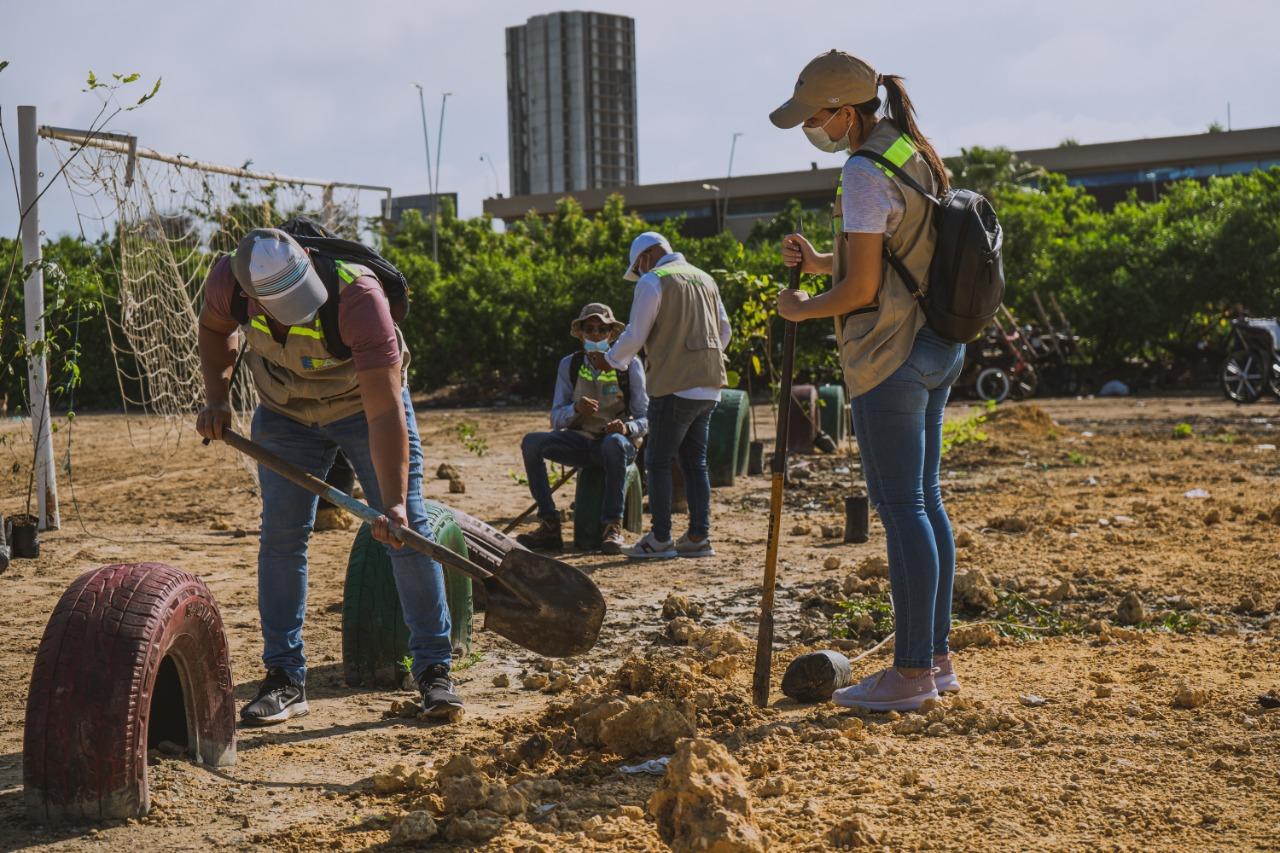
The Urban Forestry Plan for Cartagena, led by EPA Cartagena, outlines a comprehensive strategy for enhancing the city's green infrastructure. The plan focuses on selecting suitable tree species, planting, and management to achieve several goals: reducing heat through shade, creating microclimates, protecting against climatic events such as coastal erosion and windstorms, enhancing food security, and enhancing the landscape's beauty. Over 10 years, the plan aims to establish at least 100,000 additional trees, increase overall tree cover, enhance accessibility to green spaces, and build a main ecological structure based on natural resources and biodiversity. It also emphasises the importance of local knowledge and resources (ref 1). Formulated with community input, the plan commenced in 2013 and involved a detailed assessment of existing urban vegetation and climate conditions, utilising tools such as iTree. The development included international conferences and expert consultations to ensure a robust and informed approach (ref 1).

Overview
Nature-based solution
- Grey infrastructure featuring greens
- Alley or street trees and other street vegetation
Key challenges
- Climate action for adaptation, resilience and mitigation (SDG 13)
- Climate change adaptation
- Green space, habitats and biodiversity (SDG 15)
- Green space creation and/or management
- Social justice, cohesion and equity (SDG 10)
- Environmental education
- Sustainable consumption and production (SDG 12)
- Food scarcity / security
Principal problems in Functional Urban Area (FUA)
- Climate-Related Hazards
- Coastal hazards (e.g. erosion, flooding)
- Heat stress & Extreme temperatures
Key priorities
Focus
Project objectives
Implementation activities
Climate-focused activities
Climate change adaptation:
- Increase urban vegetation cover to reduce urban heat island effect
Main beneficiaries
- Citizens or community groups
- Young people and children
Governance
Management set-up
- Government-led
Type of initiating organisation
- Local government/municipality
Participatory approaches/ community involvement
- Consultation (e.g. workshop, surveys, community meetings, town halls)
- Joint implementation (e.g. tree planting)
- Citizen monitoring and review
Details on the roles of the organisations involved in the project
Project implemented in response to ...
Type of enablers
Financing
Total cost
Source(s) of funding
- Public local authority budget
- Corporate investment
- Other
Type of funding
- Earmarked public budget
- Direct funding (grants, subsidies, or self-financed projects by private entities)
- Donations
Non-financial contribution
- Provision of goods
- Provision of labour
- Provision of expertise
- Provision of other services
- Citizens (e.g. volunteering)
- Private sector (businesses, financial institution)
Impacts and Monitoring
Environmental impacts
- Climate change
- Lowered local temperature
- Expected lowered local temperature
- Environmental quality
- Improved air quality
- Expected improved air quality
- Reduced noise exposure
- Expected reduced noise exposure
- Green space and habitat
- Increased green space area
- Achieved increased green space area
- Reduced biodiversity loss
- Expected reduced biodiversity loss
Economic impacts
- Unknown
Socio-cultural impacts
- Social justice and cohesion
- Increased access to healthy/affordable food
- Expected increased access to healthy/affordable food
- Health and wellbeing
- Improved physical health
- Expected improved physical health
- Education
- Increased knowledge of locals about local nature
- Achieved increased knowledge of locals about local nature
Type of reported impacts
Presence of formal monitoring system
Presence of indicators used in reporting
Presence of monitoring/ evaluation reports
Availability of a web-based monitoring tool
Potential risks of implementation and trade-offs
References
 Information about this nature-based solution was collected as part of the Naturescapes project funded by the European Union under Grant Agreement No 101084341.