

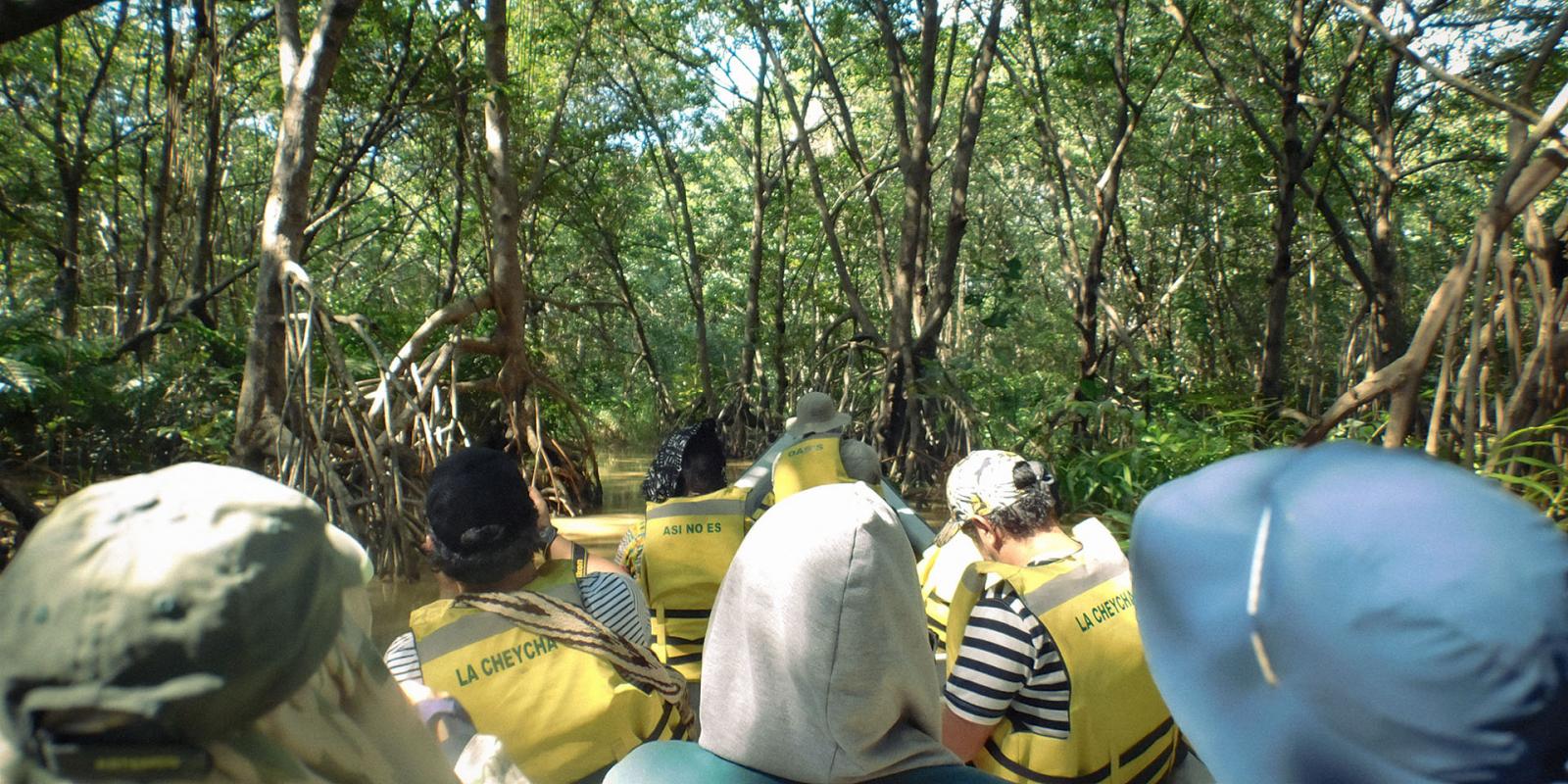
The BASIC Cartagena Project is an applied research initiative focused on developing tools for integrated coastal water resource management in Cartagena, Colombia (ref 4). It is funded by the International Development Research Centre (IDRC) of Canada, and EAFIT University leads it in collaboration with the University of Los Andes, the University of Cartagena, the Foundation H.E.O., and the Regional Corporation CARDIQUE (ref 4). The goals are to reduce pollution, conserve ecosystem services, and implement climate change adaptation strategies in the coastal area (ref 3). The studies focus on Cartagena Bay (Recognized as the most polluted body of water in the Caribbean), the Dique Canal and the Magdalena River watershed, the local communities in the areas surrounding Cartagena Bay, principally the communities of Ararca and Barú (ref 5). During its first phase (2014-2017), the project concentrated on diagnosing pollution levels and sources. This included extensive monitoring of water quality and the socio-economic conditions of local communities (with a public health focus). The second phase (2018-2021) focused on developing early warning systems for pollution, educational programs, and knowledge transfer through community engagement. The third phase (2023) plans to expand the same activities from phase 1 & 2 to the Rosario and San Bernardo Islands, with continued collaboration among scientists, authorities, and local communities (ref 2, 3). Among its most significant achievements are the production of high-level scientific knowledge and the training provided to communities and environmental authorities. A notable impact of the project is its contribution to the formulation of seven policies, including the creation of an intersectoral committee for the environmental management of the Bay of Cartagena. This committee, for the first time, brings together various stakeholders, including fishing and tourism communities, to make decisions about environmental management (3)
Overview
Nature-based solution
- Blue infrastructure
- Coastlines
Key challenges
- Climate action for adaptation, resilience and mitigation (SDG 13)
- Climate change adaptation
- Coastal resilience and marine protection (SDG 14)
- Marine and coastal research and/or education
- Water management (SDG 6)
- Improvements to water quality
- Inclusive and effective governance (SDG 16)
- Inclusive governance
- Effective management
Principal problems in Functional Urban Area (FUA)
- Environmental Degradation
- Poor water quality
- Health, Well-being and Social cohesion
- Physical health harm (from pollution, wildfire, extreme temperature)
Key priorities
Focus
Project objectives
Implementation activities
Climate-focused activities
Climate change adaptation:
- Protect and restore coastal ecosystems, to address loss of land and livelihoods, due to rising sea levels
Specification of climate or environmentally vulnerable communities
Main beneficiaries
- Local government/Municipality
- Researchers/University
- Citizens or community groups
- Coastal-dependent communities (e.g. small-scale fishers, coastal farmers, and indigenous peoples)
- Young people and children
- Other
Governance
Management set-up
- Led by non-government actors
Type of initiating organisation
- Researchers/university
Participatory approaches/ community involvement
- Co-planning (e.g. stakeholder workshops, focus groups, participatory mapping)
- Joint implementation (e.g. tree planting)
Details on the roles of the organisations involved in the project
Project implemented in response to ...
Type of enablers
Financing
Total cost
Source(s) of funding
- Research organisation / University
- Multilateral funds/international funding
Type of funding
- Direct funding (grants, subsidies, or self-financed projects by private entities)
Non-financial contribution
Impacts and Monitoring
Environmental impacts
- Climate change
- Strengthened capacity to address climate hazards/natural disasters
- Expected strengthened capacity to address climate hazards/natural disasters
- Water management and blue areas
- Improved water quality
- Expected improved water quality
Economic impacts
- Unknown
Socio-cultural impacts
- Health and wellbeing
- Improved physical health
- Expected improved physical health
- Education
- Increased support for education and scientific research
- Achieved increased support for education and scientific research
- Other
Type of reported impacts
Presence of formal monitoring system
Presence of indicators used in reporting
Presence of monitoring/ evaluation reports
Availability of a web-based monitoring tool
Potential risks of implementation and trade-offs
References

 Information about this nature-based solution was collected as part of the Naturescapes project funded by the European Union under Grant Agreement No 101084341.