Cagliari, Cagliari (FUA), Italy
City population: 384743
Duration: 2018 – 2018
Implementation status: Completed
Scale: Micro-scale: District/neighbourhood level
Project area: 2600 m2
Type of area: Vacant or abandoned land
Last updated: October 2024

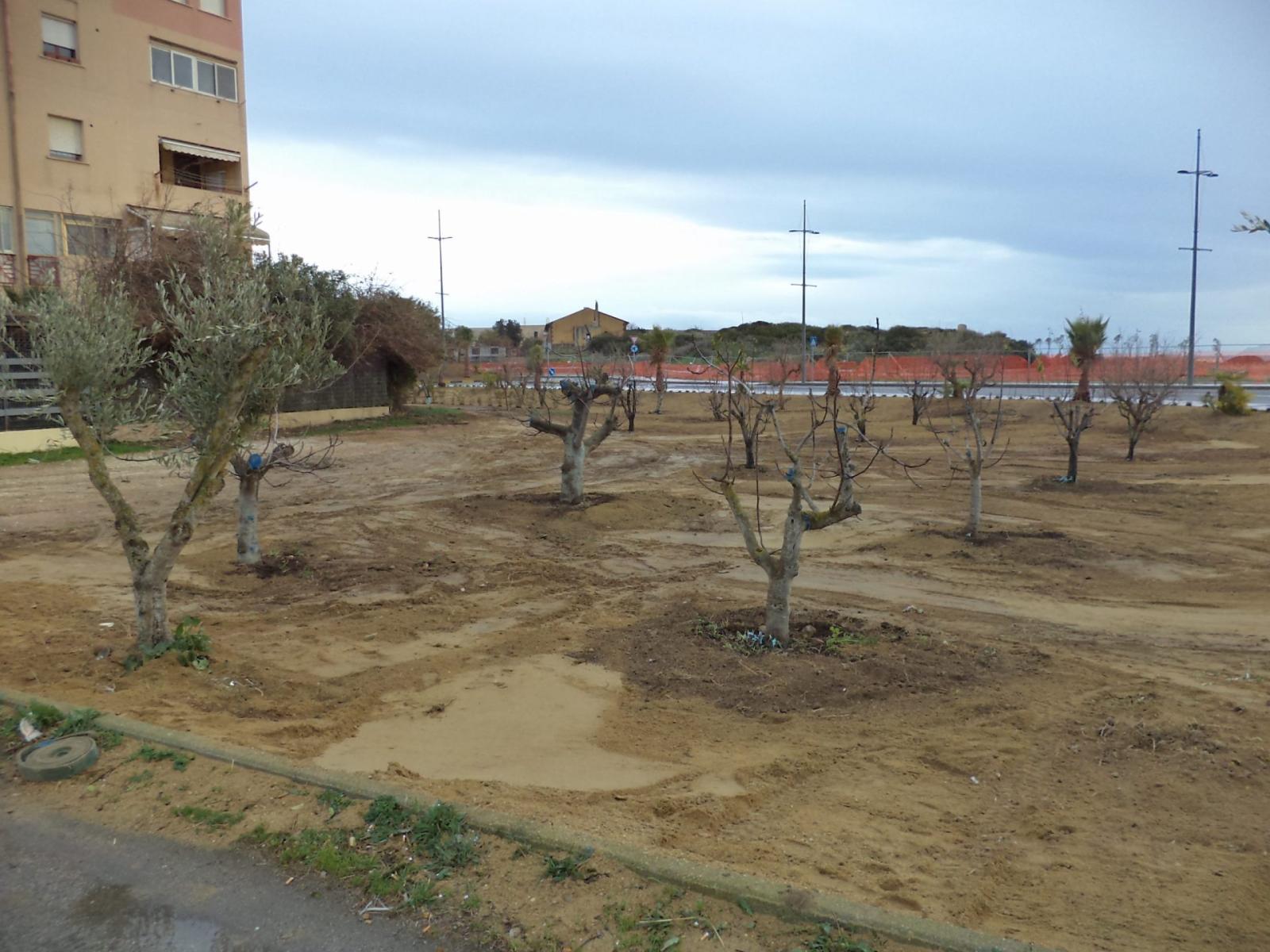
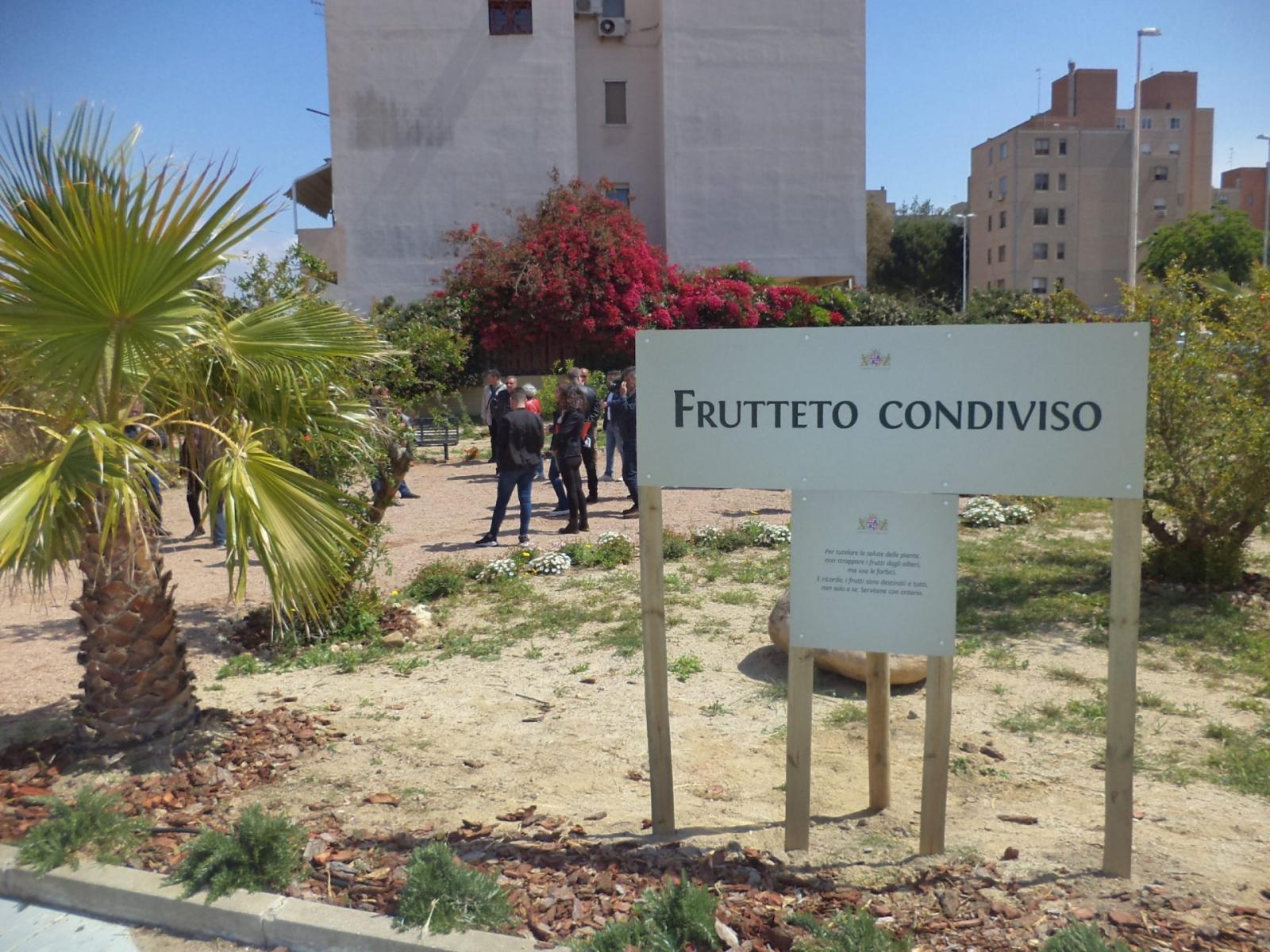
The intervention in the Sant'Elia neighborhood, which opened in 2018, created a new green area of approximately 2,600 square meters designed to enhance the urban environment and improve the quality of life for residents. This space includes an olive grove and an orchard, featuring pathways and landscaping that integrate local plant species. Along the side facing Via Utzeri, olive trees and a small grassy area have been planted, complemented by stabilized gravel paths for walking. The orchard contains 28 fruit trees, including citrus, pomegranate, quince, and fig trees, along with Mediterranean shrubs, allowing residents to freely enjoy the fruits for their own consumption. The entire area is equipped with an automated drip irrigation system, while the grassy sections utilize sub-irrigation. Additionally, a central roundabout in Piazza Giovanni da Verrazzano has been adorned with a lawn, palms, and vibrant rose beds. Commemorative plaques honor tenor Piero Schiavazzi and local resident Samuele Utzeri, who tragically passed away in Kosovo. The area also features signs encouraging respectful harvesting of fruits and permits dogs, provided they are kept on a leash (Refs. 1, 2, 3, 4 & 5).
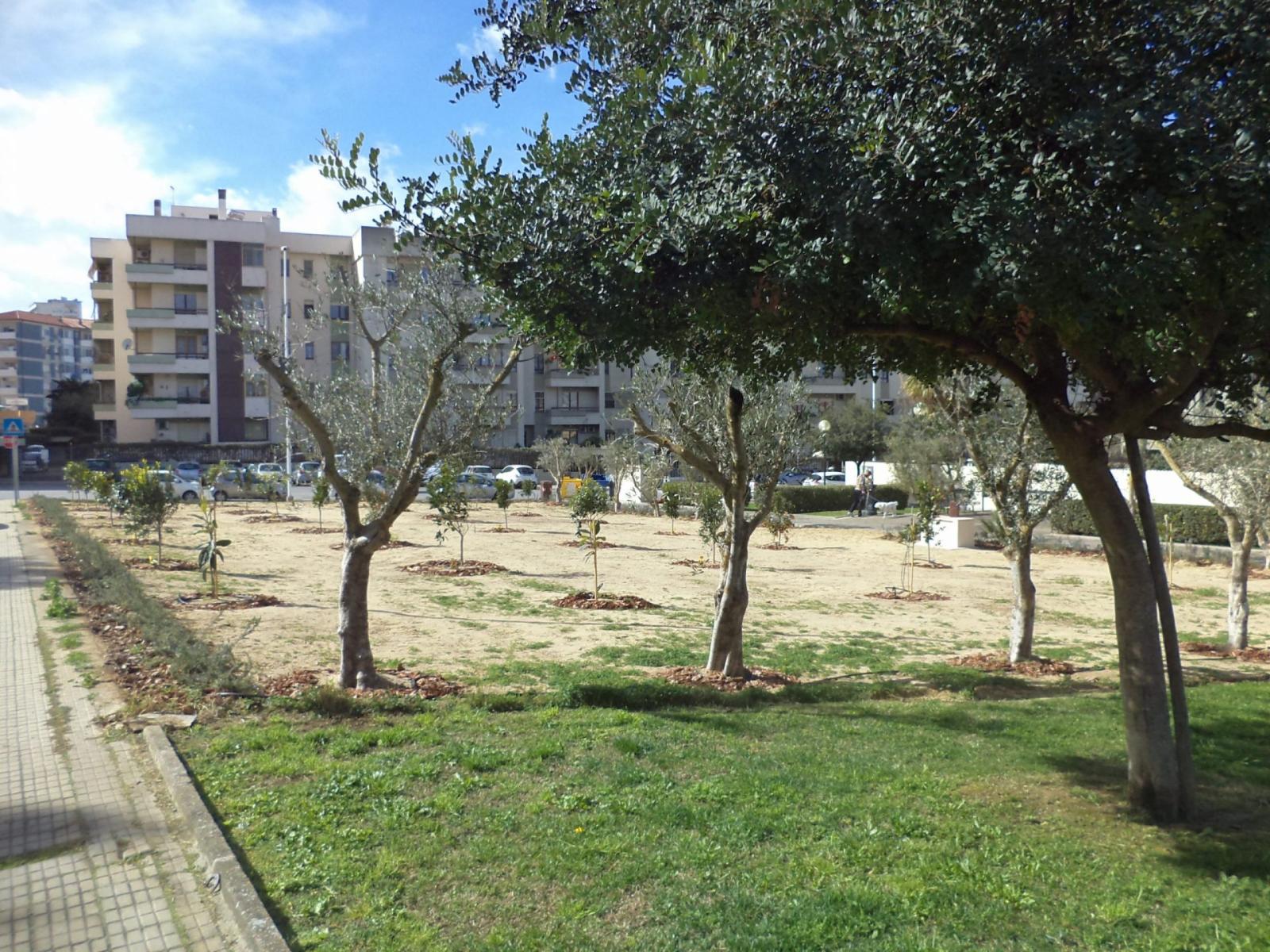
Photo of the orchard: green areas and its newly planted trees
Congiu, Raimondo. 2020. “Frutteti Condivisi a Cagliari in via Biasi E via Utzeri | Dottore Agronomo Raimondo Congiu.” Dottore Agronomo Raimondo Congiu |. January 23, 2020. https://www.raimondocongiu.it/portfolio_page/orti-condivisi-a-cagliari-in-via-biasi-e-via-utzeri/.

Overview

Nature-based solution

  • Blue infrastructure
  • Coastlines
  • Parks and urban forests
  • Pocket parks/neighbourhood green spaces

Key challenges

  • Green space, habitats and biodiversity (SDG 15)
  • Green space creation and/or management
  • Habitat and biodiversity restoration
  • Regeneration, land-use and urban development
  • Promote natural styles of landscape design for urban development
  • Social justice, cohesion and equity (SDG 10)
  • Social cohesion
  • Social justice and equity
  • Social interaction
  • Sense of community and community engagement
  • Sustainable consumption and production (SDG 12)
  • Sustainable consumption
  • Sustainable production

Principal problems in Functional Urban Area (FUA)

  • Environmental Degradation
  • Biodiversity loss
  • Soil degradation and loss
  • Land use and Socio-economic change
  • Agriculture/ crop production
  • Health, Well-being and Social cohesion
  • Disconnection from nature
  • Poor community engagement

Key priorities

Biodiversity (conservation and/or restoration), Social Justice and community

Focus

Creation of new green areas, Creation of any other green urban spaces, Coastal landscape management or protection, Coastal ecosystems restoration and maintenance (mangroves, dunes, saltplains, underwater meadows), Ecological restoration of ecosystems, Soil remediation and revegetation, Remediation activities of sites with very poor environmental quality, Transformation of previously derelict areas, Transformation of vacant land into green spaces

Project objectives

To requalify an area traditionally known for its negative reputation by transforming unused space into a green area, promoting a positive shift in the neighborhood's image and enhancing both aesthetic appeal and social cohesion. To create a 2,600 square meter orchard that offers residents access to a shared space, encouraging community interaction and fostering a sense of belonging. To increase accessibility to common resources, such as fruit and olive trees, which contribute to local biodiversity, while providing citizens with access to green spaces that promote shared responsibility and communal ownership. To improve residents' quality of life by making the neighborhood more welcoming and inclusive and integrating walking paths, seating areas, and improved landscaping (Refs. 1, 2, 3 & 4).

Implementation activities

The project began with site preparation, where the land was cleared and shaped to accommodate the various sections, including the olive grove, orchard, and grassy areas, with pathways planned for pedestrian access. Next, olive trees, fruit trees such as citrus, pomegranate, quince, and figs, along with Mediterranean shrubs and rosemary bushes, were planted across different parts of the park (25 windbreak olive trees, 12 Washingtonia palms, 11 St. Peter's palms and, in the orchard, 28 citrus, pomegranate, quince and fig trees have been planted. Hedges of Mediterranean scrub have been created with mastic trees, phillyrea, holm oaks and rosemary). The roundabout at Piazza Giovanni da Verrazzano was landscaped with a central lawn, palm trees, and flowering plants like roses and Agapanthus. Infrastructure was then installed, with stabilized gravel pathways laid out to ensure accessibility throughout the park. Benches in Liberty style were placed in a small square, and an efficient drip irrigation system was implemented to water the plants, while sub-irrigation was used for the grassy areas. Finally, signage was added to provide guidelines for the responsible harvesting of fruit, emphasizing the shared nature of the resources. Additional signs honored local figures, including tenor Piero Schiavazzi and Samuele Utzeri, a young corporal from the neighborhood (Refs. 1, 2, 3, 4 & 5).

Biodiversity conservation or restoration-focused activities

Biodiversity restoration:

  • Restore native species
  • Public engagement

Main beneficiaries

  • Citizens or community groups

Governance

Management set-up

  • Government-led

Type of initiating organisation

  • Local government/municipality

Participatory approaches/ community involvement

  • Joint implementation (e.g. tree planting)
  • Co-management/Joint management

Details on the roles of the organisations involved in the project

The main actor of the project is the Municipality of Cagliari, specifically represented by Mayor Massimo Zedda and the Councillor for Culture and Public Green Spaces, Paolo Frau. These key figures led the planning and execution of the requalification project. Additionally, municipal departments responsible for urban planning, public green spaces, and infrastructure were likely involved in the technical aspects, including landscaping, planting, and installing the irrigation system (Refs. 1, 2 & 3).

Project implemented in response to ...

... an EU policy or strategy? Unknown
... a national policy or strategy? Unknown
... a local policy or strategy? Unknown

Type of enablers

Change agents (individual with major role influence on launching)

Financing

Total cost

€50,000 - €100,000

Source(s) of funding

  • Public local authority budget

Type of funding

  • Earmarked public budget

Non-financial contribution

Unknown

Impacts and Monitoring

Environmental impacts

  • Green space and habitat
  • Increased green space area
  • Achieved increased green space area
  • Increased conversion of degraded land or soil
  • Achieved increased conversion of degraded land or soil
  • Increased number of species present
  • Achieved increased number of species present

Economic impacts

  • Unknown

Socio-cultural impacts

  • Social justice and cohesion
  • Improved access to urban green space
  • Achieved improved access to urban green space
  • Increased opportunities for social interaction
  • Achieved increased opportunities for social interaction
  • Increased involvement of locals in the management of green spaces
  • Achieved increased involvement of locals in the management of green spaces
  • Increased access to healthy/affordable food
  • Achieved increased access to healthy/affordable food
  • Cultural heritage and sense of place
  • Increased appreciation for natural spaces
  • Expected increased appreciation for natural spaces

Type of reported impacts

Presence of formal monitoring system

Unknown

Presence of indicators used in reporting

No evidence in public records

Presence of monitoring/ evaluation reports

No evidence in public records

Availability of a web-based monitoring tool

No evidence in public records

Potential risks of implementation and trade-offs

Unknown

References

Photo of the orchard and its newly planted trees
Congiu, Raimondo. 2020. “Frutteti Condivisi a Cagliari in via Biasi E via Utzeri | Dottore Agronomo Raimondo Congiu.” Dottore Agronomo Raimondo Congiu |. January 23, 2020. https://www.raimondocongiu.it/portfolio_page/orti-condivisi-a-cagliari-in-via-biasi-e-via-utzeri/.
Photo of the orchard and its newly planted trees
Congiu, Raimondo. 2020. “Frutteti Condivisi a Cagliari in via Biasi E via Utzeri | Dottore Agronomo Raimondo Congiu.” Dottore Agronomo Raimondo Congiu |. January 23, 2020. https://www.raimondocongiu.it/portfolio_page/orti-condivisi-a-cagliari-in-via-biasi-e-via-utzeri/.
naturescapes bannerInformation about this nature-based solution was collected as part of the Naturescapes project funded by the European Union under Grant Agreement No 101084341.