

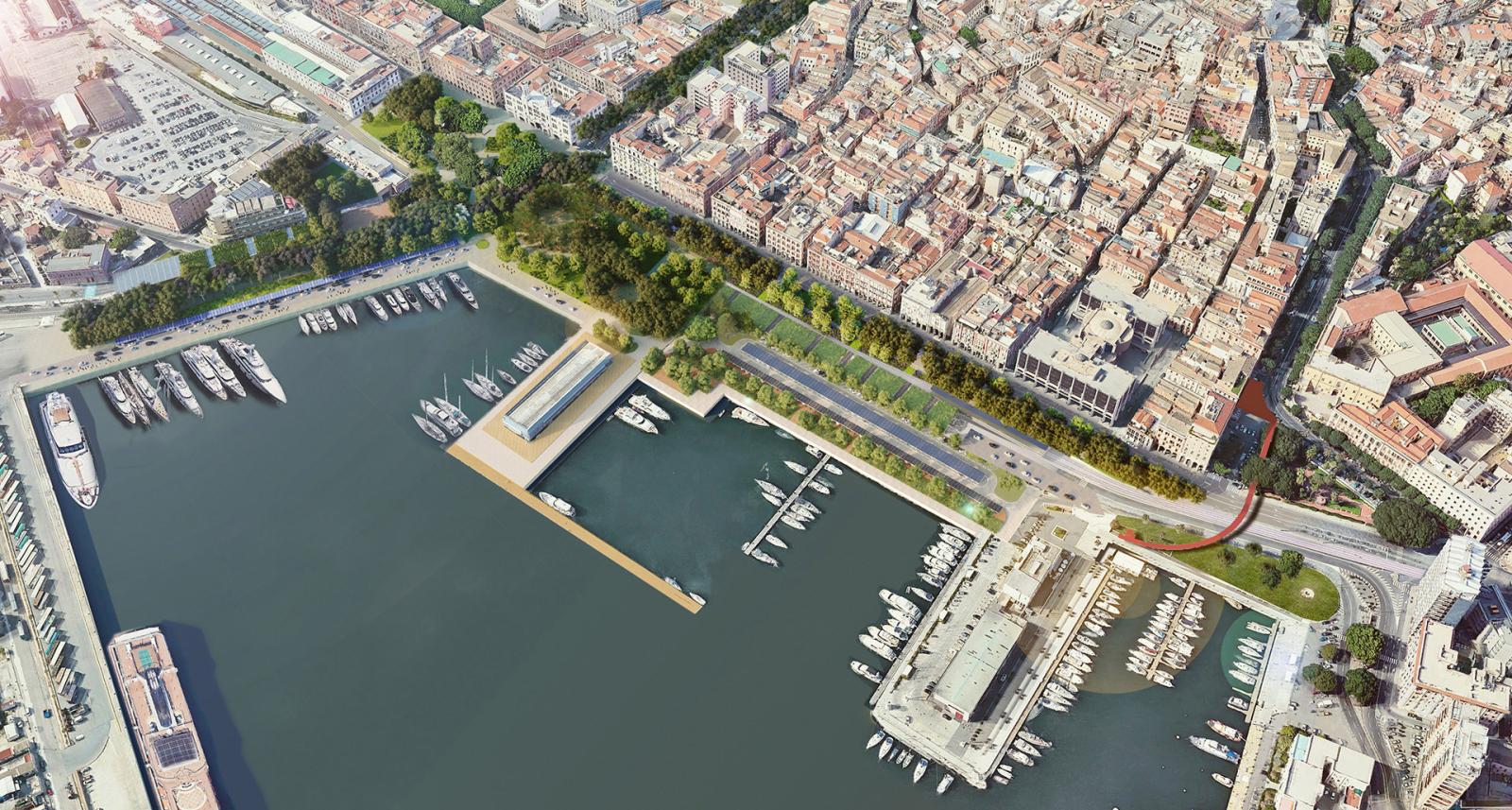
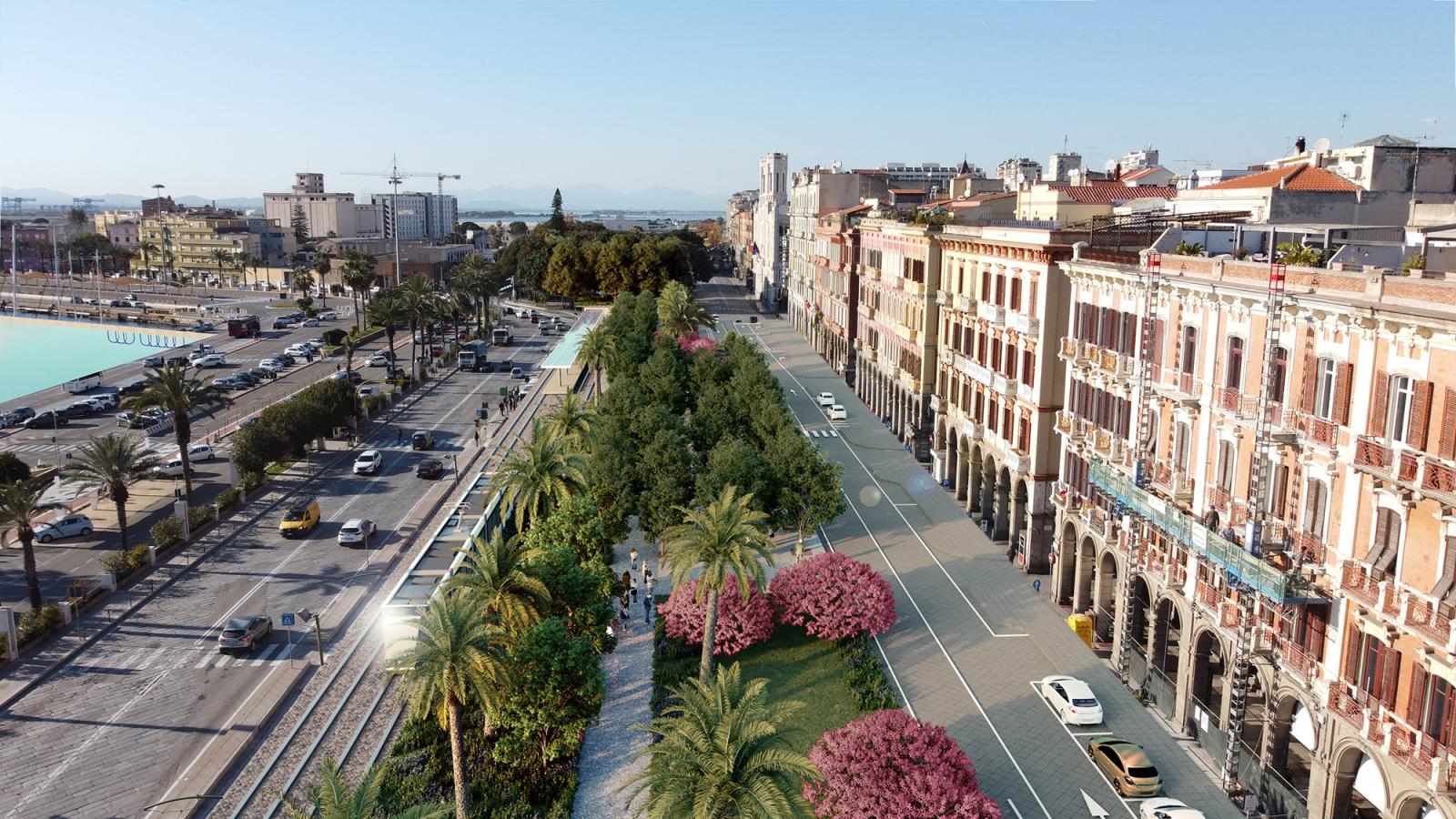
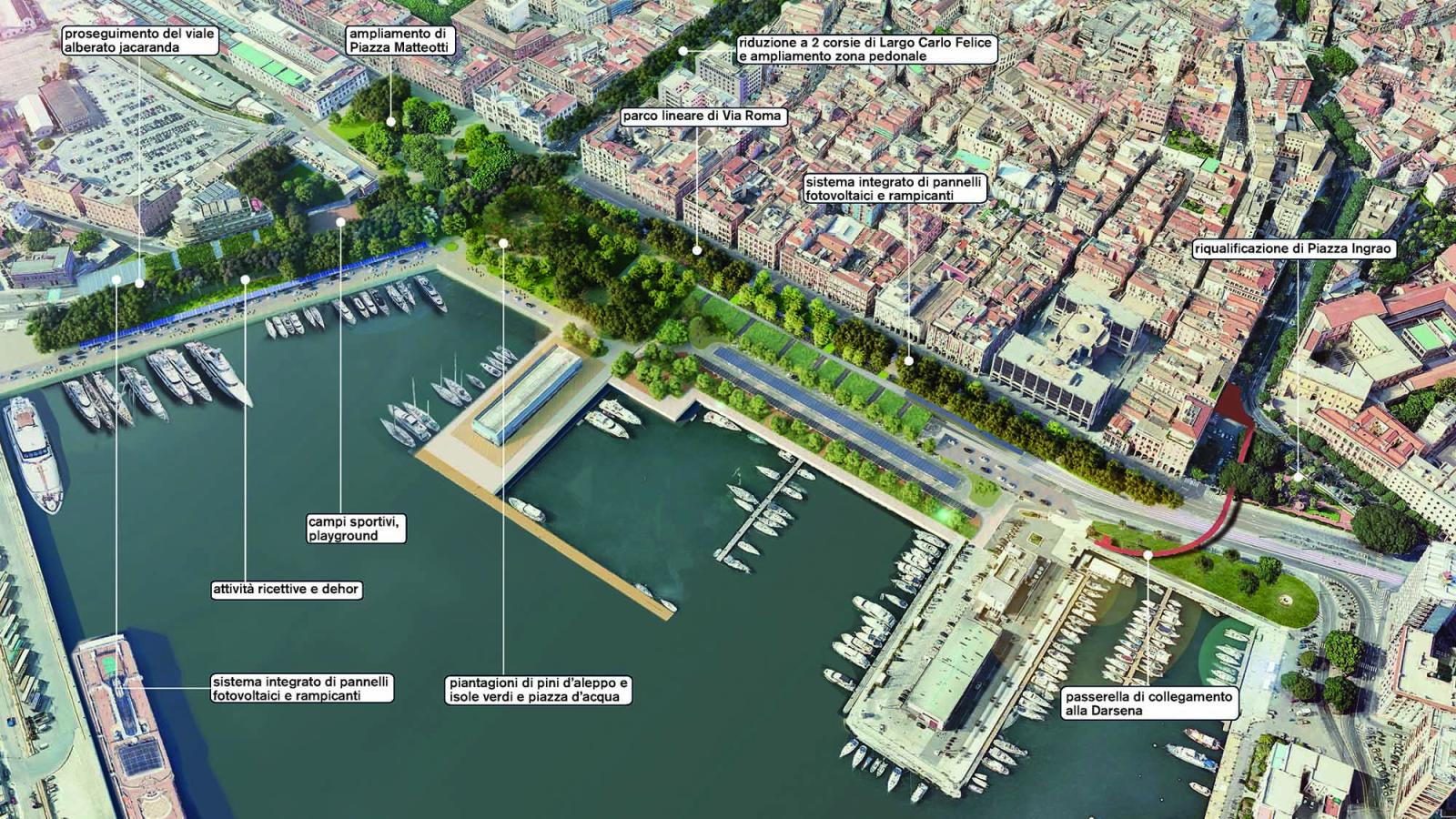
Cagliari's waterfront is currently characterized by extensive soil sealing, which has rendered the soil impermeable, leading to a loss of biodiversity and contributing to the urban heat island effect. Additionally, the waterfront is disconnected from the city due to heavy traffic. In 2023, the Municipality of Cagliari launched the "Green Promenade for Cagliari’s Seafront" project, aimed at revitalizing the waterfront and reconnecting the city with its coastal heritage. Led by Stefano Boeri Architetti, the project seeks to transform the area into a continuous green space that integrates pedestrian pathways with shaded public areas, functioning as a "green lung" to mitigate urban heat and enhance biodiversity. The initiative will introduce over 200 new trees and 5,700 square meters of green space, creating a park that beautifies the area, improves air quality, and lowers local temperatures. A key focus of the project is fostering cultural and social inclusion by developing new community hubs that encourage diverse activities and strengthen social cohesion. Additional features include recreational areas, sports fields, and outdoor seating. (Ref. 1, 2,3) The project also aims to enhance social inclusion, environmental sustainability, and urban connectivity, ultimately transforming the waterfront into a vibrant public space that reflects Cagliari’s identity. However, the lengthy construction process has disrupted local businesses and reduced foot traffic, making the area less attractive during the redevelopment phase. (Refs. 10, 11, 12 & 13).
Overview
Nature-based solution
- Blue infrastructure
- Coastlines
- Parks and urban forests
- Pocket parks/neighbourhood green spaces
- Green corridors and green belts
Key challenges
- Climate action for adaptation, resilience and mitigation (SDG 13)
- Climate change adaptation
- Coastal resilience and marine protection (SDG 14)
- Coastal protection / hazard mitigation
- Environmental quality
- Air quality improvement
- Green space, habitats and biodiversity (SDG 15)
- Green space creation and/or management
- Regeneration, land-use and urban development
- Promote natural styles of landscape design for urban development
- Water management (SDG 6)
- Flood protection
- Stormwater and rainfall management and storage
- Cultural heritage and cultural diversity
- Protection of historic and cultural landscape/infrastructure
- Health and well-being (SDG 3)
- Creation of opportunities for recreation
- Social justice, cohesion and equity (SDG 10)
- Social cohesion
- Social interaction
- Sense of community and community engagement
Principal problems in Functional Urban Area (FUA)
- Climate-Related Hazards
- Urban flooding (stormwater)
- Heat stress & Extreme temperatures
- Environmental Degradation
- Biodiversity loss
- Soil degradation and loss
- Air pollution
- Health, Well-being and Social cohesion
- Physical health harm (from pollution, wildfire, extreme temperature)
- Disconnection from nature
Key priorities
Focus
Project objectives
Implementation activities
Climate-focused activities
Climate change adaptation:
- Increase urban vegetation cover to reduce urban heat island effect
Specification of climate or environmentally vulnerable communities
Main beneficiaries
- Private sector/Corporate/Company
- Citizens or community groups
Governance
Management set-up
- Co-governance with government and non-government actors
Type of initiating organisation
- Local government/municipality
Participatory approaches/ community involvement
- Co-planning (e.g. stakeholder workshops, focus groups, participatory mapping)
- Taskforce groups
- Joint implementation (e.g. tree planting)
Details on the roles of the organisations involved in the project
Project implemented in response to ...
Type of enablers
Financing
Total cost
Source(s) of funding
- Public local authority budget
- Public national budget
- EU funds
Type of funding
- Earmarked public budget
- Direct funding (grants, subsidies, or self-financed projects by private entities)
Non-financial contribution
Impacts and Monitoring
Environmental impacts
- Climate change
- Enhanced carbon sequestration
- Expected enhanced carbon sequestration
- Prevent the frequency and/or intensity of heatwaves
- Expected prevent the frequency and/or intensity of heatwaves
- Environmental quality
- Improved air quality
- Expected improved air quality
- Improved soil quality
- Expected improved soil quality
- Water management and blue areas
- Increased protection against flooding
- Expected increased protection against flooding
- Enhanced protection and restoration of coastal and marine ecosystems
- Expected enhanced protection and restoration of coastal and marine ecosystems
- Green space and habitat
- Increased green space area
- Expected increased green space area
- Increased number of species present
- Expected increased number of species present
Economic impacts
- Attraction of business and investment
- Expected attraction of business and investment
Socio-cultural impacts
- Social justice and cohesion
- Improved access to urban green space
- Expected improved access to urban green space
- Increased opportunities for social interaction
- Expected increased opportunities for social interaction
- Health and wellbeing
- Gain in activities for recreation and exercise
- Expected gain in activities for recreation and exercise
- Cultural heritage and sense of place
- Increased sense of place identity, memory and belonging
- Expected increased sense of place identity, memory and belonging
Type of reported impacts
Presence of formal monitoring system
Presence of indicators used in reporting
Presence of monitoring/ evaluation reports
Availability of a web-based monitoring tool
Potential risks of implementation and trade-offs
References
 Information about this nature-based solution was collected as part of the Naturescapes project funded by the European Union under Grant Agreement No 101084341.