

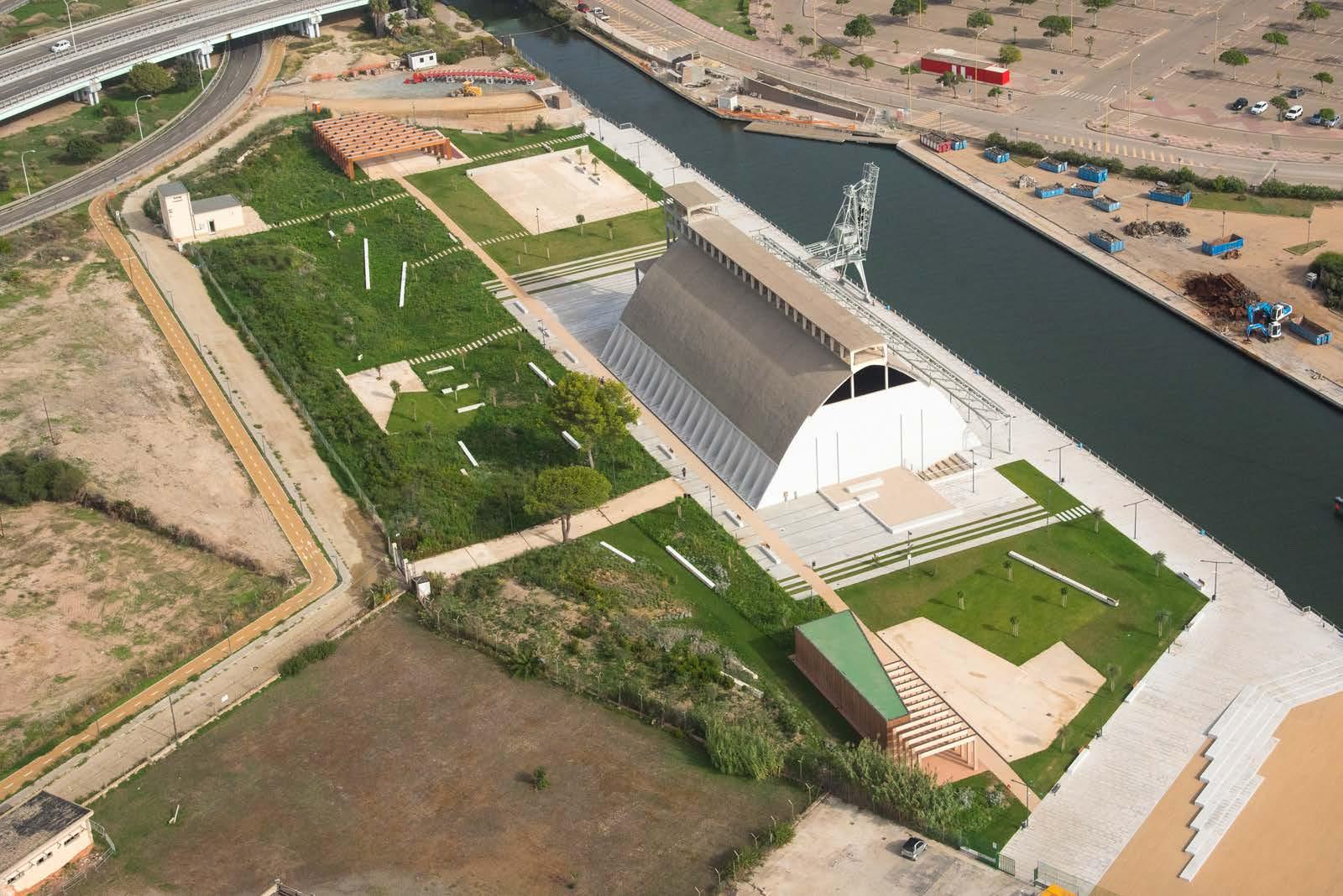
The Cagliari Canal project is an initiative aimed at revitalizing and transforming the urban and natural landscape of the Cagliari Metropolitan Area in Sardinia. The project is rooted in the city's strategic metropolitan plan and seeks to restore and enhance the navigability of the Terramaini-La Palma canal, which had become disused and neglected over time (3,4). The primary goal of the Cagliari Canal project is to develop a connected, innovative, and sustainable urban environment by re-establishing the canal as a green and blue infrastructure (2). It aims to provide alternative, sustainable mobility options, improve connectivity between municipalities, and enhance the natural and urban environments. It strives to foster a sense of community by creating a shared space for residents and integrating modern amenities that align with environmental sustainability (1,4). It involved a highly participatory process, emphasizing community involvement from the initial planning stages. The Metropolitan Authority of Cagliari, in collaboration with local stakeholders, launched a series of consultations to gather public input on the canal's design and function(3). These consultations were part of a broader initiative called LabMet, the Metropolitan Laboratory for Innovation, which facilitated the collection of ideas and feedback (1). The project was partly developed in response to the increasing environmental challenges faced by Cagliari, including the need to adapt to climate change. The canal's revitalization is seen as a key measure for enhancing the city's resilience to climate-related risks, such as flooding and heat waves(1). By restoring the canal and its surrounding areas, the project aims to mitigate these risks through improved water management, reducing pollution, and the creation of green spaces that can absorb excess rainwater and provide cooling effects (2)
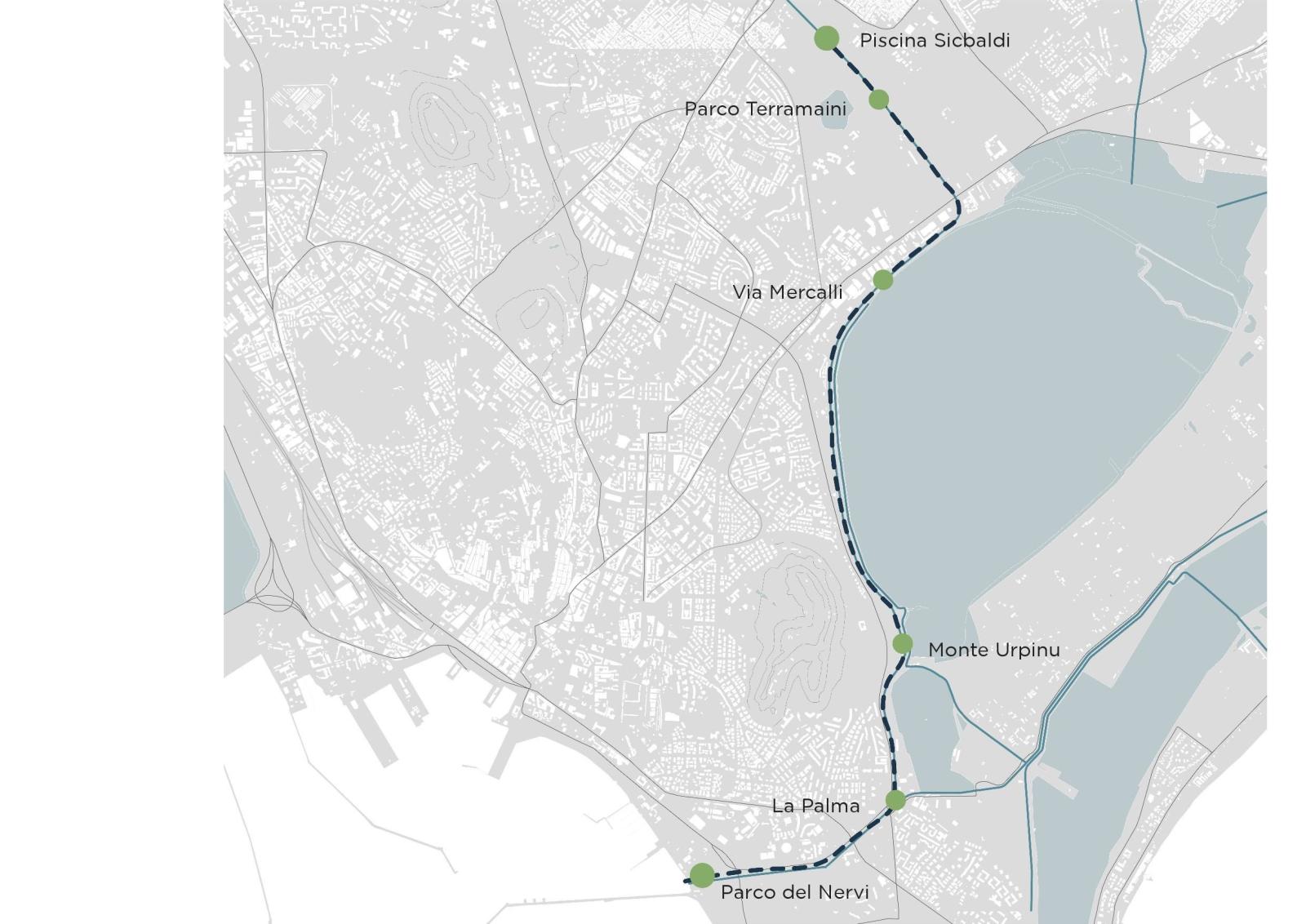
Overview
Nature-based solution
- Blue infrastructure
- Rivers/streams/canals/estuaries
- Parks and urban forests
- Pocket parks/neighbourhood green spaces
- Green corridors and green belts
Key challenges
- Climate action for adaptation, resilience and mitigation (SDG 13)
- Climate change adaptation
- Environmental quality
- Air quality improvement
- Green space, habitats and biodiversity (SDG 15)
- Green space creation and/or management
- Water management (SDG 6)
- Flood protection
- Improvements to water quality
- Health and well-being (SDG 3)
- Creation of opportunities for recreation
Principal problems in Functional Urban Area (FUA)
- Climate-Related Hazards
- Coastal hazards (e.g. erosion, flooding)
- Heat stress & Extreme temperatures
- Environmental Degradation
- Biodiversity loss
- Poor water quality
- Health, Well-being and Social cohesion
- Inadequate access to recreational opportunities
Key priorities
Focus
Project objectives
Implementation activities
Climate-focused activities
Climate change adaptation:
- Increase urban vegetation cover to reduce urban heat island effect
Main beneficiaries
- Citizens or community groups
- Young people and children
Governance
Management set-up
- Government-led
Type of initiating organisation
- Local government/municipality
Participatory approaches/ community involvement
- Co-planning (e.g. stakeholder workshops, focus groups, participatory mapping)
- Consultation (e.g. workshop, surveys, community meetings, town halls)
- Citizen monitoring and review
Details on the roles of the organisations involved in the project
Project implemented in response to ...
Type of enablers
Financing
Total cost
Source(s) of funding
- Public local authority budget
- Public national budget
Type of funding
- Earmarked public budget
Non-financial contribution
Impacts and Monitoring
Environmental impacts
- Climate change
- Lowered local temperature
- Expected lowered local temperature
- Reduced emissions
- Expected reduced emissions
- Water management and blue areas
- Increased protection against flooding
- Expected increased protection against flooding
- Green space and habitat
- Increased green space area
- Achieved increased green space area
- Increased ecological connectivity across regeneration sites and scales
- Achieved increased ecological connectivity across regeneration sites and scales
- Reduced biodiversity loss
- Expected reduced biodiversity loss
- Enhanced support of pollination
- Expected enhanced support of pollination
Economic impacts
- More sustainable tourism
- Expected more sustainable tourism
- Increased property prices
- Expected increased property prices
Socio-cultural impacts
- Social justice and cohesion
- Improved social cohesion
- Expected improved social cohesion
- Improved access to urban green space
- Expected improved access to urban green space
- Increased opportunities for social interaction
- Achieved increased opportunities for social interaction
- Increased involvement of locals in the management of green spaces
- Achieved increased involvement of locals in the management of green spaces
- Education
- Increased knowledge of locals about local nature
- Expected increased knowledge of locals about local nature
Type of reported impacts
Presence of formal monitoring system
Presence of indicators used in reporting
Presence of monitoring/ evaluation reports
Availability of a web-based monitoring tool
Potential risks of implementation and trade-offs
References

 Information about this nature-based solution was collected as part of the Naturescapes project funded by the European Union under Grant Agreement No 101084341.