

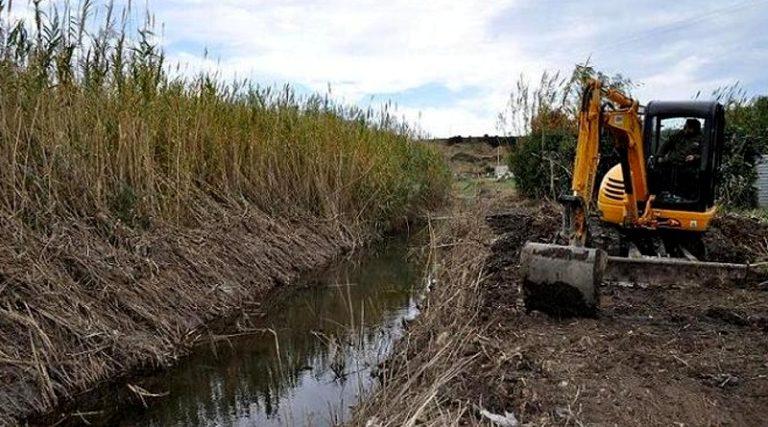
Assemini, a municipality in Cagliari, has long grappled with hydrogeological instability, marked by major floods in 1999 and 2002. To mitigate future risks, the municipality launched a series of interventions focused on improving the hydraulic management of its waterways. These projects are part of a broader strategy to address recurring flood hazards exacerbated by the effects of rapid urbanization in the 1970s, which disrupted the natural water drainage systems (1,3). The central goal of the project is to reduce the risk of flooding by enhancing the functionality of existing waterways. This includes both preventative measures and structural improvements to the canal system to manage stormwater more effectively. These efforts aim to safeguard urban and rural areas from severe meteorological events. The project development involved a multi-phased approach starting in 2013, focusing on cleaning and maintaining minor waterways such as the Gutturu Lorenzu, Sa Nuxedda, and Giaccu Meloni streams. These efforts expanded over time, culminating in an agreement with the Land Reclamation Consortium of Southern Sardinia in 2015, securing both local and regional financial support. The interventions have covered over 24 kilometers of canals and streams, targeting key flood-prone areas (1,2). Key interventions include the cleaning and maintenance of over 35 km of canals and streams, in partnership with the Land Reclamation Consortium of Southern Sardinia, supported by regional funding. A separate, large-scale intervention in Truncu Is Follas involves constructing an open-air diversion canal, a retention basin (44,500 m³), and new pipelines to redirect floodwaters, thus reducing risk for residents downstream in both Assemini and Elmas.

Overview
Nature-based solution
- Blue infrastructure
- Rivers/streams/canals/estuaries
Key challenges
- Climate action for adaptation, resilience and mitigation (SDG 13)
- Climate change adaptation
- Water management (SDG 6)
- Flood protection
- Stormwater and rainfall management and storage
- Inclusive and effective governance (SDG 16)
- Disaster-risk reduction
Principal problems in Functional Urban Area (FUA)
- Climate-Related Hazards
- River flooding
Key priorities
Focus
Project objectives
Implementation activities
Climate-focused activities
Climate change adaptation:
- Restore rivers and other fresh water bodies to reduce flood or drought risk
Specification of climate or environmentally vulnerable communities
Main beneficiaries
- Citizens or community groups
Governance
Management set-up
- Government-led
Type of initiating organisation
- Local government/municipality
Participatory approaches/ community involvement
- Unknown
Details on the roles of the organisations involved in the project
Project implemented in response to ...
Type of enablers
Financing
Total cost
Source(s) of funding
- Public local authority budget
- Public regional budget
Type of funding
- Earmarked public budget
Non-financial contribution
Impacts and Monitoring
Environmental impacts
- Water management and blue areas
- Increased protection against flooding
- Achieved increased protection against flooding
- Improved stormwater management
- Achieved improved stormwater management
- Enhanced protection and restoration of freshwater ecosystems
- Expected enhanced protection and restoration of freshwater ecosystems
Economic impacts
- Increase of green jobs (e.g. paid employment positions)
- Expected increase of green jobs (e.g. paid employment positions)
- Other
Socio-cultural impacts
- Social justice and cohesion
- Improved liveability
- Expected improved liveability
- Cultural heritage and sense of place
- Improvement in people’s connection to nature
- Expected improvement in people’s connection to nature
- Safety
- Improved community safety to climate-related hazards
- Expected improved community safety to climate-related hazards
Type of reported impacts
Presence of formal monitoring system
Presence of indicators used in reporting
Presence of monitoring/ evaluation reports
Availability of a web-based monitoring tool
Potential risks of implementation and trade-offs
References
 Information about this nature-based solution was collected as part of the Naturescapes project funded by the European Union under Grant Agreement No 101084341.