

Last updated: October 2021
The rooftop garden of Nádor 15 was implemented as part of the sustainable campus development strategy of the Central European University. It contains a community garden that is managed by the CEU community, intensive green roofs and green walls as well. The rooftop garden also collects water for it's automatic irrigation system and supports biodiversity with bat shelters, bee hotels and birdhouses. (Reference 1)

CEU Rooftop Garden
Logan Strenchock, retrieved 08/13/2018
Overview
Nature-based solution
- Nature on buildings (external)
- Green roofs
- Green walls or facades
- Community gardens and allotments
- Community gardens
- Green areas for water management
- Rain gardens
Key challenges
- Climate action for adaptation, resilience and mitigation (SDG 13)
- Climate change adaptation
- Water management (SDG 6)
- Stormwater and rainfall management and storage
- Green space, habitats and biodiversity (SDG 15)
- Habitat and biodiversity conservation
- Green space creation and/or management
- Environmental quality
- Air quality improvement
- Social justice, cohesion and equity (SDG 10)
- Social interaction
- Sustainable consumption and production (SDG 12)
- Sustainable production
Focus
Creation of new green areas
Project objectives
The transformation of the rooftops of the Nador 13 and15 buildings of CEU into a communal roof garden space aimed at providing social benefits as well as functional environmental benefits. The goals of the intervention were providing a large addition of outdoor space to the campus, creating an island of urban biodiversity and serving as a medium for collecting rainwater, which will be used to irrigate the plants and will reduce dependence on using potable water for irrigation purposes. Further goals are to decrease the heat island effect in summer and to provide a place for a community garden for educational purposes (Reference 2)
Implementation activities
"Extensive garden areas comprised of planting boxes, tree planters, green walls and climbing plants have been added to the space [...]. Plant species were selected from a list of locally specific species found within the Carpathian Basin region, with specific selection of bird and bee friendly species which can ensure the relatively harsh environment of a rooftop garden. The entire rooftop surface area will serve as a medium for collecting rainwater, which will be used to irrigate the plant life, reducing dependence on using potable water for irrigation purposes. A special area of the garden has been designated as the CEU community Edible Garden, and will be utilized by community members to produce a micro version of an organic crop rotation, which will be maintained throughout throughout the seasons" (Reference 2).
Climate-focused activities
Climate change adaptation:
- Increase or improve urban vegetation cover to help reduce outdoor temperature
- Create or improve outdoor spaces to help people escape from urban heat
Biodiversity conservation or restoration-focused activities
Biodiversity conservation:
- Protect species
- Undertake specific measures to protect species
- Undertake specific measures to protect valued species
- Means for conservation governance
- Manage biological resources for conservation and sustainable use
- Raise public awareness
- Create and use scientific knowledge for conservation
Main beneficiaries
- Researchers/University
- Citizens or community groups
Governance
Management set-up
- Led by non-government actors
Type of initiating organisation
- Researchers/university
Participatory approaches/ community involvement
- Dissemination of information and education
- Joint implementation (e.g. tree planting)
- Co-management/Joint management
Details on the roles of the organisations involved in the project
Project implemented in response to ...
... an EU policy or strategy?
Unknown
... a national policy or strategy?
Unknown
... a local policy or strategy?
Unknown
(The email correspondence revealed that the project was not inspired by any kind of city level GI/NBS vision/strategy, see uploaded doc in the reference section.)
Financing
Total cost
Unknown
Source(s) of funding
- Unknown
Type of funding
- Loan
Non-financial contribution
Unknown
Impacts and Monitoring
Environmental impacts
- Climate change
- Lowered local temperature
- Environmental quality
- Improved air quality
- Green space and habitat
- Increased green space area
- Enhanced support of pollination
Economic impacts
- Unknown
Socio-cultural impacts
- Social justice and cohesion
- Improved access to urban green space
- Increased opportunities for social interaction
- Increased involvement of locals in the management of green spaces
- Education
- Increased support for education and scientific research
Type of reported impacts
Achieved impacts
Presence of formal monitoring system
Unknown
Presence of indicators used in reporting
No evidence in public records
Presence of monitoring/ evaluation reports
No evidence in public records
Availability of a web-based monitoring tool
No evidence in public records
References
1. Source link. (2017). The Official Website of the Rooftop Garden. [online] Accessible at: Source link 19.06.2020].
2. Central European University. (2017). Building User Guide: Introduction to the Environmental Design Elements of the CEU Campus. [online] Accessible at: Source link 19.06.2020].
3. Source link. (2017). Campus Development: Key Facts. [online] Available at: Source link 19.06.2020].
4. Source link. (2017). Sustainable Design and Construction. [online] Accessible at: Source link 19.06.2020].
5. Keszthelyi, C. (2015). CEU Budapestʼs new campus earns BREEAM certification. Budapest Business Journal. [online] Available at: Source link 19.06.2020].
6. Source link. (2017). The Official Website of Breeam. [online] Available at: Source link 19.06.2020].
7. Source link. (2017). Sustainable CEU. [online] Available at: Source link 19.06.2020].
8. Bielik I. (2017). CEU Rooftop Garden. Flickr. [image] [image not available in 2020]
9. Source link. (2016). EIB Supports CEU's Campus Redevelopment. [online] Accessible at: Source link [Accessed: 19.06.2020].
10. Source link (year unknown) Get Involved: Going Green on Campus. [online] Available at: Source link [Accessed: 09.07.2020]
11. Source link. (2020) Covid-19 Advice and Updates. [online] Available at: Source link [Accessed: 09.07.2020]
2. Central European University. (2017). Building User Guide: Introduction to the Environmental Design Elements of the CEU Campus. [online] Accessible at: Source link 19.06.2020].
3. Source link. (2017). Campus Development: Key Facts. [online] Available at: Source link 19.06.2020].
4. Source link. (2017). Sustainable Design and Construction. [online] Accessible at: Source link 19.06.2020].
5. Keszthelyi, C. (2015). CEU Budapestʼs new campus earns BREEAM certification. Budapest Business Journal. [online] Available at: Source link 19.06.2020].
6. Source link. (2017). The Official Website of Breeam. [online] Available at: Source link 19.06.2020].
7. Source link. (2017). Sustainable CEU. [online] Available at: Source link 19.06.2020].
8. Bielik I. (2017). CEU Rooftop Garden. Flickr. [image] [image not available in 2020]
9. Source link. (2016). EIB Supports CEU's Campus Redevelopment. [online] Accessible at: Source link [Accessed: 19.06.2020].
10. Source link (year unknown) Get Involved: Going Green on Campus. [online] Available at: Source link [Accessed: 09.07.2020]
11. Source link. (2020) Covid-19 Advice and Updates. [online] Available at: Source link [Accessed: 09.07.2020]
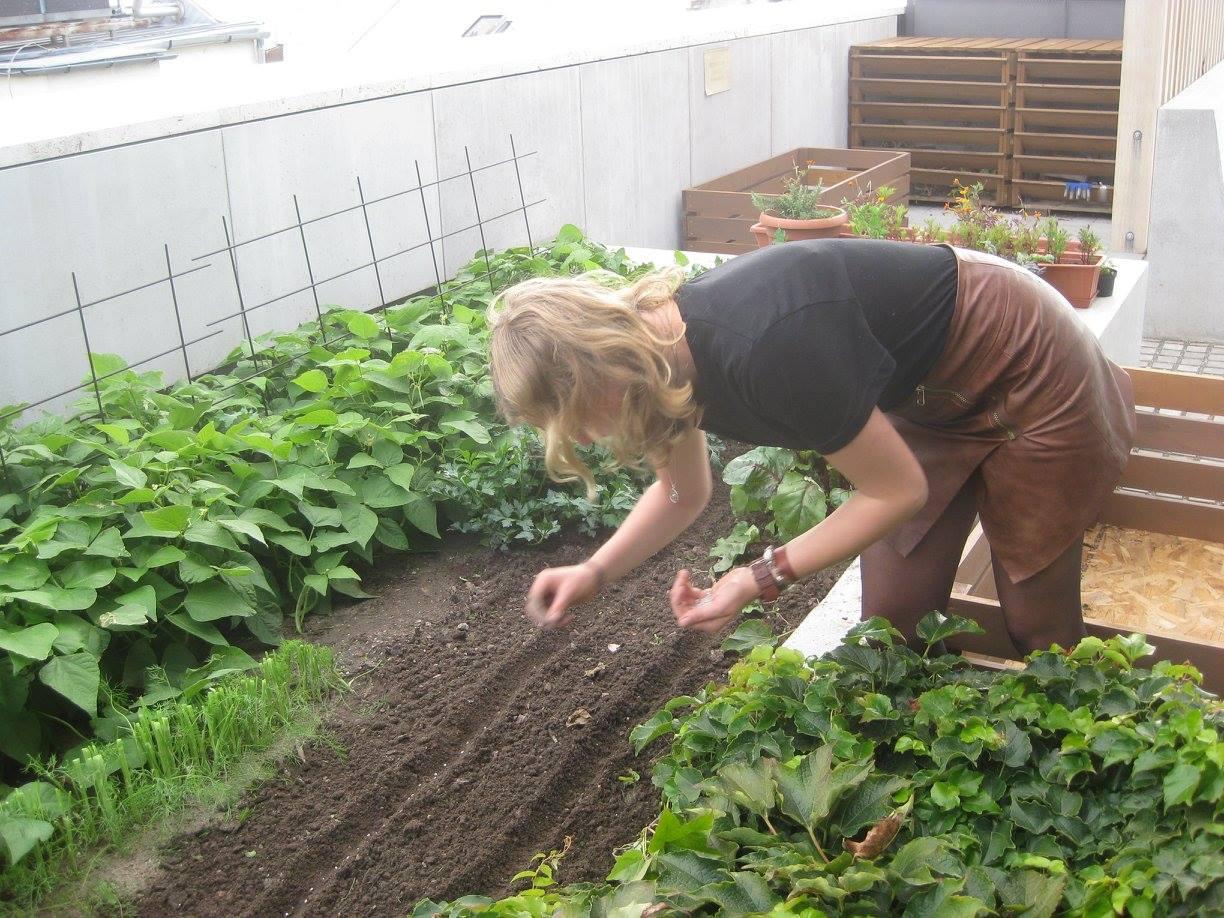
CEU Rooftop Garden
Logan Strenchock, retrieved 08/13/2018
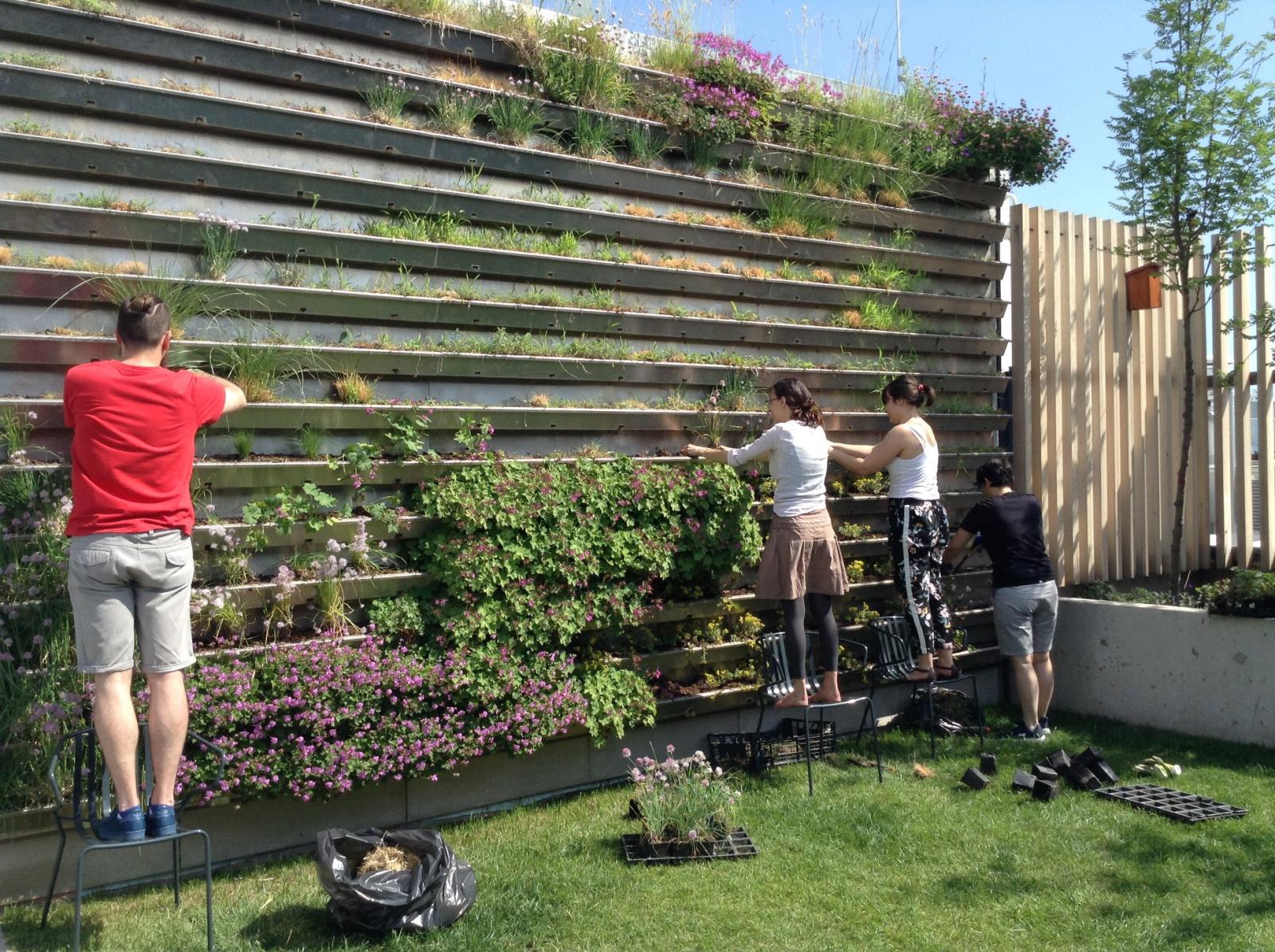
CEU Rooftop Garden
Logan Strenchock, retrieved 08/13/2018