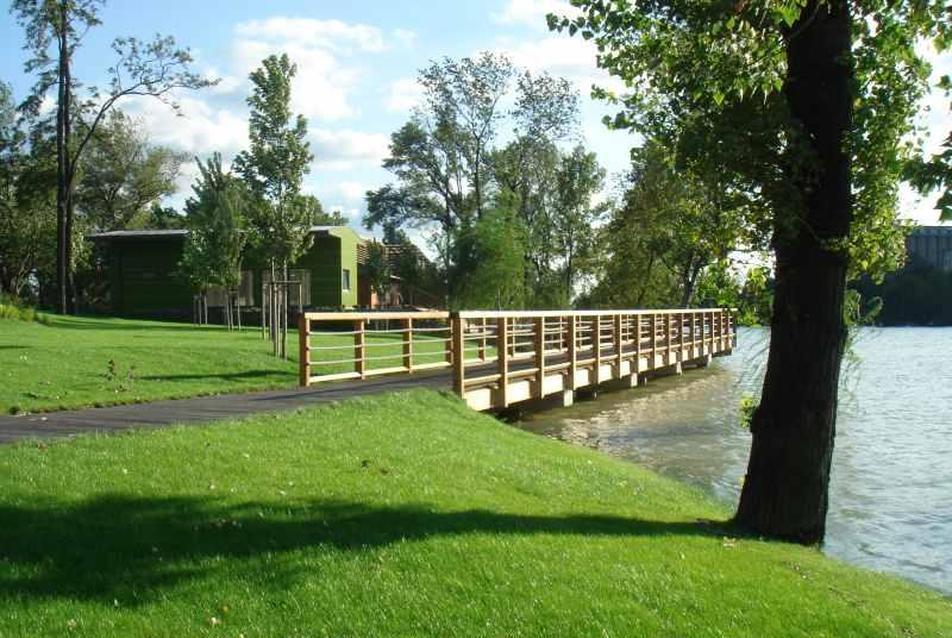
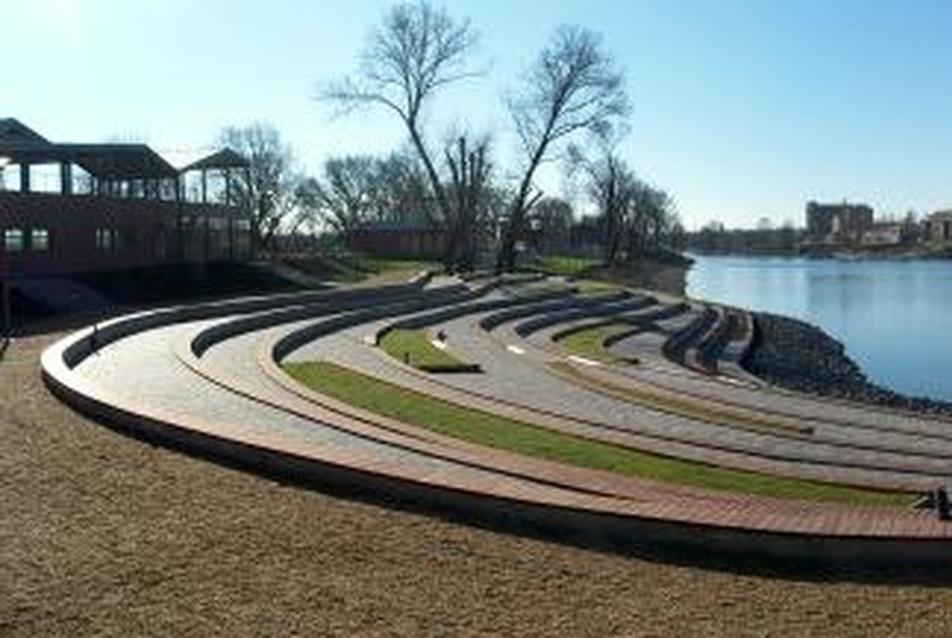
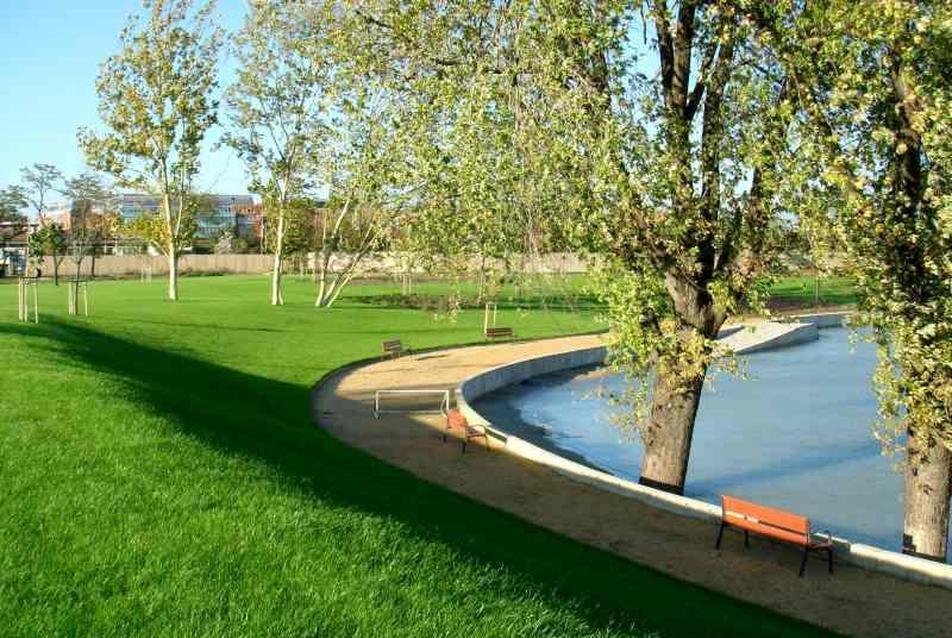
Before the intervention, the dam was a derelict former industrial and recreational area. (Reference 6) It was transformed into a green recreational park of the southern part of Budapest. 40,000 square metres of grass was laid, 700 trees, 20,000 shrubs and 20,000 perennials were planted. (Reference 4) The park now is a home to a biodiverse population of wild birds. It is one of the few places of the city that have direct connection to the Danube, giving space for strolling, doing sport, playing and relaxing. In 2018, a large-scale development began next to the dam, with the aim of creating a new city center. This would make the park a place for leisure for much greater number of people, but may be detrimental to the ecosystem of the dam. (Reference 6)
Overview
Nature-based solution
- Grey infrastructure featuring greens
- Blue infrastructure
- Riverbank/Lakeside greens
- Parks and urban forests
- Large urban parks or forests
- Rivers/streams/canals/estuaries
Key challenges
- Water management (SDG 6)
- Improvements to water quality
- Green space, habitats and biodiversity (SDG 15)
- Green space creation and/or management
- Regeneration, land-use and urban development
- Conversion of former industrial areas
- Social justice, cohesion and equity (SDG 10)
- Social interaction
- Health and well-being (SDG 3)
- Enabling opportunities for physical activity
- Creation of opportunities for recreation
- Economic development and employment (SDG 8)
- Economic development: service sectors
Focus
Project objectives
Implementation activities
Main beneficiaries
- Private sector/Corporate/Company
- Citizens or community groups
Governance
Management set-up
- Co-governance with government and non-government actors
Type of initiating organisation
- Local government/municipality
- Private sector/corporate actor/company
Participatory approaches/ community involvement
- Unknown
Details on the roles of the organisations involved in the project
Project implemented in response to ...
Financing
Total cost
Source(s) of funding
- Public local authority budget
- Corporate investment
Type of funding
- Direct funding (grants, subsidies, or self-financed projects by private entities)
Non-financial contribution
Impacts and Monitoring
Environmental impacts
- Water management and blue areas
- Improved water quality
Economic impacts
- Increase of green jobs (e.g. paid employment positions)
- Stimulate development in deprived areas
- Attraction of business and investment
Socio-cultural impacts
- Safety
- Increased perception of safety
- Social justice and cohesion
- Improved access to urban green space
- Increased opportunities for social interaction
- Health and wellbeing
- Gain in activities for recreation and exercise
Type of reported impacts
Presence of formal monitoring system
Presence of indicators used in reporting
Presence of monitoring/ evaluation reports
Availability of a web-based monitoring tool
References
2. Csikós, G. (2006). új vízparti városrész születik: Építészet és tájrehabilitáció. Octogon [insert]. (2). pp.
3. Bajor, Z. (2013). Ökológiai Állapotfelmérő Adatlap. [online] Available at: Source link [Accessed: 19.06.2020].
4. Source link. (2009). Park a gáton. [online] Available at: Source link 19.06.2020].
5. Batár, Zs. (2009). Photo of the Kopaszi Dam. [image] Available at: Source link 19.06.2020].
6. Tolnai, G. Berki, M. (2018). Városi diverzitás a vízpartokon. A Duna-part funkcionális átalakulása Budapest déli részén. [online] Available at: Source link [Accessed: 11.07.2020]
7. Source link. (year unknown) Kopaszi-gát. [online] Available at: Source link [Accessed: 11.07.2020]
8. Szabó, P., Mihályi, Z., Szomorjai, T., Tóth, E. (2015). Explanatory Factors of the
Expansion of Recreation Function on the Bank of Danube River in Budapest. Deturope, 7, 2: 291-308 Available at: Source link [Accessed: 11.07.2020]
9. Tolnai, G. (2018) Budapest’s fragmented riverfront renewal: Western trends interspersed with post-socialist characteristics. National Committee of Geography of Belgium, Société Royale Belge de Géographie, p.7. Available at: Source link [Accessed: 11.07.2020]
10. Újbuda Municipality of the 11th distroct of Budapest. (2006). 2007 tavaszára elkészül a Kopaszi-gát és a Lágymányosi-öböl partja. [online] Available at: Source link [Accessed: 13.07.2020]