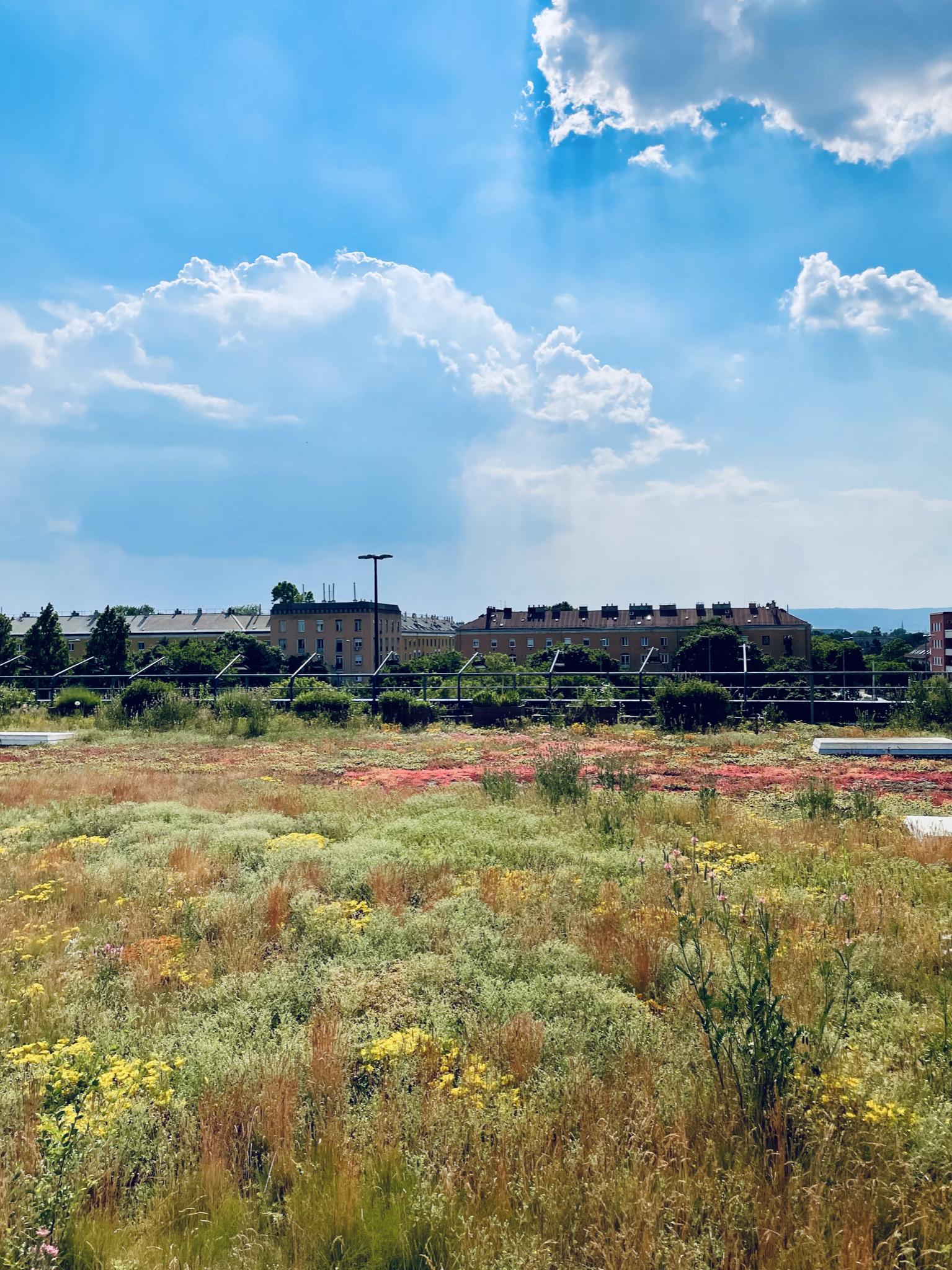
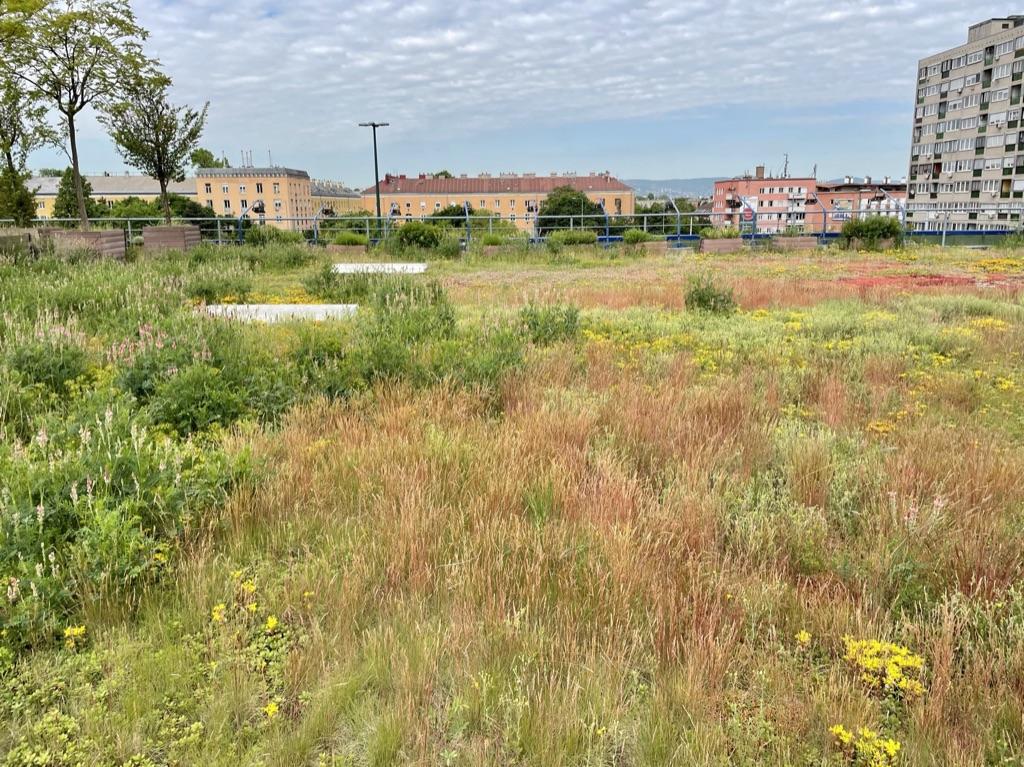
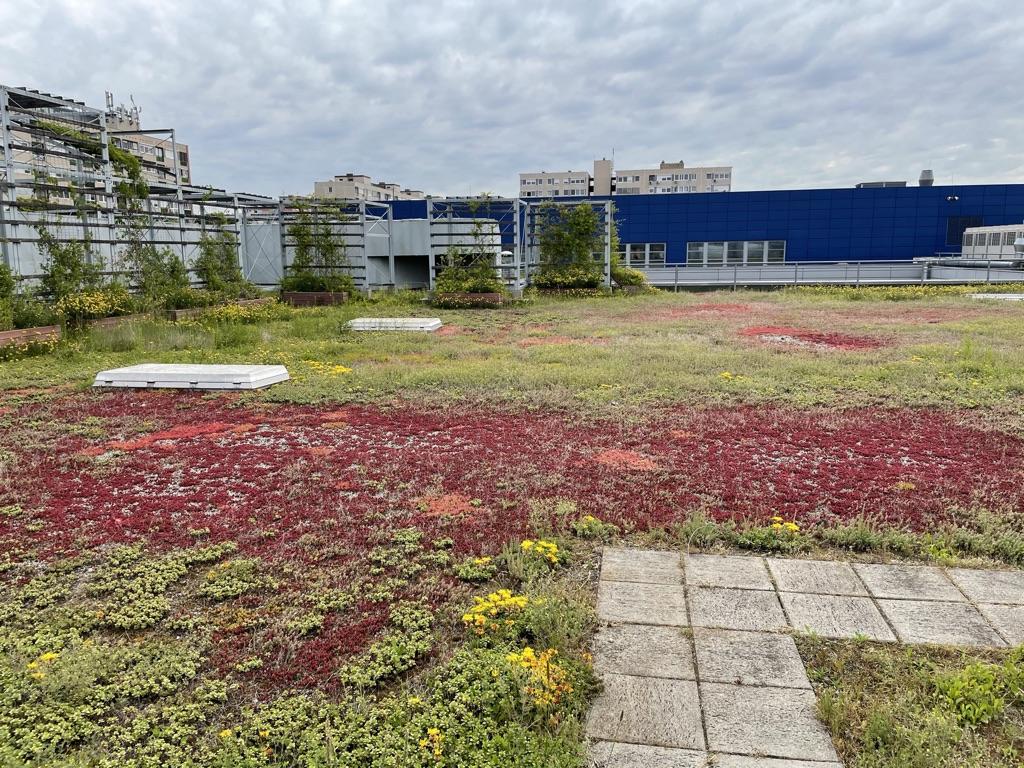
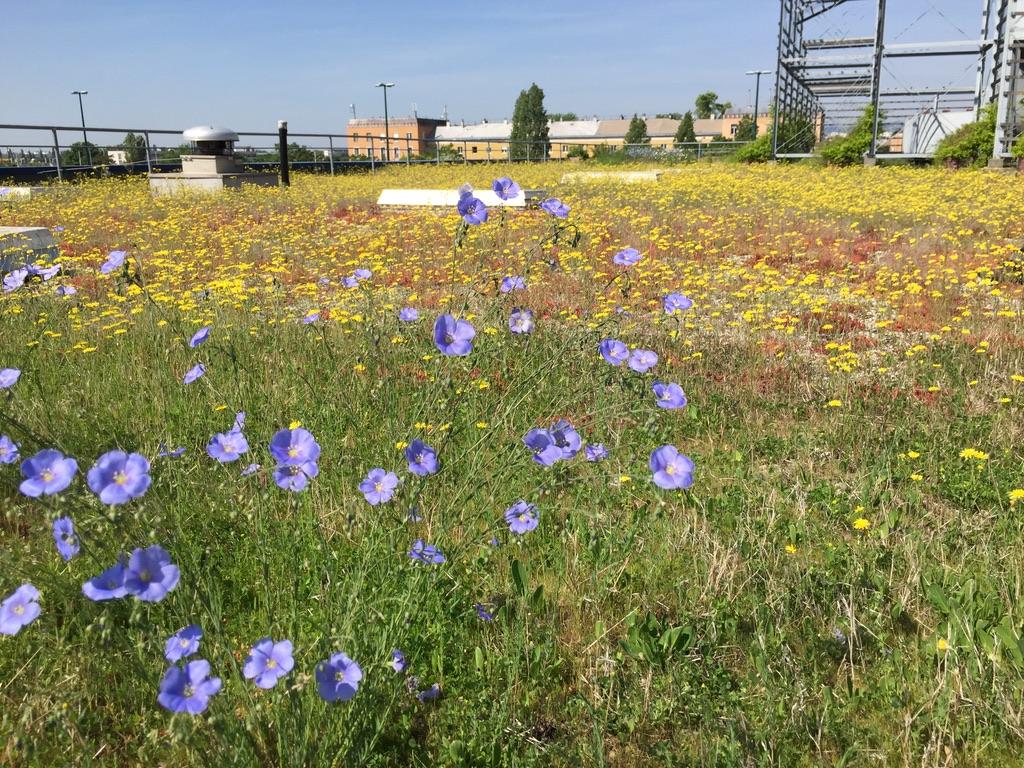
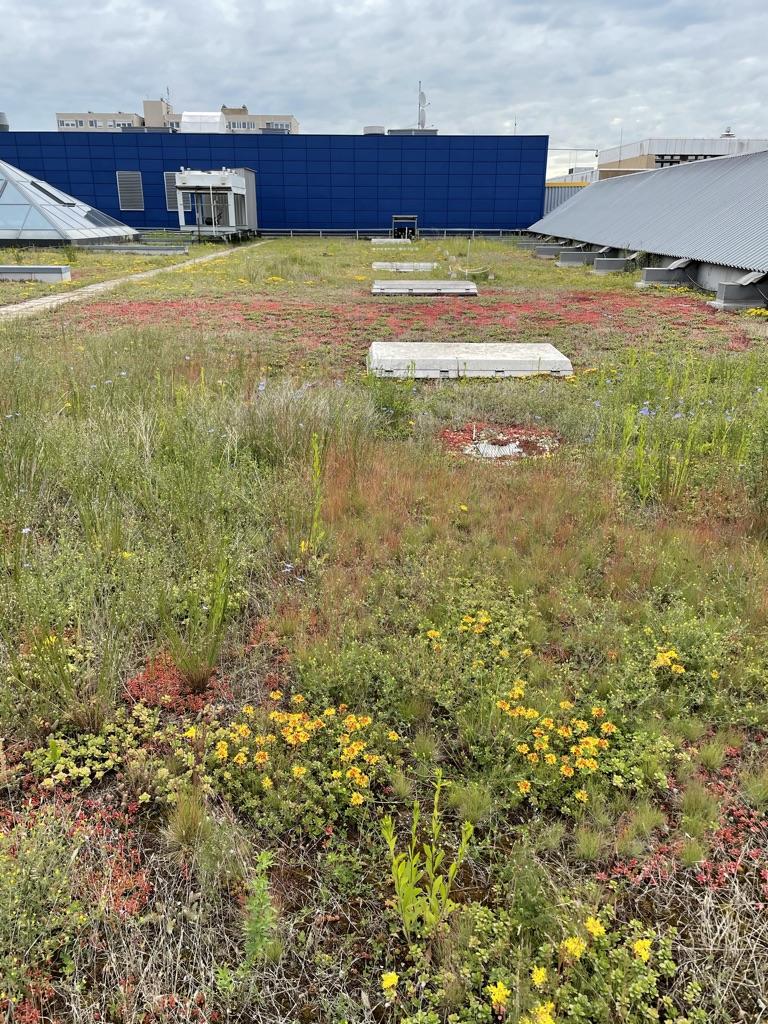
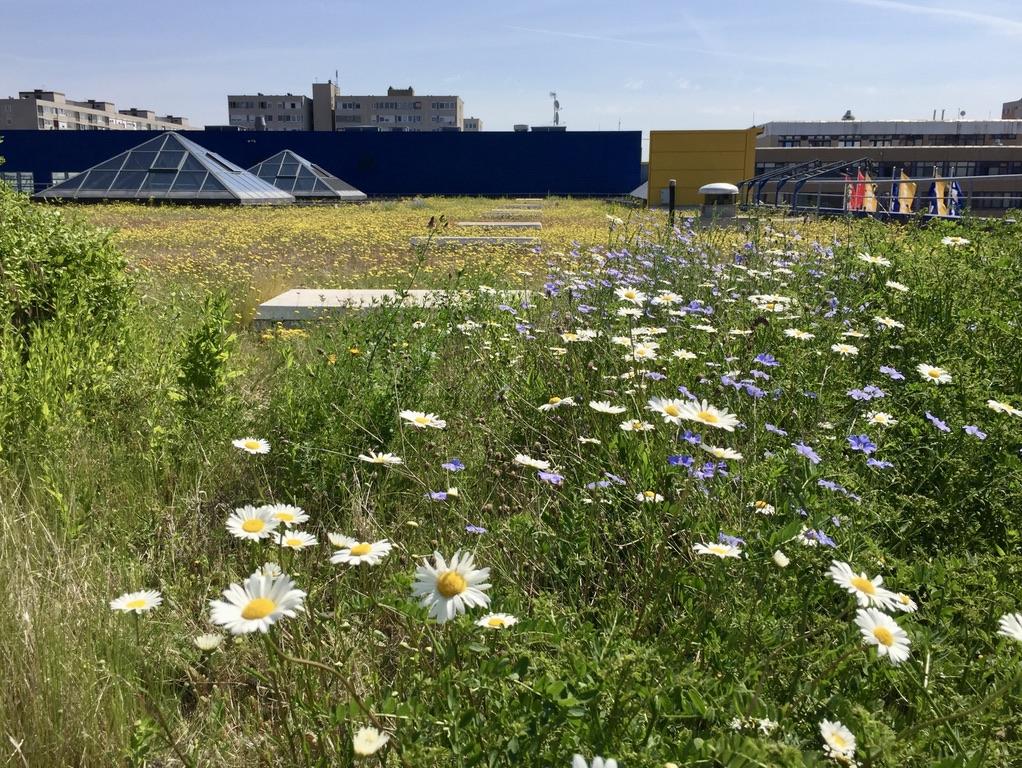
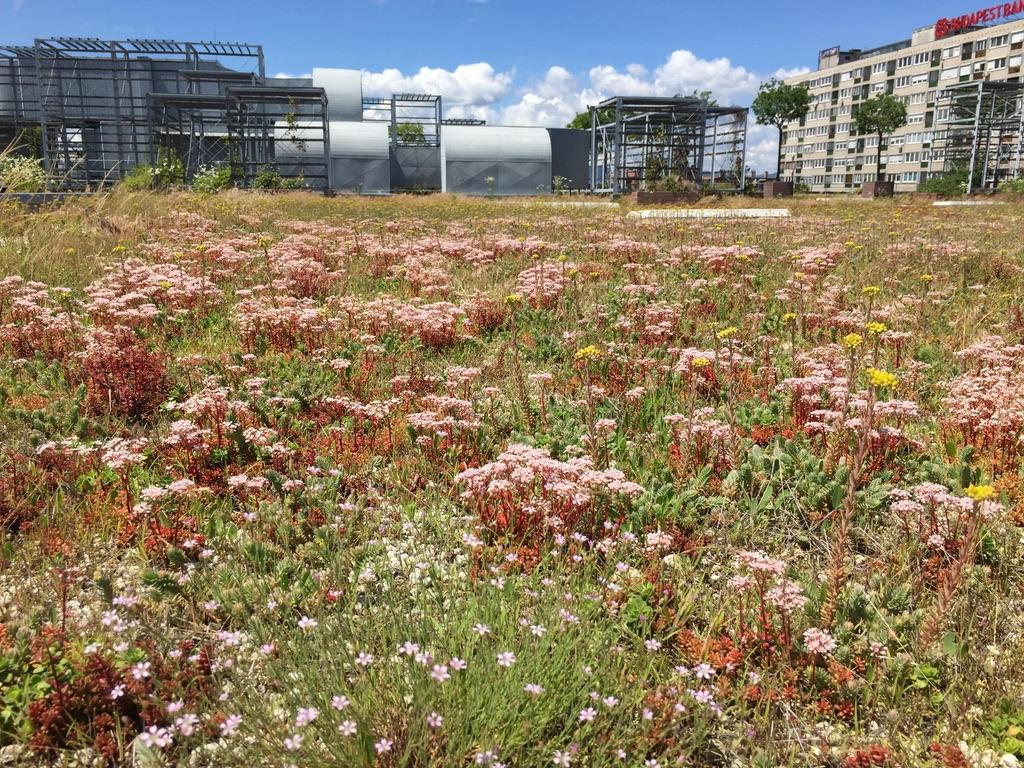
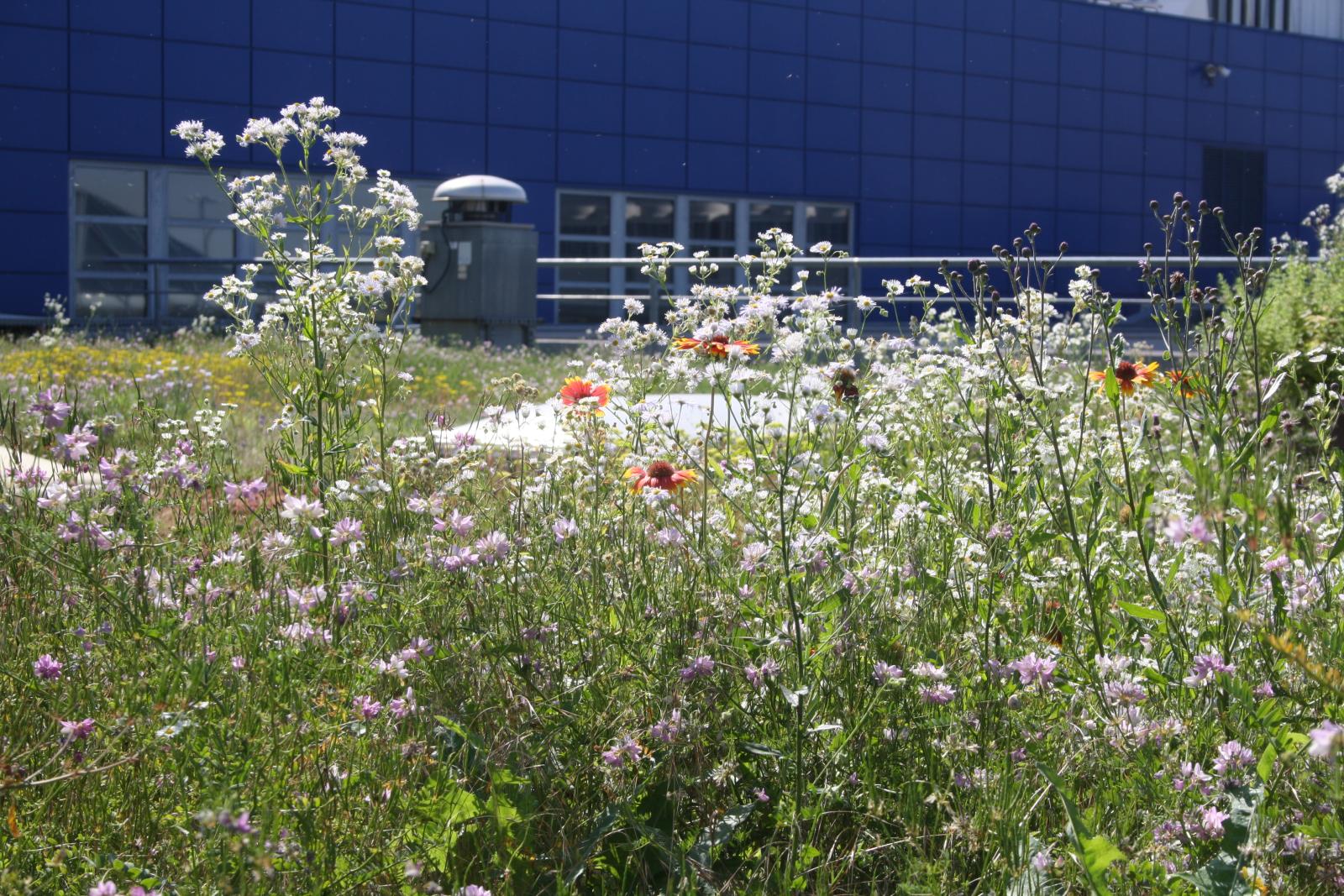
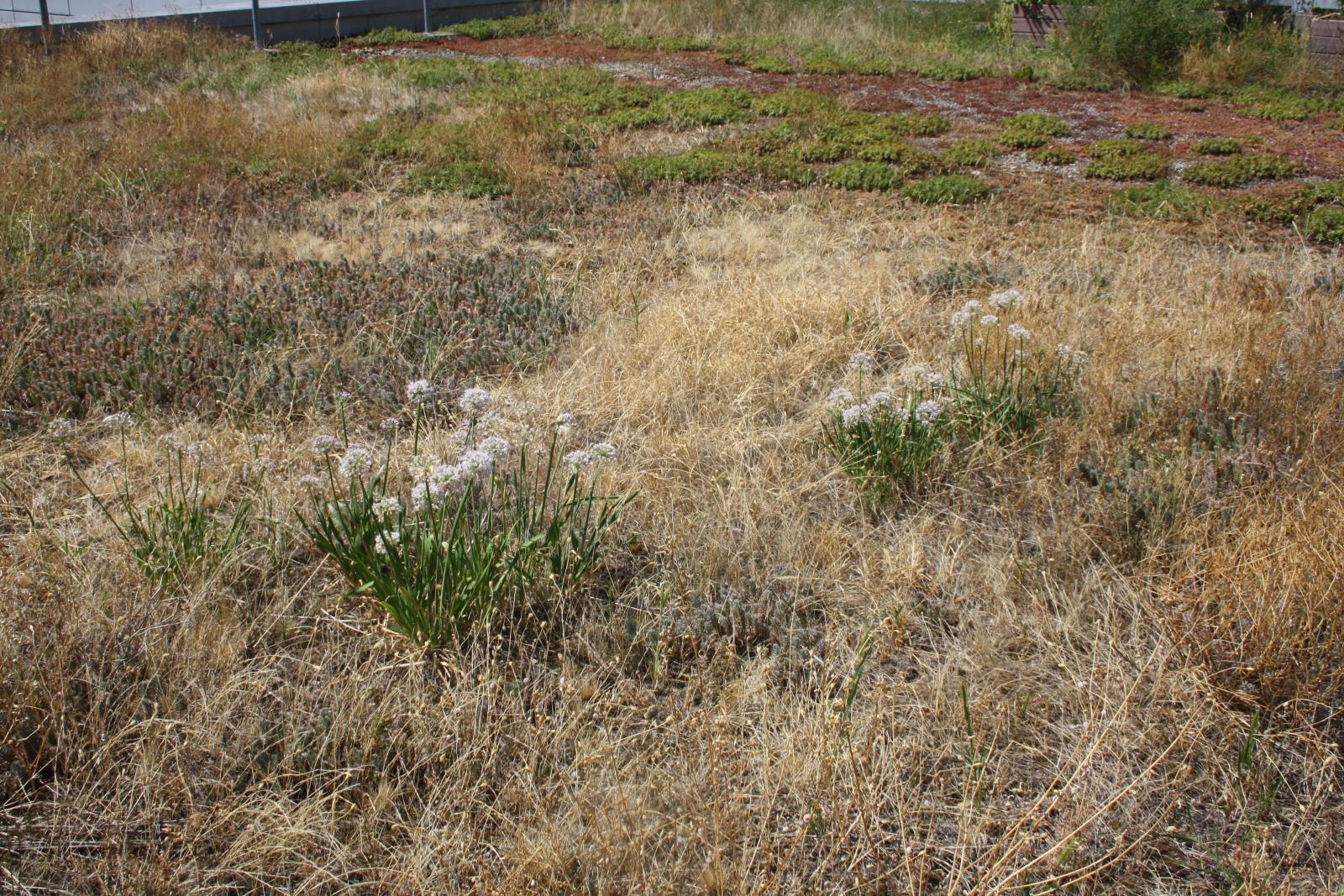
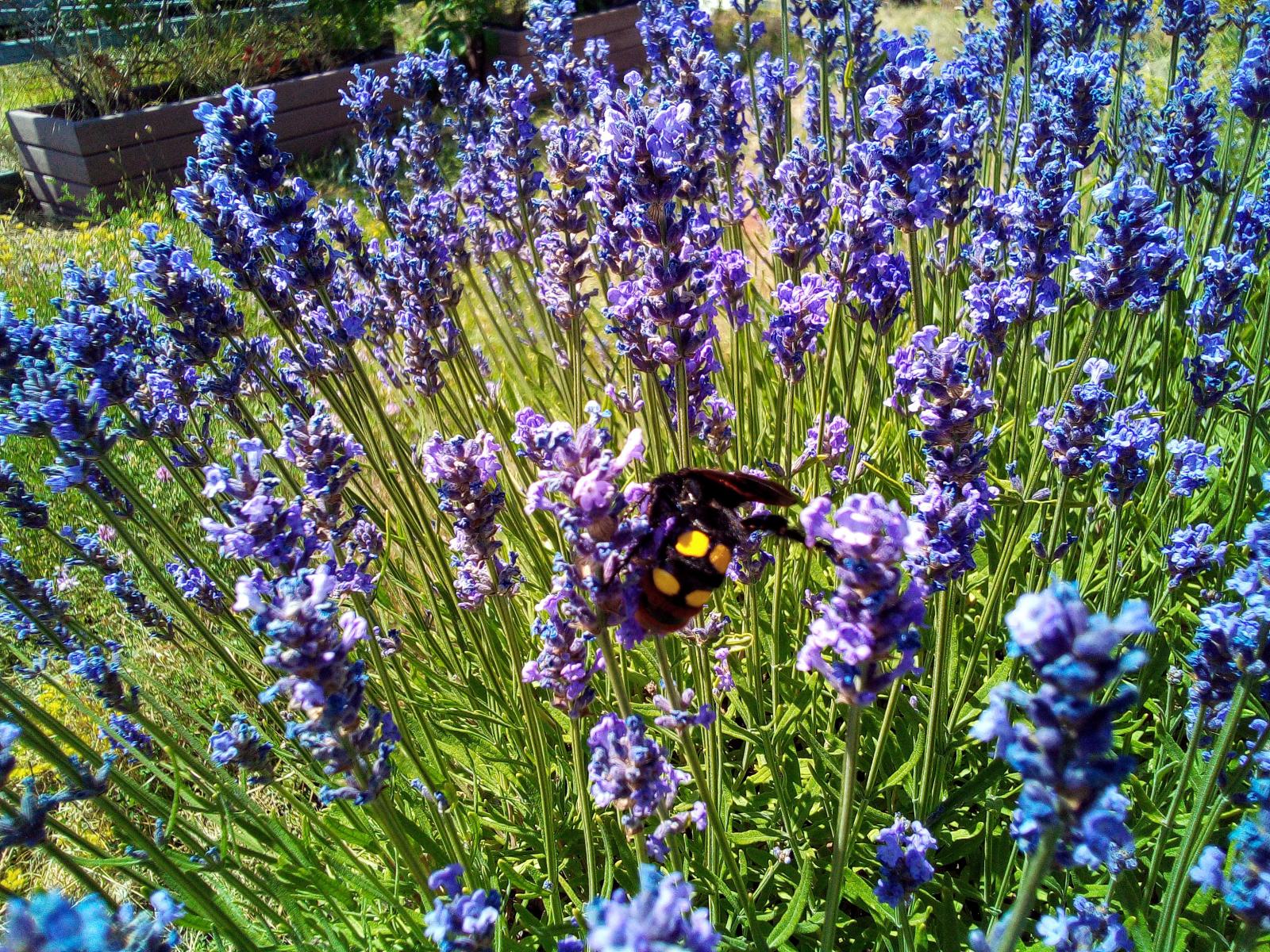
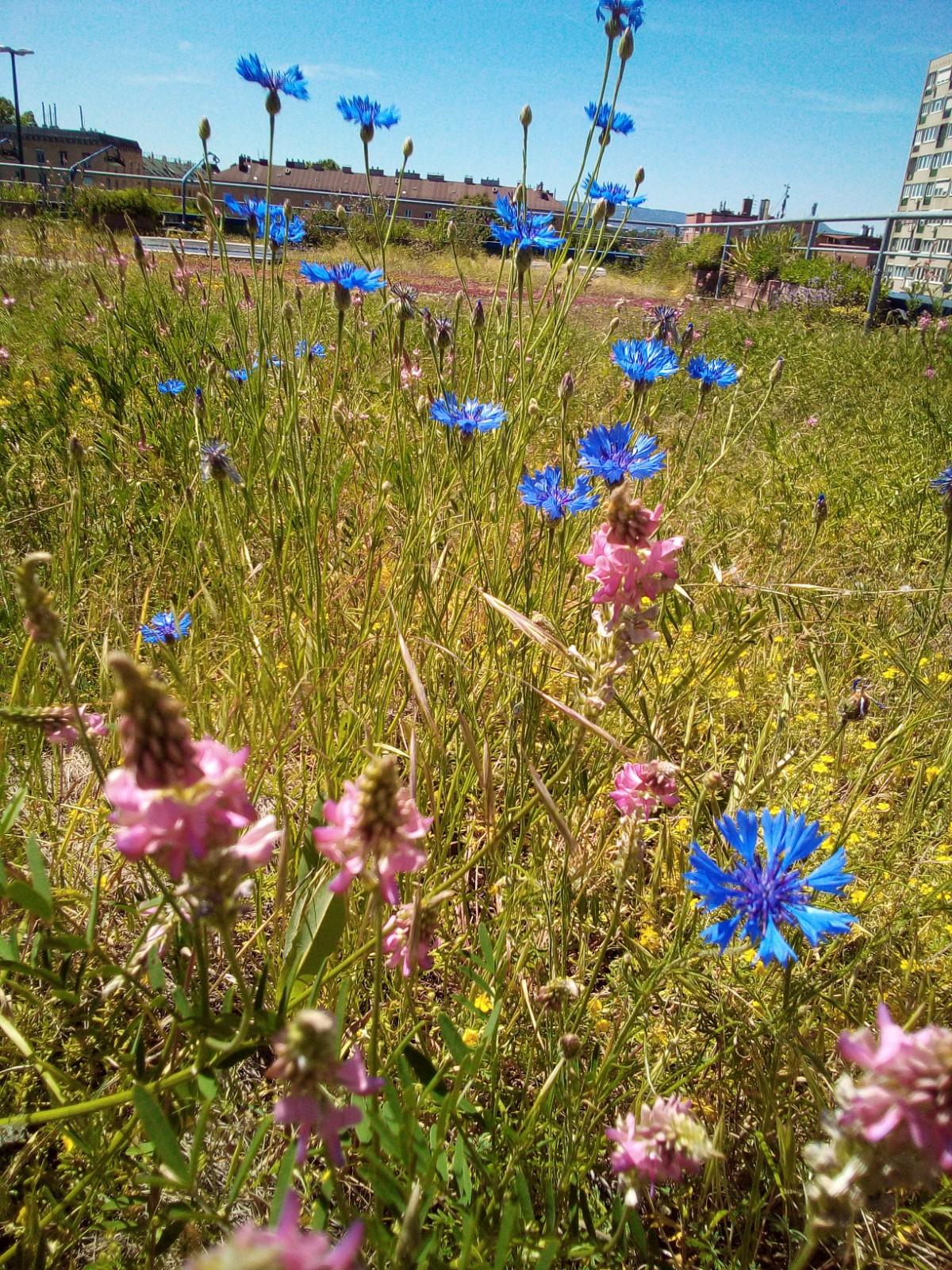
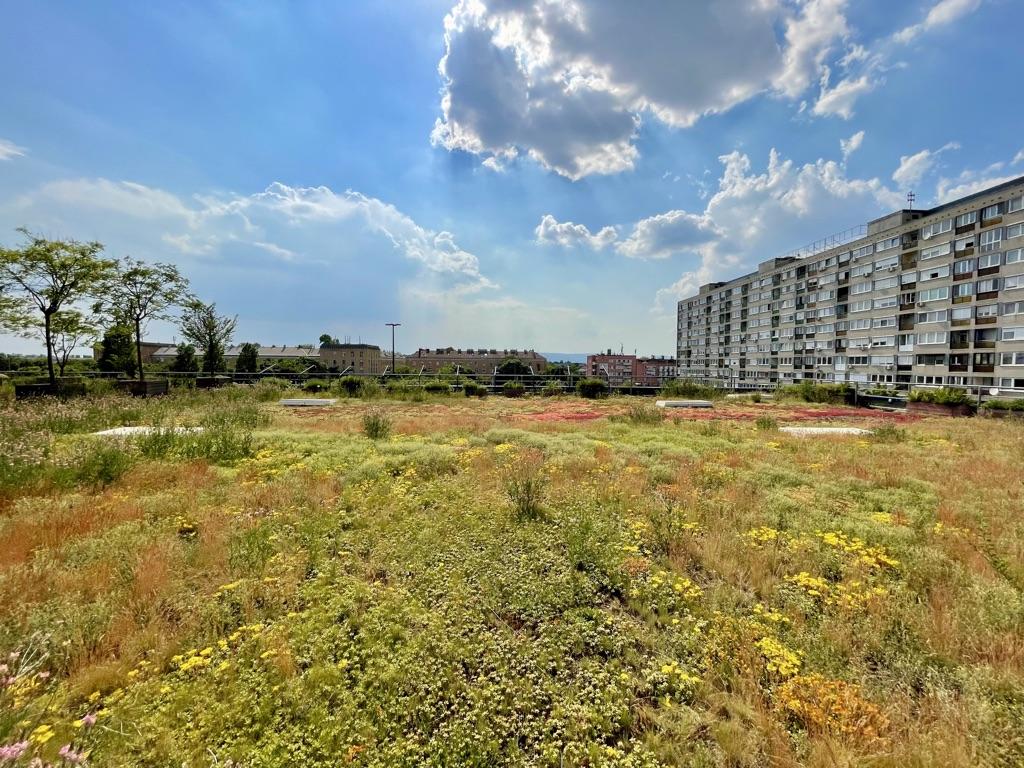
IKEA opened its doors in Budapest in 1990. This was the very first store in Hungary. Twelve years later, the store announced that it would install a green roof. The main purpose of the green roof was to compensate the locals for the loss of green space. The green roof was intended to create a biologically active surface that fits in aesthetically into the suburban landscape and provide a home for animals such as pollinators. The green roof, built in 2002, was covered with a Sedum carpet. In 2014, when the original Sedum vegetation died out, the green roof was completely removed. Then, during the autumn 2014 planting, four types of Sedum shoots were seeded. This was followed in the spring of 2015 by the seeding of herbaceous dicots seed mixes, which contained seeds of roughly 50 plant species. The vegetation is regularly monitored by ecologists: in 2021, more than 160 different taxa were recorded, including spontaneously occurring species. The green roof is closed, not accessible to the public, however tours are occasionally organized for professionals [3] [6] [8] [9] [10] [11].
Overview
Nature-based solution
- Nature on buildings (external)
- Green roofs
Key challenges
- Climate action for adaptation, resilience and mitigation (SDG 13)
- Climate change adaptation
- Green space, habitats and biodiversity (SDG 15)
- Green space creation and/or management
- Habitat and biodiversity restoration
- Regeneration, land-use and urban development
- Promote natural styles of landscape design for urban development
- Health and well-being (SDG 3)
- Improving mental health
- Social justice, cohesion and equity (SDG 10)
- Environmental education
- Economic development and employment (SDG 8)
- Real estate development
Focus
Project objectives
Implementation activities
Climate-focused activities
Climate change adaptation:
- Increase or improve urban vegetation cover to help reduce outdoor temperature
- Implement green walls or roofs to lower indoor temperature and provide insulation
- Increase the use of climate-resilient plant species (resistant to drought, fire, and pests)
Climate change mitigation:
- Increase green urban nature for carbon storage (wetlands, tree cover)
- Install vertical or horizontal artificial surfaces that help with carbon storage and cooling
- Implement solutions to help reducing energy consumption or support the use of sustainable energy resources
- Raise public awareness of behaviours, lifestyle and cultural changes with mitigation potential
Biodiversity conservation or restoration-focused activities
Biodiversity conservation:
- Protect and enhance urban habitats
- Preserve and strengthen existing habitats and ecosystems
- Promote environmentally-sound development in and around protected areas
- Create new habitats
- Means for conservation governance
- Biodiversity offsets
Biodiversity restoration:
- Rehabilitate and restore damaged or destroyed ecosystems
- Restore species (native, endangered, or unspecified)
- Restore ecological connectivity
Main beneficiaries
- Private sector/Corporate/Company
- Citizens or community groups
Governance
Management set-up
- Led by non-government actors
Type of initiating organisation
- Private sector/corporate actor/company
Participatory approaches/ community involvement
- Unknown
Details on the roles of the organisations involved in the project
Project implemented in response to ...
Financing
Total cost
Source(s) of funding
- Corporate investment
Type of funding
- Direct funding (grants, subsidies, or self-financed projects by private entities)
Non-financial contribution
Impacts and Monitoring
Environmental impacts
- Climate change
- Environmental quality
- Improved air quality
- Reduced noise exposure
- Green space and habitat
- Increased green space area
- Increased conservation or restoration of ecosystems
- Reduced biodiversity loss
- Increased number of species present
Economic impacts
- Other
Socio-cultural impacts
- Health and wellbeing
- Education
- Increased support for education and scientific research
Type of reported impacts
Presence of formal monitoring system
Presence of indicators used in reporting
Presence of monitoring/ evaluation reports
Availability of a web-based monitoring tool
References
2. Source link. (2023). A fenntarthatóság már édeskevés, vissza kell vadítani városainkat. [online] Available at: Source link [Accessed: 24.09.2024]
3. 365.Source link. (2017). Télen fűt, nyáron hűt, évente egyszer elég gondozni: ez a zöldtető [online] Available at: https://365.Source link [Accessed: 24.09.2024]
4. Source link. (2017). Gazos és trendi. Zöld a város felett [online] Available at: Source link [Accessed: 24.09.2024]
5. Source link. (2020). Mennyire meghatározó a zöldtető rétegrend? [online] Available at: Source link [Accessed: 24.09.2024]
6. Source link. (2021). Biodiverz zöldtető Budapesten [online] Available at: Source link [Accessed: 24.09.2024]
7. Source link. (2017). Merjünk belevágni a zöldtető telepítésbe! [online] Available at: Source link [Accessed: 24.09.2024]
8. Source link. (2024). Most nézd meg az IKEA biodiverz zöldtetőjét! [online] Available at: Source link [Accessed: 24.09.2024]
9. Source link. (2021). IKEA zöldtető szakmai séta [online] Available at: Source link [Accessed: 24.09.2024]
10. Source link. (2018). Újra IKEA zöldtető szakmai séta [online] Available at: Source link [Accessed: 24.09.2024]
11. IKEA növénylista (2021) – pdf dokumentum. [offline] Available at: Source link [Accessed: 24.09.2024]
12. IKEA's local sustainability report for the financial year of 2018 (2019) – pdf dokumentum. [offline] Available at: Source link [Accessed: 24.09.2024]
13. Magyar biodiverz magkeverékek (2023). In: Kertészet és Szőlészet. 12. szám. 2023.03.22. p. 23–25 – pdf dokumentum. [offline] Available at: Source link [Accessed: 24.09.2024]
14. Zöldinfrastruktúra útmutató (2024). MultiContact Consulting Kft. AQUA Engine Kft. – pdf dokumentum. [offline] Available at: Source link [Accessed: 24.09.2024]