

Last updated: June 2024
A nature park in Bucharest containing the wetlands surrounding Lake Vacaresti. It was initially a swamp drained by the communist regime, which builds a complex of apartment blocks. In 2014 it was declared protected by the Romanian Government and named Văcărești Nature Park, and was approved as a natural protected area in 2016. (1)
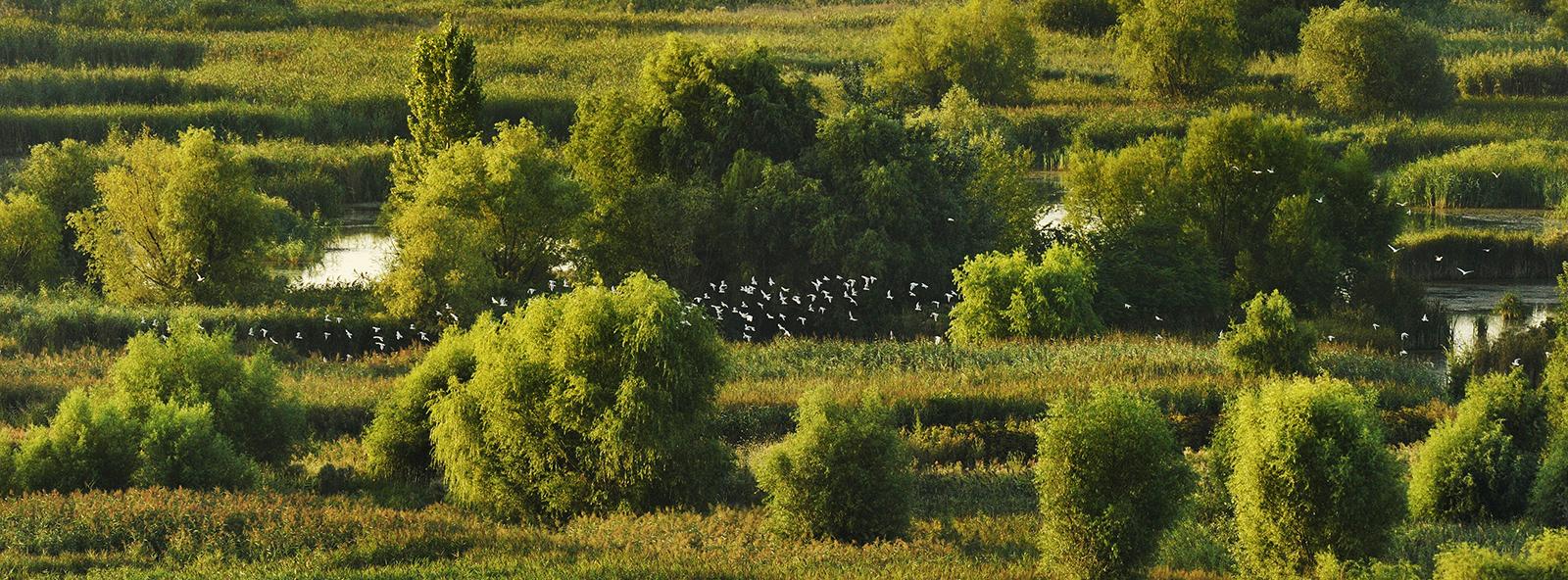
Vacaresti Nature Park (2014)
Vacaresti Nature Park Association, retrieved 08/15/2018 from Dan Barbulescu
Overview
Nature-based solution
- Blue infrastructure
- In-land wetlands, peatlands, swamps, and moors
- Parks and urban forests
- Large urban parks or forests
Key challenges
- Green space, habitats and biodiversity (SDG 15)
- Habitat and biodiversity conservation
- Green space creation and/or management
- Cultural heritage and cultural diversity
- Preservation of natural heritage
- Health and well-being (SDG 3)
- Creation of opportunities for recreation
- Social justice, cohesion and equity (SDG 10)
- Environmental education
- Economic development and employment (SDG 8)
- Tourism support
Focus
Maintenance and management of urban nature, Protection of natural ecosystems, Knowledge creation and awareness raising, Monitoring and maintenance of habitats and/or biodiversity
Project objectives
1. To maintain and protect biodiversity in the capital of the country (1);
2. To protect and preserve landscape assemblages in which the interaction of human activities with nature still exists (2);
3. To encourage scientific and educational activities and provide the public with opportunities for recreation and tourism (1);
4. To increase contact with nature for health reasons (1).
Implementation activities
-2014, creation of the Observatory Center of the Văcăreşti Natural Park. (2)
-establishing internal regulations for the Park (fines, access, protection measurements) (2016) (1)
Biodiversity conservation or restoration-focused activities
Biodiversity conservation:
- Protect and enhance urban habitats
- Preserve and strengthen existing habitats and ecosystems
- Protect species
- Undertake specific measures to protect species
- Undertake specific measures to protect native species
- Means for conservation governance
- Raise public awareness
- Public engagement
- Create and use scientific knowledge for conservation
Main beneficiaries
- National-level government
- Local government/Municipality
- Non-government organisation/Civil Society
- Researchers/University
- Citizens or community groups
Governance
Management set-up
- Co-governance with government and non-government actors
Type of initiating organisation
- National government
- Non-government organisation/civil society
Participatory approaches/ community involvement
- Co-planning (e.g. stakeholder workshops, focus groups, participatory mapping)
- Dissemination of information and education
- Consultation (e.g. workshop, surveys, community meetings, town halls)
- Joint implementation (e.g. tree planting)
- Co-management/Joint management
- Citizen oversight (e.g. boards, advisory)
Details on the roles of the organisations involved in the project
In 2012 the area became noticeable for the Romanian authorities who in 2014 declared it a protected area. At the beginning of 2015, representatives of the Initiative Group for the establishment of the Văcăreşti Natural Park founded the Văcăreşti Natural Park Association. In 2017 the Vacaresti Natural Park Association became the administrator of the Park (4)
Project implemented in response to ...
... an EU policy or strategy?
Yes
(The intervention mentions the 2004/35/CE, Council of Europe Directive in regards to Environmental Protection, which discusses the amount of green spaces needed per urban citizen capita (5))
... a national policy or strategy?
Yes
(The intervention also mentions the Government Emergency Ordinance no. 57/2007 , The Nature of protected areas, under which the park fits (1)
)
... a local policy or strategy?
Unknown
Financing
Total cost
Unknown
Source(s) of funding
- Unknown
Type of funding
- Unknown
Non-financial contribution
Type of non-financial contribution
- Provision of land
- Provision of goods
- Provision of labour
- Provision of expertise
Who provided the non-financial contribution?
- Public authorities (e.g. land, utility services)
- Citizens (e.g. volunteering)
Impacts and Monitoring
Environmental impacts
- Green space and habitat
- Increased green space area
- Reduced biodiversity loss
- Increased number of species present
- Restoration of derelict areas
Economic impacts
- More sustainable tourism
Socio-cultural impacts
- Unknown
Type of reported impacts
Achieved impacts
Presence of formal monitoring system
Yes
Presence of indicators used in reporting
Yes
Presence of monitoring/ evaluation reports
Yes
Availability of a web-based monitoring tool
No evidence in public records
References
1. Asociatia Parcul Natural Vacaresti (2015), Studiul de Fundamentare Științifică al ariei naturale protejate Parcul Natural Vacărești Available at Source link (Accessed 17-8-2020)
2. Adevarul (2014), Delta Văcăreşti, privită de la etajul 17. Cum s-a transformat lacul lui Ceauşescu în parcul natural urban de astăzi, Available at Source link (Accessed 17-8-2020)
3. Igloo (2013), "Groapa Văcăreşti sau Parcul-Deltă al Bucureştiului", Available at Source link (Accessed 17-8-2020)
4. National Geographic (2013), "Groapa Văcăreşti la un an", Available at Source link (Accessed 17-8-2020)
5. Evenimentul Zilei (2014), "Între blocuri de lux, stâpânii „Deltei Urbane” duc o viață sălbatică", Available at Source link (Accessed 17-8-2020)
6. Directive 2004/35/CE of the European Parliament and of the Council on environmental liability with regard to the prevention and remedying of environmental damage, (2004), Available at Source link (Accessed 17-8-2020)
2. Adevarul (2014), Delta Văcăreşti, privită de la etajul 17. Cum s-a transformat lacul lui Ceauşescu în parcul natural urban de astăzi, Available at Source link (Accessed 17-8-2020)
3. Igloo (2013), "Groapa Văcăreşti sau Parcul-Deltă al Bucureştiului", Available at Source link (Accessed 17-8-2020)
4. National Geographic (2013), "Groapa Văcăreşti la un an", Available at Source link (Accessed 17-8-2020)
5. Evenimentul Zilei (2014), "Între blocuri de lux, stâpânii „Deltei Urbane” duc o viață sălbatică", Available at Source link (Accessed 17-8-2020)
6. Directive 2004/35/CE of the European Parliament and of the Council on environmental liability with regard to the prevention and remedying of environmental damage, (2004), Available at Source link (Accessed 17-8-2020)

Vacaresti Nature Park (2016)
Vacaresti Nature Park Association, retrieved 08/15/2018 from Dan Barbulescu

Vacaresti Nature Park (2015)
Vacaresti Nature Park Association, retrieved 08/15/2018 from Dan Barbulescu